
Views: 178 Author: waigaoqiao Publish Time: 2026-10-19 Origin: Site
Content Menu
● Why a CAD Drawing Is Only the Start
● Step 1: Review the Drawing and Define the Requirements
● Step 2: Select the Right Product Family and Mounting Interface
>> Slatwall hooks for compatible panels
>> Pegboard hooks for specified hole patterns
>> Display brackets for supported components
● Step 3: Turn the CAD Model into a Manufacturable Design
● Step 4: Develop and Approve a Prototype or Sample
● Step 5: Define Quality Control Before Mass Production
● Step 6: Agree on Load Testing and Performance Criteria
● What B2B Buyers Should Send with an OEM RFQ
● Common CAD-to-Production Problems to Avoid
● Suggested Visuals for the Published Article
● Start Your Custom Retail Fixture Project with Waigaoqiao
Custom retail fixtures start with a clear design brief—not just a CAD file. For overseas brands, wholesalers, and manufacturers, Waigaoqiao can use drawings as the starting point for developing OEM retail display fixtures, including retail display hooks, slatwall hooks, pegboard hooks, and display brackets. The work is to translate dimensions and merchandising goals into a design that fits the intended fixture, can be sampled and checked, and is ready for production.
*Editor's note: No original article or customer reviews were included in the brief. This draft therefore does not quote customers or make unverified claims about factory capabilities, certifications, or test results. Confirm project-specific capabilities and acceptance criteria with Waigaoqiao before publication.*
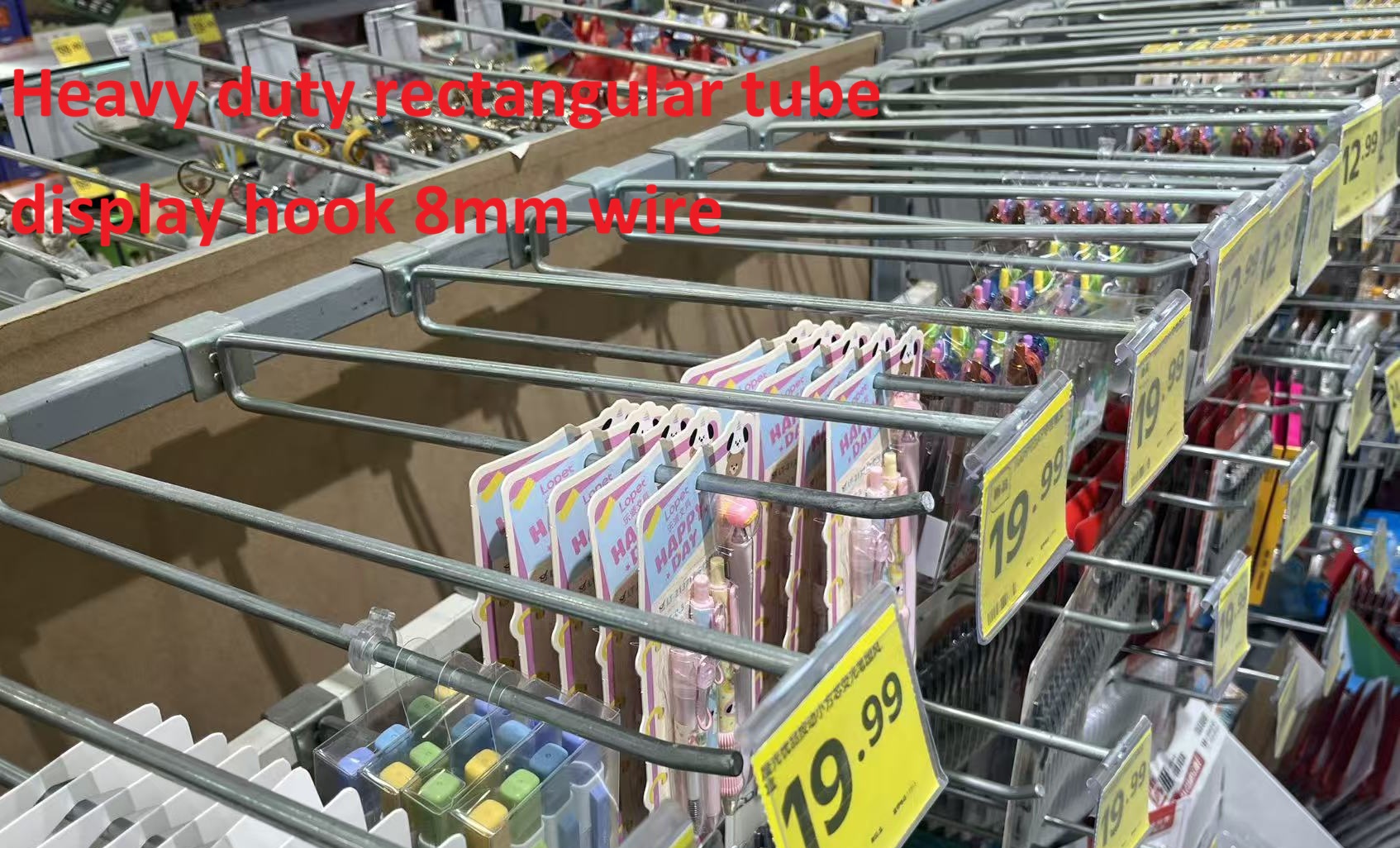
A CAD drawing communicates geometry, but it may not answer every production question. It might show a hook's overall length without specifying the mounting interface, material, finish, or how the hook will be loaded in use. For a custom fixture, these details can affect fit, function, cost, and manufacturability.
Our recommended approach is to use the drawing as a shared working document and clarify:
- The retail application: What merchandise will the fixture hold, and how will shoppers interact with it?
- The mounting system: Is the product designed for pegboard, slatwall, or another interface?
- The critical dimensions: Which measurements determine fit and function?
- The production requirements: What material, finish, packaging, quantity, and inspection criteria apply?
The key is to distinguish confirmed requirements from open design questions early—before a sample or production order is based on assumptions.
The first step is not to redraw everything. It is to check whether the available information is sufficient for a reliable design review.
A useful CAD package should include, where applicable:
1. Overall dimensions, with units and tolerances for critical features.
2. Mounting details, including the panel, slot, hole, or mating part.
3. Material and finish, or a note that these remain to be selected.
4. Product information, such as package dimensions, hang-hole geometry, and merchandise weight.
5. Assembly context, showing how the part relates to the complete display.
6. Revision identification, so the buyer and factory are reviewing the same design.
If a drawing is incomplete, supplement it with photographs, a physical sample, or a simple sketch of the intended use. For retail display hooks, the packaging matters: two products with similar weights may hang differently if their hang holes or package shapes differ.
The mounting interface is one of the most important design decisions. A hook that looks suitable in a rendering may not fit the buyer's panel system.
Slatwall hooks are designed for compatible slatwall systems. Buyers should identify the specific panel profile and mounting arrangement, then check the hook's engagement and usable projection. Retail hook ranges can include multiple lengths and configurations, but a product listing alone does not confirm fit for a particular project. [clipstrip](https://www.clipstrip.com/pegboard-slatwall-hooks-for-retail-displays-white-abs-plastic-2-10) [storefixturesdirect](https://storefixturesdirect.com/slatwall/slatwall-hooks)
Pegboard hooks must match the intended hole pattern and panel construction. Confirm relevant dimensions—such as hole spacing, hole diameter, and panel thickness—and test a sample on the actual panel. Some commercially available hooks specify compatibility with particular pegboard dimensions, demonstrating why "standard pegboard" should not replace a project-specific fit check. [clipstrip](https://www.clipstrip.com/pegboard-slatwall-hooks-for-retail-displays-white-abs-plastic-2-10)
Display brackets support other parts of a fixture, such as a shelf, bar, or merchandising component. Their geometry and mounting points determine how the supported part sits and how the assembly carries load. Provide a drawing or sample that shows the bracket's mating parts and intended loading direction.
Practical design rule: Specify the mounting interface before refining appearance. A visually polished design that does not fit the store's existing fixture is not production-ready.
A successful OEM design balances the requested appearance and function with the process and materials selected for the part. The design review should identify features that may need clarification or adjustment before sampling.
For retail display hooks, review:
- Hook length and projection: Does the product fit without obstructing neighboring merchandise?
- Prong count and layout: Does the hook suit the package's hang hole and desired presentation?
- Tip and end design: Is the product easy to load and remove, with the required end treatment?
- Material and finish: Do they meet the project's appearance and use requirements?
- Mounting geometry: Does the hook engage the specified panel as intended?
For brackets and other fixture parts, review the mating dimensions, assembly sequence, and access needed for installation. Where a design uses multiple components, make sure the drawing describes their relationship—not just each part in isolation.
A strong design review also records which changes are proposed and why. That keeps the buyer in control of key decisions while helping the factory flag potential issues before production.
A sample is the opportunity to test the design in context. Review it on the intended panel or fixture and, where possible, with the actual product packaging.
Check:
- Fit: Does the part install and sit as intended?
- Function: Can staff stock and retrieve products conveniently?
- Appearance: Does the sample match the approved shape, finish, and color expectations?
- Clearance: Is there enough room for the merchandise and adjacent products?
- Assembly: Can the part be installed in the intended sequence?
Record the outcome as specific feedback. "Too short" is less useful than a measured change to the usable projection. "Does not fit" should identify the panel or mating feature used and the dimension that caused the issue.
When the sample is approved, link the approval to a drawing revision and, if relevant, a physical sample reference. This helps prevent a later order from being produced against an outdated file.
Quality control is most useful when it is based on agreed requirements that can be checked. For a custom fixture project, the buyer and supplier should define which characteristics matter, how they will be inspected, and when.
A project-specific inspection plan may cover:
- Dimensions: Critical lengths, mounting features, and mating points.
- Fit: Installation on the specified panel or assembly.
- Appearance: Finish, color, and visible defects.
- Function: Product loading, removal, and intended display position.
- Packaging: Protection, labeling, and quantity per pack.
The appropriate inspection stages depend on the order and the buyer's requirements. Possible checkpoints include sample approval, an initial production review, in-process checks, and final inspection. Do not imply a certification or inspection standard unless it has actually been agreed and verified for the project.
Load testing should be designed around the real fixture and use case. A number without its test conditions can be misleading.
Before testing, agree on:
- The hook, bracket, panel, and installation method being tested.
- The load amount and how it is distributed.
- The direction of loading and the test duration.
- The pass/fail criteria and how results will be recorded.
For a display hook, testing it on one panel does not establish performance on every panel. The hook, mounting interface, panel, installation, and loading conditions all contribute to the result. If a buyer requires a particular capacity or safety factor, include it in the project specification and agree on the test method before production.
This is a useful place to connect CAD, sample approval, and quality planning: the drawing identifies the configuration, the sample verifies fit, and the agreed test checks performance under defined conditions.

A complete inquiry helps Waigaoqiao review the project and respond with fewer assumptions. Include:
- CAD files or dimensioned drawings, with units and revision number.
- Photos or samples of the existing panel, fixture, and merchandise.
- Product details, including package dimensions, weight, and hang-hole geometry.
- Requirements for material, finish, and color, or note which are open.
- Estimated order quantity and repeat-order expectations.
- Packaging, destination market, and delivery requirements.
- Sample, inspection, and load-test expectations.
If you do not have a finished drawing, send a sketch and explain the problem the fixture needs to solve. A manufacturer can only evaluate the design accurately when the intended application is clear.
Missing mounting dimensions: Supply a sample panel or confirm its critical dimensions; do not rely on a generic system label.
Unclear drawing revisions: Put the revision and date on the drawing and confirm which file is approved.
Designing without the merchandise: Check the hook with the real package, especially when hang-hole geometry is unusual.
Treating a test result as universal: Record the tested assembly and conditions alongside the result.
Approving appearance but not function: A sample review should include fit, loading, removal, and clearance—not only visual inspection.
This draft intentionally includes no images or tables. For the published page, consider adding:
- A CAD-to-sample process diagram after the workflow introduction.
- An annotated drawing highlighting mounting dimensions and hook projection.
- A product-family illustration distinguishing slatwall hooks, pegboard hooks, and display brackets.
- A short sample-fit or load-test video that identifies the actual fixture and test conditions.
Use real Waigaoqiao project images only when the factory has permission to publish them, and label demonstrations accurately.
A CAD drawing becomes a production-ready retail fixture through specification review, design clarification, sample verification, and agreed quality checks. For overseas brands, wholesalers, and manufacturers, a clear process can make OEM communication more efficient and help prevent avoidable fit and production issues.
Send Waigaoqiao your CAD drawing, sample, or project brief with the intended fixture, merchandise details, target quantity, and required finish. We can discuss the next steps for your custom retail display hooks, slatwall hooks, pegboard hooks, or display brackets.

1. What CAD files should I send for a custom retail fixture?
Send the available drawing in a commonly used CAD format, plus a dimensioned PDF if available. Include units, revision number, mounting details, and any open requirements.
2. Can Waigaoqiao develop a fixture from a sketch instead of CAD?
A sketch, photos, and a clear description of the application can be a useful starting brief. The final design and production requirements should be documented and approved before sampling or production.
3. How do I confirm that a custom hook fits my panel?
Provide the panel type and critical dimensions, then review a sample on the actual panel. Product descriptions may specify compatibility with particular panel dimensions, but that does not verify every project's fit. [clipstrip](https://www.clipstrip.com/pegboard-slatwall-hooks-for-retail-displays-white-abs-plastic-2-10)
4. What should a load test for display hooks include?
Agree on the tested hook and panel, installation, load and distribution, direction, duration, and pass/fail criteria. Record the conditions with the result.
5. How can I reduce errors before mass production?
Approve a sample against a controlled drawing revision, define measurable inspection points, and confirm packaging and order requirements before production.
6. What information helps you quote a custom OEM project?
Provide drawings or samples, fixture and merchandise details, target quantities, material and finish requirements, packaging needs, and destination market.
1. Clip Strip Corp., [Pegboard & Slatwall Hooks for Retail Displays](https://www.clipstrip.com/pegboard-slatwall-hooks-for-retail-displays-white-abs-plastic-2-10) — product example describing hook lengths and stated panel compatibility.
2. Store Fixtures Direct, [Slatwall Hooks](https://storefixturesdirect.com/slatwall/slatwall-hooks) — retail slatwall hook and accessory category.
3. Clip Strip Corp., [Double-Loop Pegboard & Slatwall Plastic Display Hooks](https://www.clipstrip.com/double-loop-pegboard-slatwall-plastic-display-hooks-for-retail-fixtures-4-or-6-lengths) — product example illustrating prong configuration and merchandise considerations.
4. Made-in-China, [Supermarket Metal Wire Display Shelf Pegboard Slatwall Hanging Display Retail Hooks](https://ownway2025.en.made-in-china.com/product/vTZpfcIUAFWM/China-Supermarket-Metal-Wire-Display-Shelf-Pegboard-Slatwall-Hanging-Display-Retail-Hooks.html) — marketplace listing describing customized display solutions and OEM/ODM services.
*These references support examples of product categories and listed attributes; they do not verify Waigaoqiao's specific capabilities, certifications, or customer outcomes.*


