
Views: 176 Author: waigaoqiao Publish Time: 2026-09-27 Origin: Site
Content Menu
● Why Global Brands Choose Custom Slatwall Hooks
● Start with the Fixture: Slatwall Hooks, Pegboard Hooks, and Display Brackets
>> Custom Slatwall Hooks for Grooved Panels
>> Pegboard Hooks for Perforated Panels
>> Display Brackets for Shelves and Fixture Components
● Custom Design: Turn the Brief into a Clear Specification
● Material and Finish Choices for Wholesale Projects
● Load Testing: Evaluate the Hook and Fixture Together
● Quality Control for Repeat OEM Production
● How Waigaoqiao Supports Global Brands Through OEM Manufacturing
● Common Sourcing Mistakes to Avoid
>> 1. Can Waigaoqiao manufacture custom Slatwall Hooks?
>> 2. What information is needed for a custom hook quote?
>> 3. How do Slatwall Hooks differ from Pegboard Hooks?
>> 4. Why test a hook with the actual fixture?
>> 5. What should I confirm before approving an OEM sample?
>> 6. Can a standard hook be customized instead of designing a new one?
Custom Slatwall Hooks are a small but important part of a retail display system. The right hook must fit the panel, present the product clearly, and suit the store's replenishment routine. For international brands, wholesalers, and fixture manufacturers, working with a capable retail display hooks manufacturer can also help turn a product brief into a repeatable OEM specification.
Waigaoqiao is a China-based retail display fixture factory offering OEM services to overseas B2B customers. This guide covers how to plan custom Slatwall Hooks, how they relate to Pegboard Hooks and Display Brackets, and what to review during custom design, load testing, and quality control. It focuses on practical sourcing decisions rather than unsupported capacity claims.
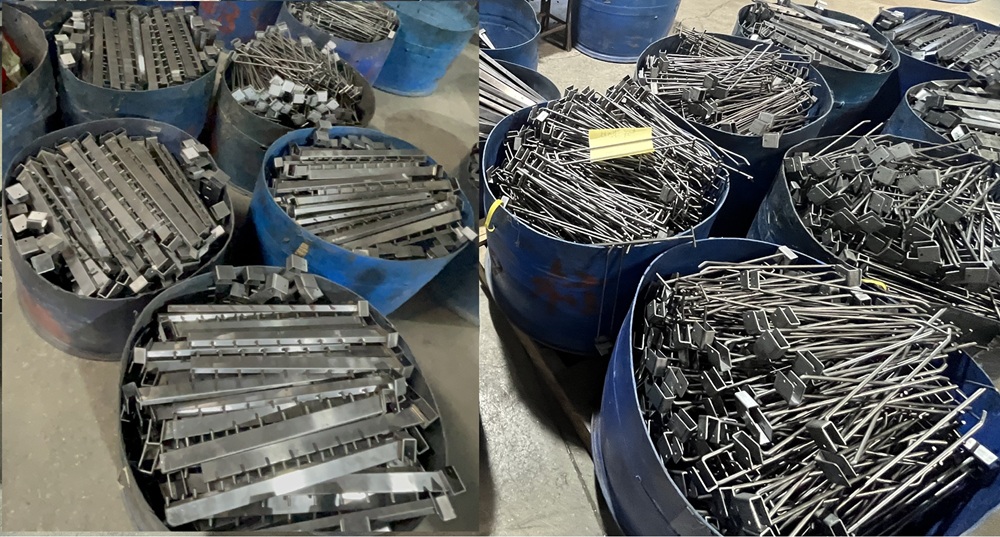
Standard hooks can work well when the panel, merchandise, and display requirements match an available design. A custom hook may be appropriate when a standard option does not fit the fixture or product presentation.
Custom Slatwall Hooks can be developed around requirements such as:
- Panel compatibility: The hook must engage the specified groove or insert.
- Product dimensions: Length and projection should suit the package and display layout.
- Merchandising features: A stopper, tip, label holder, or other detail may be needed.
- Brand presentation: Color, finish, and visible design can support the fixture program.
- Repeat purchasing: A documented specification gives buyer and factory a shared reference for future orders.
The phrase "custom slatwall hook" can mean different things to different buyers. One project may require only a different length; another may require a revised mounting interface, finish, or product-retention feature. Define what needs to change before requesting a quote.
The first design question is what the component attaches to. Material and dimensions matter, but the mounting interface is fundamental to fit and use.
Slatwall Hooks engage grooves or compatible inserts in a slatwall panel. For an OEM project, provide the panel or insert details along with the hook length, projection, and intended merchandise.
During evaluation, check that the hook:
- Fits the specified groove or insert
- Sits securely without excessive movement
- Provides suitable clearance for the merchandise
- Can be loaded and replenished conveniently
- Works with any required stopper or label holder
Do not assume that all panels described as slatwall are identical. A sample should be checked on the intended fixture or a verified equivalent before production approval.
Pegboard Hooks mount to perforated panels. Hole dimensions, spacing, board thickness, and hook geometry affect fit and alignment. A hook that works with one board may not sit correctly on another.
Include the panel specification in the buyer brief. Check that the sample inserts properly, sits as intended, and remains stable through ordinary loading and unloading. Product listings may specify the panel details a hook is designed for, reinforcing the importance of checking the fixture rather than relying on the product category name alone. [justdial](https://www.justdial.com/india/Retail-Display-Hook)
Display Brackets support shelves and other display components. Their load path differs from that of a single-arm hook, so the supplier needs to know what is being supported and how the bracket will be installed.
Share the bracket orientation, mounting points, supported component, fixture details, and expected load distribution. If brackets and hooks are part of one fixture, evaluate the assembly as a system.
A useful design brief explains what the component must do, not just how it should look. Photos and drawings help, but they should be paired with dimensions and application details.
For a custom retail display hook, provide:
- Product photos, drawings, or a physical sample
- Product and package dimensions, unit weight, and hang-hole details
- Fixture type and panel specifications
- Hook length, projection, tip style, and number of prongs
- Material and finish preferences
- Color and packaging requirements
- Estimated quantity and delivery expectations
- Any required testing or market documentation
Mark which requirements are critical and which may be adjusted. For example, panel engagement may be fixed, while a cosmetic detail may allow options. This helps the manufacturer discuss alternatives without compromising the key fit requirements.
A practical development sequence is:
1. Review the application: Confirm the panel, merchandise, and display purpose.
2. Clarify dimensions: Resolve missing or ambiguous measurements before sampling.
3. Develop a sample: Use the agreed brief to produce a sample for review.
4. Test the application: Check the hook on the intended fixture with representative products.
5. Approve a reference: Keep a controlled drawing or sample record for production.
6. Document revisions: Record any changes to dimensions, material, finish, or function.
This sequence helps both parties work from the same approved design rather than relying on informal descriptions.
Material and finish should be selected for the use case, not appearance alone. Retail hook product ranges include differing constructions and finishes, and suppliers may offer customized configurations. Verify options for the specific design and order rather than assuming every listed option applies. [aseertime](https://www.aseertime.com/product/category/23288595001470)
When reviewing materials and finishes, consider:
- Rigidity: Does the selected design suit the intended product and hook geometry?
- Surface appearance: Does the finish match the display program?
- Product contact: Are tips and edges suitable for the packaging?
- Store environment: Will the display be exposed to conditions that affect finish selection?
- Repeatability: Can the finish and color be specified clearly for later orders?
For color-critical projects, provide a reference sample or an agreed color specification. Define how visible defects and acceptable variation will be reviewed. This is more actionable than a general instruction such as "match the sample," especially when a project involves multiple production runs.
Load testing is useful only when the setup reflects the intended application. A hook tested on a different panel or with a different load position may behave differently in the final display.
Before testing, agree on:
- Hook dimensions and material
- Fixture, panel, or bracket used
- Test load and where it is applied
- Test duration and loading method
- Acceptable deflection or permanent deformation
- Pass/fail criteria and result documentation
A practical sample review can follow these steps:
1. Install the hook on the specified panel or fixture.
2. Load it with the intended merchandise or an agreed representative load.
3. Observe its fit and movement during loading and removal.
4. Inspect its condition for bending, looseness, or finish damage.
5. Record the configuration and result so the sample can be compared with production.
Avoid treating an unspecified capacity number as a universal rating. If a buyer needs a formal test method, certification, or third-party assessment, state that requirement before sampling and confirm how it will be verified.
A satisfactory sample is a starting point, not a complete quality plan. Repeat production requires clear criteria for checking that the delivered hooks match the approved design.
A project-specific quality plan can define:
- Critical dimensions and measurement methods
- Fixture-fit checks
- Material and finish expectations
- Visual inspection criteria
- Functional checks for installation and use
- Inspection frequency agreed by buyer and supplier
- How design revisions and nonconforming items will be handled
For multiple hook styles, organize specifications by product code and retain an approved reference for each model. This makes it easier to distinguish design revisions and discuss concerns using the same technical information.
Keep quality requirements measurable. "Good quality" is difficult to inspect; a defined dimension, finish reference, fit condition, or test criterion gives both sides something specific to verify.

Waigaoqiao serves overseas brands, wholesalers, and manufacturers sourcing retail display fixtures and components. A clear brief gives the factory a better basis to discuss whether a custom Slatwall Hook, Pegboard Hook, or Display Bracket suits the project.
An effective OEM discussion can cover:
- Product and fixture details
- Custom geometry, material, and finish
- Sample development and approval
- Quality expectations and documentation
- Order quantity, packaging, and delivery requirements
Buyers should request confirmation of any capability essential to their project. This is particularly important for a specified material, coating, testing requirement, or market document. Clear communication at the quote and sample stages helps align the product, specification, and buyer expectations.
- Requesting a quote without fixture details: "Slatwall hook" alone may not identify the required interface.
- Sending only a photo: Add dimensions and application details.
- Specifying a load without test conditions: State the setup and acceptance criteria.
- Approving appearance but not function: Confirm fit and usability before bulk production.
- Leaving revisions undocumented: Keep drawings and samples aligned with the purchase specification.
- Treating hook categories as interchangeable: Slatwall Hooks, Pegboard Hooks, and Display Brackets have different mounting and support roles.
Waigaoqiao provides OEM services for retail display fixtures. Share the panel specifications, hook dimensions, application, and target quantity so the team can review the project requirements.
Provide product and package dimensions, unit weight, hang-hole details, fixture type, desired hook geometry, finish preferences, quantity, packaging, and delivery requirements.
Slatwall Hooks engage grooves or inserts. Pegboard Hooks fit perforated panels. Because the interfaces differ, buyers should identify the fixture and verify sample fit.
The panel or insert affects how the hook mounts and behaves. Testing the hook on the intended fixture gives a more relevant indication of fit and use.
Check dimensions, fixture fit, installation, product handling, finish, and any required test results. Retain the approved drawing or sample details as a production reference.
Sometimes a project can use a standard design with adjusted dimensions or finish. Share the requirements with the supplier to confirm feasibility; do not assume a modification is available before review.
Looking for a custom Slatwall Hooks manufacturer for a global retail program? Send Waigaoqiao your product brief, fixture specifications, target quantity, and finish requirements. Our team can discuss Retail Display Hooks, Pegboard Hooks, Display Brackets, custom design, OEM manufacturing, quality control, and load testing for your project.
Contact Waigaoqiao to start a quotation and sample review.
- [Retail Display Hook at the Best Price from Verified Sellers](https://www.justdial.com/india/Retail-Display-Hook) — general reference for display-hook categories and Slatwall Hook applications.
- [Wall Panel and Pegboard Product Category](https://www.aseertime.com/product/category/23288595001470) — product-category reference; verify specific product specifications directly with the supplier.
*This article provides general sourcing and product-development guidance. No Waigaoqiao-specific test results, certifications, or customer testimonials were supplied for this draft. Confirm product capabilities and project requirements directly with the manufacturer.*


