
Views: 220 Author: WAIGAOQIAO Publish Time: 2026-03-03 Origin: Site
Content Menu
● The Rise of the Industrial Aesthetic in Modern Commerce
● Genuine Malleable Iron vs. Decorative Steel Tubing
● The Importance of Precision Threading and Joint Integrity
● Powder Coating: The Industry Standard for Durability
● The "Clear Coat" Raw Aesthetic
● Luxury Finishes: Gold, Brass, and Copper
● Freestanding Single and Double Rail Racks
● Multi-Arm and Four-Way Displays
● Casters vs. Stationary Flanges
● The Importance of Leveling on Uneven Surfaces
● Customization and Proprietary Designs
● Optimized Packaging for Global Shipping (KD Design)
● Quality Control and Material Certification
● Frequently Asked Questions (FAQs)
In the contemporary landscape of retail design and interior aesthetics, few fixtures have achieved the enduring popularity and functional versatility of the industrial pipe garment stand. Once a niche aesthetic found in the lofts of urban artists and repurposed warehouses, the "industrial-chic" look has moved firmly into the mainstream. Today, these rugged, high-strength displays are staples for high-end boutiques, global fashion wholesalers, and organized residential walk-in closets. For international brands and manufacturers looking for high-quality OEM solutions, understanding the nuances of these fixtures is essential. As a specialized leader in the garment rack industry, WAIGAOQIAO provides international clients with the engineering expertise and manufacturing scale needed to bring these robust designs to market. This guide provides an exhaustive analysis of how to select the best industrial pipe garment stands, ensuring they meet the highest standards of durability, aesthetics, and operational efficiency.

The transition of plumbing pipes from hidden utility to center-stage design element is a fascinating evolution in retail architecture. The appeal lies in the "honest" nature of the material—raw, strong, and unapologetically functional. For a fashion brand, an industrial pipe stand communicates a sense of authenticity and durability. It suggests that the brand is grounded, modern, and values quality that lasts. From a practical standpoint, the modular nature of pipe systems allows for nearly infinite customization, making them the ideal choice for businesses that need to adapt their floor layouts frequently.
## Materials and Construction: The Foundation of Industrial Strength
When selecting an industrial pipe stand, the most critical factor is the quality of the raw material. Not all "pipe" racks are created equal. Some are made from genuine plumbing-grade iron, while others use lightweight, decorative tubing designed to mimic the look without providing the strength.
Authentic industrial stands are typically constructed from malleable iron pipes or heavy-gauge steel. Malleable iron is preferred for its classic "rough" texture and its ability to withstand significant pressure without cracking. For high-volume retail environments, the wall thickness of the pipe—often referred to as the "schedule" in plumbing terms—is paramount. A professional-grade stand should use pipes with a sufficient diameter (usually 3/4 inch or 1 inch) to prevent sagging when fully loaded with heavy garments like winter coats or bridal gowns. Decorative tubing, while cheaper and lighter, often fails under heavy loads and lacks the tactile "heaviness" that customers associate with quality.
The beauty of a pipe stand lies in its joints—the elbows, tees, and flanges that hold the structure together. In a high-quality stand, the threads on the ends of each pipe must be precision-cut to ensure a deep, secure fit into the fittings. If the threading is too shallow, the rack will wobble; if it is inconsistent, the rack may lean. For OEM manufacturing, WAIGAOQIAO employs advanced CNC threading machines to ensure that every component fits together perfectly, providing a rigid structure that feels like a single, solid piece once assembled.
## Surface Treatments and Finishing: Beyond the Raw Look
While the "raw" look is popular, untreated iron is susceptible to rust and can leave oily residues on expensive garments. Therefore, the finish is a vital consideration for both protection and brand alignment.
For most commercial applications, powder coating is the superior finish. This process involves applying a dry resin powder to the metal and then baking it in an oven to create a hard, continuous shell. Matte black is the most iconic choice for industrial pipe stands, providing a clean, modern look that resists chipping, scratching, and fading. Unlike traditional liquid paint, powder coating is thick enough to hide small imperfections in the metal while providing a smooth surface that allows hangers to glide effortlessly.
For brands that want the authentic look of grey or black iron without the risk of rust, a transparent clear coat is the solution. This involves thoroughly degreasing the raw pipes and then applying a matte or satin clear lacquer. This preserves the natural variations, welding marks, and industrial character of the metal while creating a barrier against moisture and skin oils. This finish is particularly popular in high-end "boutique" settings where the "found object" aesthetic is a core part of the brand identity.
A growing trend in the luxury sector is the use of industrial pipe shapes finished in "glamorous" colors. By applying a metallic gold, brushed brass, or copper powder coat to an industrial-style frame, designers create a striking contrast between the rugged form and the sophisticated finish. This allows brands to maintain the strength and modularity of a pipe system while fitting into a high-end, elegant interior design.
## Design Variations and Functional Versatility
Industrial pipe stands come in various configurations, each suited to a different retail or storage need. Choosing the right design depends on the volume of inventory and the available floor space.
The freestanding single rail is the quintessential pipe rack. It is simple, mobile, and effective. Double rail versions offer twice the hanging space on the same footprint, making them ideal for high-density storage or for separating different categories of clothing (e.g., tops on one rail, bottoms on the other). The key to a good freestanding design is the base; it must be wide enough to prevent tipping but slim enough not to create a tripping hazard for customers.
Wall-mounted systems are the ultimate space-savers. By securing the flanges directly into wall studs, retailers can create "floating" wardrobe systems that keep the floor clear. This creates a sense of openness in the store and allows for easy cleaning. Wall-mounted pipe stands can also be integrated with wooden shelving, allowing for a mix of hanging space and folded displays.
For center-floor placement, multi-arm pipe stands (such as "T-stands" or "Four-ways") are used to highlight specific collections or new arrivals. These designs utilize specialized pipe fittings to create arms that extend at different heights, creating a dynamic, tiered visual display that encourages customers to browse from all sides.
## Stability, Mobility, and Floor Protection
An industrial stand must be as functional as it is beautiful. This means considering how it interacts with the floor and how easily it can be moved.
In a fast-paced retail environment, mobility is a major asset. Adding heavy-duty casters to a pipe stand transforms it from a fixed display into a mobile transport tool. When selecting casters for pipe stands, it is important to choose "stem casters" that can be screwed directly into the base fittings. Polyurethane wheels are recommended as they are non-marking and provide a smooth, silent roll. For stationary displays, floor flanges are used. These provide a wide, stable base and can be fitted with felt pads to protect delicate flooring.
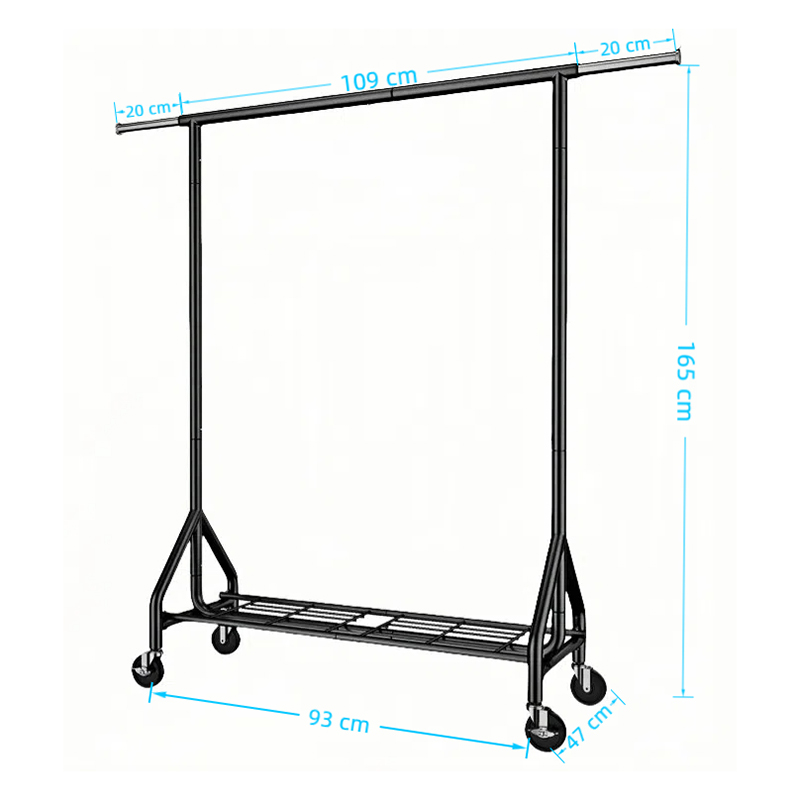
Retail floors are rarely perfectly level. One of the unique advantages of the threaded pipe system is that the height can be adjusted slightly by tightening or loosening the pipes within the fittings. This allows for manual leveling of the rack, ensuring it stands perfectly vertical even on an old warehouse floor or uneven tile.
## The Strategic Value of OEM Manufacturing with WAIGAOQIAO
For wholesalers and global brands, sourcing industrial pipe stands through an OEM partnership offers significant advantages in terms of cost, quality, and logistics.
Working with a dedicated manufacturer like WAIGAOQIAO allows brands to move beyond "off-the-shelf" designs. We can customize the diameter of the pipes, the specific type of fittings used, and the color of the finish to create a proprietary look that is unique to a single brand. This level of customization is essential for building a recognizable retail identity.
One of the challenges of industrial pipe stands is their weight and volume. Shipping fully assembled pipe racks is prohibitively expensive. We specialize in "Knock-Down" (KD) designs where the rack is shipped as a collection of pipes and fittings in a compact, flat-pack carton. Because the pipes are threaded, assembly at the destination is fast and requires no specialized tools. This dramatically reduces shipping costs and minimizes the risk of damage during international transit.
In a global market, compliance and quality assurance are non-negotiable. We conduct rigorous testing on our pipe stands, including load-bearing tests and salt spray tests for the finishes. This ensures that the products meet the safety standards required by major retailers in Europe, North America, and beyond. When a wholesaler partners with us, they are getting a product that has been engineered for the demands of the global supply chain.
## Maintenance and Longevity of Industrial Pipe Stands
The "lifetime" nature of iron pipe means that these stands can last for decades if properly maintained.
Industrial pipe stands are remarkably low-maintenance. A simple dusting with a microfiber cloth is usually enough to keep the finish looking new. For powder-coated stands in a high-traffic area, a damp cloth with mild soap can be used to remove fingerprints or scuff marks. It is important to avoid abrasive cleaners that could dull the finish over time.
Over time, especially for racks that are moved frequently, the threaded joints may loosen slightly. It is a good practice for retail staff to periodically check the joints and hand-tighten any pipes that feel less than perfectly rigid. This simple step ensures the rack remains safe and stable for its entire service life.
## Conclusion: A Timeless Investment in Quality
Selecting the right industrial pipe garment stand is a process that requires a balance of aesthetic vision and technical understanding. By prioritizing high-grade materials, precision threading, and durable powder-coated finishes, brands can create a retail environment that feels both historic and cutting-edge. The industrial pipe stand is more than just a place to hang clothes; it is a testament to the beauty of utility and the strength of simple, honest design.
As a specialized manufacturer, WAIGAOQIAO is dedicated to helping our international partners navigate these choices. We provide the manufacturing excellence and logistical support needed to turn raw metal into world-class retail fixtures. Whether you are outfitting a single boutique or a global chain of department stores, the industrial pipe stand offers a modular, durable, and stylish solution that stands the test of time. By investing in quality construction and thoughtful design, you ensure that your display infrastructure is as exceptional as the garments it holds.
***
Q1: How much weight can a standard industrial pipe garment stand actually hold?
A well-constructed stand made from 3/4-inch or 1-inch iron pipe can easily hold between 150 and 250 pounds of static weight. The weight capacity is largely determined by the length of the horizontal rail—shorter rails are stronger, while longer rails may require a central support leg to prevent bowing under extreme loads.
Q2: Will the pipes rust over time, especially in humid environments?
Raw, untreated iron will rust if exposed to moisture. However, our pipe stands are finished with either a high-grade powder coating or a protective clear lacquer. These treatments create a moisture barrier that prevents oxidation, making them safe for use in most indoor retail and residential environments.
Q3: Is assembly difficult for the end-user since they are shipped "Knock-Down"?
Not at all. The primary advantage of the pipe-and-fitting system is that it uses standard threading. Most stands can be hand-assembled in less than 15 minutes. While we provide instructions, the process is very intuitive—similar to building with a construction toy—and usually requires no tools other than perhaps a simple wrench for tightening the casters.
Q4: Can I customize the height of the stand after it has been built?
While the pipes themselves are fixed lengths, the threaded design allows for minor height adjustments (usually about half an inch) to level the rack. If a significant height change is needed, the modular nature of the system means you can simply swap out the vertical pipes for longer or shorter ones, which is a major benefit of the pipe design.
Q5: Are these stands safe for delicate fabrics like silk or lace?
Yes, provided they have a high-quality finish. Professional powder coating or clear-coating creates a perfectly smooth surface. We recommend that users check for any burrs or sharp edges—which are removed during our quality control process—to ensure that even the most delicate fabrics can be displayed without the risk of snagging.


