
Views: 266 Author: Waigaoqiao Co.,Ltd Publish Time: 2026-10-22 Origin: Waigaoqiao Co.,Ltd
Content Menu
● How Can I Clean Wire Clad Shelves Without Damaging the Finish?
>> Match the Method to the Shelf Surface
● What You Need Before Cleaning Wire Shelving
● How to Clean Wire Clad Shelves: Seven Practical Steps
>> 1. Empty the Shelves and Check Stability
>> 2. Remove Loose Dust and Debris
>> 3. Prepare a Mild Cleaning Solution
>> 4. Wash Gently, Including the Underside
>> 5. Remove All Detergent Residue
>> 7. Inspect and Reload Carefully
● Why Are My Wire Shelves Still Sticky After Cleaning?
● Can I Use Vinegar, Bleach, or a Degreaser?
>> Vinegar Is Not a Universal Wire-Shelf Cleaner
>> Bleach Requires Separate Safety and Compatibility Checks
>> Degreasers Should Be a Targeted Escalation
● Cleaning, Sanitizing, and Disinfecting Are Different Tasks
● A Better Maintenance System: Inspect, Record, and Adjust
● What OEM Buyers Should Specify Before Ordering
● Talk to Waigaoqiao About Shelving and Care Requirements
>> How can I clean wire clad shelves without removing them?
>> Can I use a pressure washer on wire shelving?
>> How do I clean epoxy-coated wire shelves?
>> What should I do if my shelves are rusty?
>> Can I put removable shelf liners in a dishwasher?
>> How often should commercial wire shelving be cleaned?
Waigaoqiao's answer to "how can i clean wire clad shelves" starts with one principle: compatibility. Identify the shelf finish, remove stored items, clean with warm water and mild detergent, rinse away residue, and dry thoroughly before reloading. The best method removes dirt without damaging the surface protecting the metal underneath. This basic sequence also follows established wire-shelving cleaning guidance.
Established in 2003, Waigaoqiao manufactures wire shelves and garment racks, serving international brands, wholesalers, and manufacturers through OEM production. In this guide, we connect everyday cleaning questions with a manufacturer-oriented approach to finish protection, inspection, and maintenance.
Whether your shelves hold clothing, pantry supplies, or commercial inventory, start gently. Stronger chemicals and harder scrubbing are not automatically better.
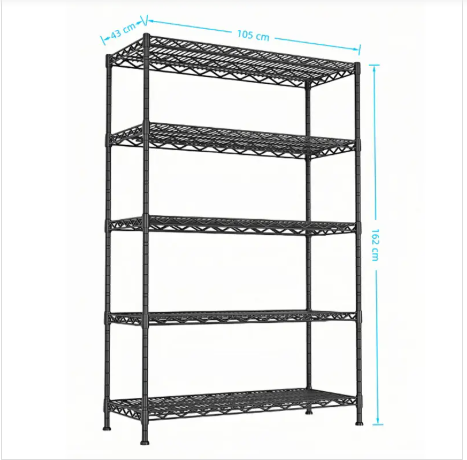
For most intact coated or plated wire shelves, begin with a soft cloth, warm water, and a mild, nonabrasive detergent. Use a soft brush around wire intersections, remove cleaning residue, and dry accessible surfaces. Manufacturer instructions always take priority, particularly for specialist coatings and commercial installations.
"Wire clad shelves" can describe several products in everyday searches. Here, it means metal wire shelving with a protective surface, such as chrome plating, epoxy coating, or a plastic covering. Stainless steel wire shelving is included for comparison, although it is a different material category.
Before cleaning, check the product label, purchase records, or supplier specifications. Appearance alone cannot reliably identify the finish.
| Shelf surface | Sensible starting method | Important limitation |
|---|---|---|
| Chrome-plated wire | Mild detergent, soft cloth, controlled rinsing, prompt drying | Chrome shelving is generally intended for dry environments |
| Epoxy-coated wire | Mild cleaner and a soft, nonabrasive cleaning tool | Avoid damaging the coating with scraping or aggressive scrubbing |
| Plastic-covered wire | A cleaner approved for the specific covering | Do not assume solvent or heat resistance |
| Stainless steel wire | Mild detergent and a soft cloth | Avoid steel wool and check cleaner compatibility |
Chrome, epoxy, polymer, and stainless products have different maintenance requirements. Do not transfer instructions from one shelf system to another without checking.
Prepare your supplies before unloading:
- Two clean microfiber cloths.
- A soft sponge.
- A small, soft-bristled nylon brush.
- Warm water.
- Mild, nonabrasive detergent.
- A container for clean rinse water.
- Dry towels.
- Protective equipment specified on the cleaning-product label.
A vacuum with a brush attachment can help remove loose dust before wet cleaning. Keep dirty cleaning tools separate from cloths used for final rinsing.
Choose a work area where splashes will not reach food, garments, electrical equipment, or clean inventory. For commercial shelves, arrange temporary storage before starting rather than placing stock on the floor.
Remove everything, including liners, baskets, hooks, and labels that interfere with cleaning.
Do not attempt to move a heavily loaded rack. If relocation is necessary, follow the unit's instructions and check that the route is clear.
Before washing, look for loose components, bent wires, peeling coating, and corrosion. Cleaning is easier when damage is identified before it becomes hidden beneath water or foam.
Brush or vacuum crumbs, lint, and dust from the top, underside, corners, and wire intersections.
Pay attention to rear edges and areas beneath containers. Cleaning around stored products leaves these concealed areas untouched. Removing loose debris first also makes the washing stage more manageable.
Dilute detergent according to its label. More detergent can mean more residue to remove, so avoid estimating a strong mixture.
Test an unfamiliar cleaner on a small, inconspicuous area. Stop if the surface softens, changes color, loses gloss, or transfers coating onto the cloth.
A spot test helps identify obvious incompatibility, but it does not replace the manufacturer's care instructions.
Wipe each shelf systematically. Work from the upper levels downward so dirty water does not fall onto areas already cleaned.
Use the soft brush around wire crossings, corner collars, and accessible joints. Let an approved cleaner loosen stubborn dirt rather than increasing scrubbing pressure.
Mild detergent, sponges, and brushes are standard components of manufacturer wire-shelving cleaning procedures.
Wipe repeatedly with clean water, refreshing the cloth and rinse water as needed.
For fixed shelving, controlled damp wiping may be more practical than spraying. Only hose down a unit when its manufacturer permits it and the surrounding area can safely handle runoff.
A manufacturer's washdown procedure is not blanket permission to flood every shelving installation.
Towel-dry the wires, edges, posts, and accessible joints. Leave removable liners off until the underlying shelf and the liners themselves are dry.
Check the underside, where droplets can remain unnoticed. Drying and residue removal are important parts of wire-shelving maintenance, not optional finishing touches.
Run a clean cloth over representative sections. Look for remaining dirt, detergent film, flaking finish, or sharp edges.
Confirm that removable parts are correctly reinstalled. Reload according to the product's rated capacity and assembly instructions.
If you discover structural damage, keep the affected shelf out of service until the supplier advises whether repair or replacement is appropriate.
Persistent stickiness needs diagnosis, not automatically a stronger chemical.
Use this troubleshooting sequence to distinguish removable contamination from possible finish deterioration.
| What you observe | Possible explanation | Practical next step |
|---|---|---|
| Tackiness improves after rinsing | Detergent residue | Repeat clean-water wiping and dry |
| Greasy film transfers to the cloth | Remaining oily contamination | Repeat mild cleaning before considering a compatible degreaser |
| Stickiness occurs beneath a label | Adhesive residue | Ask the supplier about an approved adhesive remover |
| The covering feels soft or smears | Possible coating deterioration | Stop scrubbing and request product-specific advice |
| Rust appears beneath peeling material | Possible coating failure | Inspect the affected component rather than cleaning alone |
These are troubleshooting clues, not a definitive material diagnosis.
Avoid treating every sticky shelf with acetone, paint thinner, or a strong solvent. When the coating itself is deteriorating, repeated chemical treatment may not solve the underlying problem.
For buyers managing multiple locations, photograph the affected area and record the cleaner used. This gives the supplier more useful information than "the shelf feels sticky."
Do not assume that a household cleaning recipe suits every coating.
Start with the shelf manufacturer's approved method. If vinegar is not listed, ask before using it on an unidentified finish. Likewise, do not treat an ordinary vinegar solution as a substitute for a disinfectant with validated label directions.
For disinfection, use a product approved for the intended surface and application.
A product's ability to disinfect does not establish that it is suitable for your shelving finish.
Check both the disinfectant label and the shelf manufacturer's instructions. Never mix bleach or other disinfectants with cleaning products unless the product directions explicitly permit it. Dangerous vapors can result from incompatible mixtures.
If mild detergent does not remove grease, look for a degreaser specifically compatible with the surface.
Follow its dilution, protective-equipment, application, and rinsing instructions. Test first, and stop if the finish changes.
Avoid combining products to create a stronger cleaner. A controlled, compatible process is preferable to an improvised chemical mixture.
Routine cleaning removes dirt and residue. Disinfection addresses microorganisms using a suitable product under specified conditions. A shelf that looks clean has not necessarily been disinfected. [cdc]
When disinfection is required:
1. Confirm that the product is suitable for the surface and intended setting.
2. Pre-clean when its directions require it.
3. Apply the specified concentration.
4. Keep the surface visibly wet for the full contact time.
5. Rinse afterward if the label requires it.
6. Complete drying before returning the shelf to use.
Contact time is the period during which the surface must remain wet for the disinfectant to work as directed. Wiping it dry too early can undermine the treatment.
In food-related settings, also check whether the label permits the intended food-contact use and requires a post-treatment rinse. Requirements differ by product and application.
A useful cleaning program should respond to conditions rather than rely on an arbitrary universal schedule.
As a starting framework:
- Clean spills when discovered.
- Check exposed shelves during routine housekeeping.
- Schedule deeper cleaning according to dust, grease, moisture, and product turnover.
- Review the interval if residue repeatedly accumulates before the next clean.
Treat these as planning suggestions, not regulatory requirements.
For commercial installations, a simple record can include:
| Record field | What to capture |
|---|---|
| Shelf identification | Location, model, and finish |
| Cleaning method | Product, dilution, and tools |
| Inspection findings | Residue, coating damage, corrosion, or loose parts |
| Corrective action | Recleaned, isolated, repaired, or referred to supplier |
| Completion check | Dry, visibly clean, correctly assembled |
This approach makes recurring problems easier to investigate. It also helps distinguish a cleaning issue from an unsuitable environment or damaged finish.
For brands and wholesalers, maintenance should enter the specification discussion before production.
Waigaoqiao's role as a wire-shelf and garment-rack manufacturer makes this a relevant conversation at the sourcing stage.
Ask your manufacturing partner to document:
- Intended operating environment.
- Surface material and coating specification.
- Approved cleaning agents and tools.
- Restrictions on washdown, chemicals, and temperature.
- Inspection and replacement criteria.
- Care-label wording for end users.
Consider a hypothetical retail stockroom: frequent garment lint may call for easy access beneath shelves and straightforward dry cleaning. A damp storage area raises different questions about finish suitability and corrosion exposure.
Chrome is generally associated with dry storage, while appropriately specified epoxy systems can serve wetter environments. Product-specific suitability still needs confirmation.
The procurement goal is not simply an attractive sample. It is a shelf whose finish, environment, and maintenance instructions work together.
Planning an OEM wire-shelving or garment-display project?
Send Waigaoqiao your intended environment, shelf dimensions, loading requirements, preferred finish, and cleaning routine. Ask for a product-specific care recommendation alongside the quotation.
For an existing shelf, provide photographs, purchase details, and the name of the cleaner currently used. These details support a more precise discussion about maintenance, finish compatibility, or replacement.
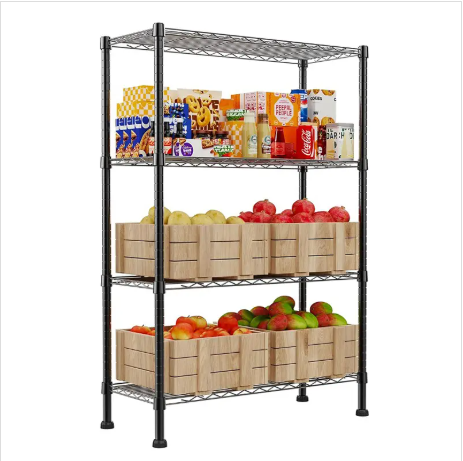
Unload them first. Remove loose debris, wash with a damp cloth and mild detergent, wipe with clean water, and dry thoroughly. Avoid flooding fixed shelving or nearby walls and equipment.
Do not assume it is permitted. Some manufacturer procedures allow hosing, but that does not establish pressure-washer compatibility for every finish, connection, or installation. Obtain product-specific approval.
Use a mild cleaner and nonabrasive tools, following the manufacturer's instructions. Avoid aggressive scraping and inspect damaged areas before returning the shelf to service.
Determine whether you are seeing removable surface contamination or corrosion associated with damaged plating or coating. Do not aggressively sand an unidentified finish. Ask the supplier to assess peeling, pitting, damaged wires, or recurring rust.
Only if that exact liner is approved for dishwasher cleaning. Some removable polymer shelf mats are designed for it, but those instructions do not apply automatically to other liners.
Base the schedule on actual contamination, the operating environment, product instructions, and any applicable hygiene requirements. Clean spills promptly and shorten the interval when inspections show recurring buildup.
Hot Tags: China, Global, OEM, private label, manufacturers, factory, suppliers, manufacturing company


