
Views: 259 Author: Waigaoqiao Co.,Ltd Publish Time: 2026-07-15 Origin: Waigaoqiao Co.,Ltd
Content Menu
● Why Under-Rack Inches Matter
● The Practical Answer: Inches You Need Under a Clothes Rack
● What Changes the Required Space
>> 3. Rack Type
● Waigaoqiao's OEM Design Perspective
● Recommended Clearance by Use Case
● Expert Insight for Better Display Results
● Why Waigaoqiao Is the Right OEM Partner
● FAQ
>> 1. How many inches do you need under a clothes rack?
>> 2. Is more under-rack space always better?
>> 3. Do long dresses need more clearance?
>> 4. Does hanger type affect rack height?
>> 5. What is the best clearance for retail clothing racks?
>> 6. Why choose an OEM manufacturer for clothes racks?
If you are asking how many inches do you need under a clothes rack, the practical answer is that most setups need 10 to 15 inches of floor clearance below the lowest hanging garment for easy cleaning and airflow, while longer garments may require more depending on the hem length and hanger drop. For retail and OEM display planning, Waigaoqiao recommends designing from the garment first, then setting rack height, depth, and under-rack clearance around the product mix.
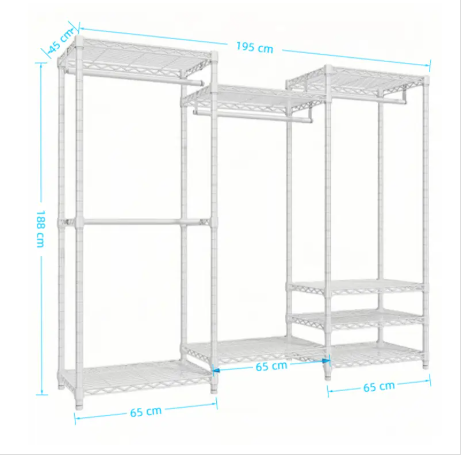
The space under a clothes rack affects more than looks. It influences cleanability, airflow, customer access, product safety, and the overall premium feel of a display. In commercial environments, poor clearance can make a store feel cramped, while too much space can waste valuable floor area.
For brands, wholesalers, and manufacturers, the right under-rack measurement also affects how well a rack performs across different markets. Waigaoqiao has seen that buyers often focus on load capacity and finish, but clearance planning is just as important for a display that feels professional and works in real use.
Here is the simplest rule of thumb:
- 10 to 15 inches under the lowest hanging item for most everyday retail and home use.
- 15 to 20 inches if the floor needs frequent cleaning access or if garments are fuller.
- More clearance if you are displaying long coats, dresses, or layered fashion items that hang lower.
This is not a one-size-fits-all number. The right dimension depends on the type of clothes, hanger shape, rack height, and whether the rack is fixed or mobile. In our experience, OEM buyers who plan this early avoid the common problem of racks that look good in renderings but fail on the sales floor.
Several factors affect how many inches you need under a clothes rack. The most important ones are below.
Short tops and folded items need far less clearance than dresses or coats. If the hemline hangs low, the under-rack space should protect the garment from dust, foot traffic, and cleaning tools.
A hanger does not start at the garment shoulder; it adds extra drop from the hook and shoulder shape. That small difference becomes important when you are optimizing display height in tight spaces.
Single-rail racks, double-rail racks, wall-mounted systems, and wheeled racks all create different under-rack needs. A double-rail design often saves space, but it can also reduce vertical freedom if not measured carefully.
Retail racks need better visual spacing and customer movement. Home racks often prioritize storage density. The same rack can feel spacious in a wardrobe but crowded in a boutique.
As a manufacturer of metal clothes racks and garment display systems, Waigaoqiao approaches clearance as a design variable, not an afterthought. That matters because OEM clients usually need racks that match a brand identity while still performing across stores, warehouses, showrooms, and pop-up spaces.
Our view is simple: a successful clothes rack is measured by how well it balances display, durability, and human use. When under-rack clearance is planned correctly, the rack becomes easier to clean, easier to style, and easier for shoppers to navigate. That is why we recommend building clearance decisions into the product specification stage, not after production starts.
| Use case | Suggested under-rack clearance | Why it works |
|---|---|---|
| Home wardrobe | 10–12 inches | Enough for basic airflow and cleaning |
| Boutique retail display | 12–15 inches | Better visual balance and customer access |
| Heavy outerwear display | 15–20 inches | Protects long garments and improves spacing |
| Mobile rack in stockroom | 15 inches or more | Easier movement and cleaning underneath |
| Children's clothing display | 8–10 inches | Lower visual profile and efficient use of space |
These numbers are practical planning targets, not fixed laws. The best final size depends on the rack's total height, the garment category, and whether your priority is display impact or storage density.
If you are planning a clothes rack layout, use this simple process:
1. Measure the longest garment you plan to hang.
2. Add the hanger drop and any visual breathing room.
3. Decide how much clearance is needed underneath for cleaning and movement.
4. Check whether the rack will sit in a home, showroom, warehouse, or retail aisle.
5. Confirm that the rack still looks balanced when fully loaded.
This method prevents the most common mistake: choosing a rack height before knowing the product mix. In professional display planning, the garment should lead the measurement, not the other way around.
Many buyers compare racks only by price, finish, or load capacity. In reality, the following details often determine whether a rack succeeds in daily use:
- Under-rack clearance, because it affects usability.
- Hanger compatibility, because different hanger shapes change drop length.
- Floor conditions, because uneven floors or cleaning needs can change the ideal height.
- Visual merchandising goals, because a rack should support the brand story, not distract from it.
This is where OEM experience matters. Waigaoqiao helps overseas brand owners, wholesalers, and manufacturers build racks that are not only durable, but also practical in real retail environments.
From a merchandising perspective, the best rack clearance is one that makes the display feel intentional. If the rack is too low to the floor, the clothing can look heavy and crowded. If it is too high, the display may feel disconnected and inefficient.
A good benchmark is to keep enough space under the rack so that the floor is visibly open, easy to clean, and free from visual clutter. That small detail often improves perceived quality more than buyers expect.
Waigaoqiao, established in 2003, specializes in metal wire racks and garment display racks for global brands, wholesalers, and manufacturers. Our manufacturing focus is not just on making racks, but on building display systems that support commercial goals, brand aesthetics, and practical space planning.
For buyers who need OEM service, that means one partner can help align structure, finish, load performance, and clearance requirements. When those details are handled together, the final rack performs better in stores and is easier to scale across multiple markets.
Most setups need 10 to 15 inches of clearance under the lowest garment for airflow, cleaning, and a cleaner visual appearance.
No. Too much space can waste floor area and make a display feel less efficient. The ideal amount depends on garment length and store layout.
Yes. Long dresses, coats, and full-length garments usually need more under-rack planning than shirts or folded items.
Yes. Different hanger shapes create different drop lengths, which can change the final clearance you need.
A practical retail range is 12 to 15 inches, but premium displays or long garments may need more.
An OEM partner can customize dimensions, structure, and finish so the rack matches both your brand and your real use case.
1. [Clothing Rack Dimensions: Size Guide for Home & Retail]
2. [Cloth Rack Sizing and Height Standards for Different Garment Types]
3. [Beginner's Guide to Planning Closet Space]
4. [Is It Better to Mount a Clothes Rail Higher or Lower in a Wardrobe]
5. [Ideal Clothing Rack Size Guide: Find the Best Fit]
6. [Ultimate Guide to Installing Wall-Mounted Clothing Racks]
7. [What space requirements should a clothing store have?]
Hot Tags: China, Global, OEM, private label, manufacturers, factory, suppliers, manufacturing company


