
Views: 220 Author: WAIGAOQIAO Publish Time: 2026-03-14 Origin: Site
Content Menu
● The Engineering Fundamentals of Wardrobe Storage
>> Selecting the Right Material Grade
>> Understanding Load Distribution
● Designing for Adaptability and Modular Utility
>> Adding Multi-Functional Components
● Stability: The Hidden Key to Longevity
>> Base Construction and Caster Integration
>> Wall-Anchoring for High-Load Systems
● Manufacturing for Scale: The WAIGAOQIAO Perspective
● Enhancing the User Experience
In the professional landscape of home organization and retail display, the demand for high-quality, reliable clothing storage is relentless. Whether you are a brand owner looking to expand your product line, a wholesale distributor sourcing durable fixtures, or a discerning homeowner seeking to maximize closet utility, understanding the mechanics behind a superior wardrobe clothing rack is essential. As a specialized manufacturer in the garment rack industry, WAIGAOQIAO has mastered the balance between load-bearing strength, material precision, and versatile design. This guide serves as a comprehensive manual on how to design, construct, and select the ultimate wardrobe clothing rack, ensuring your storage solutions are built to last.
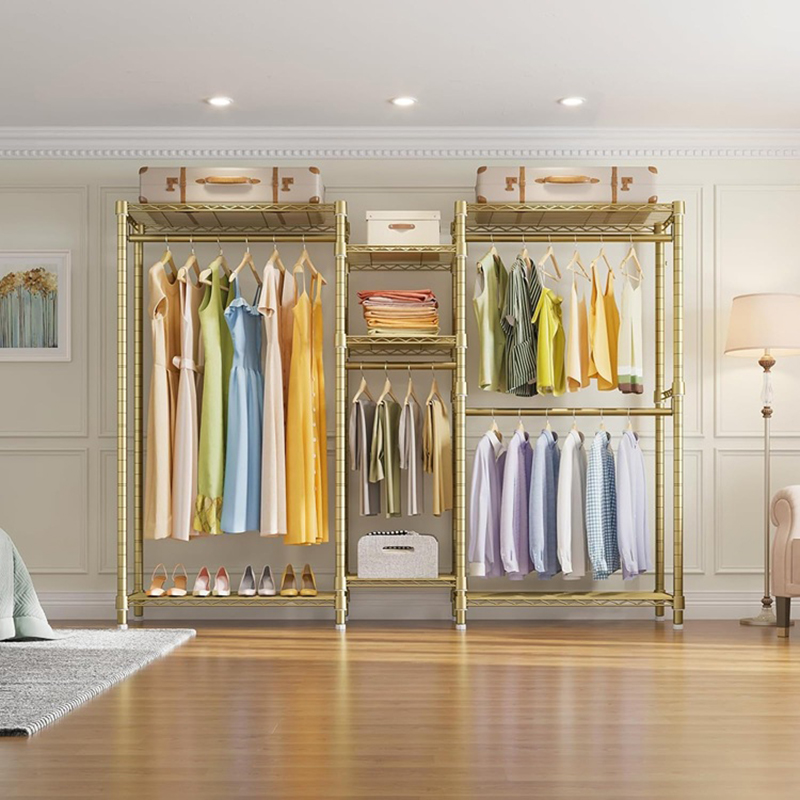
A wardrobe clothing rack is far more than a simple metal frame; it is a structural system designed to manage significant static loads while maintaining aesthetic appeal. To build a rack that stands the test of time, one must first understand the physics of weight distribution and material integrity.
The foundation of any heavy-duty clothing rack is the steel. At WAIGAOQIAO, we advocate for the use of high-carbon cold-rolled steel. The thickness, or "gauge," of this steel is the most critical factor. Many consumer-grade racks are constructed from light-gauge steel that is prone to buckling under the weight of a full winter wardrobe. When you are engineering a rack, you must select steel that offers a high strength-to-weight ratio. Furthermore, the selection of the finish—whether it be electroplated chrome, brushed nickel, or high-durability powder coating—should be dictated by the intended environment, as moisture resistance is vital for long-term usage.
The secret to a long-lasting rack lies in its truss design. A rack is essentially a beam supported by vertical posts. If the connection points are weak, the rack will eventually sag in the center. A well-designed wardrobe rack must feature reinforced horizontal trusses that connect to the vertical posts using precision-engineered locking collars. This ensures that the weight of the garments is transferred evenly down to the base and the floor, rather than being concentrated on the joint itself. When building your rack, always prioritize systems that utilize a triangular or rectangular perimeter truss, as these designs significantly increase the overall load capacity.
Modern storage requires flexibility. As fashion trends shift and inventories change, the ability to reconfigure your storage setup without needing to purchase new hardware is a significant asset for any brand or user.
The most effective wardrobe racks utilize a one-inch increment adjustment system. This allows the user to raise or lower shelves and hanging rails to perfectly fit items of varying lengths—from short-sleeved shirts to long-length coats or evening gowns. The locking mechanism—usually a split-sleeve clip system—must be manufactured from high-density, impact-resistant resin. When weight is applied to the shelf, the collar of the shelf should lock tighter onto the sleeve, creating a vice-like grip that ensures the shelf remains perfectly level under heavy loads.
To elevate your rack from a simple hanging rod to a comprehensive wardrobe system, consider adding modular accessories. Shelving levels can be added above the hanging rail for folded storage or below for shoe organization. Side-hooks or telescoping garment arms can be attached to the exterior of the vertical posts to create extra storage for accessories like scarves, bags, or belts. Designing these add-ons early in the construction phase ensures that the entire system remains balanced and stable, regardless of how the user chooses to customize it.
Stability is often the overlooked element of wardrobe rack design, yet it is the primary reason for rack failure. If a rack shifts or sways, the stress is transferred to the joints, leading to premature metal fatigue and failure.
The base of the rack should have a footprint proportional to the height and load capacity of the system. For taller, heavier-duty units, a wider base is non-negotiable to prevent accidental tipping. If mobility is a requirement, the casters must be industrial-grade. We recommend choosing casters with a dual-locking mechanism—one that locks the wheel from rotating and another that prevents the swivel head from turning. This dual-lock feature is crucial for ensuring that your garment rack stays exactly where it is placed, even when it is loaded with heavy inventory.
In situations where you are building a floor-to-ceiling wardrobe system, wall-anchoring kits are an essential safety measure. By securing the top of the vertical posts to the wall, you eliminate the risk of the rack pulling away from the wall or tipping forward when heavy items are removed or added. This provides a secondary layer of security that is highly valued by professional retail partners and safety-conscious homeowners alike.

As an OEM manufacturing partner, we understand that consistency is the currency of business. Whether you are ordering a batch of 100 or 10,000 units, every single rack must perform to the same standard. Our manufacturing process utilizes automated robotic welding cells to ensure that every spot weld is executed with the same intensity and precision, eliminating the human error that leads to structural weakness. By employing rigorous material testing—including load-bearing stress tests—we ensure that our partners receive a product that enhances their brand reputation. For retailers and wholesalers, partnering with a factory that views every rack as an piece of engineered infrastructure is the surest way to minimize returns and maximize customer satisfaction.
The final design of a wardrobe rack should be intuitive. If a user has to struggle to adjust a shelf or if the rack requires complex tools to assemble, it has failed its primary purpose. Focus on "tool-free" assembly. By designing the rack to use simple, snap-in components, you enhance the perceived value of the product. An easy-to-assemble rack is a portable rack, one that can be broken down for storage or transport, which adds significant utility to the end user.
The choice to prioritize quality over the lowest price point is the hallmark of a serious professional in the garment industry. A cheap, flimsy rack will eventually be replaced, creating waste and damaging brand credibility. Conversely, a well-built, high-capacity rack serves as an investment in organization and space efficiency. By utilizing professional-grade materials, focusing on modularity, and ensuring rigid stability, you build more than a storage rack—you build a solution that improves the quality of daily life and work.
***
1. What is the difference between residential and commercial-grade wardrobe racks?
Commercial-grade racks utilize thicker gauge steel, reinforced structural trusses, and industrial-rated casters. They are engineered to hold significantly higher weights—often over 500 pounds—and are designed for daily, high-intensity use, whereas residential racks are typically intended for lighter loads and less frequent manipulation.
2. How do I ensure my clothing rack remains level if my floor is slightly uneven?
Most professional wardrobe racks come with adjustable leveling feet. If your rack uses casters, ensure they are high-quality models that can accommodate minor floor variations. If the rack still feels wobbly, confirm that all four vertical posts have the clips set to the exact same groove number on the post.
3. What is the best way to prevent the rack from sagging in the middle?
Sagging is caused by insufficient truss strength. When choosing or designing a rack, ensure it has a robust, perimeter-welded truss system. Avoid racks that use thin, unreinforced wires across the middle. Distributing the load evenly across the rail, rather than concentrating all items in the center, also helps maintain the integrity of the horizontal support.
4. Can I add shelves to my hanging rack system later?
Yes, if you choose a modular system. High-quality wardrobe racks are designed as a family of parts. You should be able to purchase additional shelving or hanging rails that fit the same diameter post and clip system as your original rack, allowing your storage to grow as your needs change.
5. How often should I check the connections on my wardrobe rack?
For heavy-duty systems, especially those that are frequently moved, a semi-annual check of the connection points is recommended. Ensure that the sleeves are still firmly seated in the grooves and that any bolts or leveling feet remain tight. This minor proactive maintenance will significantly extend the lifespan of your wardrobe rack.


