
Views: 220 Author: WAIGAOQIAO Publish Time: 2026-03-07 Origin: Site
Content Menu
● The Strategic Importance of Industrial Garment Racks
>> Optimizing Floor Density and Workflow
>> Protecting Merchandise Value
● Core Engineering Requirements for Structural Integrity
>> Material Gauge and Tensile Strength
>> The Role of Precision Welding
● Selecting the Right Finish for Your Operational Environment
>> Powder Coating as the Industry Standard
>> Specialty Finishes for Specific Needs
● Modularity and Versatility: Adapting to Change
>> The Advantage of Adjustable Height
● The Strategic Advantage of OEM Partnerships
>> Tailoring Hardware to Your Architecture
>> Ensuring Cohesive Brand Consistency
● Maintenance and Long-Term Asset Management
>> Implementing Proactive Inspections
>> Cleaning and Surface Restoration
● Conclusion: Investing in Your Business Infrastructure
In the fast-paced world of apparel retail and garment logistics, the physical infrastructure supporting your inventory is just as important as the clothing itself. Industrial garment clothing racks serve as the essential framework for organizing, transporting, and showcasing stock, directly impacting your operational efficiency and store aesthetics. As a leading manufacturer specializing in OEM solutions for global brands and wholesalers, WAIGAOQIAO understands that choosing the right rack is a strategic investment in your business's longevity. This guide explores the technical, structural, and aesthetic criteria required to select industrial racks that meet the rigorous demands of professional use.

Industrial racks are not merely metal structures; they are high-performance tools designed to maximize space and preserve merchandise quality. When evaluating your storage needs, you must distinguish between light-duty consumer furniture and true industrial-grade equipment.
Effective retail operations depend on high-density storage that remains accessible. Industrial racks allow you to move beyond basic linear displays, utilizing vertical space and modular footprints to store or present more merchandise in a smaller area. Whether you are managing seasonal stock in a warehouse or showcasing collections on a sales floor, the right rack setup minimizes aisle congestion and streamlines the picking or browsing process.
Apparel is a fragile asset. Flimsy, improperly engineered racks can lead to sagging bars, tipped units, or metal-on-fabric friction that damages delicate materials. Industrial-grade racks are engineered to maintain structural stability under full weight loads, ensuring that your garments hang properly, retain their shape, and avoid the unsightly wrinkling or snagging often caused by lower-quality, budget-oriented fixtures.
When sourcing industrial-grade equipment, technical specifications are your best indicator of quality. You should never compromise on the fundamental construction of the racks that support your business.
The strength of a garment rack is fundamentally determined by the gauge of the steel used in its uprights and hanging rails. Thicker-gauge steel provides the necessary resistance to bending, torsion, and permanent deformation when loaded to capacity. As an OEM manufacturer, we emphasize that industrial applications require cold-rolled steel with a high tensile rating. Before committing to a large order, request the technical load-bearing data to ensure the racks are rated for the specific weight of your inventory, especially for heavy items like denim, leather, or winter outerwear.
The weakest points of any rack are its connection points. Industrial-grade racks should rely on high-integrity, continuous welds rather than modular plastic connectors or shallow-depth screws. Strong, reinforced welds ensure that the rack acts as a rigid, monolithic unit, preventing the wobbling and swaying that can eventually lead to structural failure. When inspecting a sample or reviewing technical drawings, prioritize products that showcase clean, penetration-welded seams, which signify superior craftsmanship and durability.
The finish of your rack serves two critical functions: protecting the underlying metal from environmental wear and contributing to the visual brand identity of your storage or retail space.
For the majority of industrial and commercial applications, professional powder coating is the superior choice. This electrostatic process creates a hard, durable surface that is highly resistant to chips, scratches, and the chemical stresses of daily cleaning. Because metal hangers are constantly sliding across rails, a powder-coated finish is essential to prevent premature surface degradation. Furthermore, powder coating allows for a vast spectrum of colors, enabling brands to align their hardware with their specific visual merchandising palette or organizational color-coding system.
In high-end boutique environments, chrome or nickel-plated finishes are often selected for their reflective, premium aesthetic. While visually striking, these finishes require higher maintenance, as they can reveal fingerprints and are prone to scratching. Conversely, if your racks are intended for high-humidity warehouse environments or industrial laundry settings, consider specialized anti-corrosion treatments or stainless steel construction, which prevent rust and ensure long-term structural integrity in harsh conditions.
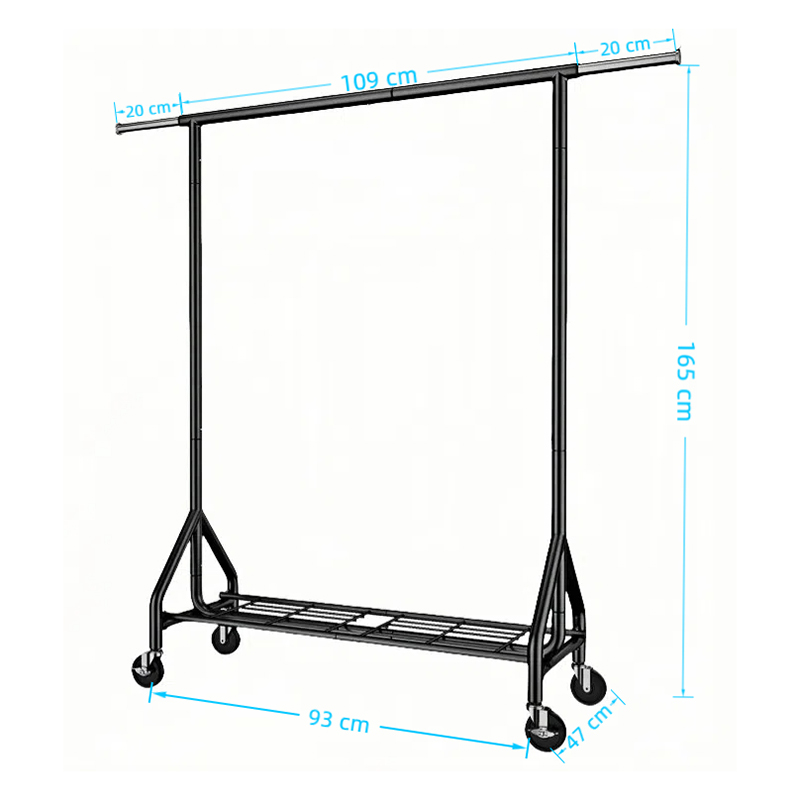
The retail and logistics landscape is constantly shifting. Your rack system should be flexible enough to adapt to new inventory profiles, seasonal changes, or evolving floor layouts.
Rarely does one rack height suit all purposes. Investing in racks with independent height-adjustment mechanisms provides the flexibility to transition from long coats or gowns to short-sleeve tops within minutes. Look for systems that feature secure, locking adjustment pins or clamp mechanisms that remain stable even when the rack is under a full load. This modularity is key to maximizing your storage density and maintaining a fresh, professional look for your customers.
For retailers and warehouse managers who frequently reconfigure their space, mobility is a non-negotiable feature. Industrial-grade racks must be equipped with locking, swivel casters that are specifically rated for the total potential weight of the rack. These casters should be large enough to glide smoothly across varied floor surfaces, such as polished concrete or carpeting, and feature robust locking mechanisms that prevent the rack from shifting unintentionally during browsing or loading operations.
When you outgrow the limitations of off-the-shelf catalog products, partnering with a professional OEM manufacturer like WAIGAOQIAO becomes a transformative strategy for your business.
Generic fixtures rarely fit the specific architectural nuances of a retail location, such as structural columns, alcoves, or irregular wall shapes. OEM manufacturing allows you to specify custom dimensions, base designs, and rack configurations that fit your space with surgical precision. This level of customization ensures that you are utilizing every square inch of your floor, effectively turning architectural constraints into functional storage or display opportunities.
For brands operating multi-location chains, maintaining visual and operational consistency is essential. Custom OEM production guarantees that every fixture, whether for a flagship store or a regional warehouse, is engineered to the same exacting standards. By working directly with the manufacturer, you eliminate the variability inherent in purchasing from disparate sources, ensuring a professional, unified identity that reinforces your brand's reputation for quality.
Treating your industrial racks as capital assets rather than disposable furniture is the hallmark of professional operations. Proper maintenance is the most effective way to protect your investment.
Retail and warehouse environments are subject to constant movement and vibration, which can naturally lead to loose fasteners or stressed connections over time. Establish a regular, proactive inspection schedule that includes checking all locking mechanisms, tightening fasteners, and evaluating caster functionality. Identifying and resolving minor mechanical issues early prevents structural fatigue and eliminates the risk of more costly, dangerous failures later on.
A clean, well-maintained rack is a reflection of your commitment to excellence. Regularly wipe down rails to remove dust and debris that can accumulate in joints or wear down finishes. If a rack surface is scratched, address it immediately with matching touch-up paint. Keeping the finish intact is the best way to prevent rust and maintain a high-end, professional appearance that ensures the customer's attention remains on your apparel rather than the hardware.
Selecting the correct industrial garment clothing racks is a foundational decision that influences your operational efficiency, merchandise safety, and brand perception. By prioritizing industrial-grade steel construction, reinforced welding, and high-quality, protective finishes, you build a resilient foundation for your inventory. Embracing the modularity of adjustable designs and the strategic benefits of OEM partnerships allows you to tailor your infrastructure to your precise needs, creating a streamlined, professional environment. When you view your racks as long-term assets and implement proactive maintenance, you are setting your business up for sustained performance and long-term success in a competitive marketplace.
***
1. What is the most important factor in assessing a rack's structural quality?
The most important factors are the gauge of the steel and the quality of the weld points. Industrial racks must be built from high-tensile, cold-rolled steel with reinforced, continuous welds at all junctions to ensure they do not wobble, sag, or fail under heavy, high-density inventory loads.
2. Why is powder coating preferred over standard paint for retail racks?
Powder coating is a hardened, electrostatic finish that offers significantly higher resistance to the daily abrasion and wear caused by metal hangers. It is far more durable, resists chipping and scratching, and provides a clean, professional aesthetic that lasts for years in high-traffic retail environments.
3. How can an OEM manufacturer help with store layout optimization?
An OEM manufacturer allows you to customize the dimensions, design, and footprint of your racks to fit the specific architectural constraints of your retail space. This ensures you can maximize your available floor area and create a display configuration that is both perfectly tailored to your store and consistent with your overall brand identity.
4. Should I prioritize mobile racks over stationary ones?
Mobility is essential if you frequently update your store floor, move stock between areas, or host events. However, stationary racks are generally better for high-density, permanent storage zones. If you choose mobile units, always invest in high-quality, locking, industrial-grade casters to ensure long-term reliability.
5. How often should I perform maintenance on my garment racks?
You should conduct a comprehensive structural and visual inspection at least once a month. This includes tightening bolts, checking caster stability, inspecting for any signs of metal fatigue or bending, and touching up any surface scratches in the finish to prevent rust and maintain a professional appearance.


