
Views: 177 Author: waigaoqiao Publish Time: 2026-11-15 Origin: Site
Content Menu
● What Is a Straight Display Hook for an Oval Tube Rack?
● Measure the Rack Before Ordering
● Choose Hook Length and Configuration for the Merchandise
● Specify Material, Finish, and Appearance
● Evaluate Fit and Load on the Complete Fixture
● When Custom Retail Display Hooks and OEM Design Make Sense
● OEM Quality Control: Approve the Specification Before Production
● B2B Buyer Checklist for Oval Tube Display Hooks
● FAQ: Straight Display Hooks for Oval Tube Racks
>> 1. Will any straight display hook fit an oval tube rack?
>> 2. What measurements should I send for a quote?
>> 3. Can a supplier quote from a photo alone?
>> 4. How should I specify load capacity?
>> 5. Should I choose a standard or custom hook?
>> 6. What should an OEM RFQ include?
● Request a Factory-Direct OEM Quote
Choosing the right straight display hook for an oval tube rack starts with one critical question: does the hook's mounting feature match the rack? For brands, wholesalers, and fixture manufacturers sourcing custom retail display hooks, fit, merchandise access, finish, and production consistency all matter. This guide outlines what to specify when buying straight hooks and related retail display fixtures through OEM manufacturing.
At Waigaoqiao, we support OEM discussions for overseas buyers. The recommendations below are a practical sourcing guide—not product-specific performance claims. Oval tube dimensions and hook interfaces vary, so verify them against the actual fixture before placing an order.
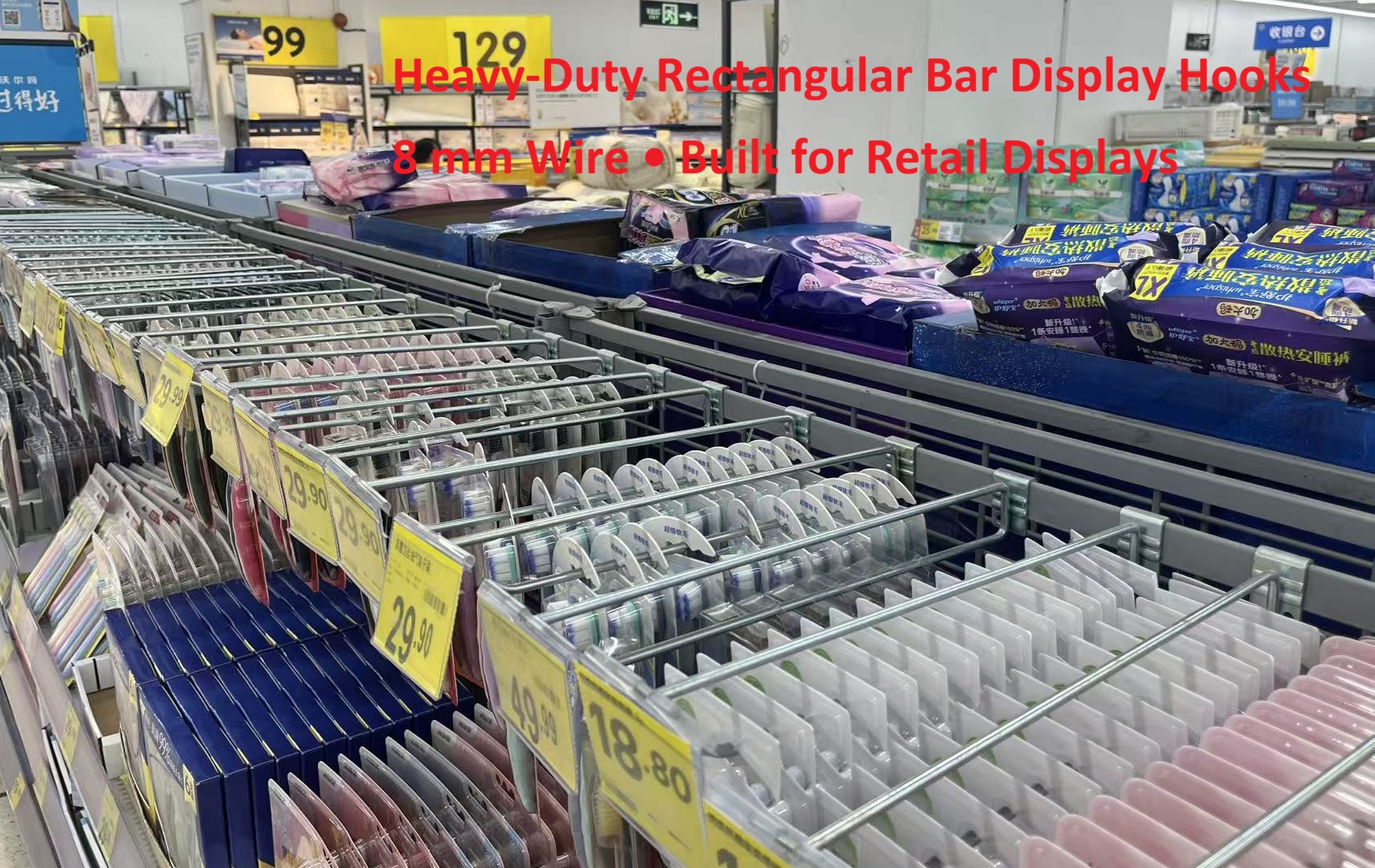
A straight display hook is an arm that projects from a retail fixture to present hanging merchandise. For an oval tube rack, its mounting end must be designed for that rack's profile and attachment method.
"Straight" describes the arm shape; it does not define how the hook mounts. Similar-looking hooks may attach differently. Ask the supplier to confirm the interface using a drawing, sample, or clear installation photo.
Before sourcing, identify:
- Rack or fixture system: Include the supplier or model, if known.
- Oval tube profile: Provide its cross-section and orientation.
- Mounting method: Explain how the hook attaches and is retained.
- Merchandise: Describe the package, hanging hole, loop, or strap.
- Application: State whether this is for a permanent fixture, temporary display, or replacement part.
An oval-tube hook is not automatically interchangeable with slatwall hooks, pegboard hooks, or shelving uprights and brackets. These are related fixture products, but their mounting interfaces differ. [garmentrackings](https://www.garmentrackings.com/e_products.html) [swiftcourser-rack](https://www.swiftcourser-rack.com/data-61686)
Accurate fit information is the foundation of a reliable quote. Product photos show appearance but usually cannot confirm dimensions or compatibility.
Record or provide:
1. Tube width and depth at the intended mounting point.
2. Tube orientation, indicating which dimension is horizontal and vertical.
3. Hook position and direction on the rack.
4. Clearance from nearby shelves, rails, products, or signage.
5. Rack variations across stores or fixture batches.
6. Critical dimensions and tolerances that affect fit.
Whenever possible, send a dimensioned drawing and a physical rack sample. If samples are impractical, provide clear images from multiple angles with a ruler or other scale reference. Mark the hook's contact points and intended final position.
For a multi-store program, check more than one rack. A single sample may not represent every fixture generation or supplier batch.
Hook projection should suit the merchandise and display layout. A longer arm may accommodate more packages, but it can also affect clearance, visibility, and replenishment.
Include these details in the product brief:
- Usable hook length or projection
- Package dimensions and weight
- Hanging-hole size and position
- Number of products intended per hook
- Spacing between adjacent hooks
- End stop, label holder, or other feature
- Arm shape and orientation
Test the sample with actual merchandise. Check whether shoppers can see and remove products easily, and whether products remain organized when the hook is partially filled. Review the sample on the intended fixture rather than evaluating it alone.
A request for a "metal hook" leaves important details unresolved. State the required material and finish, or ask the supplier to propose options for approval.
A useful brief includes:
- Base material or a request for supplier recommendations
- Finish and color reference, such as a sample or agreed specification
- Visible-surface expectations
- Workmanship requirements for edges, joints, or contact areas
- Packaging requirements to protect the finish in transit
- Branding or identification, if needed
If the fixture will be used in a specific environment, describe it and state any relevant durability or corrosion testing requirements. Avoid using terms such as "premium" or "heavy duty" as the only quality criteria. Where appearance matters, approve a physical sample as the reference standard.
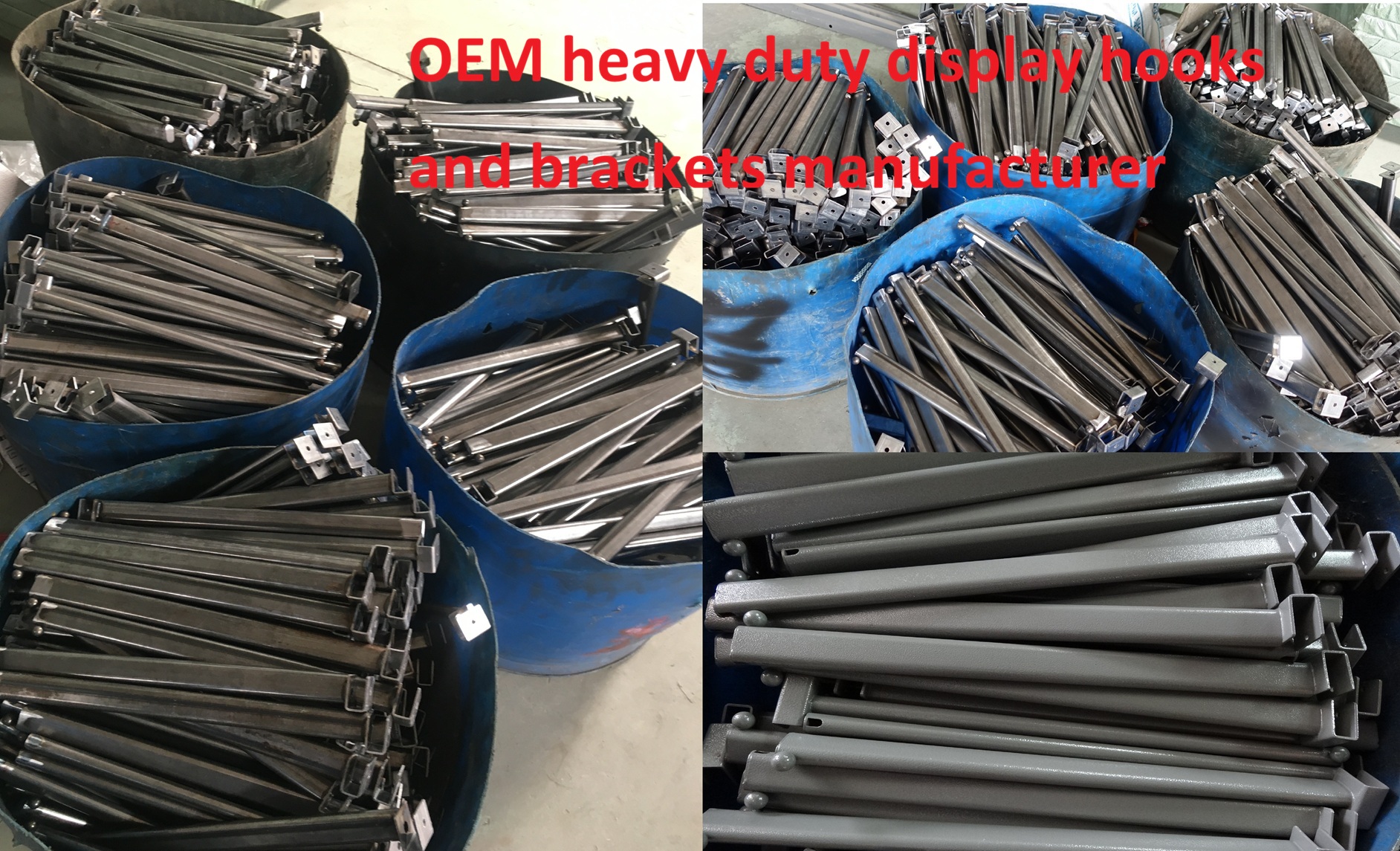
A hook's performance depends on the complete setup: the hook, mounting interface, rack, installation, and merchandise. Do not treat a generic load rating as proof that a hook will perform the same way on every oval tube rack.
If capacity is important, specify:
1. The required load and how it is distributed.
2. The rack and hook configuration to be tested.
3. The test method and acceptance criteria.
4. Any test records required before production approval.
Ask for evidence tied to the proposed configuration. During sample review, test the hook on the intended rack with representative merchandise and agreed handling conditions.
A standard hook is a sensible choice when it fits the rack and meets display requirements. Custom retail display hooks may be appropriate when standard products do not meet a clearly defined need, such as a non-standard mounting profile, specific projection, finish, or packaging requirement.
OEM design may address:
- A specific oval tube profile or attachment method
- A required arm length or product spacing
- A stop, label holder, or other merchandising feature
- A finish that matches the store environment
- Packaging or identification for distribution
- Consistent specifications for a multi-location rollout
For factory-direct quotations, provide measurements, drawings or samples, materials and finish preferences, quantities, packaging needs, and delivery destination. Ask suppliers to list one-time sample, design, or tooling charges separately from repeat-order unit pricing. This makes quotations easier to compare.
Custom development should solve a documented application or fit problem. It does not automatically reduce total cost; the result depends on design, order volume, and project scope.
Agree on quality requirements before mass production. Document the features that matter and how they will be inspected.
Depending on the project, define:
- Critical mounting dimensions
- Finished hook projection and orientation
- Material and finish
- Workmanship and appearance criteria
- Fit check on the approved rack or sample
- Performance tests, if required
- Packaging and product identification
- Sample approval and change-control process
Keep the approved drawing and sample as reference points. If a supplier proposes a change to dimensions, materials, finish, or production method, require written review and approval before applying it to the order.
Factory-direct OEM manufacturing can support direct technical communication. Buyers should still review samples, inspection methods, quotation scope, commercial terms, and delivery plans.
Before approving an order, confirm that:
1. The oval tube profile has been measured or physically checked.
2. The hook mounting feature has been tested on the intended rack.
3. Hook projection and configuration suit the actual merchandise.
4. Material, finish, and appearance requirements are documented.
5. Any capacity requirement has an agreed test setup.
6. Sample, tooling, packaging, quantity, and delivery terms are clear.
7. Quality checks and production approval steps are agreed.
8. Related fixtures—such as slatwall hooks, pegboard hooks, or shelving uprights and brackets—are specified separately.

No. Compatibility depends on the tube profile and mounting interface. Confirm fit using measurements, a drawing, or a physical test.
Provide the tube's cross-section and orientation, mounting position, hook projection, merchandise dimensions, and any clearance requirements.
A photo helps explain the design, but it usually cannot confirm fit. Include dimensions or a drawing, and provide a sample when practical.
Define the load, distribution, rack and hook configuration, test method, and acceptance criteria. Request evidence for the specific setup if necessary.
Choose a standard hook if it fits and meets the display requirements. Consider OEM customization when a defined mounting, configuration, finish, or packaging need is not met.
Include rack details, drawings or measurements, merchandise information, material and finish preferences, quantities, packaging, delivery destination, and quality requirements.
The right straight display hook begins with a verified fit to the oval tube rack. Then assess merchandise access, finish, performance requirements, and project cost. Waigaoqiao supports OEM discussions for overseas brands, wholesalers, and manufacturers sourcing custom retail display hooks and related retail fixtures.
Send your rack measurements, photos or sample, hook requirements, target quantity, finish preferences, and delivery destination to discuss custom design, sampling, quality-control criteria, and factory-direct pricing.
- [Fairy Daily Products — Commercial Garment Racks and Display Fixtures](https://www.garmentrackings.com/e_products.html): Product examples include straight-arm oval-tube slatwall accessories and straight display hooks.
- [Swift Courser — Slatwall Hooks and Faceouts](https://www.swiftcourser-rack.com/data-61686): Product information for oval-tubing display accessories and related fixture components.
- [Morplan — Slatwall Fittings, Panels and Accessories](https://www.morplan.com/gb_en/products/shop-fittings/slatwall-panels-accessories): Retail slatwall system and accessories overview.


