
Views: 220 Author: WAIGAOQIAO Publish Time: 2026-02-25 Origin: Site
Content Menu
● Understanding the Strategic Value of Custom OEM Garment Racks
● Phase 1: Defining the Technical Requirements of "Heavy Duty"
>> Determining Load Capacity and Stress Distribution
>> Evaluating the Environment of Use
● Phase 2: Material Selection and Structural Engineering
>> Steel Grades and Tube Thickness (Gauge)
>> Reinforced Joints and Welding Techniques
● Phase 3: The Science of Surface Finishing
>> The Triple-Chrome Plating Process
>> Advanced Powder Coating for Brand Identity
● Phase 4: Designing for Mobility and Logistics
>> Industrial Caster Selection
>> Knock-Down (KD) Design for Global Shipping
● Phase 5: The OEM Workflow with WAIGAOQIAO
>> Concept and Prototype Development
>> Quality Control and Mass Production
● Phase 6: Customization Beyond the Basics
>> Branding and Private Labeling
>> Specialized Attachments and Versatility
● Phase 7: Navigating the Challenges of Global Sourcing
>> Compliance and Safety Standards
>> Lead Times and Supply Chain Management
● Conclusion: The Long-Term Value of Custom OEM Manufacturing
● Related Questions and Answers
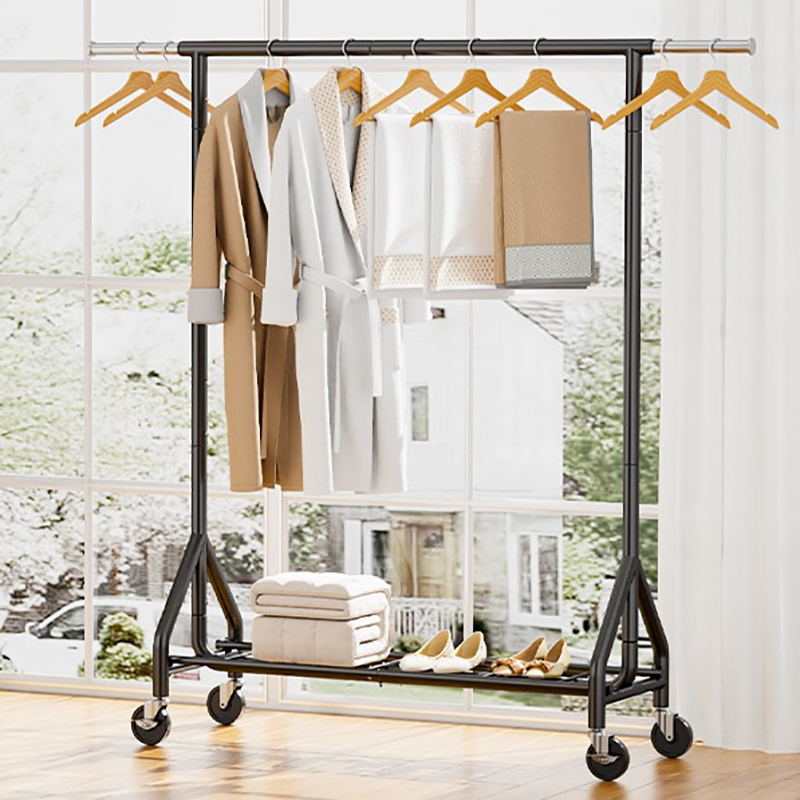
In the competitive landscape of the global apparel industry, the equipment used for inventory management and retail display is a critical component of operational success. While standard garment racks may suffice for basic needs, high-volume wholesalers, international brands, and industrial producers often require specialized solutions. This is where the Original Equipment Manufacturer (OEM) model becomes indispensable. For a company like WAIGAOQIAO, specializing in garment racks in China, the mission is to translate a client's unique requirements into a robust, heavy-duty reality.
Customizing heavy-duty garment racks via OEM is not just about changing the dimensions of a product; it is a deep dive into material science, structural engineering, and aesthetic branding. A heavy-duty rack must withstand hundreds of pounds of constant weight, survive the rigors of warehouse movement, and maintain a premium appearance in a retail showroom. This guide provides a comprehensive roadmap for international partners on how to navigate the OEM process to create the ultimate heavy-duty garment rack system.
The first step in any custom OEM project is defining what "heavy duty" means for your specific application. In the world of commercial garment storage, the term implies a level of durability and load-bearing capacity that far exceeds residential products.
The foundation of a custom rack begins with the weight it must carry. A standard rack might hold fifty pounds, but a heavy-duty industrial rack must support anywhere from 250 to 500 pounds of static load. When customizing, you must consider whether the load is static (stationary storage) or dynamic (the rack is moved frequently while loaded). Dynamic loads place significant stress on the joints and casters, necessitating reinforced welding and thicker steel profiles.
Where will the racks be used? A rack destined for a temperature-controlled luxury boutique requires different technical specifications than one used in a high-humidity textile factory or a rough-and-tumble logistics center. Understanding the environment allows the OEM partner to recommend the correct steel grade and surface finish to prevent oxidation and structural fatigue.
The quality of a custom garment rack is fundamentally determined by the metal from which it is forged. As an OEM manufacturer, WAIGAOQIAO prioritizes the selection of industrial-grade raw materials.
The thickness of the steel tube wall, measured in gauge, is the primary factor in a rack's strength. For heavy-duty applications, we recommend 16-gauge or 18-gauge cold-rolled steel. Cold-rolled steel is superior for OEM customization because it has a higher strength-to-weight ratio and a much smoother surface, which is essential for achieving a high-quality chrome or powder-coated finish. Square tubing often offers more rigidity for stationary racks, while round tubing is traditional for rolling Z-racks and retail displays.
In custom manufacturing, the point of failure is rarely the tube itself, but the joint where two pieces of metal meet. For heavy-duty OEM projects, we utilize full-circumference robotic welding to ensure 100% penetration and consistency. Unlike manual spot welding, robotic welding ensures that every rack in a 10,000-unit order has identical structural integrity. We also incorporate gussets and reinforcement plates at high-stress points, such as the connection between the vertical uprights and the base.
A custom garment rack must be as durable as it is beautiful. The surface finish is the rack's primary defense against the environment and the constant friction of metal hangers.
For high-end retail, chrome plating is the gold standard. Our OEM process involves a multi-stage electroplating sequence. The steel is first cleaned and polished, then plated with a layer of copper for adhesion, followed by a layer of nickel for corrosion resistance, and finally a layer of decorative chromium for hardness and shine. This "triple-plating" ensures that the finish will not flake or peel, even after years of hangers sliding across the top rail.
Powder coating offers a more versatile range of colors and textures, allowing brands to match their racks to their corporate identity. This process involves applying a dry powder electrostatically and then curing it under high heat to form a tough, durable "skin." Powder coating is highly resistant to chemicals, scratching, and chipping, making it an excellent choice for back-of-house warehouse racks and industrial environments.
A heavy-duty rack that cannot be moved or shipped efficiently is a liability. Engineering for mobility and logistics is a core part of the WAIGAOQIAO OEM philosophy.
For mobile racks, the wheels are the most critical moving part. Custom OEM racks should be fitted with industrial-grade casters featuring ball-bearing swivels and non-marking polyurethane wheels. For truly heavy-duty applications, we offer casters with high-load ratings and dual-locking mechanisms (locking both the wheel rotation and the swivel) to ensure maximum safety when the rack is stationary.
Shipping fully assembled racks from China to Europe or North America is cost-prohibitive due to the volume of air. We specialize in "Knock-Down" engineering, where the rack is designed to be shipped in a flat carton. The challenge in custom OEM is ensuring that a KD rack, once assembled by the customer, is just as strong as a fully welded unit. We achieve this through precision-engineered interlocking components and heavy-duty bolt-through connections that prevent "racking" or swaying.
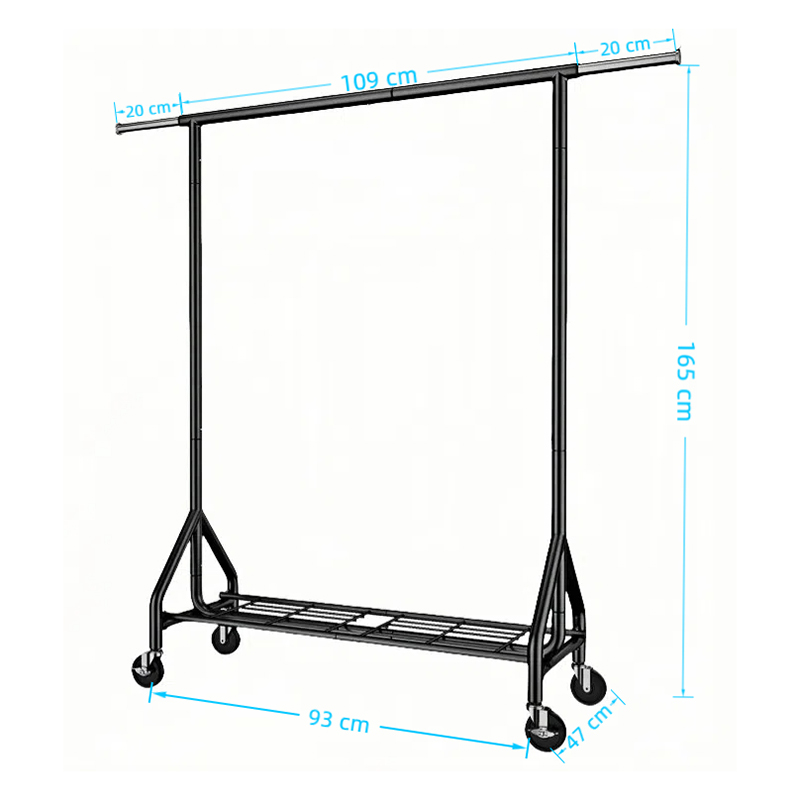
Partnering with a Chinese manufacturer for custom racks requires a clear, systematic communication process.
The journey begins with a technical drawing or a sample provided by the client. Our engineering team then creates a 3D CAD model to simulate weight distribution and stress points. Once the digital design is approved, we produce a physical prototype. This prototype is the "proof of concept" and undergoes rigorous weight testing to ensure it meets the client's heavy-duty specifications.
Upon approval of the prototype, mass production begins. Our quality control (QC) protocols are integrated into every stage of the manufacturing line. We conduct raw material inspections, weld integrity checks, and finish thickness tests. Before packing, a percentage of every batch is fully assembled and load-tested to ensure that the "real world" performance matches the technical drawings.
In the OEM world, the details are what differentiate a premium product from a commodity.
We offer several ways to integrate brand identity into the garment racks. This includes laser-etching logos onto the metal frame, custom-branded hardware, and specialized packaging that is retail-ready. For wholesalers, this allows them to sell a product that is uniquely theirs, building brand equity in their local markets.
Customization also extends to the functionality of the rack. We can design racks with adjustable heights using spring-loaded pins, add-on "swing arms" for extra capacity, or integrated signage holders for retail promotions. By understanding the end-user's needs, we can create a tool that is more than just a place to hang clothes—it becomes an efficiency-driver for their business.
Sourcing from China offers immense cost and scale advantages, but it requires a partner who understands international standards.
Heavy-duty racks used in commercial spaces must comply with various safety regulations regarding stability and material safety. As an experienced OEM provider, WAIGAOQIAO ensures that our products meet the necessary industrial standards for the markets they are entering, whether that is CE compliance for Europe or specific safety factors for the US market.
Effective OEM customization requires careful timing. From the finalization of the design to the arrival of the product at the client's warehouse, several weeks of production and shipping are involved. We provide our partners with transparent timelines and milestone updates, ensuring that their inventory planning is accurate and reliable.
Investing in custom heavy-duty garment racks via an OEM partnership is a strategic move that pays dividends in durability, safety, and brand prestige. By choosing a specialized manufacturer like WAIGAOQIAO, brand owners and wholesalers gain access to the technical expertise and production scale of the Chinese manufacturing heartland. A custom rack is more than a storage solution; it is a piece of industrial equipment engineered to perform under pressure and represent the quality of the garments it holds.
As the global fashion market continues to evolve, the need for flexible, robust, and aesthetically pleasing garment racks will only grow. Through precision engineering, advanced surface treatments, and a commitment to quality, we help our partners build the infrastructure they need to succeed on the world stage.
---
Q1: What is the minimum order quantity (MOQ) for a custom OEM garment rack project?
Typically, for a custom heavy-duty rack involving specialized tooling or unique dimensions, the MOQ starts at 300 to 500 units. This allows us to optimize the production line and offer the most competitive pricing for our international partners. Smaller quantities may be possible for slight modifications to existing designs.
Q2: How do you verify the weight capacity of a custom-designed rack?
We perform both digital and physical stress tests. First, we use Finite Element Analysis (FEA) software during the design phase to identify potential weak points. Once a prototype is built, we conduct a static load test by applying 1.5 times the rated weight capacity for 24 to 48 hours to ensure there is no permanent deformation of the steel.
Q3: Can you match a specific brand color for the powder coating?
Yes. We use the RAL or Pantone color matching systems to ensure that the finish on your garment racks aligns perfectly with your brand's visual identity. We can also offer different textures, such as matte, gloss, or "sand-grain" finishes, for added durability and style.
Q4: How long does the prototype development process take?
Under normal circumstances, once the technical drawings are finalized, we can produce a physical prototype within 10 to 15 days. This speed is one of the primary advantages of working with a manufacturer located in a specialized industrial cluster in China.
Q5: What are the advantages of cold-rolled steel over hot-rolled steel for these racks?
Cold-rolled steel undergoes further processing at room temperature, which gives it a more precise dimension and a much smoother surface finish. It is also harder and stronger than hot-rolled steel. For heavy-duty racks, the smooth surface of cold-rolled steel is essential for a high-quality chrome finish, as it prevents imperfections from showing through the plating.


