
Views: 178 Author: waigaoqiao Publish Time: 2026-10-11 Origin: Site
Content Menu
● Why products slide off pegboard hooks
● 7 practical ways to keep products from sliding off pegboard hooks
>> 1. Choose pegboard hooks with a front stop
>> 2. Add a compatible end cap or hook tip
>> 3. Match hook length to the package
>> 4. Select a hook shape that suits the product
>> 5. Check installation and board fit
>> 6. Reduce accidental contact through better merchandising
>> 7. Test the loaded display before rollout
● When slatwall hooks or display brackets make more sense
● OEM custom design: build retention into the hook specification
● Quality control and load testing for retail display hooks
● A quick B2B sourcing checklist
● FAQ: preventing products from sliding off pegboard hooks
● Request a custom retail display-hook solution
Retail display hooks are small components with an outsized effect on how products look, stay organized, and move through a store. If merchandise slides off pegboard hooks, retailers may face disorganized displays, damaged packaging, extra restocking, and a frustrating shopping experience. The right solution depends on the product, packaging, hook geometry, and pegboard—not simply on choosing a "heavier-duty" hook.
For retailers, brands, wholesalers, and manufacturers, preventing products from sliding off pegboard hooks starts with identifying why movement occurs. This guide covers practical fixes, related slatwall hooks and display brackets, and the OEM design and quality checks that help make a retail display more dependable.
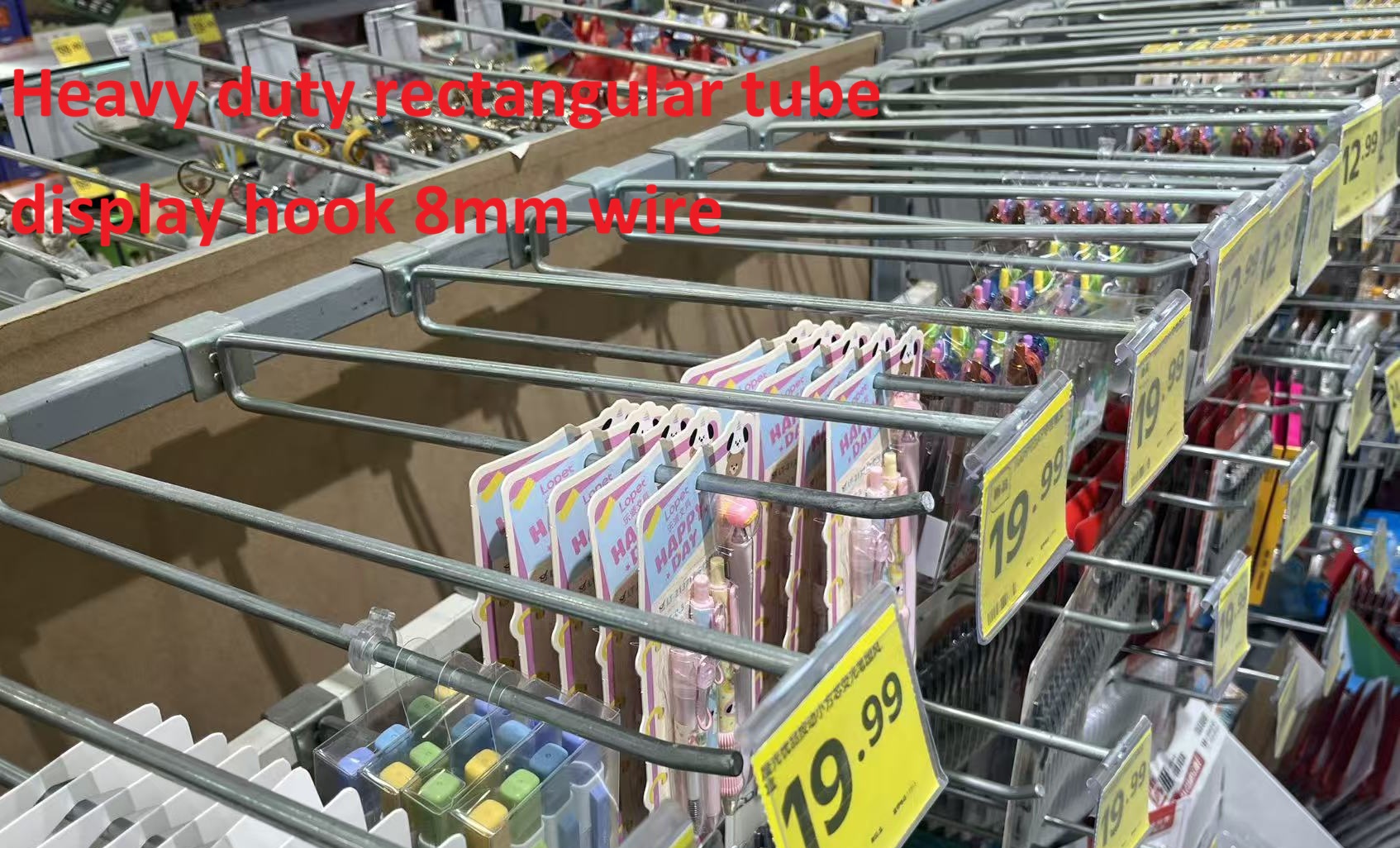
A product can move forward and fall when the hook is tilted, the package hangs loosely, customers brush against the display, or the hook does not suit the product's weight and shape. A weak or poorly fitting connection between the hook and pegboard can also affect stability.
Start by checking the complete display setup:
- Hook angle: Is the pegboard level, and does the installed hook sit in the intended position?
- Product balance: Does the package hang evenly, or is its weight concentrated toward the front?
- Hook length and shape: Does the product have room to hang securely without extending beyond the hook?
- Front retention: Is there a stop, end cap, or other feature to prevent forward movement?
- Mounting fit: Does the hook fit the pegboard securely, without excessive movement?
- Customer interaction: Are shoppers pulling products forward, catching them on neighboring items, or brushing against the fixture?
A useful troubleshooting rule is to observe the display with the actual products loaded. The cause may be in the hook, the board, the package, the installation, or their combination.
A front stop is a raised end or barrier at the tip of the hook. It helps keep merchandise from sliding off when the display is bumped or a shopper handles nearby items. Some retail hooks are specifically designed with a front stop guard. [K C Store Fixtures](https://www.kc-store-fixtures.com/productimages/45136-quarter-inch-pegboard-scanner-hook-6-black-00.jpg?resizeid=3&resizeh=600&resizew=600) [Palay Display](https://www.palaydisplay.com/images/T/Heavy-Duty-Pegboard-Hook-8L.jpg)
Front stops are often suitable for bagged hardware, tools, accessories, and other packaged goods. However, the stop must be high enough to retain the product without making it awkward to remove or restock.
Check that shoppers can lift or slide the item off naturally. A stop that prevents easy access may solve one problem while creating another.
A removable tip cap can create a simple barrier at the end of a hook. It may suit existing displays where replacing every hook is impractical. Retail product listings show tip caps marketed for pegboard-hook ends, with different sizes available. [Lowe's](https://www.lowes.com/pd/Unique-Bargains-50pcs-Pegboard-Hooks-Protector-Rubber-End-Caps-Peg-Board-Hook-Flexible-Prongs-End-Tips-Caps-Rack-Cover-for-Pegboard-Dishwasher-Hook-Black-31mm-Long-6mm-Inner-Dia/5014734583)
Before using caps in a retail program, confirm that they:
- Fit the hook diameter and tip shape.
- Stay securely attached during normal handling.
- Do not snag, tear, or catch the package.
- Are compatible with the store's cleaning and replenishment routines.
Do not assume one tip cap fits every hook. Match the cap to the actual hook dimensions and test the combination under store conditions.
An overly long hook can leave the product sitting far from the pegboard, making it more exposed to passing shoppers and easier to dislodge. An overly short hook may not support the required number of items.
Measure the packaged product, not only the item inside it. Include the hanging-hole location, package depth, desired facings, and clearance from neighboring merchandise. If shoppers must remove one product without disturbing the rest, test that interaction before approving the hook length.
A straight hook may work well for a stable blister pack with a properly positioned hanging hole. A front-stop hook may be more appropriate where packages tend to slide forward. For products with unusual shapes or uneven weight distribution, a custom design may offer a better fit.
When choosing a hook, consider:
- Package orientation: Does the product hang vertically and face shoppers?
- Center of gravity: Does weight pull the package forward or sideways?
- Hanging-hole size: Can the package move freely without slipping past the hook tip?
- Product removal: Can a shopper remove the first unit without knocking off the next one?
A hook that is loose in the board may wobble when shoppers interact with the display. Confirm the board's hole size, hole spacing, panel thickness, and material with the hook supplier. Then fit a sample hook into the actual board used in the store.
Inspect for:
- A secure fit without excessive rocking.
- Correct engagement with the board.
- Consistent hook orientation across the display.
- Damage or deformation around the mounting section.
If the hook appears secure when unloaded but shifts once products are added, test the full assembly rather than replacing the hook based on appearance alone.
Sometimes the hook is not the main issue. Products may slide because hooks are packed too closely, extend into an aisle, or overlap with merchandise on adjacent hooks.
Consider adjusting:
- The spacing between hooks.
- The number of units displayed per hook.
- The placement of heavier or bulky products.
- The height of products most likely to be bumped.
- The clearance between hooks and nearby fixtures.
A well-organized display gives products enough room to hang and allows customers to browse without catching neighboring packages.
A quick visual check is not enough to confirm that a display works in practice. Load the hook with representative merchandise, install it in the specified board, and test normal handling.
Observe whether:
1. Products stay in place when the display is lightly disturbed.
2. The first item can be removed without dislodging others.
3. Remaining products move forward as stock is depleted.
4. Staff can replenish the hook quickly.
5. Packaging catches on the hook tip, end cap, or label holder.
For larger programs, agree on the test setup and acceptance criteria with the supplier. Test the hook, board, and actual package as one system.

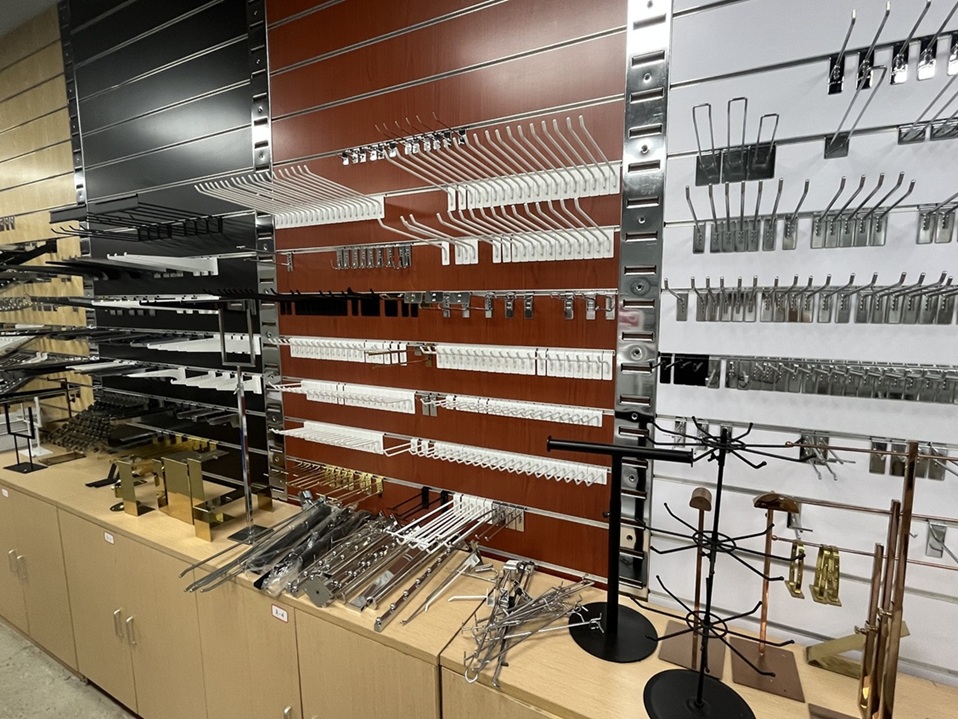
Pegboard hooks are one part of a broader retail display-hook range. Depending on the fixture and the product, slatwall hooks or display brackets may be a better match.
- Pegboard hooks: Designed for perforated pegboard panels. Confirm hole and panel compatibility.
- Slatwall hooks: Designed to engage slatwall grooves. Confirm the profile fits the specific panel system.
- Display brackets: Useful where products need a shelf-like support, a more substantial resting surface, or an alternative to hanging from a single hook.
These products are not interchangeable by default. When the merchandise repeatedly slips from a pegboard hook—even after a suitable stop, cap, or length adjustment—review whether the package is better supported by another fixture style.
For brands and wholesalers sourcing retail display hooks in volume, retention should be addressed during the design stage. An OEM supplier can assess hook style, length, tip design, finish, and packaging against the board and product requirements.
To request a useful custom proposal, provide:
- A board sample or complete board specifications.
- Product and package dimensions.
- The hanging-hole dimensions and position.
- The intended number of products per hook.
- Store handling requirements and display constraints.
- Any finish, branding, or packaging requirements.
A practical design review should consider a front stop, compatible end feature, hook angle, and clearance for both shoppers and replenishment staff. The aim is secure display without making products difficult to access.
A supplier's quality plan should translate the approved design into measurable checks. Depending on the project, buyers may specify checks for dimensions, fit, finish, and function.
For example, a sample inspection can verify that:
- Hook length and mounting geometry match the approved specification.
- The hook fits the nominated pegboard or slatwall panel.
- The stop or cap remains attached during normal use.
- Packages load and unload without snagging.
- The finished product matches the approved appearance.
Where load performance matters, ask what was tested, how it was tested, and which hook-and-board combination the result applies to. A load figure without its test setup should not be treated as a universal guarantee. Agree on the sample, test conditions, and acceptance criteria before mass production.
Before approving a wholesale order, confirm:
1. Application: What products will hang, and in which retail environment?
2. Compatibility: What are the board type, hole or slot dimensions, and panel thickness?
3. Retention: Is a front stop, end cap, or alternative fixture needed?
4. Usability: Can shoppers remove products and staff replenish them easily?
5. Quality: What sample and inspection criteria define approval?
6. Repeat orders: How will the approved design, finish, and packaging be documented?
This checklist helps overseas brands, wholesalers, and manufacturers communicate their requirements clearly to an OEM factory such as Waigaoqiao.
1. What is the simplest way to stop products sliding off pegboard hooks?
Use a hook with a suitable front stop or a compatible tip cap. Confirm that the product remains easy to remove and restock.
2. Will a rubber or plastic end cap fit any pegboard hook?
No. End caps must match the hook's tip shape and dimensions. Test that the cap stays attached and does not snag packaging.
3. Can a longer hook make products more likely to fall?
It can increase product projection and exposure to contact, but the result depends on the package, hook shape, and display layout. Test the loaded setup.
4. How do I know whether the hook or the pegboard is causing the problem?
Inspect the fit and observe the display loaded with actual products. A loose board connection, poor hook geometry, package imbalance, or crowded layout may all contribute.
5. When should I consider slatwall hooks instead of pegboard hooks?
Consider them when the store uses slatwall panels or when the product and fixture design are better served by a slatwall system. Confirm groove and hook compatibility first.
6. What should I send an OEM supplier for a custom hook?
Send the board specifications or a sample, package dimensions, hanging-hole details, target quantities, preferred finish, and a description of the slipping problem.
7. What should load testing include?
Agree on the tested hook, board, product load, procedure, and acceptance criteria. Results should apply to the specified assembly, not be assumed universal.
If products are sliding off your pegboard hooks, Waigaoqiao can review the application and help assess the right OEM direction across pegboard hooks, slatwall hooks, and display brackets. Send your board details, product packaging dimensions, target quantity, and photos or samples of the current display. This gives the team a practical starting point for a compatible design, sample review, and production quotation.
- [K C Store Fixtures — Pegboard scanner hook with front stop guard](https://www.kc-store-fixtures.com/productimages/45136-quarter-inch-pegboard-scanner-hook-6-black-00.jpg?resizeid=3&resizeh=600&resizew=600)
- [Palay Display — Heavy-duty pegboard hook with front stop](https://www.palaydisplay.com/images/T/Heavy-Duty-Pegboard-Hook-8L.jpg)
- [Lowe's — Pegboard hook end caps product listing](https://www.lowes.com/pd/Unique-Bargains-50pcs-Pegboard-Hooks-Protector-Rubber-End-Caps-Peg-Board-Hook-Flexible-Prongs-End-Tips-Caps-Rack-Cover-for-Pegboard-Dishwasher-Hook-Black-31mm-Long-6mm-Inner-Dia/5014734583)


