
Views: 240 Author: Waigaoqiao Co.,Ltd Publish Time: 2026-07-31 Origin: Waigaoqiao Co.,Ltd
Content Menu
● Why You Might Want to Secure Wire Shelves Without Clips
● Method 1: Direct Stud Mounting with Angle Brackets
● Method 2: Pipe Hanger Straps or Metal Loops
● Method 3: Wall-Mounted Track Systems with Bracket Hooks
● Method 4: Custom-Fabricated Shelf Supports (Waigaoqiao Expertise)
● Method 5: Using Shelf Support Braces for Front Stability
● Call to Action: Partner with Waigaoqiao for Custom Solutions
● FAQ: Frequently Asked Questions
>> Q1: Can I secure wire shelves without any hardware at all?
>> Q2: What is the strongest way to mount a wire shelf without clips?
>> Q3: Are pipe hanger straps suitable for heavy shelves?
>> Q4: Can Waigaoqiao produce custom clip-free shelving systems?
>> Q5: Do I still need front supports if the back is secured?
Securing wire shelves without clips is entirely achievable using wall-mounted brackets, angle supports, pipe hangers, or custom-fabricated solutions that distribute load directly to studs. At Waigaoqiao, we have spent over two decades manufacturing metal wire shelving and garment display racks for global brands, wholesalers, and OEM partners—and we understand that not every installation scenario calls for traditional plastic clips. Whether you are retrofitting an existing closet, working with uneven walls, or simply prefer a more industrial aesthetic, this guide walks you through proven, clip-free methods backed by real-world installation experience and engineering best practices.

Traditional wire shelf installations rely heavily on plastic or metal clips that snap onto wall standards or hang tracks. While effective in many cases, clips can fail under heavy loads, degrade over time, or simply not fit non-standard shelving systems.
Common reasons to avoid clips include:
- Heavy-duty storage needs – Clips may not support industrial-grade loads.
- Wall material limitations – Drywall anchors and plastic clips can loosen with vibration.
- Aesthetic preferences – Some users prefer exposed hardware or minimalist mounting.
- Retrofitting or custom builds – Existing structures may not accommodate standard clip systems.
- Long-term durability concerns – Metal-to-metal fastening often outlasts plastic components.
At Waigaoqiao, we design our wire shelving systems with flexibility in mind, allowing for multiple secure mounting options beyond clips.
The most secure way to install wire shelves without clips is to attach them directly to wall studs using angle brackets or L-brackets. This method eliminates intermediate hardware and transfers the full load to the structural framing of the wall.
1. Locate wall studs using a stud finder. Mark their centers with a pencil.
2. Measure and mark shelf height on the wall, ensuring the bracket mounting points align with stud centers.
3. Pre-drill pilot holes through the bracket holes into the studs.
4. Secure brackets with 2½–3 inch wood screws (or lag bolts for heavier loads).
5. Rest the wire shelf on the brackets, ensuring the rear edge is flush against the wall.
6. Optional: Add a front support brace or vertical standard to prevent forward tipping.
Pro Tip: For shelves longer than 36 inches, install a bracket at each end and one in the middle to prevent sagging.
Pipe hanger straps—commonly used in plumbing—make excellent, low-profile shelf retainers when screwed directly into studs. These galvanized metal straps can be bent or sized to fit over the rear wire of the shelf, holding it firmly against the wall.
- Select the appropriate strap size (½-inch to 1-inch diameter typically works for most wire shelves).
- Position the strap over the rear wire at stud locations.
- Drive two screws per strap into the stud for maximum hold.
- Space straps every 12–16 inches along the shelf length for even support.
This method is especially useful in laundry rooms, garages, or utility closets where a rugged, industrial look is acceptable.
Track systems (also called hang tracks or standards) allow you to mount shelf brackets without relying on snap-in clips. Instead, brackets hook or bolt directly into the track, which is itself screwed into studs or anchored securely to the wall.
1. Mount the track horizontally along the back wall, leveling it carefully.
2. Secure the track every 12–16 inches, ensuring screws hit studs whenever possible.
3. Insert shelf brackets into the track slots or bolt them in place.
4. Place the wire shelf onto the brackets, pressing down until it locks.
This approach offers adjustability and can support significant weight when properly anchored.
As a leading OEM manufacturer of metal wire shelving, Waigaoqiao specializes in custom-fabricated shelf supports that eliminate the need for clips entirely. Our engineering team can design and produce:
- Welded L-brackets sized to your exact shelf dimensions.
- Integrated mounting flanges built into the shelf frame.
- Bolt-through supports that pass through the wall and secure with nuts on the reverse side (ideal for partition walls or commercial installations).
Industry Case Example: For a European apparel wholesaler, we developed a clip-free display rack system using recessed wall channels and sliding shelf supports. The result was a clean, adjustable system that supported 150 lbs per shelf without a single plastic clip.
Even if the rear of the shelf is secured without clips, the front edge still needs support to prevent tipping or sagging. Shelf support braces—vertical poles or angled brackets placed at the front corners—provide critical stability.
- Install a support brace every 36 inches along the shelf run.
- Anchor braces to the floor or lower cabinetry for maximum rigidity.
- Use adjustable braces if you plan to reconfigure shelf heights later.
- Relying solely on drywall anchors – Always aim for studs whenever possible.
- Spacing supports too far apart – This leads to shelf bowing under load.
- Ignoring front-edge support – A shelf secured only at the back can pivot forward.
- Using undersized fasteners – Match screw/bolt size to expected load.
If you are a brand, wholesaler, or manufacturer seeking reliable, clip-free wire shelving solutions, Waigaoqiao is ready to collaborate. With over 20 years of OEM experience, we offer:
- Custom engineering and prototyping
- High-volume production with consistent quality
- Global logistics and compliance support
Contact us today to discuss your project requirements and request a quote for clip-free wire shelf systems tailored to your needs.
1. How to Install Wire Shelving – Detailed installation steps and bracket usage.
https://www.closetmaid.com/how-to-install-wire-shelving
2. Installing Wire Shelving – Shelf support braces and mounting best practices.
https://www.shelving.com/installing-wire-shelving
3. How to Install Wire Shelving | The Home Depot – Track system and bracket installation guide.
https://www.homedepot.com/c/ah/how-to-install-wire-shelving
4. Wire shelf fell off the wall. How to prevent this from... – Community-sourced secure mounting alternatives.
https://www.reddit.com/r/AskOldPeople/comments/15q5h3z/wire_shelf_fell_off_the_wall_how_to_prevent_this/
5. How to Install Wire Shelving for a Wire Closet System – Expert tips on leveling and supporting shelves.
https://www.familyhandyman.com/project/how-to-install-wire-shelving-for-a-wire-close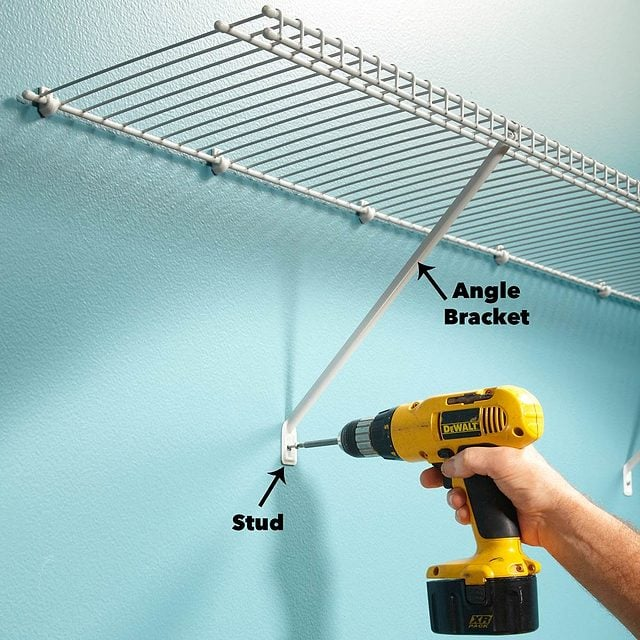 t-system/
No. Wire shelves require some form of mechanical fastening—whether brackets, straps, or tracks—to remain stable under load. Freestanding units are the only exception, but they still need a base or frame.
Direct stud mounting with angle brackets or lag bolts provides the highest load capacity and long-term reliability.
Yes, if installed correctly. Use galvanized steel straps and secure them with at least two screws per strap into wall studs. Space them every 12–16 inches for even support.
Absolutely. We specialize in OEM wire shelving with custom mounting solutions, including integrated brackets, flanges, and bolt-through supports.
Yes. Front supports (braces, poles, or brackets) prevent the shelf from tipping forward, especially when loaded unevenly.
Hot Tags: China, Global, OEM, private label, manufacturers, factory, suppliers, manufacturing company


