
Views: 220 Author: WAIGAOQIAO Publish Time: 2026-04-15 Origin: Site
Content Menu
● Understanding the Anatomy of Chrome Wire Shelving
● Determining Your Load Requirements
>> Assessing Total Load vs. Per-Shelf Load
>> Material Gauge and Wire Density
● Evaluating Environmental Suitability
>> Ventilation and Light Penetration
● Modularity and Customization Options
>> Shelf Adjustability and Increments
>> Precision of the Friction-Fit System
>> Reliability of the Shelf Clips
● Conclusion: Making the Right Investment
In the world of commercial, industrial, and residential storage, the versatility of adjustable chrome wire shelving is unmatched. Whether you are outfitting a high-end retail boutique, a professional kitchen, a bustling warehouse, or simply looking to organize a sophisticated home workspace, these systems offer a unique combination of strength, ventilation, and aesthetic appeal. However, not all wire shelving is created equal. The market is saturated with options, and making the wrong choice can lead to sagging shelves, compromised weight capacities, and an overall lack of utility. At WAIGAOQIAO, we specialize in high-quality wire shelving solutions, and we understand that choosing the right system is a strategic decision. This comprehensive guide will walk you through the essential factors to consider when selecting adjustable chrome wire shelves, ensuring your investment stands the test of time.
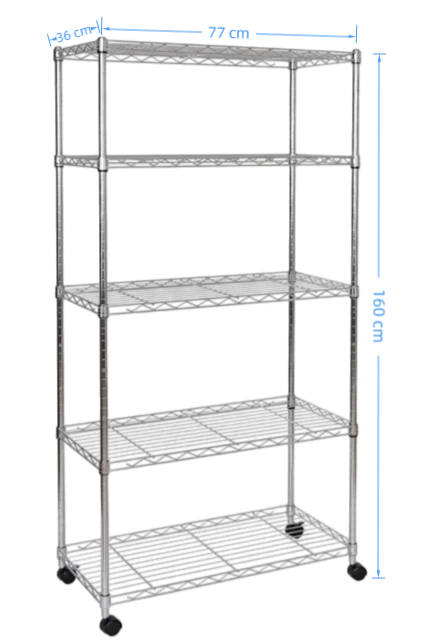
Before diving into selection criteria, it is vital to understand the basic components of a chrome wire shelving unit. These systems typically consist of four key elements: the vertical posts (or uprights), the wire shelves, the plastic shelf clips (also known as split sleeves), and leveling feet (or casters).
The "chrome" finish refers to a decorative and protective plating process that gives the wire its signature lustrous, professional look. When selecting these shelves, you are not just choosing a color; you are choosing a system that relies on a precise friction-fit design. The posts feature grooves at consistent intervals, and the shelf clips snap onto these grooves, supporting the corners of the shelves. Understanding this basic architecture is the first step in recognizing why precision in manufacturing—a core focus at WAIGAOQIAO—is so critical to the stability of the final unit.
The primary reason to choose industrial-grade wire shelving is its remarkable strength-to-weight ratio. However, "heavy-duty" is a relative term. Before you purchase, you must accurately calculate the weight you intend to place on the shelves.
Manufacturers typically provide two weight capacities: the load per shelf and the total capacity for the entire unit. It is common for users to underestimate the total weight, especially when dealing with dense items like bulk inventory, books, or specialized equipment. Always aim for a shelving system where your anticipated load is within 80 percent of the rated capacity. This provides a safety buffer and prevents the shelves from bowing over time, which can compromise the integrity of the entire unit.
The thickness of the wire, measured in gauge, is the most direct indicator of a shelf's durability. A lower gauge number indicates thicker steel wire. Additionally, consider the number of support wires running beneath each shelf. More support wires mean the shelf is less likely to deform under heavy localized pressure. For heavy-duty commercial applications, look for shelves with reinforced support trussing and thicker primary wire.
While chrome plating is aesthetically pleasing and offers excellent resistance to indoor moisture, it is not impervious to all environments.
Chrome wire shelving is ideal for dry environments, such as retail floors, offices, closets, and heated warehouses. The reflective finish is easy to clean and maintains its shine even with frequent use. However, if your application involves high humidity—such as walk-in freezers, coastal environments, or areas frequently exposed to water—chrome plating may eventually show signs of oxidation. In these specific cases, you might want to consider epoxy-coated or stainless steel alternatives. For most standard retail and indoor commercial settings, however, high-quality triple-plated chrome remains the industry standard for its balance of cost, durability, and appearance.
One of the distinct advantages of wire shelving over solid metal or wood shelving is its open-wire design. This is essential for retail display and inventory management for three reasons. First, it allows for air circulation, which is critical for food storage and preventing mold or dust buildup. Second, it allows for light penetration, which makes it much easier to see items stored on lower shelves. Finally, it helps keep the shelving clean, as dust and debris fall through the wire rather than accumulating on the surface.
The true beauty of adjustable wire shelving lies in its modularity. You should select a system that allows you to easily reconfigure your storage as your needs change.
The vertical posts of a high-quality system will feature grooves every inch. This allows for fine-tuning the shelf height to fit specific product dimensions. When selecting your system, ensure that the posts are compatible with a wide range of accessories. You want the flexibility to add side enclosures, shelf dividers, label holders, and back ledges. These accessories are what transform a basic shelving unit into a highly efficient retail display or inventory management system.
Look for manufacturers that offer comprehensive product lines that allow for system expansion. Can you connect two shelving units together using "S-hooks" to save on posts? Does the manufacturer offer both static and mobile configurations, allowing you to swap out leveling feet for heavy-duty casters if you need to transform your stationary rack into a rolling cart? Choosing a system that is part of a broader, compatible ecosystem is the best way to future-proof your storage.
With the market flooded with budget-friendly options, it can be difficult to tell the difference between a high-quality unit and an inferior one. Here are the professional markers to inspect.
The stability of a wire rack depends on the fit between the post and the shelf corner. Inferior units often have poorly manufactured shelf corners that do not sit flush with the clips. When assembled, a high-quality unit should feel rock-solid even before it is fully loaded. If you are ordering in bulk, always request samples to test the fit and feel of the connection.
Inspect the chrome plating for consistency. A high-quality finish should be uniform across the entire unit, free of pitting, flaking, or discoloration. The plating process is where many manufacturers cut corners, leading to premature rusting. A reputable manufacturer will prioritize a multi-layer plating process that ensures longevity and maintains a professional luster for years.
The shelf clips are the "unsung heroes" of the wire shelving world. They must be made from high-impact, durable plastic that does not easily crack or deform under pressure. They should have a clear "top" indicator to ensure correct orientation. Reliable clips are essential to the safety of your shelving system, as they are the points that transfer the weight of the shelf to the post.
Selecting the right adjustable chrome wire shelving is about balancing your immediate needs with long-term goals. By carefully assessing your weight requirements, considering the environment of your retail or storage space, and prioritizing systems that offer modularity and high-quality manufacturing, you can create a storage solution that is as efficient as it is aesthetic. Whether you are managing a large-scale retail operation or optimizing a professional workspace, these shelving units are a fundamental investment in your organization's success. At WAIGAOQIAO, we are committed to providing wire shelving solutions that meet the highest standards of engineering and durability. By making informed decisions today, you ensure that your storage infrastructure remains a robust and reliable foundation for your business operations for many years to come.
1. How do I know if I need heavy-duty or standard-duty shelving?
If you are storing light retail items, office supplies, or small household goods, standard-duty shelving is usually sufficient. However, if you are stocking bulk inventory, heavy tools, or dense products, you must choose heavy-duty shelving, which features thicker wire gauge and reinforced trussing. Always check the manufacturer's per-shelf weight capacity rating against your heaviest expected load.
2. Can chrome wire shelves be used in a refrigerator or freezer?
While chrome is excellent for dry indoor environments, it is generally not recommended for walk-in freezers or high-humidity areas, as condensation can eventually lead to oxidation. For these environments, we strongly suggest using stainless steel or epoxy-coated wire shelving, which are specifically engineered to withstand moisture and extreme cold.
3. Is it difficult to adjust the shelf height after the rack is assembled?
The shelves are adjustable, but they are not "tool-free" in the sense that they can be moved instantly. To adjust the height, you must remove all items from the shelf, tap the shelf upward to release the pressure on the plastic clips, move the clips to the desired new position on the post, and then slide the shelf back down to lock it into place.
4. Can I add more shelves to my unit later?
Yes, that is one of the main advantages of modular wire shelving. As long as you purchase shelves from the same manufacturer and in the same dimensions (width and depth) as your existing unit, you can easily add more levels. Always ensure that the total weight of the new items does not exceed the unit's total load capacity.
5. Why are the shelf corners sometimes tight to put on?
A tight fit is actually a sign of quality. The shelf corners are designed to have a slight friction fit against the plastic shelf clips. This tension is what makes the shelving system so stable. If the corners feel too loose, the rack will wobble; if they feel snug, it indicates a high-precision manufacturing process that will result in a sturdy and reliable finished display.


