
Views: 220 Author: WAIGAOQIAO Publish Time: 2026-03-21 Origin: Site
Content Menu
● The Functional Advantages of Double Rod Design
● Technical Criteria: The Anatomy of a High-Quality Rack
>> Material Selection and Steel Gauge
>> Surface Finishes and Corrosion Resistance
>> Connection Hardware and Structural Stability
● Advanced Design Considerations for Professional Buyers
>> Adjustability and Modular Versatility
>> Mobility and Caster Systems
● The Strategic Importance of OEM Partnerships
>> Precision Manufacturing and Quality Control
>> Customization and Brand Differentiation
● Safety and Reliability Standards
>> Weight Distribution and Center of Gravity
>> Load Testing and Documentation
● Sustainable Trends in the Industry
The garment rack is a staple in modern organization, bridging the gap between temporary storage and permanent wardrobe infrastructure. Among the various configurations available, the double rod garment rack stands out as a productivity powerhouse, effectively doubling the hanging capacity of a single-rod unit without significantly increasing the floor footprint. For companies like WAIGAOQIAO, which provide premium OEM manufacturing services for global brands and retailers, understanding the technical and functional nuances of these racks is essential. Whether you are a brand owner looking to expand your catalog or a wholesaler sourcing for high-volume markets, this guide details the critical factors involved in selecting the ideal double rod garment rack.
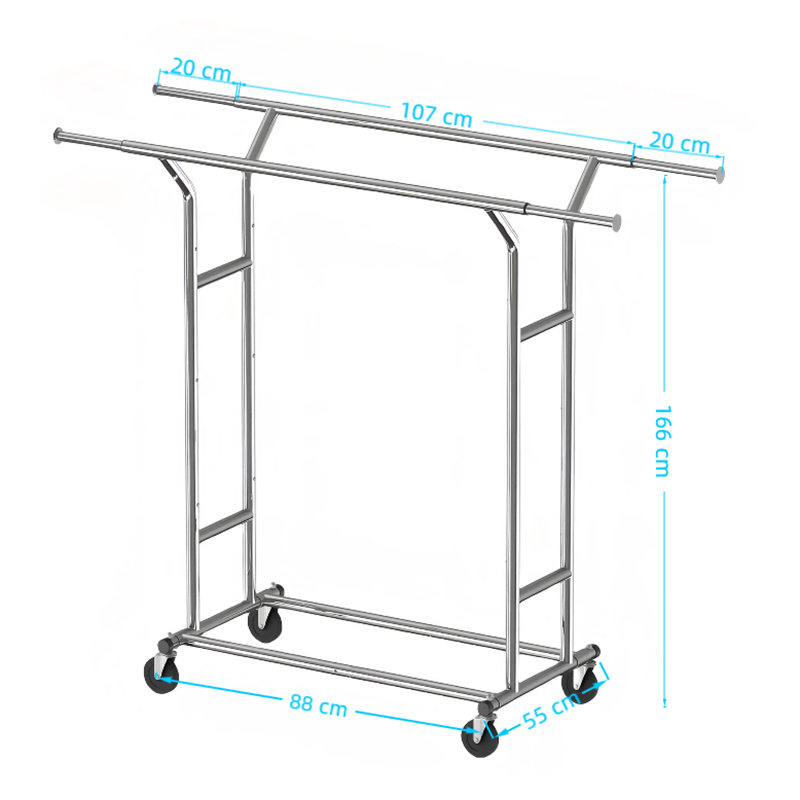
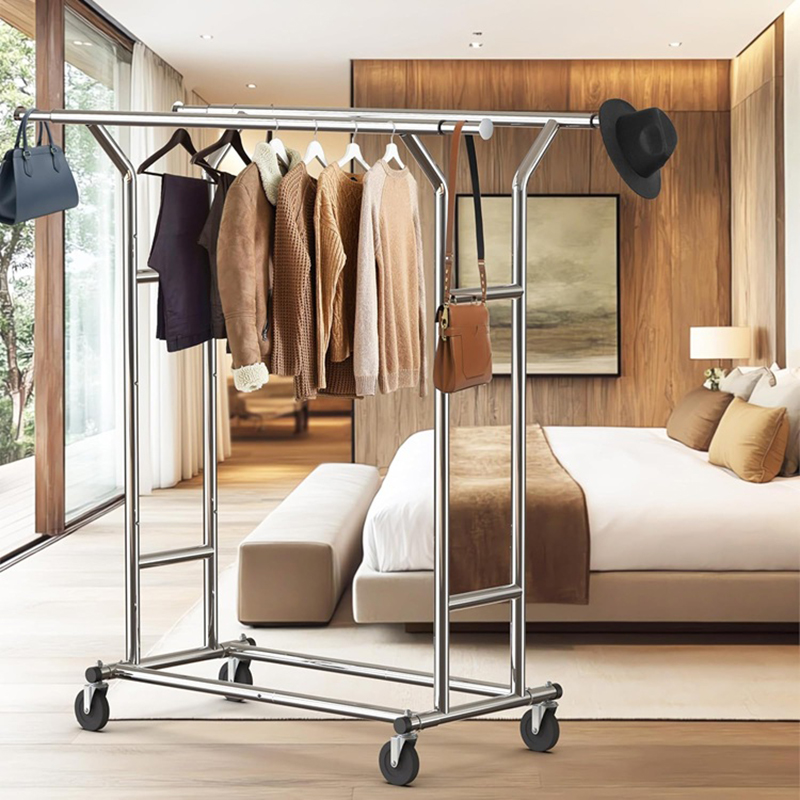
The core appeal of a double rod garment rack is its vertical efficiency. In most interior settings—be it a residential bedroom, a boutique retail floor, or a backstage dressing area—floor space is the most expensive commodity. A double rod configuration allows users to maximize vertical space by hanging shorter garments, such as shirts, skirts, and folded trousers, on one level, while utilizing the other for longer items or simply increasing the density of the total collection.
Beyond capacity, these racks facilitate better wardrobe management. They allow for the segregation of garments by season, occasion, or outfit type, significantly reducing the time spent searching for specific items. For retail environments, this design enables dual-level merchandising, which can significantly enhance the visual presentation of inventory. By offering a clean, organized, and accessible storage solution, double rod racks remain a top-tier product in the garment hardware industry.
Not all double rod racks are created equal. The difference between a unit that lasts for years and one that fails after a few months of use lies in its engineering, material composition, and manufacturing quality.
The structural backbone of any garment rack is the metal tubing. As professional OEM manufacturers, we prioritize high-tensile steel over cheaper alloys. The "gauge" of the steel is the most critical technical specification; lower gauge numbers denote thicker, more robust steel. For a double rod rack, which supports weight on two different planes, the uprights and the horizontal rods must be resistant to bowing. We recommend steel with a minimum thickness of 1.2 mm to 1.5 mm for residential use, while industrial-grade racks designed for retail settings should utilize even heavier gauges to prevent deformation when fully loaded with winter coats or heavy leather jackets.
Garments, particularly those made of delicate fabrics, can be damaged by rough surfaces or oxidation. The finish of the metal rods must be exceptionally smooth. Chrome plating is a popular choice for its sleek, professional appearance and durability. However, for a more modern or industrial look, powder coating has become the industry standard. A high-quality powder coating not only provides a wide range of color options but also acts as a robust barrier against humidity, scratching, and chemical degradation from dry cleaning solvents or laundry additives.
The joints where the rods meet the uprights are the primary points of failure in low-quality racks. Buyers should look for racks that feature reinforced, welded, or high-tolerance bolt connections. Cheap plastic connectors are often a sign of a lower-end product that will inevitably wobble over time. A professional-grade double rod rack should feature all-metal or high-density reinforced polymer connectors that lock the rods into place securely, ensuring that even when the unit is loaded to its maximum capacity, it remains rigid and stable.
When selecting a double rod garment rack for a brand or a wholesale inventory, design details can significantly differentiate your product in a competitive market.
Modern consumers demand flexibility. A double rod rack that allows for height-adjustable rods is significantly more valuable than a fixed-height unit. This feature permits the user to adapt the rack to accommodate long gowns, coats, or even shorter items like children's clothing. Furthermore, width-adjustable rods allow the rack to fit into various spatial constraints, from a narrow closet to a spacious dressing room. An OEM partner like WAIGAOQIAO can provide custom adjustment mechanisms that are intuitive and durable, ensuring that the user experience remains positive over years of use.
The utility of a garment rack is often tied to its mobility. High-quality casters are essential for moving a full rack across different floor surfaces—from hardwood to carpet. Look for industrial-grade, 360-degree swivel casters. Ideally, these should include a locking mechanism on at least two of the wheels to ensure that the rack stays in position when loaded. The material of the wheel itself matters: soft, rubberized wheels are preferable to hard plastic ones, as they provide better traction and are less likely to scratch or leave marks on delicate flooring.
For brands and wholesalers, the manufacturer is a strategic partner. Working with a company like WAIGAOQIAO ensures that your product line benefits from years of manufacturing expertise and rigorous quality control.
Quality control is not just about final inspection; it is built into the manufacturing process. Precision welding ensures that the load is distributed evenly, preventing uneven strain on the frame. Every unit should undergo load testing to verify its weight capacity claims. When you partner with an experienced manufacturer, you benefit from consistent production standards, which minimizes product returns and enhances brand reputation.
The ability to customize your garment racks is a major competitive advantage. Whether it is a unique configuration of the double rods, a proprietary color finish, or custom branding on the end caps and retail packaging, OEM services allow you to bring your vision to life. This level of customization ensures that the product fits perfectly within your existing brand identity and meets the specific needs of your target customer base, whether that is high-fashion boutiques or large-scale wholesale distributors.
In a retail or heavy-use residential environment, safety is paramount. Double rod garment racks, when fully loaded, can be quite heavy and potentially top-heavy if not designed correctly.
A well-engineered double rod rack should have a wide enough base to counteract the weight of the garments. The design should naturally concentrate the center of gravity as low as possible. When sourcing or designing these racks, it is essential to ensure that the base structure is robust enough to support the total potential load of both rods. Poorly balanced racks can tip over, posing a safety risk.
Reputable manufacturers provide detailed load-bearing documentation. For a brand owner, having these test results available for your customers serves as a powerful marketing tool. It demonstrates transparency and a commitment to product safety. Always verify that your manufacturer performs dynamic load testing—moving the rack while fully loaded—to ensure the wheels and joints are durable enough for real-world usage scenarios.
As the furniture and organization industry evolves, sustainability has become a critical topic. Metal garment racks are an excellent, sustainable alternative to plastic or composite wood units. They are durable, have a long service life, and are fully recyclable at the end of their lifecycle. By prioritizing sustainable manufacturing processes, such as water-based powder coatings and waste-reduction in the metal fabrication phase, brands can appeal to the growing segment of eco-conscious consumers. Choosing an OEM partner that adheres to these environmentally responsible practices adds significant value to your product line and aligns your brand with global sustainability goals.
The selection of a double rod garment rack is an exercise in balancing form, function, and durability. By focusing on technical fundamentals such as steel gauge, high-quality finishes, and robust connection hardware, brands and wholesalers can ensure they provide their customers with a storage solution that exceeds expectations. As a dedicated OEM partner, WAIGAOQIAO stands ready to support this mission by delivering precision-engineered, customizable, and reliable garment racks. Investing in quality not only safeguards your brand's reputation but also provides your customers with the peace of mind that their wardrobe is stored in a secure, efficient, and professional-grade system. When you choose the right rack, you are choosing a lifetime of organization and utility.
1. Why is a double rod rack better than a single rod unit?
The double rod rack effectively doubles your hanging storage space within the same floor footprint. It is ideal for maximizing small closets, organizing different categories of clothing, or creating a more efficient retail display without requiring additional square footage.
2. What should I look for in the steel quality of a garment rack?
You should prioritize steel gauge; lower numbers represent thicker, stronger metal. For durable garment racks, look for a thickness of 1.2 mm or higher. High-tensile steel is necessary to prevent the horizontal rods from bowing under the weight of heavy clothing like coats or professional attire.
3. How do I know if a garment rack is stable enough for heavy clothing?
Stability is determined by the width of the base and the integrity of the joints. Look for a rack with a wide base to keep the center of gravity low. The joints should be all-metal and reinforced rather than simple plastic clips, and the unit should be able to support a high static weight load without wobbling.
4. Are casters necessary for a garment rack?
Casters are highly recommended, especially if you plan to move the rack between rooms or reorganize your retail space frequently. Ensure the rack uses industrial-grade, lockable, rubberized casters to protect your floors and provide smooth, secure mobility when the rack is fully loaded.
5. How does the finish impact the durability of the rack?
The finish acts as a protective barrier. While chrome is a classic aesthetic choice, high-quality powder coating offers superior resistance to rust, scratching, and chemical damage. Proper finishes are essential for ensuring the rack maintains its professional look and structural integrity in diverse environments.


