
Views: 220 Author: Site Editor Publish Time: 2026-03-29 Origin: Site
Content Menu
● The Engineering Philosophy of Professional Wire Shelving
● Material Selection: The Foundation of Durability
>> Carbon Steel vs. Stainless Steel
>> Understanding Wire Gauge and Load Distribution
● Coatings and Finishes: Battling Corrosion
>> Chrome Plating: The Aesthetic Standard for Dry Storage
>> Epoxy Coating: The Science of Anti-Microbial Protection
>> Zinc Plating and Specialized Finishes
● NSF Certification: The Global Benchmark for Safety
● Design Innovations for Professional Kitchens
>> The Open-Wire Advantage: Airflow and Hygiene
>> Adjustability and Tapered Sleeve Systems
>> Mobility: Selecting the Right Casters and Wheels
● The Strategic Advantage of Sourcing from WAIGAOQIAO
>> OEM Capabilities and Customization
>> Quality Control and Robotic Precision
>> Logistical Efficiency for Wholesalers
● Maintenance and Lifecycle Management
● Conclusion: Strategic Investment in Storage
In the high-intensity world of commercial food service and international logistics, the difference between a high-performing kitchen and a chaotic one often comes down to the quality of its infrastructure. For global brand owners, wholesalers, and professional producers, selecting the right storage solutions is not merely a matter of organization; it is a critical investment in efficiency, hygiene, and long-term cost management. As a specialized Chinese OEM manufacturer, WAIGAOQIAO has spent years refining the art and science of wire shelving production to meet the rigorous demands of the global market. This guide provides a deep dive into the technical specifications, material sciences, and manufacturing nuances required to select truly durable wire shelves for kitchen environments.
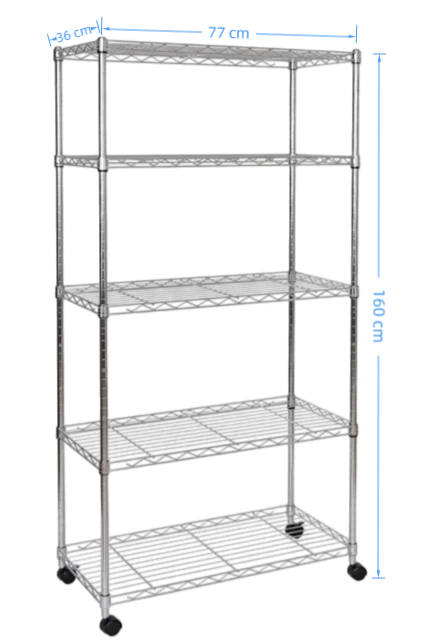
A wire shelf might appear simple to the untrained eye, but it is a highly engineered product designed to balance structural integrity with environmental adaptability. The primary reason wire shelving has remained the industry standard for kitchens is its "open-wire" design. This architecture allows for maximum airflow, which is essential for maintaining consistent temperatures in walk-in coolers and preventing the accumulation of dust or moisture that can lead to mold and bacterial growth.
For an OEM partner like WAIGAOQIAO, the engineering begins with the truss design. The "snake" or "zigzag" wire patterns that run along the length of each shelf level are not decorative; they are strategically welded to distribute vertical weight to the corner posts. Understanding how these trusses are manufactured—using robotic precision welding—is the first step for any brand owner in ensuring they are offering a product that won't sag or fail under the heavy loads of industrial kitchenware or bulk ingredients.
The longevity of a kitchen shelf is dictated primarily by the metal used in its construction. In the professional world, two main categories dominate the market: carbon steel and stainless steel.
Carbon steel is the most common material due to its exceptional strength-to-weight ratio and cost-effectiveness. However, carbon steel is inherently susceptible to oxidation. To make it "durable" for kitchen use, it must be treated with high-quality finishes such as chrome plating or epoxy coating. This is where the expertise of an OEM manufacturer becomes vital. At WAIGAOQIAO, we ensure the steel used is of the correct grade to provide a smooth surface for these coatings to adhere to, preventing premature peeling.
Stainless steel, specifically Grade 304, is the gold standard for durability. It contains high levels of chromium and nickel, making it naturally resistant to rust without the need for additional coatings. For wholesalers catering to high-end restaurants or medical-grade kitchens, 304 stainless steel shelving is the ultimate recommendation. While the initial investment is higher, the lifecycle cost is significantly lower as these units can withstand extreme moisture, salt, and acidic environments for decades.
The thickness of the wire, or its "gauge," directly correlates with the shelf's weight capacity. Most commercial-grade shelves utilize a combination of thicker frame wires (usually 6mm to 8mm) and thinner deck wires (3mm to 4mm). A durable shelf must be able to support anywhere from 300 lbs to 800 lbs per level, depending on the dimensions. As an OEM provider, we emphasize the importance of uniform wire spacing. If the wires are too far apart, the shelf deck can become unstable for smaller items; if they are too close, it adds unnecessary weight and cost.
Since most kitchen shelves are made of carbon steel, the finish is the only barrier between the metal and the harsh kitchen environment. Selecting the right finish is perhaps the most important decision a wholesaler can make.
Chrome-plated wire shelving is the most recognizable finish in the industry. It offers a brilliant, mirror-like shine that enhances the visibility of products and creates a "clean" look. However, chrome is primarily intended for dry storage environments. In a dry pantry, chrome provides excellent durability and resistance to abrasion. But when exposed to the high humidity of a dishwashing area or a walk-in freezer, even the best chrome plating will eventually succumb to "pitting" or rust. Brands focusing on front-of-house displays or dry warehouses typically prioritize this finish.
For "wet" storage, epoxy-coated shelving is the superior choice. This process involves electrostatically applying a powder coating—typically in green, black, or silver—and then curing it under high heat to create a hard, plastic-like shell.
At WAIGAOQIAO, we often incorporate anti-microbial agents directly into the epoxy resin. This creates an additional layer of protection by inhibiting the growth of bacteria, mold, and fungus on the surface of the shelf. This is a crucial selling point for global brands that prioritize food safety. Green epoxy is the industry standard for walk-in coolers, as it can withstand the constant moisture and "salt spray" often found in commercial refrigeration.
Zinc plating serves as an intermediate option. It offers better corrosion resistance than basic chrome but is often used as a "base coat" for epoxy to provide double-layer protection. For specialized industrial applications, some brands may request a "pewter" or "graphite" finish, which provides a modern aesthetic while maintaining the heavy-duty performance of epoxy.
For any brand owner looking to enter the North American or European markets, NSF (National Sanitation Foundation) certification is non-negotiable. An NSF-certified wire shelf has undergone rigorous testing to ensure that:
1. The materials used are non-toxic and food-safe.
2. The design does not have "dead corners" or rough welds where food particles or bacteria can hide.
3. The surface is easy to clean and sanitize.
As a high-end OEM manufacturer, WAIGAOQIAO maintains strict adherence to these standards. When a wholesaler sees the NSF mark on our shelving, they know the product meets the highest global safety requirements. This certification simplifies the inspection process for restaurant owners and builds immediate trust in the brand.
Durability is not just about the metal; it is also about how the shelving adapts to the user's needs. Several design features define a high-quality wire shelving system.
As mentioned earlier, the open-wire design is functional. In a professional kitchen, spilled liquids must be able to pass through the shelves to the floor for easy cleaning, rather than pooling and contaminating other food items. Furthermore, the open design allows light to pass through, making it easier for staff to identify inventory in low-light storage areas.
One of the greatest innovations in wire shelving is the tool-free assembly system. Using plastic tapered sleeves that "click" into grooves on the posts, shelves can be adjusted in 1-inch increments. This allow kitchen managers to maximize their vertical space based on the size of the containers they are storing. A durable system must have sleeves made of high-density polymers that won't crack under pressure or lose their grip over time.
Many kitchen environments require "Wire Shelving with Wheels" to allow for easy cleaning of the floors or to transport heavy loads of ingredients from the loading dock to the pantry. Selecting the right casters is vital for durability.
- Polyurethane Wheels: These are the standard for kitchens as they are non-marking, quiet, and resistant to oil and grease.
- Bumper Protectors: High-quality mobile units should include donut bumpers to prevent the shelving from damaging walls during transport.
- Load Capacity of Casters: It is important to remember that the weight capacity of a mobile unit is often limited by the casters, not the shelves. Wholesalers must ensure the caster rating matches the intended use of the unit.
In the global supply chain, the relationship between a brand and its OEM manufacturer is the primary driver of success. Sourcing from a specialized Chinese company like WAIGAOQIAO offers several competitive advantages for international wholesalers.
Every market has unique needs. While the US might prefer 18"x48" units, European markets might require metric specifications. Our manufacturing facility is equipped to handle custom sizes, wire densities, and branding requirements. We can emboss brand logos directly onto the plastic sleeves or the metal shelf edges, providing a private-label solution that helps our partners build brand equity.
China's manufacturing landscape has evolved. At WAIGAOQIAO, we utilize robotic welding arms to ensure every weld is consistent. Manual welding often leads to "burrs" or weak points that can snap under stress. Our automated processes ensure that every shelf produced is identical in strength and finish quality. We also conduct salt-spray testing on our coatings to simulate years of kitchen use, ensuring that our epoxy and chrome finishes meet international durability benchmarks.
For large-scale producers and wholesalers, lead times and shipping costs are critical. We optimize our packaging to ensure maximum "cube utilization" in shipping containers. By designing the shelving to nest efficiently, we help our partners reduce their landed cost per unit, making them more competitive in their local markets.
Even the most durable shelf requires proper care to reach its full potential. We advise our brand partners to educate their end-users on basic maintenance:
- Regular Cleaning: Use mild soap and water. Avoid abrasive chemicals or steel wool, which can scratch the epoxy or chrome layers and invite rust.
- Weight Distribution: Always place the heaviest items on the bottom shelf to maintain a low center of gravity, especially for mobile units.
- Periodic Inspections: Check the plastic sleeves every few years for signs of wear and ensure the casters are free of debris.
Selecting durable wire shelving for a kitchen is a balance of metallurgy, chemistry, and practical design. For global brand owners and wholesalers, the goal is to provide a product that disappears into the background of a kitchen—not because it is unimportant, but because it performs so reliably that the staff never has to think about it.
By partnering with an experienced OEM like WAIGAOQIAO, brands can leverage advanced manufacturing techniques, strict NSF compliance, and deep material expertise to deliver world-class storage solutions. Whether it is 304 stainless steel for a high-moisture prep station or anti-microbial epoxy for a walk-in cooler, the right shelving choice is the foundation of a successful, hygienic, and efficient kitchen operation.
Q1: What is the difference between Grade 304 and Grade 201 stainless steel for kitchen shelving?
A1: Grade 304 contains higher levels of nickel and chromium, making it significantly more resistant to corrosion and rust in wet environments. Grade 201 is a more affordable alternative but is prone to rusting if exposed to moisture over long periods. For commercial kitchens, Grade 304 is the recommended standard for durability.
Q2: Can I use chrome-plated wire shelving in a walk-in freezer?
A2: It is not recommended. Chrome plating is designed for dry storage. The condensation and high humidity in freezers will eventually cause the chrome to pit and rust. For freezers and coolers, epoxy-coated shelving or stainless steel is a much better, more durable choice.
Q3: How much weight can a standard commercial wire shelf hold?
A3: A standard 48-inch-long wire shelf can typically hold between 600 and 800 lbs of evenly distributed weight when stationary. If the unit is on wheels, the total capacity is usually limited by the rating of the casters, often around 600-1000 lbs for the entire unit.
Q4: Why is "open-wire" design preferred over solid shelving in kitchens?
A4: Open-wire design promotes better airflow, which is critical for temperature consistency in refrigeration and prevents dust buildup. It also allows for better light penetration and fire safety, as sprinkler water can pass through the shelves.
Q5: How does anti-microbial epoxy coating work?
A5: During the manufacturing process, anti-microbial agents are mixed into the powder coating. These agents damage the cell walls of microorganisms, preventing bacteria and mold from growing on the shelf surface. This is a vital feature for maintaining food safety in commercial kitchens.


