
Views: 220 Author: WAIGAOQIAO Publish Time: 2026-03-01 Origin: Site
Content Menu
● The Strategic Importance of Verticality in Narrow Spaces
● Chrome Plating vs. Epoxy Coating
● The Significance of NSF Certification
● Wire Gauge and Truss Strength
● Post Diameter and Wall Thickness
● Adjustability and Customization
● Leveling Feet vs. Stem Casters
● The Role of Specialized Accessories
● Precision Manufacturing and Scalability
● Logistics and Container Optimization
● Environmental Considerations
● Frequently Asked Questions (FAQs)
In the modern world of urban planning and interior design, the kitchen has evolved into a high-density environment where every square inch is considered a premium asset. For international brands, wholesale distributors, and commercial producers, the challenge lies in providing storage solutions that are both robust enough for heavy use and slim enough to fit into the often-underutilized "dead spaces" of a kitchen layout. Narrow wire shelving has emerged as the definitive answer to this logistical puzzle. As a specialized OEM manufacturer in the wire shelf and garment rack industry, WAIGAOQIAO recognizes that selecting the right narrow shelving unit is not just a matter of measurements; it is an exercise in engineering, material science, and operational strategy. This guide explores the critical factors involved in procuring high-quality narrow wire shelves for the global kitchen market.
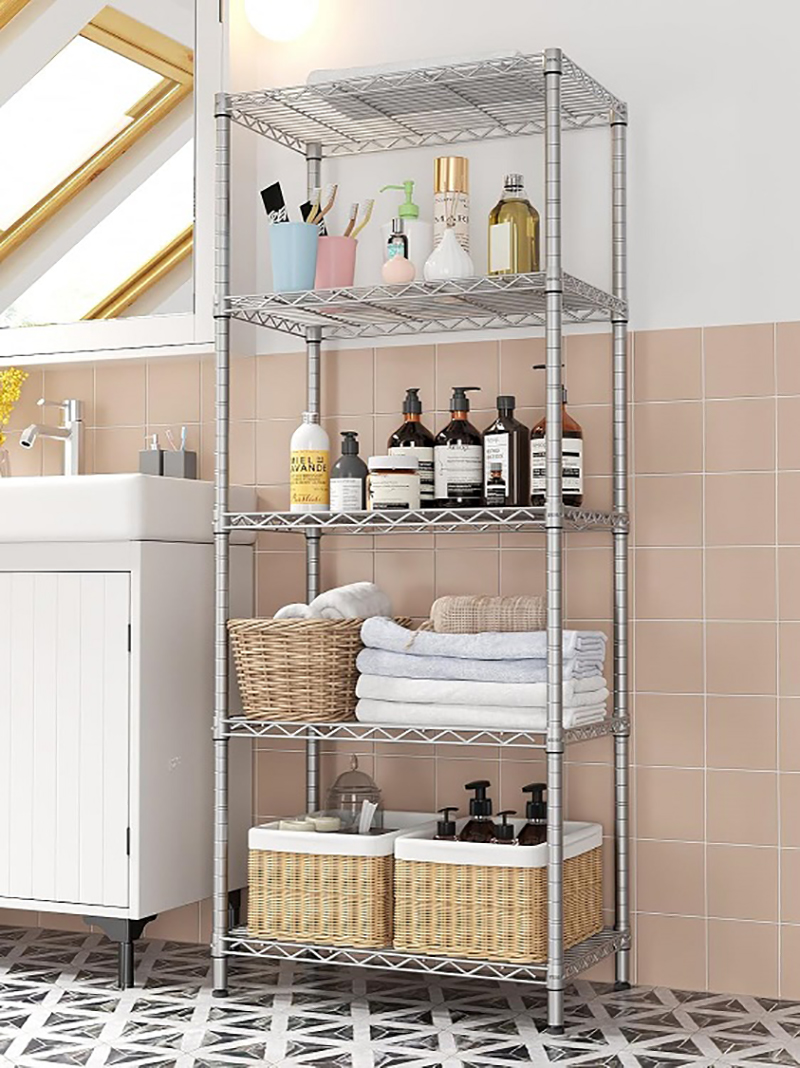
Narrow kitchens—whether in a compact city apartment, a high-volume restaurant, or a mobile food truck—suffer from a common problem: horizontal congestion. When floor space is limited, the only direction left to move is up. Narrow wire shelving, typically defined by depths of 12 inches to 18 inches, allows users to capitalize on vertical space that would otherwise be wasted. These slim units are ideal for placing between a refrigerator and a wall, at the end of a counter, or inside a pantry closet. By utilizing verticality, businesses can increase their storage capacity by up to 300% without expanding their physical footprint.
## Material Excellence: Durability and Sanitation Standards
When selecting wire shelving for a kitchen environment, the material and finish are the most significant indicators of long-term performance. Kitchens are unique environments characterized by high humidity, temperature fluctuations, and exposure to organic acids and oils.
For most dry storage needs and retail-facing kitchen displays, chrome-plated carbon steel is the industry standard. The brilliant, mirror-like finish of chrome provides an aesthetic of cleanliness and modernity. From a technical standpoint, high-quality chrome shelving involves a multi-layer electroplating process that includes a nickel base for corrosion resistance and a chromium top layer for hardness.
However, for kitchens with high moisture levels—such as walk-in coolers or dishwashing stations—epoxy-coated shelving is often the superior choice. Epoxy coatings, usually available in silver, green, or black, provide a physical barrier that is impervious to water and many chemicals. For an OEM provider like WAIGAOQIAO, offering both options is essential to meeting the diverse needs of global wholesalers who serve different sectors of the hospitality industry.
In the professional kitchen sector, the National Sanitation Foundation (NSF) certification is a non-negotiable requirement. An NSF-certified wire shelf has been rigorously tested to ensure it does not harbor bacteria and is easy to clean. The smooth welds and rounded corners of a certified shelf prevent the accumulation of food particles and debris. For international brands, sourcing NSF-certified products from an experienced manufacturer ensures compliance with local health department regulations in markets such as the United States and Europe.
## Engineering for Stability: Overcoming the Narrow Footprint Challenge
One of the primary concerns with narrow shelving—specifically units with a depth of only 12 or 14 inches—is stability. Because the base is narrow, the center of gravity is more sensitive than that of a standard 24-inch deep unit.
To compensate for a narrow footprint, the structural integrity of the shelf itself must be exceptional. This is achieved through the use of high-tensile carbon steel wire and a strategic truss design. The "zigzag" wire supports that run along the length of the shelf serve as the primary load-bearing mechanism. In a narrow shelf, these trusses must be welded with precision to ensure that weight is distributed evenly toward the corner collars. A thicker wire gauge (measured in millimeters) results in a more rigid shelf that resists bowing even when loaded with heavy canned goods or small kitchen appliances.
The vertical posts are the backbone of the shelving system. Most commercial wire shelving uses 1-inch (25mm) diameter posts. However, the wall thickness of the steel tubing is where quality varies significantly. For professional-grade shelving, a wall thickness of at least 1.0mm to 1.2mm is recommended to prevent the posts from buckling under heavy loads. For exceptionally tall narrow units, WAIGAOQIAO advises the use of wall-anchor kits to secure the unit and prevent tipping, a critical safety consideration for end-users.
## Optimizing Dimensions for Different Kitchen Applications
Selecting the "best" narrow shelf requires a precise understanding of what is being stored. A shelf that is too narrow for its contents is useless, while one that is too deep will obstruct traffic flow.
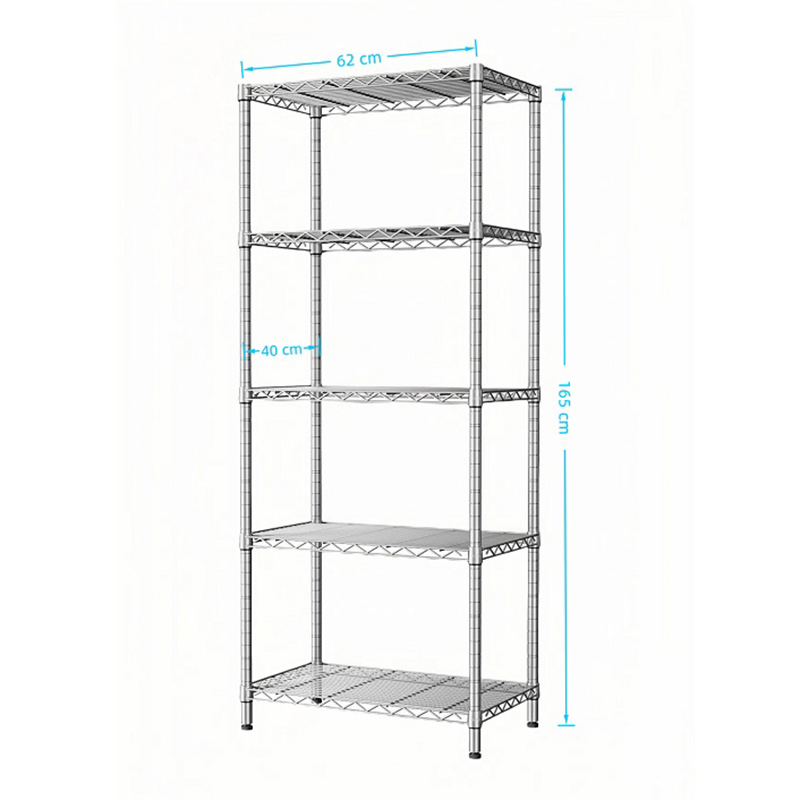
* 12-Inch (30cm) Depth: The ultimate space-saver. These are perfect for spice jars, coffee mugs, and small boxed goods. They are frequently used as "gap fillers" in residential kitchens.
* 14-Inch (35cm) Depth: A versatile middle ground. These can accommodate standard dinner plates and small microwave ovens, making them popular for dorm rooms and studio apartments.
* 18-Inch (45cm) Depth: The industry standard for "narrow" commercial storage. These are deep enough for professional cookware and medium-sized storage bins while still being slim enough for narrow hallways and prep areas.
The beauty of the wire shelf system lies in its 1-inch adjustability. Using a tapered split-sleeve locking system, users can move shelf levels up or down to accommodate tall blenders or short canisters. For wholesalers, offering a variety of post heights allows them to cater to both under-counter storage and floor-to-ceiling pantry organization.
## Mobility and Versatility in the Modern Kitchen
Static shelving is great for long-term storage, but the modern kitchen often requires a more dynamic approach.
For units that will stay in one place, adjustable leveling feet are essential. They allow the user to compensate for uneven kitchen floors, ensuring the unit remains perfectly vertical. However, adding wheels (casters) transforms a narrow shelf into a mobile prep cart or a "sliding pantry" that can be tucked away when not in use.
When selecting casters for a narrow kitchen rack, polyurethane wheels are preferred over hard plastic. Polyurethane is non-marking, quiet, and provides better traction on wet tile floors. For narrow units, it is crucial to use casters with high-quality ball bearings to ensure the unit doesn't wobble during transport.
To maximize the utility of a narrow kitchen shelf, various accessories can be integrated:
* Shelf Liners: Clear plastic liners provide a flat surface for small or unstable items, preventing them from falling through the wire rungs.
* Side Ledges and Backstops: These prevent items from sliding off the shelf when the unit is moved or when items are retrieved quickly.
* Hooks and Hanging Rails: Perfect for hanging oven mitts, ladles, or towels from the side of the unit, further increasing its storage density.
## The OEM Perspective: Sourcing for Global Brands
For brands and wholesalers, the decision of where to source narrow wire shelving is just as important as the specifications of the shelf itself. Partnering with a specialized Chinese manufacturer like WAIGAOQIAO offers several strategic advantages.
OEM manufacturing allows for the customization of every detail—from the specific wire spacing to the branding on the packaging. Large-scale production facilities ensure that every unit produced is identical, maintaining the brand's reputation for quality in the international market. Furthermore, advanced welding robotics ensure that the structural integrity of the narrow shelves is consistent across thousands of units.
Because wire shelving is essentially "air and metal," shipping costs can be a significant hurdle. Professional OEM partners optimize the packaging for "Knock-Down" (KD) shipping. By nesting components and using high-strength, double-walled corrugated boxes, manufacturers can maximize the number of units per shipping container. This reduces the carbon footprint and the landed cost per unit, allowing wholesalers to maintain competitive pricing in their local markets.
## Maintenance and Long-Term Care for Kitchen Shelving
To ensure the longevity of narrow wire shelves in a kitchen environment, proper maintenance is vital. Although the materials are durable, the harsh conditions of a kitchen can eventually take a toll if not managed.
Chrome and epoxy surfaces should be cleaned with a soft cloth and a mild detergent. Abrasive scrubbers or harsh chemicals like bleach should be avoided, as they can micro-scratch the surface, creating an entry point for oxidation. In a commercial setting, a weekly wipe-down is sufficient to maintain the luster of the chrome and the integrity of the epoxy.
While narrow wire shelves are designed for durability, they should not be subjected to standing water for extended periods. In high-humidity environments, ensuring proper ventilation is key to preventing the buildup of moisture on the metal surfaces. If a shelf is used in a coastal area with high salt air, a stainless steel or heavy-duty epoxy finish is recommended over standard chrome.
## Conclusion: Choosing the Right Partner for Success
Selecting the best narrow wire shelving for kitchen storage is a multifaceted process that balances physical dimensions with material science and engineering. Whether the end-user is a home cook looking to organize a pantry or a professional chef optimizing a prep station, the requirements remain the same: durability, sanitation, and space efficiency.
For the international brand or wholesaler, the key to delivering value lies in sourcing products that meet global standards for safety and performance. By focusing on high-quality finishes, robust wire gauges, and modular designs, businesses can provide storage solutions that truly transform the culinary environment. As a dedicated OEM partner, WAIGAOQIAO is committed to helping our global clients navigate these choices, providing the manufacturing expertise and logistical support needed to succeed in the competitive storage industry. Through careful selection and a focus on quality, narrow wire shelving can turn even the most cramped kitchen into a model of organizational efficiency.
***
Q1: How much weight can a narrow 12-inch deep wire shelf hold?
A typical commercial-grade 12-inch by 36-inch wire shelf can support approximately 400 to 600 pounds of static, evenly distributed weight. However, as the length of the shelf increases, the weight capacity may slightly decrease. It is always important to check the specific load rating provided by the manufacturer.
Q2: Is chrome shelving safe for direct food contact?
While chrome shelving is highly sanitary and used in kitchens worldwide, it is generally intended for "packaged" food storage or holding cookware and appliances. For direct food contact (such as placing raw vegetables or dough directly on the wire), NSF-certified stainless steel or specialized plastic-coated shelving is often preferred.
Q3: Can I cut the posts of my wire shelving unit if they are too tall?
Technically, steel posts can be cut using a pipe cutter or a hacksaw. However, this is not recommended for OEM products as it removes the protective finish at the cut site, making it susceptible to rust. It is much better to order posts in the specific height required for your application.
Q4: Why do some narrow shelves come with a plastic "split sleeve"?
The plastic split sleeve is the locking mechanism that holds the shelf in place on the post. It is designed to be "tapered," meaning that as more weight is placed on the shelf, the sleeve wedges itself more tightly into the shelf collar, creating a stronger and more stable connection without the need for bolts or screws.
Q5: What is the difference between a standard kitchen shelf and a "Narrow" shelf?
The primary difference is the depth. Standard shelves are usually 18, 21, or 24 inches deep. Narrow shelves are specifically engineered with depths of 12 or 14 inches to fit into tight spaces, corridors, or small pantries where a full-sized unit would block movement or access.


