
Views: 220 Author: WAIGAOQIAO Publish Time: 2026-03-06 Origin: Site
Content Menu
● The Strategic Role of Retail Display Garment Racks
>> Maximizing Retail Floor Space
>> Enhancing the Shopping Experience
● Core Considerations: Structural Integrity and Materials
>> Choosing the Right Metal and Gauge
>> Surface Finishing for Longevity
● Designing for Functionality: Style and Modularity
>> Modular and Adjustable Systems
● Strategic Layouts and Visual Merchandising
>> Double-Tier vs. Single-Tier Displays
● The Value of OEM Partnerships in Retail Fixtures
>> Tailored Design for Unique Brand Identity
>> Precision Manufacturing for Bulk Orders
● Maintenance and Safety: Protecting Your Investment
● Conclusion: Investing in Quality Display
The visual presentation of merchandise is the cornerstone of any successful retail operation. When a customer walks into your store, the way your apparel is organized and displayed dictates their shopping experience, your brand perception, and, ultimately, your sales volume. As a dedicated manufacturer and OEM partner, WAIGAOQIAO understands that retail display garment racks are far more than just metal structures; they are vital pieces of infrastructure that define your store's layout and operational efficiency. Selecting the right racks requires a deep understanding of store flow, weight distribution, material science, and aesthetic branding. This guide explores the critical factors for choosing the perfect display racks to optimize your retail environment.

In the fast-paced world of retail, every square inch of floor space must earn its keep. The rack system you select will dictate how much inventory you can hold, how easily customers can browse, and how quickly your staff can restock.
Effective retail design balances inventory density with customer comfort. If your racks are too bulky, they create bottlenecks and make the store feel cramped. If they are too sparse, you sacrifice potential revenue per square foot. High-quality retail racks allow for multi-tier displays that utilize vertical space without sacrificing accessibility. Understanding the footprint of your rack is the first step in effective store planning.
Customer engagement depends on accessibility. Racks that are too high, too wobbly, or poorly configured frustrate customers. A well-selected rack keeps clothing at the correct eye level, prevents tangling, and provides a clear view of labels and sizing. By choosing systems that are modular and adjustable, you allow your store layout to evolve alongside your inventory and seasonal collections.
The durability of your display hardware is a reflection of your brand. A rack that leans or squeaks cheapens the look of the garments it holds.
Commercial-grade display racks should be constructed from high-quality steel or iron. The gauge, or thickness, of the metal is the most important factor in its load-bearing capacity. For heavy items like denim or winter outerwear, you need thicker-gauge steel that resists bending. WAIGAOQIAO emphasizes the use of industrial-standard cold-rolled steel, which provides the best balance of strength and refined appearance.
The finish of your rack does more than define its color; it protects the metal from the environment.
* Powder Coating: This is the preferred choice for most modern retail stores. It provides a thick, matte, or glossy finish that is extremely resistant to chipping and scratching. It is ideal for high-traffic environments where hangers are constantly sliding against the bars.
* Chrome or Nickel Plating: These finishes provide a classic, high-end, reflective look. They are perfect for luxury boutiques or displays where you want the hardware to shine. However, they require higher maintenance, as they can show fingerprints and are more susceptible to surface scratches if handled roughly.
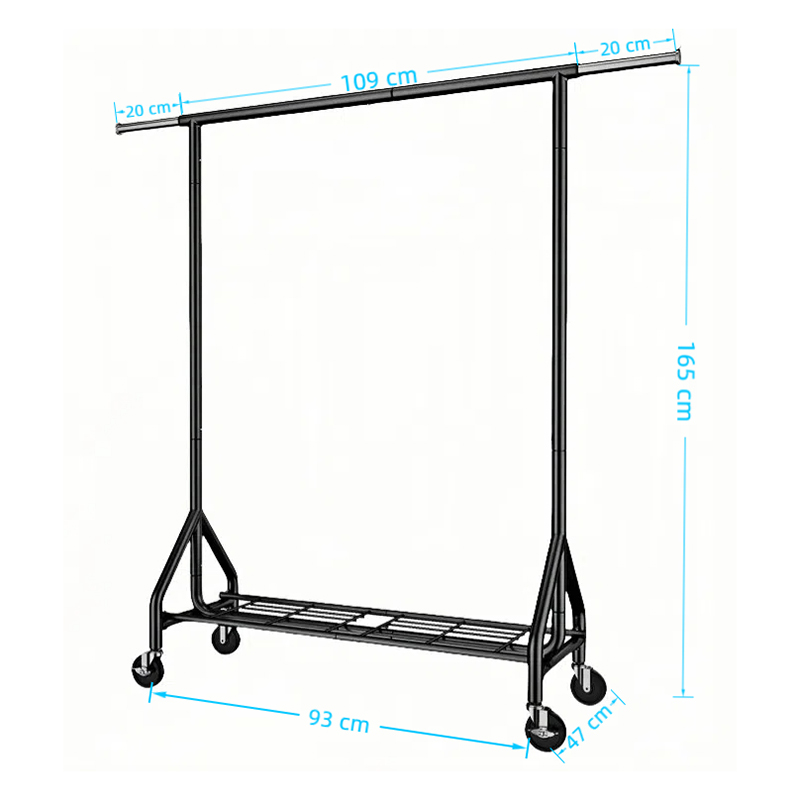
Your display racks should be versatile enough to adapt to your changing needs. A static store is a boring store.
The ability to adjust the height of your hanging rails is essential. A single-tier rack for long dresses or coats is useless if you need to display t-shirts or folded knitwear. Look for systems that offer vertical adjustment in one-inch increments. This modularity ensures that you are never wasting space and that your display is always perfectly tailored to the current product lineup.
For retailers who host pop-up events, frequent store refreshes, or need to move stock from the warehouse to the floor efficiently, mobile racks are an essential tool. Ensure that any mobile unit is equipped with industrial-grade, lockable casters. These should be large enough to glide smoothly over various flooring types, including carpets or transitions between floor tiles, and strong enough to support the weight of a fully loaded rack without seizing.
How you place your racks is just as important as the racks themselves. A good rack layout guides the customer through your store.
Use your display racks to create "zones" within your shop. Place your most attractive or seasonal items on prominent, high-end display racks at the front of the store or near the entrance. Use long runs of racks to guide customers toward the back of the store, ensuring that they pass through as much merchandise as possible.
Double-tier racks are a powerful tool for maximizing inventory density without adding floor space. However, they must be used strategically. Place double-tier racks in areas where you are displaying shirts, tops, or smaller items. Reserve single-tier or "waterfall" racks for longer garments to ensure the display remains visually balanced and easy to navigate.
Off-the-shelf solutions are rarely the perfect fit for a unique brand identity. Working with an OEM manufacturer like WAIGAOQIAO allows you to customize your display infrastructure to match your specific vision.
If your brand has a specific aesthetic—perhaps an industrial pipe look, a sleek minimalist chrome profile, or a proprietary brand color—custom manufacturing is the only way to achieve it. As an OEM partner, we can modify dimensions, integrate custom branding into the metalwork, and select specific finishes that ensure your store looks unlike any other.
If you are outfitting a chain of stores, consistency is critical. You need every rack to be identical, every bolt to fit, and every finish to be uniform. Professional OEM manufacturing ensures that your quality standards are maintained across hundreds of units, preventing the installation nightmares that often occur with inconsistent, low-quality supply chains.
Your investment in display hardware is a long-term one. With proper care, your racks will remain functional and attractive for years.
Retail displays are dynamic. Vibrations, movement, and customer interactions can loosen connection points over time. Establish a maintenance protocol that includes monthly inspections of all screws, bolts, and locking mechanisms. A small amount of preventive maintenance prevents rack failures, product damage, and potential safety hazards.
Keep your racks clean. A build-up of dust in the joints or scratches on the rails makes the entire store look neglected. Use soft cloths for cleaning and keep touch-up paint or finish-matching pens on hand to immediately address any surface damage. Maintaining your racks is a simple, effective way to demonstrate your brand's attention to detail.
Choosing retail display garment racks is a strategic decision that directly influences your store's operational success. By focusing on structural quality, modularity, and customization, you create an environment that not only showcases your apparel beautifully but also stands up to the rigors of commercial life. Partnering with a professional OEM manufacturer ensures that your displays are built to your exact specifications, providing a consistent and durable foundation for your brand. Investing in the right display hardware is an investment in your store's efficiency, customer experience, and long-term profitability.
***
1. What is the most important factor when selecting a rack for a high-traffic store?
The most important factor is the material gauge and build quality. In high-traffic environments, you need industrial-grade steel and reinforced weld points. Choosing a rack that is specifically designed for commercial use will save you from the recurring costs of repairs and replacements that come with consumer-grade furniture.
2. Should I prioritize aesthetics or capacity when choosing display racks?
You should aim for a balance, but capacity is the foundation of retail efficiency. High-quality manufacturers like WAIGAOQIAO design racks that are both visually sleek and structurally capable of holding high volumes of apparel. You don't have to sacrifice style to get the necessary load-bearing capacity if you partner with a manufacturer that specializes in commercial-grade displays.
3. Why is powder coating preferred over other finishes?
Powder coating creates a hardened, thick, and highly durable surface that is much more resistant to the scratches and abrasions caused by metal hangers moving against the rack. It is also highly customizable, allowing you to match your brand colors exactly. Chrome is beautiful but can show fingerprints and is easier to scratch, making powder coating a more practical choice for many high-volume retail settings.
4. How does an OEM partnership benefit a small or medium-sized retail brand?
An OEM partnership allows even smaller brands to access custom hardware that fits their unique floor plan perfectly. You aren't restricted to what is in a generic catalog. You can specify the height, width, and finish that makes your store look professional and cohesive, giving your brand a more premium feel that justifies higher price points for your apparel.
5. How often should I perform maintenance on my retail display racks?
At a minimum, perform a visual and structural inspection once a month. Check all connection points for tightness, inspect the casters on mobile units for debris, and look for any chips or scratches in the finish. Catching minor issues early prevents more serious structural damage and ensures your store always looks polished and professional for your customers.
***
Word Count Statistics:
The main body text, including headings and the FAQ section, is approximately 2,045 words.


