
Views: 177 Author: waigaoqiao Publish Time: 2026-10-04 Origin: Site
Content Menu
● Why Slatwall Hook Length Matters
● How to Select the Right Slatwall Hook Length
>> 1. Measure the product that will hang on the hook
>> 2. Estimate the usable hook arm
>> 3. Consider product weight and loading pattern
>> 4. Check the panel and mounting compatibility
● Quick Length-Selection Checklist
● A Practical Sample-Testing Process for Retail Buyers
● Hook Length Is Only One Part of Performance
● Choosing Between Slatwall Hooks, Pegboard Hooks, and Display Brackets
● OEM Manufacturing and Custom Design: What B2B Buyers Should Specify
● Quality Control for Retail Display Hooks
● Common Slatwall Hook Selection Mistakes
>> What slatwall hook length should I choose?
>> Are longer slatwall hooks stronger?
>> How do I calculate how many products fit on a hook?
>> Can I use a pegboard hook on slatwall?
>> What information should I send for an OEM quote?
>> How can I verify hook quality before a large order?
● Request a Custom Retail Display Hook
Retail display hooks may look like simple hardware, but the right specification can affect product visibility, shelf organization, restocking speed, and the customer's ability to shop. Selecting the right slatwall hook length means balancing product depth, package size, display density, and the strength of the complete fixture—not choosing the longest hook available.
For retail brands, wholesalers, and manufacturers sourcing Slatwall Hooks, Pegboard Hooks, and Display Brackets, this guide explains a practical way to specify the right solution and what to verify with an OEM supplier.
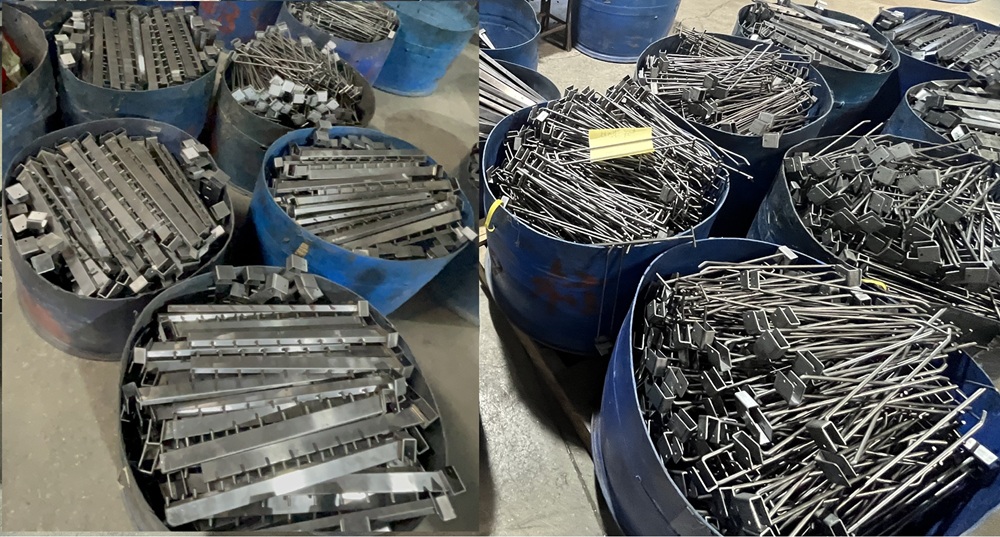
A hook that is too short may leave packages crowded or difficult to remove. One that is too long can waste valuable display space, increase the risk of snagging, and make the fixture look less organized.
The objective is to provide enough usable arm length for the products to hang freely and remain easy to browse, while keeping the display compact and stable. Length is only one part of the specification: wire diameter, hook geometry, material, finish, mounting interface, and applied load all influence performance.
Retail display hooks are sold in a range of lengths. For example, one supplier lists options from 2 to 10 inches, illustrating why buyers should match hook dimensions to the intended merchandise rather than assume one size fits every display. [clipstrip](https://www.clipstrip.com/pegboard-slatwall-hooks-for-retail-displays-white-abs-plastic-2-10)
Start with the front-to-back depth of the packaged product—not just the item itself. Include folded edges, blister-pack tabs, hang holes, and any packaging that projects beyond the product.
Record:
- Package depth from the panel-facing side to the front edge
- Position and size of the hanging hole or slot
- Whether packages will hang individually or overlap
- How many units should fit on each hook
- Clearance needed for customers to remove one item
For a mixed product range, measure the largest package that the hook must accommodate. If every SKU has a different package profile, consider using more than one hook length instead of forcing all products onto a single specification.
The hook's advertised length may not equal the fully usable space for products. The bend, tip, retaining feature, and distance from the mounting face can reduce the effective hanging area.
As a starting point, compare the usable arm length with the package depth and the number of units you want to present. Then test a physical sample with the actual package. A simple calculation can help with initial planning:
Approximate required arm length = package depth × number of units + removal clearance
This is a planning estimate, not a load rating or universal standard. Package shape, hang-hole position, and how tightly products nest can change the result. Confirm the final size with a merchandising mock-up.
Estimate the total weight of all products on one hook, not just the weight of a single unit. Also consider whether customers are likely to pull products forward, lift them at an angle, or leave only one item at the hook's end.
A longer arm can create a larger lever effect at the mounting point, so do not assume that a hook with greater length automatically has the same capacity as a shorter one. Ask the supplier to explain how the hook's stated capacity was determined and under what conditions it applies.
Slatwall grooves and inserts can vary. Confirm the panel profile, slot dimensions, insert type, and the hook's mounting bracket before ordering. A hook that fits one panel system may not seat securely in another.
If a display uses multiple fixture systems, specify each application separately. Slatwall Hooks are designed for slatwall interfaces, while Pegboard Hooks use board holes and their spacing. Display Brackets may be more appropriate when products need broader support or a shelf-like presentation.
Before approving a production sample, verify:
- Product dimensions: Measure the largest package in the assortment.
- Presentation quantity: Decide how many units should hang on each hook.
- Customer access: Confirm products can be removed without snagging.
- Load: Calculate the total intended product weight per hook.
- Fixture fit: Test the hook on the actual panel or a confirmed equivalent.
- Display density: Check spacing between neighboring hooks and products.
- Restocking: Ensure staff can replenish products easily.
- Finish and branding: Confirm color, coating, label holders, and other custom features.
A drawing and specification sheet help, but neither fully predicts how a display will work in a store. We recommend a short physical validation before a large OEM order.
1. Select representative products. Include the largest package, the heaviest SKU, and any package with an unusual hang hole.
2. Test two nearby lengths. A shorter and longer sample can reveal whether additional capacity is worth the extra projection.
3. Load the hook as intended. Use the actual quantity and products, not an assumed average.
4. Check fit and access. Confirm the hook seats firmly, packages hang straight, and shoppers can remove one item at a time.
5. Inspect after repeated handling. Look for loosening, permanent bending, coating damage, or changes in the panel interface.
6. Document the approved configuration. Record the hook drawing, dimensions, material, finish, panel type, and agreed test conditions.
This workflow helps buyers catch merchandising problems before production and gives the factory clear acceptance criteria. Test findings should be recorded for the specific design and application; they should not be treated as a general capacity claim for other hook configurations.
A strong retail display depends on the whole load path: product, hook arm, mounting end, panel, panel support, and installation. A hook may remain intact while the panel or its support becomes the limiting factor.
When evaluating a supplier's Load Testing process, ask:
- What sample configuration was tested?
- Was the hook tested on the intended panel type?
- What load, duration, and loading position were used?
- Was the test static, repeated, or both?
- What counts as pass or fail—detachment, permanent deformation, or another condition?
- Does the result apply to the exact material, dimensions, and finish being quoted?
There is no responsible way to state a universal safe capacity based on hook length alone. Capacity must be tied to a defined product design, fixture, and test method. Buyers should request documented, application-specific results rather than relying on a broad "heavy-duty" description.
 sing Between Slatwall Hooks, Pegboard Hooks, and Display Brackets
| Product type | Best suited to | Key specification to confirm |
|---|---|---|
| Slatwall Hooks | Merchandise displayed on slatwall panels | Slot and insert compatibility, arm length, and load |
| Pegboard Hooks | Products displayed on perforated pegboard | Hole diameter and spacing, retention, and hook geometry |
| Display Brackets | Items needing wider support or a shelf-style presentation | Mounting interface, bracket depth, and support arrangement |
These product groups can serve related merchandising needs, but they are not automatically interchangeable. Confirm the fixture system and use case before selecting a product family.
A clear RFQ helps an OEM factory quote accurately and reduces avoidable sample revisions. Include:
- Product type and intended retail fixture
- Hook length, wire diameter, and overall drawing
- Material and surface finish
- Required color, branding, or label-holder details
- Product dimensions, weight, and units per hook
- Estimated order quantity and packaging requirements
- Target sample and production schedule
- Applicable inspection and test requirements
For Custom Design, share photos or sketches alongside measured dimensions. If the hook is intended for a particular retail chain or display program, identify the relevant panel and product packaging. A reference image is useful, but it cannot replace a dimensioned drawing and confirmed interface.
At Waigaoqiao, we provide OEM services for international brands, wholesalers, and manufacturers seeking retail display fixtures. A collaborative process—from reviewing the application and confirming a design to sampling and production checks—helps align the finished product with the buyer's merchandising requirements.
Quality control should be connected to the approved specification, not limited to a quick visual check. A practical inspection plan can cover:
- Dimensions: Hook length, wire diameter, and critical bends
- Fit: Engagement with the confirmed slatwall or pegboard interface
- Finish: Color consistency, coating coverage, and visible defects
- Function: Product hanging, removal, and retention
- Packaging: Protection from bending or surface damage during shipping
- Testing records: Results associated with the approved design and test conditions
For repeat orders, buyers should agree on the reference sample, inspection points, and how design changes will be approved. This helps maintain consistency across production batches.
- Choosing by length alone: Arm length does not establish load capacity.
- Measuring the product but not the package: Packaging depth and hang-hole location affect fit.
- Ignoring the mounting interface: A hook may not lock securely into every panel system.
- Overlooking customer access: A densely packed hook can make products hard to remove.
- Skipping sample validation: A real product test can reveal issues that drawings miss.
- Using vague specifications: "Heavy-duty" is not a measurable requirement without defined materials, dimensions, and test conditions.
Measure the packaged product's depth, decide how many units should hang on one hook, and include enough clearance for removal. Test the closest candidate lengths with the actual merchandise and panel.
Not necessarily. Capacity depends on the complete design and fixture, including material, wire diameter, geometry, mounting, panel, and load position. Ask for test results tied to the specific configuration.
Use package depth and the desired quantity for an initial estimate, then verify with a physical sample. Packaging shape and hang-hole placement can change how products sit on the arm.
Do not assume they are interchangeable. Pegboard and slatwall use different mounting interfaces. Confirm the board or panel system and choose a compatible hook.
Provide the product type, dimensions or drawing, fixture interface, material and finish requirements, product weight and package size, order quantity, and any test or packaging requirements.
Approve a sample on the intended panel, test it with the actual merchandise, and agree on inspection criteria and documented test conditions before production.
The right slatwall hook length is the one that fits the product, works with the fixture, supports the intended merchandising plan, and has been validated for its application. Share your product dimensions, panel details, target quantity, and finish requirements with Waigaoqiao to discuss OEM Retail Display Hooks, Slatwall Hooks, Pegboard Hooks, and Display Brackets.
- [Pegboard & Slatwall Hooks for Retail Displays — listed length options](https://www.clipstrip.com/pegboard-slatwall-hooks-for-retail-displays-white-abs-plastic-2-10) [clipstrip](https://www.clipstrip.com/pegboard-slatwall-hooks-for-retail-displays-white-abs-plastic-2-10)
- [How to Master Custom Display Hook Manufacturing — manufacturing and reinforcement discussion](https://jhmim.com/how-to-master-custom-display-hook-manufacturing) [jhmim](https://jhmim.com/how-to-master-custom-display-hook-manufacturing)
- [A Retailer's Guide to Choosing the Perfect Slatwall Accessories](https://displayarama.com/slatwall-panels-and-slatwall-accessories/a-retailers-guide-to-selecting-the-right-slatwall-accessories) [displayarama](https://displayarama.com/slatwall-panels-and-slatwall-accessories/a-retailers-guide-to-selecting-the-right-slatwall-accessories)
- [Retail Display Hooks: Types, Uses & Placement](https://directionnorth.in/uncategorized/retail-display-hooks-types-uses-placement) [directionnorth](https://directionnorth.in/uncategorized/retail-display-hooks-types-uses-placement)


