
Views: 220 Author: WAIGAOQIAO Publish Time: 2026-04-06 Origin: Site
Content Menu
● Understanding the Functional Requirements of Modern Fixtures
>> Load-Bearing Capacities and Structural Integrity
>> Modularity and Space Optimization
● Key Criteria for Material Selection
>> Steel Quality and Coating Durability
>> Caster Performance and Mobility
● Evaluating Design for Operational Efficiency
>> Assembly and Logistical Efficiency
>> Aesthetic Alignment with Brand Identity
● Strategic Considerations for OEM Partnerships
>> Rigorous Quality Assurance Standards
>> Long-Term Sustainability and Value
For companies like WAIGAOQIAO, the garment rack is not merely a piece of hardware; it is a critical component of commercial infrastructure. As a premier OEM partner to international brands, wholesalers, and manufacturers, we understand that selecting the right wardrobe garment stand requires a nuanced balance between aesthetic versatility, material durability, and operational efficiency. In a world where retail space is premium real estate, a well-chosen garment stand can dramatically influence inventory density, customer interaction, and the overall longevity of the fixtures. This guide provides a comprehensive framework for selecting high-performance wardrobe garment stands tailored to professional requirements.
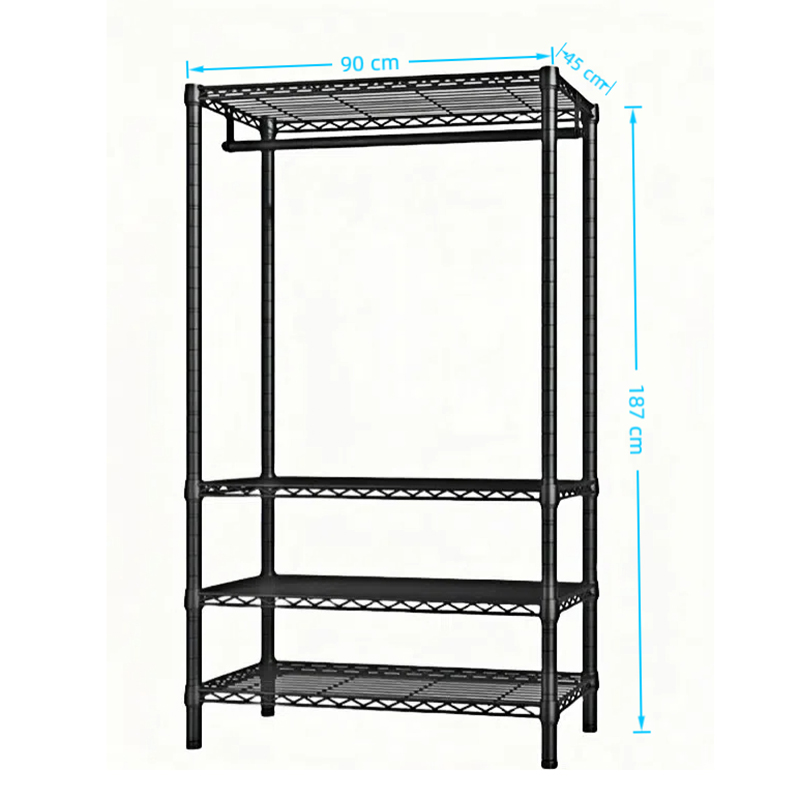
Selecting the right garment stand begins with an honest assessment of the intended environment. Retail settings, showrooms, and warehouse backrooms all place different stresses on storage equipment. Before entering the procurement phase, stakeholders must categorize their needs based on usage frequency and load requirements.
Commercial-grade stands must be engineered to handle significantly higher weights than residential alternatives. When evaluating options, the primary indicator of quality is the material thickness and the connection mechanism design. Professional stands often utilize high-grade steel, which provides the necessary rigidity to prevent the horizontal rods from sagging under the weight of heavy winter coats or dense inventory.
A critical factor for wholesalers and retail chains is the ability to adapt to changing inventory needs. Modern wardrobe garment stands should offer modular features, such as height-adjustable crossbars and extendable arms. These features allow retailers to transition seamlessly between displaying long garments like dresses or coats and shorter items like shirts or trousers, maximizing the utility of every square foot of floor space.
The longevity of a garment stand is inherently tied to the quality of the materials used in its construction. As a professional manufacturer, WAIGAOQIAO emphasizes that the "hidden" aspects of construction—such as surface treatments and joint engineering—are what truly distinguish a long-lasting product from one that requires frequent replacement.
The standard for professional-grade stands remains cold-rolled steel, valued for its consistency and strength. However, the finish is what protects this structure from the daily wear and tear of a busy retail floor. Electrostatic powder coating is widely considered the industry benchmark. Unlike standard paint, powder coating creates a robust, scratch-resistant barrier that remains pristine even with constant hanger movement. For brands seeking a more premium or industrial aesthetic, high-quality plating options, such as chrome or matte black nickel, are excellent choices, provided the underlying metal preparation is performed to strict standards to prevent oxidation.
A garment rack is only as good as its mobility. In a dynamic retail setting, fixtures are moved frequently to accommodate store resets and inventory replenishment. High-quality stands must be equipped with industrial-grade, non-marking casters that feature reliable locking mechanisms. These casters should be designed to maintain structural stability even when the rack is fully loaded and moving across uneven floor surfaces.
Beyond the technical specifications, the design of a wardrobe garment stand directly impacts the labor costs associated with store maintenance and inventory management. An efficiently designed rack reduces the time employees spend adjusting equipment and allows for faster display updates.
For international distributors and wholesalers, the design must facilitate "flat-pack" shipping to reduce carbon footprints and logistics costs. A superior stand is designed for tool-free or low-tool assembly. By prioritizing modular, interlocking parts, manufacturers can deliver high-quality products that are easy to assemble on-site without sacrificing structural stability.
Finally, the rack must serve as an extension of the brand's visual identity. Whether a retailer prefers the clean, minimalist look of a straight-bar industrial stand or the complex, high-capacity utility of a 4-way or tiered rack, the stand must provide a backdrop that highlights the clothing rather than distracting from it. The ability to customize finish colors, base shapes, and hardware accents allows OEM clients to maintain brand consistency across all their retail touchpoints.
When selecting a partner to manufacture these stands, brands should look beyond the initial unit price. True value in the OEM sector is derived from a manufacturer's ability to provide end-to-end support, from prototype design to rigorous quality assurance testing.
Professional-grade manufacturing must include multi-stage inspections. This encompasses structural stress testing, adhesion testing for coatings, and component tolerance verification. A reliable OEM partner ensures that every rack in a shipment meets the exact same specifications, providing consistency that is essential for global brand deployments.
Sustainable procurement is no longer just a trend; it is a core business mandate. Selecting manufacturers that utilize recycled steel and energy-efficient, waste-reducing production processes helps brands meet their environmental goals while maintaining the high standards expected by their customers. Ultimately, investing in a high-quality, durable garment stand is a form of sustainability itself, as it reduces the frequency of replacement and minimizes the environmental impact of disposal.

Q1: What is the most critical factor when selecting a garment rack for high-density retail?
A: The most critical factor is the structural load capacity, which depends on the steel tubing gauge and the integrity of the joints, as high-density displays place immense pressure on the rack's frame.
Q2: How do I know if a garment rack is suitable for heavy clothing like coats?
A: You should look for stands specifically designated as "heavy-duty" that feature thicker-gauge steel tubing and reinforced welding at critical stress points to prevent bowing.
Q3: Why is it important to choose a rack with industrial-grade casters?
A: Industrial casters provide better load management, smoother mobility across retail floor surfaces, and superior locking mechanisms that ensure safety and stability when the rack is stationary.
Q4: What are the benefits of choosing an OEM partner like WAIGAOQIAO for garment racks?
A: Partnering with an OEM provider ensures customized design solutions, consistent manufacturing quality through rigorous QC processes, and cost-efficiency through streamlined logistics and production.
Q5: How can a rack's design help reduce labor costs for store operations?
A: Racks designed for modularity, ease of assembly, and quick height adjustment allow retail staff to reconfigure store layouts and update displays faster, reducing the man-hours required for floor maintenance.


