
Views: 170 Author: waigaoqiao Publish Time: 2026-08-18 Origin: Site
Content Menu
● Why the golden sample matters
● Appearance approval is equally important
● A practical load-testing procedure
● Safety factor and product-specific testing
● Why photographs are not enough
● Step 1: Review the merchandising application
● Step 2: Confirm technical specifications
● Step 3: Develop and approve a sample
● Step 4: Conduct performance testing
● Step 5: Approve the golden sample
● Step 6: Control mass production
● Step 7: Complete final inspection
● 1. How does Waigaoqiao test retail display hooks?
● 2. What makes a retail hook suitable for high-traffic stores?
● 3. Can Waigaoqiao customize hook length and finish?
● 4. How can I confirm whether a hook fits my pegboard?
● 5. What information is needed for a quality-focused quotation?
● 6. Why is a golden sample important?
● 7. Should I request a load-test report?
● 8. Can packaging affect retail hook quality?
● 9. What is the difference between quality control and quality assurance?
● 10. How early should I involve the manufacturer?
Retail hooks face demanding conditions every day. They support packaged products, withstand repeated customer handling, remain exposed to friction and cleaning, and must continue to look consistent throughout a merchandising campaign.
For international brands, wholesalers, and manufacturers, choosing a retail hook manufacturer is therefore a quality and supply-chain decision—not simply a price comparison. A reliable OEM retail display fixture manufacturer in China should be able to control material specifications, dimensions, welding, surface finishes, load performance, packaging, and batch consistency.
At Waigaoqiao, we approach retail display hook quality control from a practical user perspective: the hook must fit the display system, carry the intended product, survive repeated use, and preserve the visual standards of the brand. This article explains how a structured quality-control process can help retail hooks perform in high-traffic store environments.
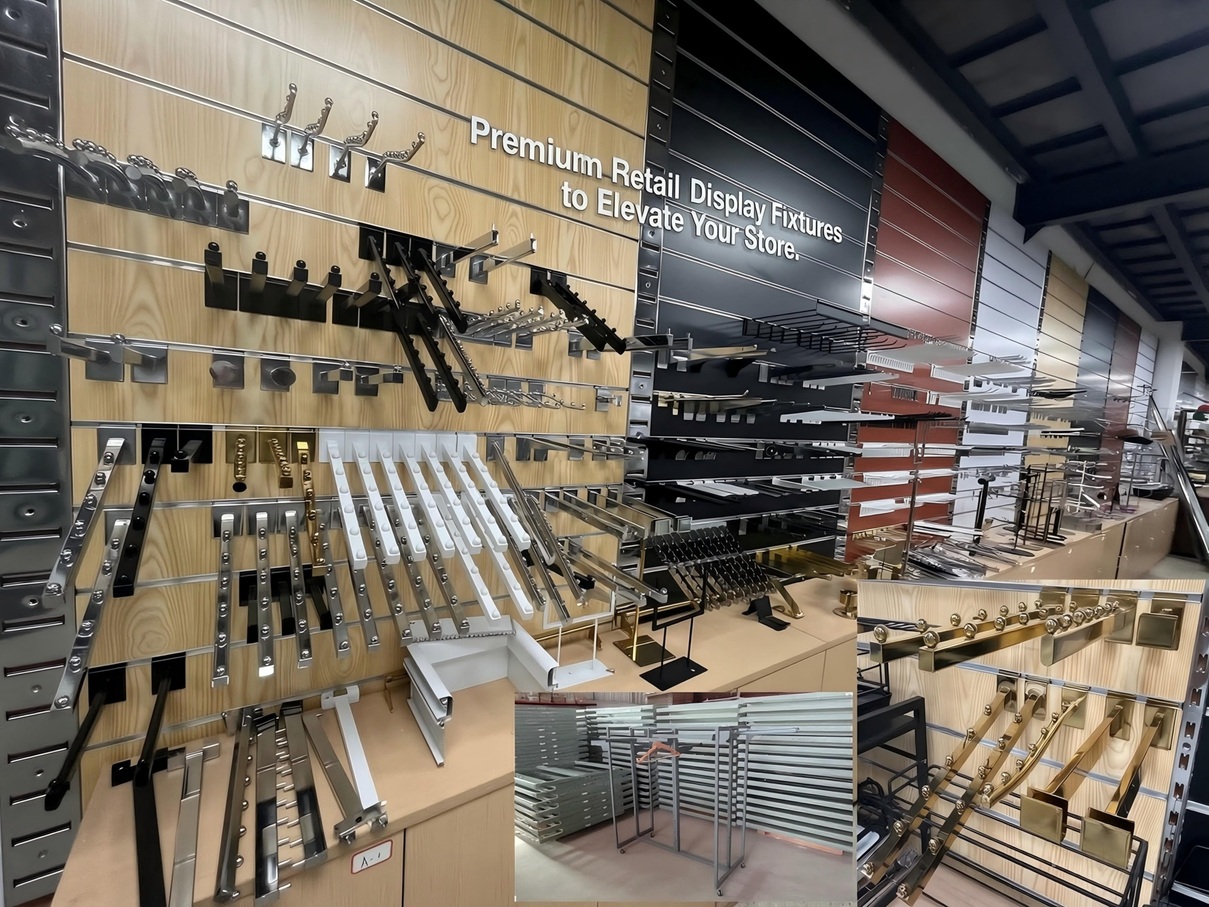
- Hero image: Retail hooks installed in a busy supermarket, hardware store, or specialty retail environment.
- Quality-control image: Factory inspection of wire diameter, dimensions, welds, and surface finish.
- Technical diagram: Hook length, wire diameter, mounting bracket, label holder, and load position.
- Video: A product loaded, removed, replenished, and tested repeatedly on a pegboard or slatwall.
## Why High-Traffic Stores Are a Serious Test for Retail Hooks
A hook used in a warehouse or showroom may experience limited handling. A hook installed in a busy store is exposed to much more demanding use.
Customers may:
- Pull several products forward at once.
- Twist or lift packages while shopping.
- Return products at different angles.
- Move products between adjacent hooks.
- Apply accidental side loads.
- Strike the hook with baskets or carts.
- Touch the coating repeatedly.
- Push products backward during replenishment.
Store employees also remove and reload merchandise during daily inventory work, promotional resets, and seasonal changes.
This creates several possible failure points:
- Hook bending
- Mounting-point rotation
- Weld cracking
- Coating scratches
- Rust or corrosion
- Loose label holders
- Poor fit with the backboard
- Inconsistent product spacing
- Sharp edges that damage packaging or create safety concerns
A retail hook should therefore be evaluated as part of a complete merchandising system. Its performance depends on the product weight, package geometry, display board, mounting method, replenishment frequency, and customer behavior.
---
## What Retail Display Hook Quality Control Should Cover
A comprehensive quality-control process normally includes four layers:
1. Incoming-material inspection
2. In-process manufacturing control
3. Performance and appearance testing
4. Final inspection and shipment verification
Each stage addresses a different risk.
A final visual inspection may identify scratches, but it cannot compensate for incorrect wire diameter or an unsuitable hook design. Likewise, a strong hook may still create problems if its mounting bracket does not fit the customer's pegboard or slatwall.
The purpose of quality control is not only to reject defective products. It is to prevent defects from moving to the next stage.
---
## 1. Incoming Material Inspection Protects Basic Strength
The quality of a metal display hook begins with the raw material.
Depending on the application, retail hooks may use:
- Carbon steel wire
- Stainless steel
- Steel strip
- Aluminum
- Molded plastic components
- Zinc or other surface-finish systems
For metal hooks, the factory should verify the material specification before production begins.
Key checks may include:
- Wire diameter
- Metal thickness
- Material grade
- Surface condition
- Coil or sheet consistency
- Supplier documentation
- Corrosion or contamination risks
Wire diameter is especially important. A small change can affect rigidity, bending resistance, appearance, and compatibility with the original design.
For custom OEM projects, the approved material should be clearly recorded in the technical specification. Buyers should avoid vague descriptions such as "high-quality steel" without identifying the actual material or dimensional requirement.
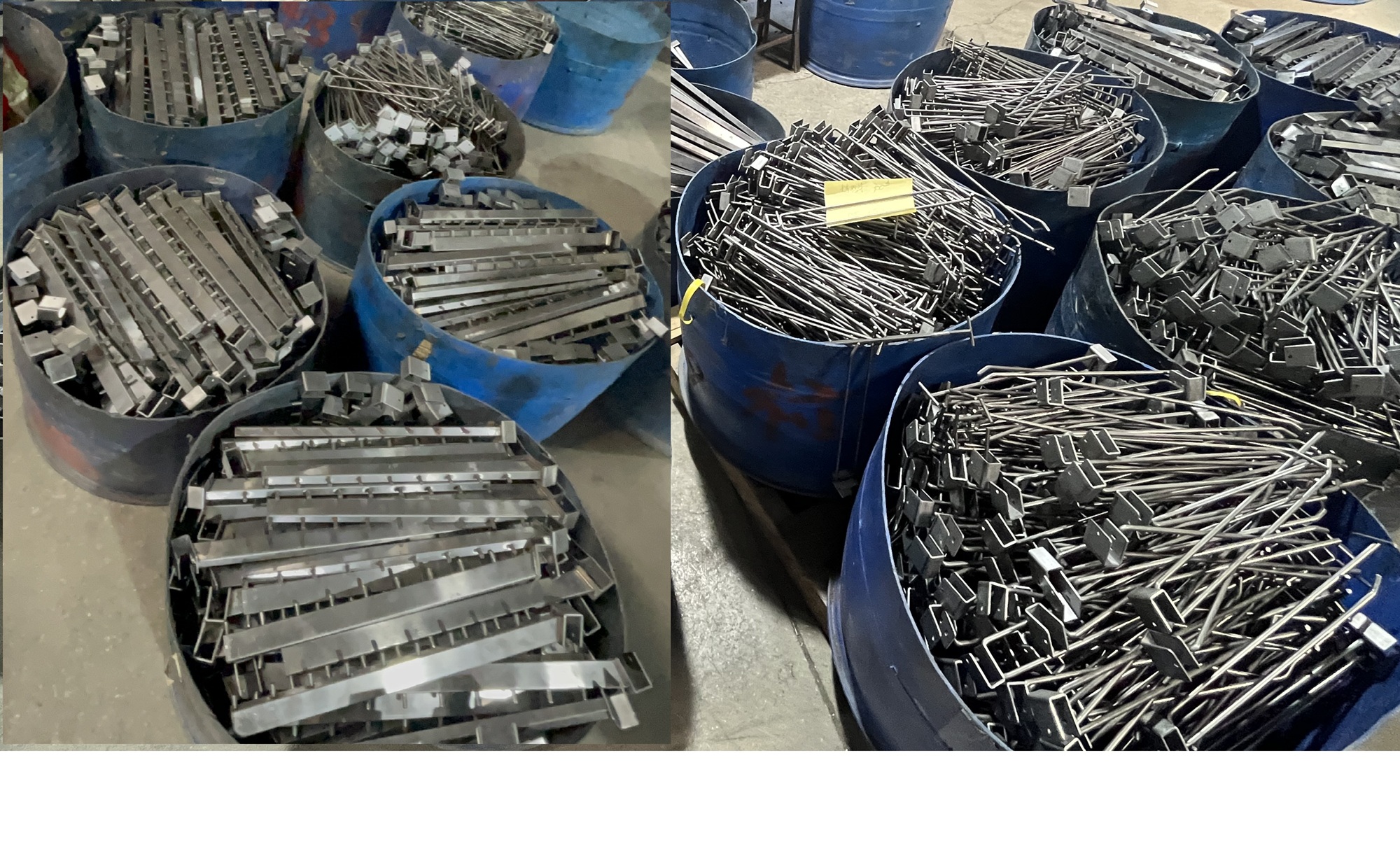
Ask the display hook supplier:
- What material is used for the hook and bracket?
- How is wire diameter verified?
- Are incoming materials traceable by batch?
- Can material documentation be provided?
- What happens if raw material does not meet the approved specification?
A transparent response indicates a more mature manufacturing system.
## 2. Precision Forming Controls Hook Shape and Compatibility
After material approval, the wire or metal strip must be cut and formed accurately.
The forming process determines:
- Hook length
- Hook angle
- Front-stop position
- Mounting geometry
- Product spacing
- Backboard compatibility
- Label-holder alignment
Even a visually minor dimensional error can cause installation problems. A bracket that is slightly too wide may not enter the pegboard correctly. A hook that is too short may reduce product capacity. A hook with an incorrect angle may cause packages to slide or sit unevenly.
For this reason, Waigaoqiao's quality-control approach should compare production parts against an approved drawing or golden sample.
Important inspection tools may include:
- Vernier calipers
- Go/no-go gauges
- Templates
- Angle gauges
- Measuring fixtures
- Custom checking jigs
A golden sample provides a physical reference for:
- Overall shape
- Hook curvature
- Finish appearance
- Bracket position
- Weld location
- Label-holder alignment
- Packaging format
The sample should be approved before mass production and retained for future batch comparisons. If a specification changes, the change should be documented and approved rather than communicated informally through messages.
## 3. Welding and Joint Inspection Prevent Structural Failure
Many retail display hooks include welded joints, support bars, brackets, or end components.
A weld that looks acceptable from a distance may still be weak if:
- The contact area is insufficient.
- Heat input is inconsistent.
- The joint is not correctly positioned.
- The weld contains visible gaps or excessive spatter.
- The wire is not properly aligned before welding.
Quality checks should examine:
- Weld continuity
- Joint alignment
- Visible cracks
- Excessive spatter
- Sharp projections
- Deformation near the weld
- Joint strength under the intended load
For higher-risk products, the factory may use sample-based destructive testing or load testing on representative production pieces. The precise test method should be agreed with the buyer based on product weight, mounting design, and intended retail environment.
Important distinction: A load test for a complete hook assembly is not the same as a simple material test. The actual performance depends on the wire, weld, bracket, board interface, and load position together.
## 4. Surface-Finish Inspection Protects Appearance and Service Life
Retail hooks are highly visible. Their finish contributes to the perceived quality of the entire display.
Common finishes include:
- Chrome plating
- Zinc plating
- Nickel plating
- Black powder coating
- White powder coating
- Custom powder-coated colors
Quality control should check:
- Color consistency
- Gloss level
- Coating coverage
- Surface smoothness
- Pinholes
- Bubbles
- Peeling
- Scratches
- Sharp edges
- Uncoated areas around joints
Coating adhesion is a measurable performance characteristic. ASTM D4541 describes a pull-off method for evaluating coating adhesion on rigid substrates such as metal, while also emphasizing that results depend on the test apparatus, adhesive, coating system, substrate, and procedure. [astm](https://www.astm.org/d4541-22.html)
This means buyers should not request a generic "adhesion test" without defining the method and acceptance criteria. Test results are meaningful only when the test conditions are clearly specified and consistently applied.
A technical test does not replace visual approval. For branded retail programs, the customer should approve:
- Finish sample
- Color reference
- Gloss level
- Logo or label treatment
- Packaging appearance
- Acceptable cosmetic defects
A controlled approval process helps prevent disputes between the factory and buyer after production.
## 5. Load Testing Must Reflect Real Store Use
Load capacity is one of the most important quality factors for heavy-duty retail display hooks.
However, "maximum load" can be misleading if the test conditions are not explained. A hook may carry a certain weight when the load is close to the mounting point but bend when the same weight is positioned at the end of a long hook.
A useful load-testing plan should define:
- Product weight
- Hook length
- Load position
- Mounting system
- Test duration
- Safety margin
- Permanent deformation limit
- Number of samples
- Acceptance criteria
1. Install the hook on the intended pegboard, slatwall, or panel.
2. Use the actual product or a load with equivalent weight and dimensions.
3. Place the load at the normal merchandising position.
4. Maintain the load for an agreed period.
5. Measure visible deflection and mounting movement.
6. Remove the load and check for permanent deformation.
7. Repeat the test on representative samples.
8. Record the result using photographs and inspection data.
For a high-traffic application, consider adding repeated loading and unloading. This better reflects the way store employees and customers use the product.
A supplier should not promise that every hook is suitable for every product. The required capacity depends on:
- Package weight
- Product shape
- Center of gravity
- Hook length
- Customer access
- Mounting board strength
- Replenishment method
The most reliable approach is to test the complete product-and-hook combination.
## 6. Compatibility Testing Prevents Installation Problems
A retail hook can pass a strength test and still fail in the field if it does not fit the display system.
Before production, verify:
- Pegboard hole diameter
- Hole spacing
- Slatwall profile
- Panel thickness
- Bracket depth
- Locking method
- Clearance from neighboring hooks
- Label-holder position
- Installation and removal force
Waigaoqiao recommends that OEM customers provide drawings, photographs, or physical samples of the target display board whenever possible.
Photographs help explain the application, but they may not reveal:
- Actual hole dimensions
- Backboard thickness
- Tolerance variation
- Hidden obstructions
- Mounting interference
- Load-bearing limitations
A physical sample or dimensioned drawing provides a much stronger foundation for engineering decisions.
## 7. Repeated-Use Testing Simulates Busy Retail Conditions
A new hook may look perfect after one installation. The more important question is how it behaves after repeated use.
A repeated-use test can simulate:
- Product removal
- Product replacement
- Hook repositioning
- Customer pulling
- Side movement
- Promotional resets
- Cleaning and handling
Inspect the sample at defined intervals for:
- Bending
- Loosening
- Weld damage
- Coating wear
- Bracket deformation
- Sharp edges
- Label-holder movement
- Loss of alignment
This is one of the most valuable additions to a standard supplier inspection because it connects laboratory-style control with actual store behavior.
| Test item | What to record |
|---|---|
| Initial condition | Photos, dimensions, finish, sample ID |
| Applied load | Weight, location, duration |
| Repeated cycles | Number of removal and replacement cycles |
| Mounting condition | Rotation, looseness, board damage |
| Surface condition | Scratches, peeling, discoloration |
| Final result | Pass, conditional approval, or failure |
The exact cycle count should be agreed with the customer and based on expected store usage.
## 8. Packaging Quality Is Part of Product Quality
Retail hooks can be damaged after leaving the production line.
Common transportation risks include:
- Coating scratches
- Wire deformation
- Bracket bending
- Mixed specifications
- Missing accessories
- Moisture exposure
- Carton collapse
- Inaccurate carton quantities
Packaging inspection should verify:
- Inner-bag protection
- Carton strength
- Quantity per carton
- Product identification
- Batch information
- Moisture protection
- Pallet or container stability
- Retail-ready packaging requirements
For international B2B shipments, packaging also affects freight efficiency. A compact package can reduce shipping volume, but over-compression may increase the risk of deformation.
The best solution balances protection, cost, handling efficiency, and sustainability.
## Waigaoqiao's Recommended Quality-Control Workflow
For a customized retail hook project, we recommend the following workflow:
We first evaluate the product package, display board, hook position, expected load, and store environment.
The project specification should identify dimensions, material, finish, tolerances, packaging, and inspection requirements.
The sample is checked for fit, appearance, product access, stability, and merchandising effect.
Testing may include dimensional checks, load testing, repeated-use evaluation, surface-finish inspection, and packaging review.
The approved sample becomes the reference for production and future batch inspections.
Production inspection checks material, forming, welding, finish, assembly, packing, and quantity.
Before shipment, the factory verifies that the finished goods match the approved specification and packaging requirements.
This workflow creates a clear link between design intent, production control, and final retail performance.
## How Buyers Can Audit a Retail Hook Manufacturer
A buyer does not need to perform a complex factory audit to identify basic quality risks. Ask for evidence.
- Factory quality-control process
- Sample inspection records
- Material specifications
- Load-test photographs or reports
- Finish approval samples
- Packaging photographs
- Corrective-action process
- Production schedule
- Traceability method
- Reference projects, where available
Be cautious if a supplier:
- Provides only catalog photographs.
- Avoids discussing load capacity.
- Cannot explain its material specification.
- Changes the finish without approval.
- Gives inconsistent dimensions.
- Refuses to document production changes.
- Offers unusually low prices without explaining the specification.
A professional supplier should be willing to explain what is tested, how it is tested, and what happens when a result does not meet the requirement.
## Common Quality Problems and Their Prevention
| Common problem | Likely cause | Preventive action |
|---|---|---|
| Hook bends under load | Insufficient wire diameter or excessive length | Confirm load position and test the complete assembly |
| Hook rotates on the board | Poor bracket design or incorrect fit | Conduct compatibility and mounting tests |
| Coating scratches during transport | Inadequate inner protection | Improve bags, dividers, and carton packing |
| Weld cracks | Inconsistent welding or alignment | Add weld inspection and sample strength testing |
| Color varies between batches | Uncontrolled coating process | Approve a color standard and retain a reference sample |
| Product slides off | Incorrect hook angle or missing stop | Test with the actual package |
| Label holder loosens | Weak connection or excessive handling | Test repeated use and inspect the joint |
| Rust appears | Inadequate finish or moisture exposure | Review material, coating, packaging, and storage conditions |
The key principle is simple: each recurring defect should have a documented preventive action, not only a repair after shipment.
## Why Waigaoqiao Is a Practical OEM Partner for Retail Hooks
Waigaoqiao is a China-based manufacturer specializing in retail display fixtures and OEM services for overseas brands, wholesalers, and manufacturers.
Our role is to help customers convert a merchandising requirement into a manufacturable and reliable display solution.
We support projects involving:
- Custom metal display hooks
- Pegboard display hooks
- Slatwall display hooks
- Heavy-duty retail hooks
- Hooks with price-tag holders
- Custom finishes and colors
- OEM packaging
- Retail fixture components
- Prototype development and production coordination
The quality-control process should be adapted to the actual application. A lightweight accessory hook, a long hook for boxed products, and a high-load hardware-store hook should not automatically use the same specification.
To begin a project, send:
- Product dimensions and weight
- Package drawings or photographs
- Hang-hole dimensions
- Display-board type
- Required hook length
- Preferred material and finish
- Estimated order quantity
- Destination market
- Packaging requirements
- Target delivery schedule
Contact Waigaoqiao to request a technical review, customized recommendation, sample development plan, and quotation for your retail display hook project.
## Frequently Asked Questions
Testing can include dimensional inspection, material verification, weld inspection, surface-finish checks, load testing, compatibility testing, repeated-use evaluation, and packaging inspection. The exact procedure should be matched to the product weight, hook design, and retail environment.
A suitable hook should provide stable mounting, adequate load capacity, smooth edges, durable surface finish, reliable welds, and easy product replenishment. It should also be tested with the actual product package whenever possible.
Yes. OEM projects may include custom hook lengths, wire diameters, mounting brackets, label holders, colors, coatings, and packaging. A sample should be approved before mass production.
Provide the supplier with the pegboard's hole diameter, hole spacing, panel thickness, and photographs or samples. The hook should be tested on the actual or equivalent board before production.
Send the product weight, package dimensions, hang-hole details, hook length, display system, material, finish, quantity, packaging requirements, and destination market. More complete information produces a more accurate quotation and recommendation.
The golden sample defines the approved shape, dimensions, finish, color, mounting structure, and packaging. It provides a common reference for the buyer and factory during mass production and future reorders.
For heavy, valuable, or safety-sensitive products, requesting a load-test record is recommended. The report should identify the sample, load, test position, duration, method, and result, rather than presenting only an unsupported maximum-load figure.
Yes. Poor packaging can cause scratches, deformation, moisture damage, mixed specifications, and missing components. Packaging should be reviewed as part of the complete quality-control plan.
Quality control focuses on inspecting and testing products. Quality assurance focuses on preventing defects through documented specifications, approved samples, process controls, traceability, and corrective actions. A reliable manufacturer needs both.
Involve the manufacturer before finalizing the retail display design when possible. Early technical input can improve hook compatibility, load performance, packaging efficiency, production cost, and lead time.
## References
1. [ASTM International, ASTM D4541: Standard Test Method for Pull-Off Strength of Coatings Using Portable Adhesion Testers](https://www.astm.org/d4541-22.html) — Referenced for coating-adhesion testing principles and the importance of defining test conditions.
2. [Smurfit Westrock, "The Top Retail Industry Trends of 2025"](https://www.smurfitwestrock.com/blog/the-top-retail-industry-trends-of-2025) — Referenced for retail display experience, visual consistency, packaging performance, and QR-enabled merchandising.
3. [National Retail Federation, "25 Predictions for the Retail Industry in 2025"](https://nrf.com/blog/25-predictions-for-the-retail-industry-in-2025) — Relevant to sustainability, circularity, transparency, and evolving retail expectations.
4. [Google Search Central, "Creating Helpful, Reliable, People-First Content"](https://developers.google.com/search/docs/fundamentals/creating-helpful-content) — Used as a content-quality framework for experience, expertise, authority, trustworthiness, and user-focused SEO.
5. [Google Search Central, "Product Structured Data"](https://developers.google.com/search/docs/appearance/structured-data/product) — Relevant to improving the machine-readable presentation of product information on product pages.


