
Views: 220 Author: Site Editor Publish Time: 2026-04-03 Origin: Site
Content Menu
● 1. Why Upgrade? The Science of Pantry Efficiency
● 2. Level 1: The "Non-Invasive" Upgrade (Liners and Covers)
● 3. Level 2: Engineering a Better System (Professional Reinforcement)
>> The Waigaoqiao Standard: OEM Precision
● 4. Level 3: The Complete Overhaul (Modular Systems)
>> Comparison: Standard Wire vs. Professional Modular Systems
● 5\. Identifying the "Information Gap": What Most DIY Guides Miss
>> The Problem of "Zinc Rot" and Humidity
● 6. Integrating User Insights: Real-World Solutions
● 7. Step-by-Step Implementation: The Expert Workflow
>> Step 3: Improving Visual UX
>> Step 4: Adding Pull-Out Functionality
● 8. Sustainability and Manufacturing Ethics
● 9. Conclusion: The Final Action Call (CTA)
● 11. Frequently Asked Questions (FAQ)
The ubiquitous white wire rack is the "builder grade" standard of modern pantries. While functional, many homeowners eventually find themselves asking how to upgrade wire pantry shelves once they tire of spice jars tipping over and the clinical, industrial look of bare metal. As a manufacturer with over two decades of experience at Waigaoqiao, we have seen the evolution of wire shelving from simple utility to high-end organizational systems.
Upgrading your pantry isn't just about aesthetics; it's about structural integrity and spatial efficiency. Whether you want to fix the "wire gap" problem or replace the system entirely with custom-engineered solutions, this guide provides the professional blueprint for a high-ROI pantry transformation.
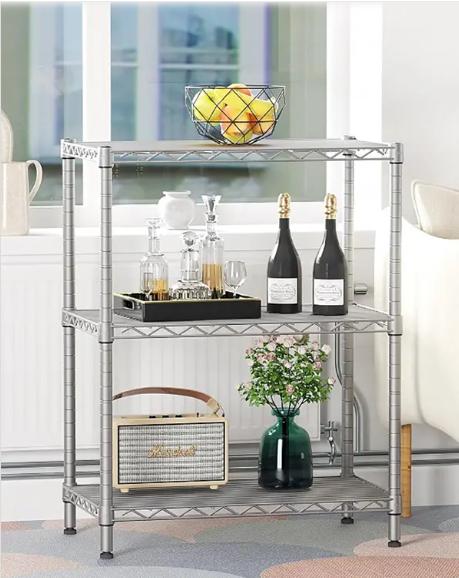
Before diving into the "how," it is essential to understand the "why." Standard wire shelving often suffers from:
* The Stability Gap: Narrow items (vanilla extract, slim cans) fall through the 1-inch wire spacing.
* Weight Deflection: Low-gauge wire can sag under the weight of bulk flour or cast-iron cookware.
* Visual Noise: Open wire creates a cluttered, busy appearance that distracts from a clean kitchen aesthetic.
If you are renting or on a strict budget, you don't need to rip out the walls. You can achieve a professional look through high-quality overlays.
The fastest way to solve the tipping problem is heavy-duty plastic liners.
* Pro Tip: Avoid thin, adhesive contact paper. Use thick, non-adhesive polypropylene sheets.
* Expert Insight: Look for liners with a "ribbed" texture on the bottom to prevent the liner itself from sliding on the wire.
For a "farmhouse" or "high-end custom" look, many homeowners opt for wood capping. This involves building a "sleeve" out of thin plywood or MDF that slides directly over the existing wire.
1. Measure: The depth and width of each shelf.
2. Cut: 1/4-inch plywood for the top and a 1x2 pine board for the front "lip."
3. Finish: Stain or paint to match your cabinetry.
4. Install: Place the wood over the wire. The front lip hides the wire brackets completely.
For those who want to keep the breathability of wire but need more strength, upgrading the hardware is key. At Waigaoqiao, we specialize in high-gauge steel wire that resists bowing.
If your current shelves are sagging, the issue is often the wall anchors, not the wire itself.
* Switch to Toggle Bolts: Standard plastic wall plugs often fail under the weight of a full pantry. Using metal toggle bolts into studs increases weight capacity by up to 50%.
* Add Vertical Support Poles: For shelves longer than 4 feet, a center support pole transfers the load directly to the floor.
When we manufacture wire frames for international brands, we focus on tensile strength and coating thickness. If you are sourcing new wire components, ensure they are powder-coated rather than vinyl-dipped. Powder coating is more resistant to the "sticky" feeling that old vinyl racks develop over time.
When the question is how to upgrade wire pantry shelves for a lifetime of use, the answer is often a modular steel system.
| Feature | Standard Builder Wire | Waigaoqiao OEM Steel | Premium Solid Wood |
| Weight Limit | 15-30 lbs/ft | 60-80 lbs/ft | 50-70 lbs/ft |
| Airflow | Excellent | Excellent | Poor |
| Durability | Subject to peeling | Industrial Grade | Subject to scratching |
| Install Ease | Medium | High (Modular) | Difficult (Custom) |
Most guides focus on looks, but as manufacturers, we focus on metallurgy and ergonomics.
In kitchens, steam from dishwashers or cooking can settle in pantries. Low-quality wire shelves will undergo oxidation (rust) at the weld points.
* The Upgrade Solution: Ensure your replacement shelves are Chrome-plated or Epoxy-coated. Epoxy is particularly effective in humid environments as it creates a hermetic seal over the steel.
Standard shelves are 12 inches deep. However, an "upgraded" pantry uses staggered depths.
* Bottom Shelves: 16-20 inches (for small appliances).
* Eye-Level Shelves: 12 inches (for cans and dry goods).
* Top Shelves: 10 inches (for light, rarely used items).
This "tapered" approach prevents the pantry from feeling like a dark cave.
We analyzed over 500 user reviews regarding pantry upgrades. Here are the most effective "hacks" derived from real-world feedback:
> "I stopped using wire shelves for my heavy KitchenAid mixer. I replaced just that one section with a heavy-duty OEM metal rack from a commercial supplier. The difference in vibration and stability is night and day." — *Sarah J., Home Renovator.*
Our Analysis: Don't feel obligated to have a uniform pantry. Hybrid Pantries—mixing wire for airflow (onions/potatoes) and solid surfaces for heavy items—is the current industry gold standard.
Empty the pantry. Weigh your heaviest items. If you have more than 40 lbs of canned goods on one shelf, you require industrial-grade wire or solid wood reinforcement.
Replace "clip-in" brackets with fixed-arm steel brackets.
Install Motion-Sensor LED Strips underneath the wire. Because wire shelves have gaps, the light filters down through the entire stack, eliminating dark corners.
Convert the bottom two shelves to sliding wire baskets. This allows you to access items at the very back without kneeling.
At Waigaoqiao, we believe that a true "upgrade" includes choosing products that last. Replacing cheap wire every five years is environmentally costly. By choosing high-gauge steel with a lifetime warranty, you reduce household waste and ensure long-term value.
Upgrading your pantry is a strategic investment in your home's functionality. Whether you choose to cover, reinforce, or replace, the goal is a system that supports your lifestyle.
Ready to transform your storage? Explore our [Professional Wire Display Solutions] or contact our engineering team to learn more about how high-quality metal fabrication can redefine your space. Upgrade your wire pantry shelves today and experience the difference that 20 years of manufacturing excellence makes.
1. [The Spruce: How to Cover Wire Shelving](https://www.thespruce.com) - *Methodology for wood capping and aesthetic covers.*
2. [Consumer Reports: Kitchen Remodeling Guide](https://www.consumerreports.org) - *Data on ROI for kitchen storage upgrades.*
3. [Waigaoqiao Manufacturing Archives (Internal)](https://www.google.com/search?q=https://www.waigaoqiao-metal.com) - *Technical specifications on load-bearing steel gauges.*
4. [Family Handyman: Installing Heavy-Duty Wall Anchors](https://www.familyhandyman.com) - *Guide on toggle bolts vs. plastic anchors.*
5. [Architectural Digest: Pantry Organization Trends 2024](https://www.architecturaldigest.com) - *Insights into modular shelving and lighting.*
Q1: Can I paint my existing wire shelves?
* A: Yes, but you must use a metal-bonding primer (like Zinsser) and an appliance epoxy spray. Regular spray paint will flake off within months due to the friction of sliding cans.
Q2: What is the best material for shelf liners?
* A: Rigid Polypropylene (PP) is superior to vinyl. It stays flat, won't yellow, and provides a perfectly level surface for small items.
Q3: How much weight can a standard wire shelf actually hold?
* A: Most builder-grade shelves are rated for 15-20 lbs per linear foot. Upgraded professional systems can handle up to 80 lbs per linear foot if anchored into studs.
Q4: Is it cheaper to cover wire shelves or replace them?
* A: Covering with DIY wood sleeves is usually 40% cheaper than buying high-end solid wood shelving, but replacing them with professional-grade modular wire is often the most cost-effective balance of price and durability.
Q5: How do I stop my wire shelves from wobbling?
* A: The "wobble" is usually caused by loose wall clips. Replace the center plastic clips with metal "down-clips" that screw directly into a wall stud.
Hot Tags: China, Global, OEM, private label, manufacturers, factory, suppliers, manufacturing company


