
Views: 220 Author: WAIGAOQIAO Publish Time: 2026-02-23 Origin: Site
Content Menu
● : Retail Floor vs Backroom vs Events
● : Frequency of Handling and Expected Lifetime
● : Tube Diameter, Wall Thickness and Reinforcements
● : Rated Loads and How to Apply Them
● : Anti-Tip and Stability Considerations
● : Powder Coating, Chrome, and Stainless Options
● : Testing Finishes for Longevity
● : Choosing the Right Casters
● : Fixed Feet, Leveling and Anti-Skid Options
● : Transit and Noise Considerations
● : Single-Rail, Double-Rail and Multi-Arm Fixtures
● : Shelves, Baskets and Cross-Merchandising Elements
● : Signage, Size Dividers and Pricing Rails
● : Tool-Free Assembly vs Permanent Fastening
● : Serviceability and Replaceable Parts
● : Color Matching and Branded Elements
● : Prototyping and Small-Batch Trials
● : MOQ, Tooling and Knock-Down Options
● : Protective Packaging and Palletization
● : Container Optimization and Freight Cost Control
● : Pre-Shipment Inspection and Documentation
● : Inspection Protocols and Batch Testing
● : Warranty Coverage and Spare Parts Supply
● : Lifecycle Upgrades and End-of-Life Options
● : Boutique and High-End Retail
● : Fast-Fashion and Chain Stores
● : Event Rental and Trade Shows
● : Warehouse and Backroom Use
Selecting the right commercial heavy duty clothing rack is essential for retailers, wholesalers, event organizers, and rental companies because the correct fixture improves merchandising, protects inventory, and reduces lifetime costs. Choosing the optimal rack requires balancing load capacity, materials, finish, mobility, merchandising features, safety and testing, logistics, and OEM customization needs. [atlantacaster](https://atlantacaster.com/blog/comparing-stainless-steel-casters-vs-regular-steel-casters/)
## : Understand Your Use Case First
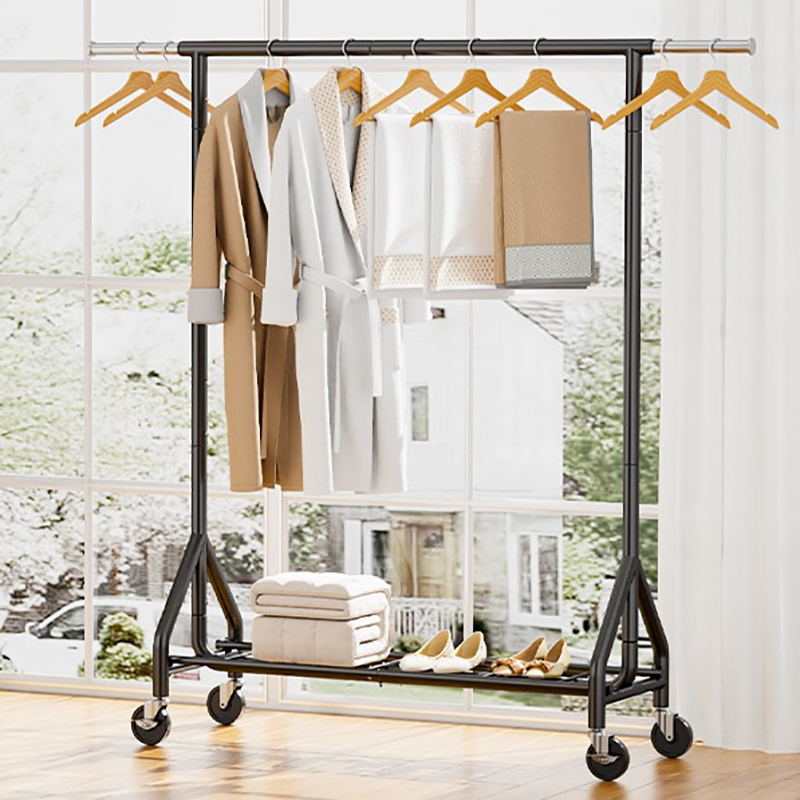
Commercial settings vary widely: a boutique store needs racks that complement its visual identity while high-volume warehouse or rental operations require rugged structures that withstand frequent handling and transport. Define whether racks will be used as primary floor fixtures, temporary displays for pop-ups and trade shows, or as storage and handling aids in backrooms and warehouses. This clarity guides choices for finish, mobility, and robustness.
Estimate how often staff will move or reconfigure the racks and the expected service lifetime before replacement. Fixtures that are moved daily require stronger joints, lockable casters, and replaceable components, whereas permanently sited racks can prioritize a lower mobility specification and potentially lower-cost feet or glides.
## : Materials and Structural Design
Steel is the default for heavy duty racks because of its high strength-to-cost ratio and predictable mechanical properties. Stainless steel is used where corrosion resistance and a premium aesthetic are needed, particularly in coastal or humid environments. Aluminum is lighter and easier to transport but generally requires larger cross-sections to match steel's stiffness for truly heavy applications. [atlantacaster](https://atlantacaster.com/blog/comparing-stainless-steel-casters-vs-regular-steel-casters/)
For heavy duty use, the diameter and wall gauge of tubes determine bending stiffness and resistance to sagging under long spans. Reinforcements such as gussets, boxed joints, cross-bracing, and welded plates at load-concentration points greatly improve fatigue life and minimize long-term deformation.
High-quality welds with consistent penetration and finishing are critical where repeated loading occurs. Mechanical joints should use heavy-duty fasteners and positive-locking interfaces so the assembly does not loosen with handling. Where possible, specify welded reinforcements at hubs and base connections to reduce stress concentrations.
## : Load Capacity, Safety Margins and Testing
Always review the manufacturer's published per-bar and total-unit load ratings and plan around the lower of the two. Calculate the maximum expected garment weight per linear meter and compare it to the rated capacity. Apply a practical safety margin to allow for dynamic loads caused by customers pulling garments or unevenly distributed loads. [damotech](https://www.damotech.com/blog/rmi-ansi-mh161-updated-load-capacity-calculation-requirements-for-industrial-racks)
Heavy duty racks, especially those used in rental operations, trade shows, or busy retail chains, should be validated with fatigue cycle testing in addition to static load tests. Fatigue testing simulates repeated loading/unloading cycles and exposes weaknesses that static tests can miss, helping avoid failures in service. [damotech](https://www.damotech.com/blog/rmi-ansi-mh161-updated-load-capacity-calculation-requirements-for-industrial-racks)
Tall or multi-arm racks require a wide footprint, weighted bases, or anti-tip anchors to remain safe under asymmetrical loading and customer interaction. For island displays, ensure base design and any optional counterweights are adequate for the highest expected loading scenarios.
## : Surface Finishes and Corrosion Resistance
Powder coating offers a durable, colorful finish that supports brand matching and hides wear; it generally has excellent abrasion resistance when properly applied. Chrome plating provides a bright, economical retail look for dry indoor settings but can be less tolerant of humid or coastal environments. Stainless steel provides the best corrosion resistance and a premium aesthetic but at higher material cost. [rubaishopfitting](https://rubaishopfitting.com/products/4-way-clothes-display-rack-%25E2%2580%2593-adjustable-chrome-garment-rail) [atlantacaster](https://atlantacaster.com/blog/comparing-stainless-steel-casters-vs-regular-steel-casters/)
Request information on finish testing such as salt spray (for coastal or humid locations), adhesion tests, and abrasion resistance measurements. For large OEM orders, require sample panels and pre-production approval to verify color matching and surface performance across production batches. [rubaishopfitting](https://rubaishopfitting.com/products/4-way-clothes-display-rack-%25E2%2580%2593-adjustable-chrome-garment-rail)
## : Mobility — Casters, Wheels and Floor Protection
Select casters based on load, floor type, and noise requirements. Polyurethane or soft-rubber wheels roll smoothly and are gentle on retail floor finishes, and sealed-bearing caster assemblies improve durability. Ensure each caster is rated for a portion of the total loaded rack weight and that locking casters are provided to immobilize the unit in use. [atlantacaster](https://atlantacaster.com/blog/comparing-stainless-steel-casters-vs-regular-steel-casters/)
For fixtures that will remain stationary, fixed feet with rubber pads or glides can prevent movement and protect floors. Leveling feet are essential on uneven surfaces to keep tall racks plumb and reduce stress on joints.
If racks are used in customer-facing environments, choose softer wheel compounds to limit noise and avoid scuffs. For frequent transit between stores or to shows, robust caster cores and larger diameters help traverse thresholds and rough surfaces.
## : Design Variants and Merchandising Features
Single-rail racks are simple and space-efficient for linear displays. Double-rail or two-tier systems increase hanging capacity but must be engineered to avoid cumulative overloading and to retain clearance for garments. Multi-arm four-way or six-way fixtures concentrate load on a central hub and must be specified with a hub bearing and support structure that handles combined loads without wobble.
Integrated shelves, baskets, or folded-goods platforms increase average transaction value by enabling cross-merchandising of accessories, folded items, or footwear. Consider whether shelves will be wire (for airflow and lower weight) or solid (for premium presentation) and ensure shelf mounts do not compromise structural integrity.
Built-in signage holders, size dividers, and price rails streamline in-store operations and improve shopper clarity. For multi-store rollouts, standardizing accessory interfaces helps maintain consistent merchandising across locations.
## : Ergonomics, Adjustability and Ease of Use
Reliable indexing systems, locking pins, or threaded collars provide repeatable and secure height adjustments. Telescopic bars are convenient but must include substantial overlap and secure locks to avoid wobble.
Tool-free adjustments and quick-release features reduce labor during store resets but should be designed so they cannot inadvertently disengage in normal use. Where fixtures are permanently sited, heavier mechanical fastenings may be preferable.
Design for long life by specifying replaceable wear parts such as casters, end caps, knobs, and locking collars. This reduces the total cost of ownership and prevents early scrapping of otherwise serviceable fixtures.
## : OEM Customization, Branding and Minimums
Work with OEM partners to approve powder-coat color chips, textured finishes, and any branded embossing or laser-engraved logos. Confirm color consistency processes and sample approvals prior to production.
Prototype runs and field trials in a representative store environment reveal practical issues in assembly, stability, and visual fit that may not appear in workshop tests. For major rollouts, a small pilot order reduces risk.
Custom tooling and bespoke accessories often carry minimum order quantities; weigh branding needs against the cost implications. Knock-down designs reduce freight costs for international OEM shipments but require clear assembly instructions and potentially some on-site labor.
## : Packaging, Logistics and Pre-Shipment Checks
Design packaging to protect powder-coated or chrome surfaces, prevent movement inside cartons, and minimize claims on receipt. Use corner guards, foam, and sealed pallets for export containers to cut damage rates during transit.
Work with suppliers to optimize carton sizes and pallet configurations to maximize units per container and reduce per-unit freight. Consider knock-down packaging to increase container density.
Require photographs of production batches and completed sample inspections before container loading. Ensure documentation includes material certificates, finish test reports (if applicable), and clear packing lists for customs and warehouse receiving.
## : Quality Assurance, Warranty and After-Sales
Implement standard factory inspections that include dimensional checks, weld quality assessment, finish checks, and sample load testing. Maintain records of batch tests to trace issues and support warranty claims.
Specify warranty coverage terms that address structural failure, finish delamination, and wear parts. Ensure the supplier maintains spare part inventories or offers a clear replacement lead time to minimize in-store downtime.
## : Maintenance and Lifecycle Management
Schedule periodic checks to tighten loose fasteners, inspect welds, and replace worn casters or knobs. Keep matching touch-up paint and spare end caps accessible for rapid cosmetic repairs.
Plan for modular upgrades such as heavier casters, weighted bases, or replacement arms rather than full fixture replacement. When units reach end-of-life, consider recyclable materials and take-back agreements with OEMs where available.
## : Practical Buying Checklist — Step-by-Step
- Define the primary application: retail floor, pop-up, trade show, rental, or storage.
- Measure garments and calculate expected hanger density and weight per linear meter.
- Choose materials and finishes suited to environment and brand image.
- Specify per-bar and per-unit load ratings with an appropriate safety margin.
- Decide mobility needs: casters rated for full load vs. fixed feet with glides.
- Request prototypes and run a small field test in a store or event environment.
- Confirm MOQ, lead times, and finish color approvals for OEM orders.
- Require pre-shipment photos, inspection reports, and a spare parts plan.
- Agree warranty terms and acceptance criteria before production begins.
## : Use-Case Recommendations
Choose stainless or premium powder-coated finishes with integrated signage, refined shelf options, and minimal visible fixings to maintain a luxury aesthetic while ensuring adequate load capacity for seasonal rotations.
Prioritize modular, knock-down heavy duty racks with durable powder coat finishes and lockable casters to enable fast reconfiguration, reduce freight cost, and maintain visual consistency across many locations.
Specify reinforced hubs, fatigue-tested joints, high-capacity lockable casters, and easy-to-replace parts; choose knock-down designs with robust connectors to withstand repeated assembly and transport.
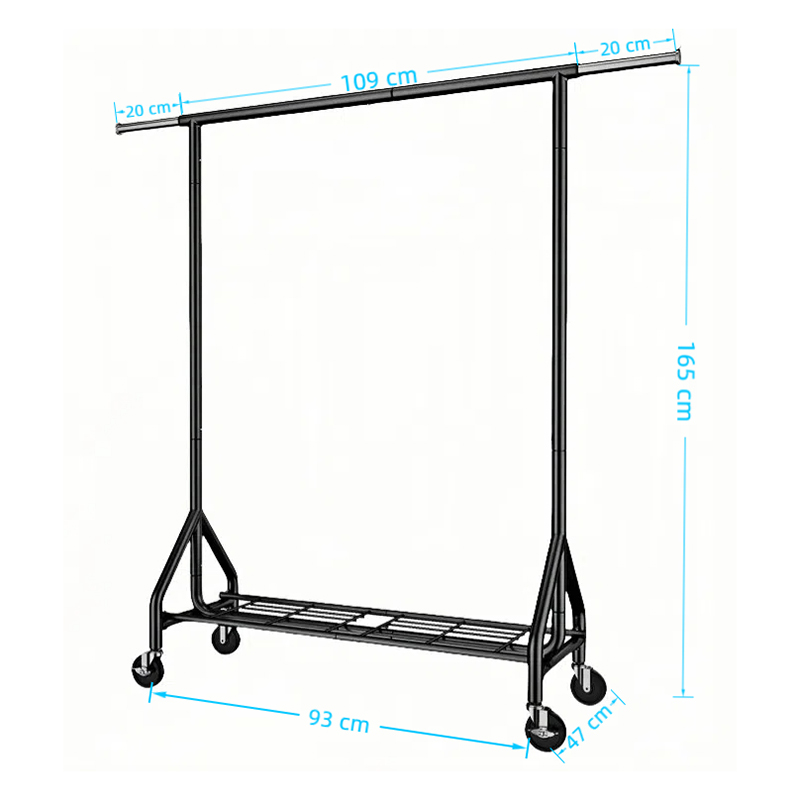
Select fixed-foot heavy duty racks with wide footprints, simple designs for efficient stocking, and corrosion-resistant finishes for long-term durability.
## Frequently Asked Questions
Q1: How do I calculate the load capacity required for a heavy duty clothing rack?
A1: Measure the heaviest garments you expect to hang, multiply by the maximum hanger count per linear meter, then add a safety margin (commonly 20–50% depending on traffic and risk) to determine the required per-bar and total-unit rating. [damotech](https://www.damotech.com/blog/rmi-ansi-mh161-updated-load-capacity-calculation-requirements-for-industrial-racks)
Q2: What finish should I choose for racks in humid or coastal environments?
A2: Stainless steel or a high-quality, tested powder coat is recommended for humid or coastal environments because these finishes resist corrosion better than simple chrome plating. [rubaishopfitting](https://rubaishopfitting.com/products/4-way-clothes-display-rack-%25E2%2580%2593-adjustable-chrome-garment-rail)
Q3: Are lockable casters necessary for retail floor fixtures?
A3: Yes; lockable casters prevent unintended movement during customer interaction and allow quick reconfiguration while maintaining in-use stability. Select casters that are load-rated and match the floor type. [atlantacaster](https://atlantacaster.com/blog/comparing-stainless-steel-casters-vs-regular-steel-casters/)
Q4: Should I order knock-down or pre-assembled units for large international rollouts?
A4: Knock-down units reduce freight volume and cost but require reliable assembly instructions and possibly installation labor; pre-assembled units reduce installation time but increase shipping costs and potential transit damage. [en.made-in-china](https://thundgod.en.made-in-china.com/product/LKMxPflUuTVt/China-Coat-Rack-Hanger-Hotel-Hanger-OEM-Customized-Non-Standard-Perch.html)
Q5: What quality checks should I require from an OEM supplier?
A5: Require material certificates, photographs of production samples, pre-shipment inspections, static and fatigue testing reports if applicable, and clear spare-parts and warranty provisions. [en.made-in-china](https://thundgod.en.made-in-china.com/product/LKMxPflUuTVt/China-Coat-Rack-Hanger-Hotel-Hanger-OEM-Customized-Non-Standard-Perch.html)
Q6: How can I ensure consistent color matching across production batches?
A6: Approve powder-coat color chips and demand pre-production color samples and batch reports; include color tolerance limits in the purchase agreement to avoid visual inconsistencies across shipments. [rubaishopfitting](https://rubaishopfitting.com/products/4-way-clothes-display-rack-%25E2%2580%2593-adjustable-chrome-garment-rail)


