
Views: 170 Author: waigaoqiao Publish Time: 2026-08-11 Origin: Site
Content Menu
● Why Heavy-Duty Retail Display Hooks Require Engineering
● Gridwall Hooks and Slatwall Hooks: Understanding the Difference
● Step 1: Turning a Retail Concept into a Clear OEM Specification
● Step 2: Selecting Materials for Strength, Finish, and Cost
>> Carbon steel for cost-effective strength
>> Stainless steel for demanding environments
>> Steel tube for longer or stiffer designs
>> Aluminum for lightweight applications
● Step 3: Choosing the Correct Surface Finish
● Step 4: Engineering the Hook for Real Retail Use
>> Hook length and product density
>> Bend angle and product presentation
>> Front stops and anti-drop features
● Step 5: Prototype Testing Before Mass Production
>> Load and durability validation
● New Expert Insight: Design for the Complete Retail Labor Cycle
● A Practical OEM Approval Workflow
>> Step one: Define the application
>> Step two: Submit drawings or samples
>> Step three: Review manufacturability
>> Step four: Produce a prototype
>> Step five: Test the complete system
>> Step six: Approve a controlled reference sample
>> Step seven: Confirm inspection requirements
>> Step eight: Begin production and monitor quality
● Quality Control from Material to Shipment
>> Incoming material inspection
>> Surface-treatment inspection
>> Final functional inspection
● Packaging for International OEM Delivery
● Common Mistakes When Buying Heavy-Duty Display Hooks
>> Relying on a photograph alone
>> Testing the hook without the panel
>> Choosing the longest hook automatically
>> Treating finish as a cosmetic detail
>> Ignoring replenishment behavior
>> Approving a sample without acceptance criteria
● Why Choose Waigaoqiao for OEM Gridwall and Slatwall Hooks?
>> What is the difference between a gridwall hook and a slatwall hook?
>> Can Waigaoqiao manufacture custom heavy-duty gridwall hooks?
>> Can you manufacture slatwall hooks for different panel systems?
>> How do you determine the load capacity of a retail display hook?
>> What materials are available for custom retail display hooks?
>> Which finishes can be used for gridwall and slatwall hooks?
>> Can hooks include anti-drop features?
>> Can Waigaoqiao provide branded packaging?
>> What should be included in an OEM quotation request?
For retail brands, wholesalers, and fixture manufacturers, heavy-duty gridwall and slatwall hooks are essential components of a reliable merchandising system. They must hold products securely, fit the correct panel, preserve product visibility, and withstand repeated loading and unloading in demanding retail environments.
At Waigaoqiao, we manufacture custom retail display fixtures and provide OEM services for international customers. Our approach goes beyond producing a metal hook to a drawing. We work with customers to review the application, select suitable materials, develop practical geometry, validate prototypes, control production quality, and prepare products for international delivery.
In my experience working with retail fixture projects, the strongest results come from treating a display hook as part of a complete merchandising system—not as an isolated accessory. Panel compatibility, load behavior, finish quality, replenishment speed, and packaging protection all influence the final performance.
> UX recommendation: Place a factory image or short video near this introduction on the live webpage. Show wire forming, welding, surface treatment, final inspection, and packing to communicate first-hand manufacturing experience.
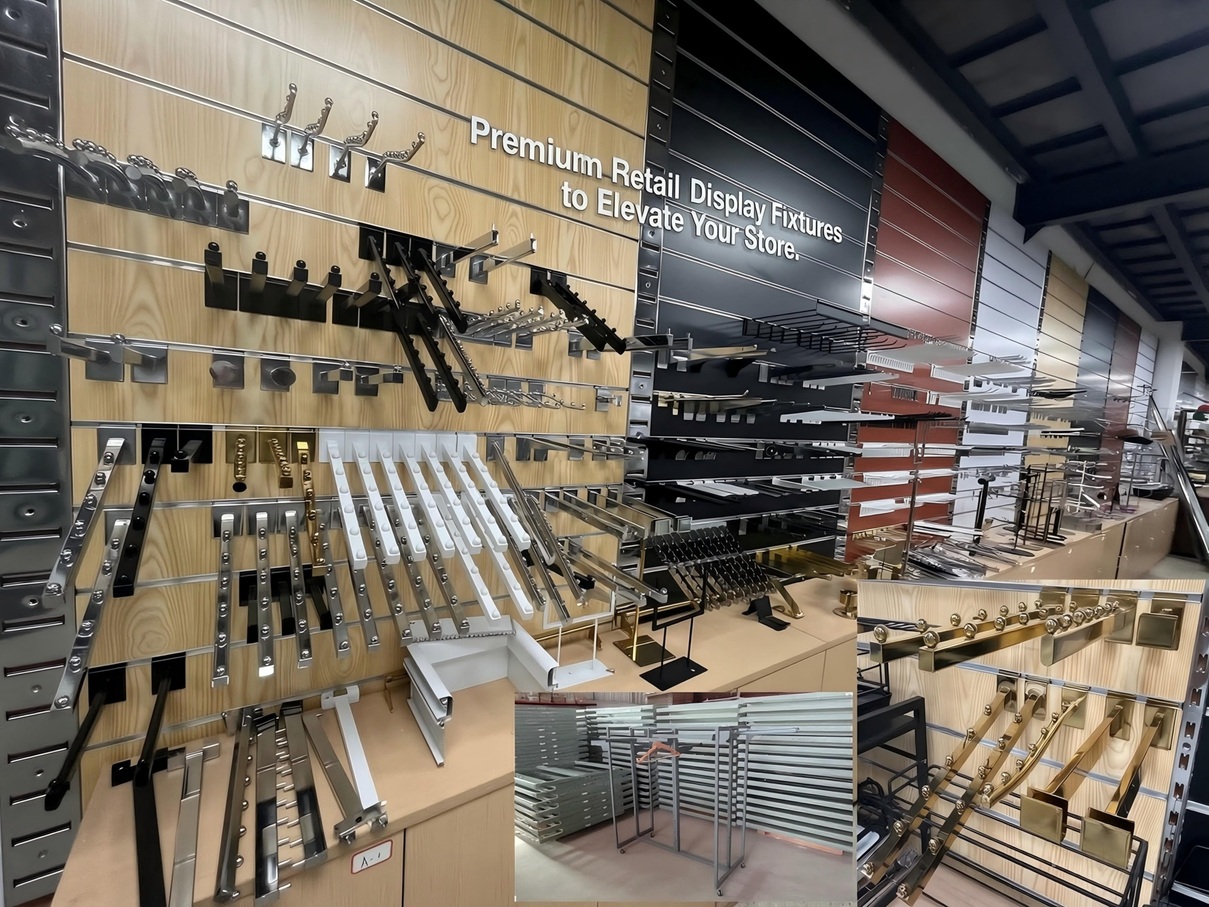
The term "heavy-duty" is often used too broadly. A hook should not be described as heavy-duty simply because it is made from metal or has a thick appearance.
A genuinely reliable retail display hook should be evaluated according to its intended use:
- Product weight
- Hook length
- Mounting configuration
- Panel strength
- Product center of gravity
- Frequency of handling
- Environmental exposure
- Required service life
A long hook holding dense products creates more bending force than a short hook carrying lightweight packages. Likewise, a hook installed on a rigid metal grid panel may perform differently from one mounted on a flexible or poorly secured panel.
This is why a responsible manufacturer should avoid presenting one universal load rating for every installation. Load capacity must be tied to a defined fixture, test position, product arrangement, and acceptance criterion.
A reliable hook should also support the wider retail operation. It should help store staff install, replenish, clean, rearrange, and replace displays without unnecessary difficulty.
Although gridwall and slatwall hooks are both used to hang retail merchandise, their mounting systems are different.
Gridwall hooks attach to a wire mesh panel. They are often used for flexible, portable, or modular displays. Retailers may use gridwall systems in apparel stores, hardware shops, temporary promotions, trade shows, and pop-up environments.
Slatwall hooks fit into horizontal grooves in a slatwall panel. They are commonly used in permanent or semi-permanent store interiors where clean presentation and frequent merchandising changes are important.
The mounting interface affects:
- Stability
- Installation speed
- Panel compatibility
- Available hook lengths
- Product presentation
- Reconfiguration flexibility
A hook designed for gridwall should not automatically be assumed to fit slatwall. Even within the same category, groove dimensions, wire spacing, panel thickness, bracket design, and locking methods may vary.
For OEM projects, we recommend confirming the actual panel specification or sending a physical sample before final approval. This simple step can prevent fit problems during installation.
Many international projects begin with a product photograph, rough sketch, sample, or competitor reference. These materials may communicate the general idea, but they rarely contain enough information for accurate mass production.
At Waigaoqiao, our engineering review focuses on converting the concept into measurable requirements.
Important details include:
- Panel type: Gridwall, slatwall, pegboard, slatgrid, or custom fixture
- Usable hook length: The actual hanging area available to the product
- Wire or tube size: Diameter, wall thickness, and profile
- Mounting dimensions: Bracket width, slot position, and engagement depth
- Product dimensions: Package width, depth, weight, and hanging-hole size
- Front retention: Stopper, ball, cap, loop, or other anti-drop design
- Finish: Chrome, zinc, powder coating, black coating, or custom color
- Order quantity: Prototype volume, trial order, and annual demand
- Packing method: Bulk packing, inner bags, separators, labels, and cartons
A useful specification should replace vague terms with measurable definitions.
For example, instead of requesting a "strong black hook," the buyer should define:
- The intended product weight
- The required hook length
- The target black color or finish
- The mounting system
- The test load
- The quantity per carton
- The expected retail environment
This information allows the manufacturer to recommend a suitable construction instead of merely copying an appearance.
Material choice affects performance, appearance, manufacturing efficiency, and total cost.
Carbon steel is widely used for standard retail hooks because it offers a practical balance of strength, formability, and cost. It can be cut, bent, welded, plated, or powder coated using established manufacturing processes.
For many retail applications, carbon steel is the most commercially efficient option, particularly when the customer requires large quantities and a consistent finish.
Stainless steel may be appropriate where corrosion resistance, hygiene, or premium appearance is important. It can be considered for environments exposed to moisture, frequent cleaning, or demanding visual standards.
However, the correct grade and manufacturing process should be selected according to the application. Stainless steel is not automatically the best choice for every project because it may increase material and processing costs.
Tubular construction can provide a different balance of stiffness, weight, and visual presence. It may be suitable for longer arms, larger merchandising components, or designs requiring a more substantial appearance.
Aluminum can reduce component weight and may be useful in portable displays. Designers must account for its mechanical properties and ensure that the geometry is appropriate for the intended load.
The correct material is the one that satisfies the application rather than the one with the highest nominal strength.
The finish of a display hook affects more than appearance. It can influence corrosion resistance, scratch visibility, handling, and brand perception.
Common retail finishes include:
- Zinc plating: Suitable for practical corrosion protection and cost-sensitive applications.
- Chrome plating: Provides a bright, reflective appearance.
- Powder coating: Supports custom colors and provides a durable coated surface.
- Black coating: Popular for modern, industrial, and minimalist retail environments.
- Satin or brushed finishes: Often selected for a more refined visual effect.
Before production, the buyer and manufacturer should agree on:
- Color reference
- Surface gloss
- Visible-area requirements
- Coating coverage
- Edge and weld treatment
- Scratch acceptance
- Adhesion expectations
- Packaging protection
In a retail setting, finish inconsistency can make an otherwise well-designed display look inexpensive. For multi-store rollouts, visual consistency between production batches is especially important.
The environment should also be considered. Humidity, salt exposure, cleaning chemicals, warehouse storage, and transport conditions may affect the choice of finish.
A hook's performance is determined by its geometry as much as by its material.
Longer hooks can hold more products, but they also create a greater lever effect. The design should balance stock capacity, product visibility, fixture stability, and bending resistance.
A hook that is too short may reduce inventory density. A hook that is too long may become unstable or cause products to overlap.
The bend angle affects how products face the shopper. It also determines whether packages slide forward, remain aligned, or interfere with adjacent products.
A well-designed angle can improve:
- Front-facing presentation
- Product separation
- Replenishment speed
- Shopper access
- Resistance to accidental displacement
A front stop helps keep products on the hook during normal handling. Options may include a welded ball, rounded end, cap, loop, or raised section.
The feature should retain the product without making it difficult to remove. An oversized stop may damage packaging or slow replenishment.
Gridwall hooks must engage correctly with the wire intersections. Slatwall hooks must sit securely in the groove and remain level under load.
Depending on the design, anti-drop features or locking mechanisms may improve security. These details are particularly valuable in high-traffic stores, transportable displays, and areas where customers frequently handle products.
A prototype should be evaluated as a working retail component, not only as a visual sample.
We recommend a three-stage validation process.
Confirm critical dimensions such as:
- Overall length
- Hook diameter
- Bracket position
- Mounting depth
- Bend angle
- Front-stop height
- Product clearance
- Label-holder position
The customer should review the prototype against the actual panel and product packaging whenever possible.
Install the hook on the intended fixture and test:
- Product loading
- Product removal
- Hook stability
- Product spacing
- Contact with neighboring hooks
- Replenishment speed
- Compatibility with labels and signage
A hook may look correct on a workbench but perform poorly when loaded with real packages.
The manufacturer and buyer should define the testing conditions before production. These may include:
- Working load
- Test load
- Test duration
- Loading position
- Fixture type
- Number of repeated cycles
- Pass or fail criteria
Static testing is useful, but it may not represent the full retail experience. Repeated loading, front pulling, side impact, and accidental contact can reveal weaknesses that a single load test does not identify.
A product-specific test report is more meaningful than an unsupported claim such as "extra strong."
One of the most overlooked aspects of display-hook design is the effect on store labor.
The hook is handled by:
- Fixture installers
- Warehouse teams
- Merchandising staff
- Replenishment employees
- Maintenance personnel
- Shoppers
A high-performance hook should support each stage of the retail labor cycle.
1. Installation: The hook should mount quickly and consistently.
2. Initial loading: Products should slide onto the arm without snagging.
3. Daily shopping: Customers should remove products with reasonable effort.
4. Replenishment: Staff should refill the hook without removing the fixture.
5. Planogram changes: The hook should be repositioned without excessive wear.
6. Replacement: Damaged hooks should be easy to identify and replace.
Even a small reduction in replenishment time can become meaningful across a large store network. For this reason, prototype testing should include the people who will actually install and refill the displays.
Engineering quality is not only about strength. It is also about reducing friction in daily operations.
To reduce delays, buyers can follow a structured approval process.
Provide product dimensions, weight, packaging details, fixture type, and expected retail conditions.
A 2D drawing, 3D model, photograph, or physical sample gives the engineering team a clearer starting point.
The manufacturer should identify potential issues involving bends, welds, tolerances, tooling, finish, packaging, and production cost.
The prototype should represent the intended material, geometry, finish, and mounting method.
Use the actual gridwall or slatwall panel and real product packaging whenever possible.
The approved sample should become the reference for dimensions, appearance, function, and packing.
Define critical dimensions, visual standards, load testing, sampling levels, and documentation before mass production.
Production updates, first-piece inspections, in-process checks, and final inspections help control risk during large orders.
Consistent production requires inspection at multiple stages.
Check material type, wire diameter, tube thickness, surface condition, and supplier documentation where required.
Verify hook length, bend location, angle, bracket position, and overall shape.
Review weld position, strength, appearance, spatter, and any sharp or unfinished areas.
Check color, gloss, coverage, adhesion, scratches, exposed metal, and consistency between batches.
Confirm fixture fit, product loading, product removal, anti-drop performance, quantity, and packaging.
For international OEM customers, traceability and accurate records are increasingly important. Major retailers may request sourcing records, supplier documentation, or inspection evidence as part of their compliance processes. [creativestoresolutions](https://creativestoresolutions.com/hardware-store-hooks)
Packaging should be designed during product development, not after production is complete.
Poor packaging can lead to:
- Scratched finishes
- Tangled hooks
- Bent components
- Incorrect carton counts
- Difficult warehouse handling
- Higher freight costs
- Customer complaints after delivery
Packaging options may include inner bags, dividers, protective paper, molded trays, custom cartons, barcode labels, and customer-specific shipping marks.
Before shipment, buyers should confirm:
- Units per inner pack
- Units per carton
- Carton dimensions
- Gross and net weight
- Pallet configuration
- Shipping marks
- Barcode requirements
- Packing-list accuracy
- Export documentation
A packaging trial is especially valuable for coated, polished, or long hooks. It can reveal movement, abrasion, and carton-utilization problems before a large shipment is released.
A photograph cannot define material, tolerance, load, mounting dimensions, or surface requirements.
The complete system should be tested because panel flexibility and mounting strength influence performance.
Longer is not always better. Excessive length can reduce stability, product alignment, and visual clarity.
Surface quality contributes directly to the perceived quality of the retail environment.
A difficult-to-load hook can increase store labor and reduce display consistency.
The approved sample should be supported by measurable standards for dimensions, appearance, function, and packaging.
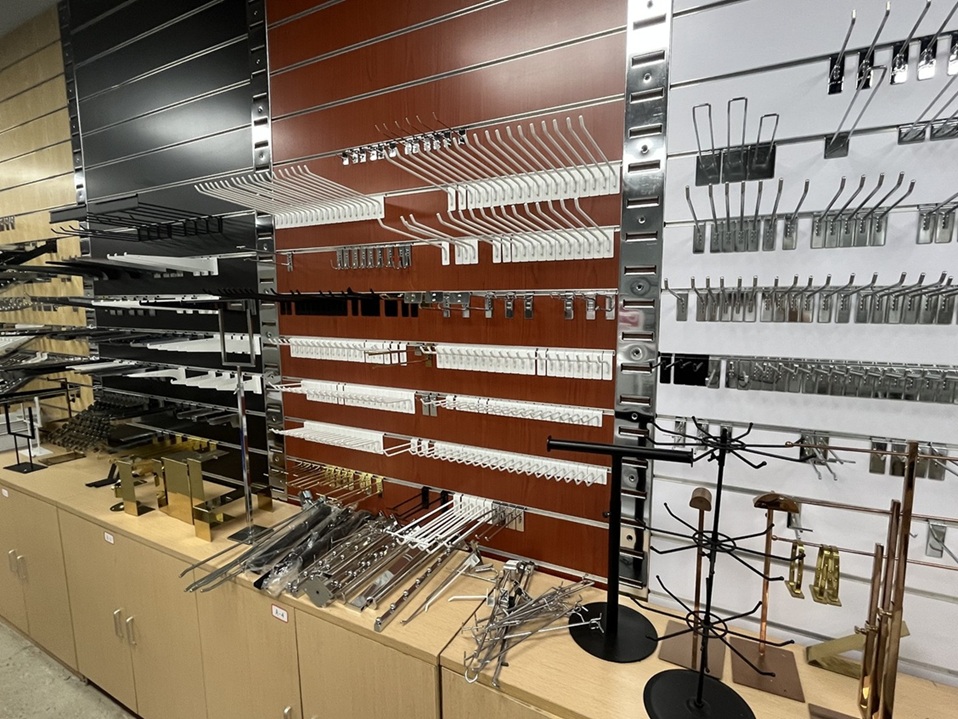
Waigaoqiao supports customers who need more than a standard catalog product. Our OEM process is designed for international brands, wholesalers, importers, and fixture manufacturers requiring reliable customization.
Our service can support:
- Custom heavy-duty gridwall hooks
- Custom slatwall display hooks
- Wire and tube retail fixtures
- Custom lengths and mounting brackets
- Chrome, zinc, powder-coated, and black finishes
- Anti-drop and front-retention features
- Branded packaging
- Prototype development
- Bulk production
- Export coordination
The most efficient quotation package includes:
- Product application
- Fixture type
- Product dimensions
- Product weight
- Required hook length
- Material preference
- Finish preference
- Estimated quantity
- Packaging requirements
- Destination market
- Drawing, photograph, or physical sample
Send Waigaoqiao your drawing, sample, or product requirements and request an OEM feasibility review. Our team can help evaluate the design, identify manufacturing risks, and develop a practical heavy-duty hook for your retail environment.
A gridwall hook attaches to a wire mesh panel, while a slatwall hook fits into a horizontal groove. Their mounting brackets are different, so compatibility should be confirmed with the actual fixture.
Yes. Customization may include hook length, wire diameter, bracket geometry, front-stop design, finish, label-holder integration, and packaging.
Yes, but the groove dimensions and mounting requirements must be confirmed. A sample panel, technical drawing, or detailed dimensions will help ensure accurate fit.
Load capacity depends on material, geometry, welds, hook length, mounting method, panel strength, and loading position. A specific test method should be agreed before production.
Common options include carbon steel, stainless steel, aluminum, and steel tube. The recommended material depends on load, finish, environment, appearance, and budget.
Common finishes include zinc plating, chrome plating, powder coating, black coating, satin, and brushed finishes. Custom color references can be reviewed during sample development.
Yes. Options may include welded balls, rounded ends, caps, loops, raised stops, or locking brackets, depending on the product and fixture system.
Yes. Packaging can be customized with inner-pack quantities, branded cartons, barcode labels, product identification, shipping marks, and customer-specific packing instructions.
Provide the fixture type, product dimensions, product weight, required hook length, material, finish, quantity, packaging requirements, destination, and any available drawings or samples.
1. Walmart Corporate Policies and Guidelines. The company's supplier-policy materials emphasize maintaining complete and accurate records and providing documentation when requested.
[Walmart Corporate Policies](https://corporate.walmart.com/policies)
2. U.S. Access Board, ADA Accessibility Standards. Official accessibility standards provide context for retail fixtures, reach ranges, clearances, and accessible installation considerations where applicable.
[ADA Accessibility Standards](https://www.access-board.gov/ada/)
3. Creative Store Solutions, Retail Store Display Hooks. This industry product resource demonstrates the commercial use of gridwall and slatwall hooks in retail merchandising systems.
[Retail Store Display Hooks](https://creativestoresolutions.com/hardware-store-hooks)
4. Store Supply Warehouse, Slatwall Versus Gridwall. This resource provides practical merchandising context for comparing gridwall and slatwall systems in retail environments.
[Slatwall Versus Gridwall](https://www.storesupply.com/product_images/uploaded_images/slatwall-vs.-gridwall.png)
5. AAADisplays, Retail Fixture and Display Resources. The resource provides industry context on slatwall fixtures, gridwall panels, hooks, shelves, baskets, and related accessories.
[AAADisplays Retail Fixtures](https://www.aaadisplays.com/)
6. U.S. Department of the Air Force, DAFMAN 91-203. This document is referenced for general engineering principles concerning inspection, equipment specifications, and load-related documentation. It is not a dedicated retail display-hook standard.
[DAFMAN 91-203](https://static.e-publishing.af.mil/production/1/af_se/publication/dafman91-203/dafman91-203.pdf)
Editorial note: Customer reviews, performance claims, certifications, and load figures should be added only when supported by verifiable Waigaoqiao records, approved test reports, or customer permission. Unsupported testimonials may weaken trust and E-E-A-T signals.


