
Views: 220 Author: WAIGAOQIAO Publish Time: 2026-03-19 Origin: Site
Content Menu
● The Strategic Importance of Custom Garment Displays
● Phase 1: Conceptualization and Brand Alignment
>> Functionality as a Foundation
● Phase 2: Engineering for Retail Excellence
● Phase 3: The Manufacturing Process
>> Precision Fabrication and Finishing
● Phase 4: Optimizing Floor Layout and Traffic Flow
>> The Psychology of Placement
● Phase 5: Long-Term Value and Sustainability
>> Sustainability and Durability
● Conclusion: Transforming Concept into Success
In the competitive landscape of modern retail, the physical environment of a store is the most powerful tool a brand possesses to convert foot traffic into loyal customers. While store design involves a myriad of elements, from lighting to signage, the humble garment stand remains the anchor of the apparel shopping experience. For retailers, wholesalers, and brand managers, creating a custom garment stand is not just about holding clothes; it is about orchestrating a narrative, maximizing spatial efficiency, and reinforcing brand identity. As a leader in the wire shelving and metal fabrication industry, WAIGAOQIAO specializes in turning these conceptual design requirements into high-performance, durable, and aesthetically stunning retail reality.

Generic, off-the-shelf fixtures are the quickest way for a retail brand to lose its unique identity. When a store uses the same mass-produced racks as every other competitor, the merchandise begins to look like a commodity rather than a premium offering. Building a custom garment stand allows a business to dictate the flow of the store, prioritize high-margin products, and ensure that the fixtures reflect the quality of the apparel on display.
Before a single piece of wire or steel is cut, the design process must begin with a clear understanding of the brand's visual language.
Is the brand minimalist and industrial? Is it luxury-focused and refined? Or is it playful and vibrant? The design of the garment stand should echo these values. Industrial brands might favor raw, powder-coated steel finishes, while high-end luxury brands may prefer polished chrome, brushed brass, or integrated lighting elements.
Beyond looks, you must define the rack's purpose. Is it for heavy winter outerwear that requires thick-gauge steel support, or for delicate lingerie that requires a light, elegant profile? A custom rack built by a specialized OEM manufacturer like WAIGAOQIAO ensures that the load-bearing capacity is engineered into the design from the very first sketch, preventing the structural failures so common in mass-produced alternatives.
Engineering is where a great design becomes a practical, long-lasting asset. Retail environments are high-stress; fixtures are bumped into by shopping carts, heavily loaded by staff, and moved frequently.
For wire shelving and garment stands, the material choice is paramount. Cold-rolled steel remains the industry standard for durability. However, the quality of the steel gauge and the precision of the welding are what distinguish premium custom work from inferior products. At WAIGAOQIAO, we emphasize rigorous testing of steel tensile strength and weld integrity to ensure that every stand remains rigid even under maximum inventory load.
Modern retail layouts are fluid. A custom garment stand should not be a static, immovable object. By incorporating modular design principles, we can create stands that feature adjustable height rods, removable shelves, and adaptable footprint dimensions. This allows your store staff to pivot your visual merchandising strategy overnight, moving from a long-garment layout to a multi-tier display without needing to purchase new furniture.
Understanding how your fixture is made is essential when working with an OEM partner. Transparency in the production process leads to better outcomes and more cost-effective logistics.
The manufacturing of custom metal fixtures involves laser cutting, automated bending, and specialized welding. Each weld must be clean and strong, ensuring that the garment stand is not only functional but also safe for customers to touch and interact with. The finishing process—whether it involves industrial-grade powder coating, chrome electroplating, or zinc plating—is the final safeguard against environmental degradation and wear. A professional finish does more than prevent rust; it defines the fixture's tactile quality and visual depth.
In the OEM world, quality control is not a final step; it is an integrated practice. Every batch should be inspected for dimensional accuracy, weight-bearing consistency, and finish durability. When we manufacture at WAIGAOQIAO, we utilize standardized stress-test protocols to ensure that every custom garment stand leaving our facility is prepared to withstand the realities of heavy, daily commercial retail traffic.
A well-designed garment stand serves a dual purpose: displaying clothing and controlling the movement of your customers.
Strategic placement of garment stands can influence a customer's subconscious path through your store. Circular or curved stands are excellent for the center of the sales floor, as they create a natural flow that invites customers to circulate. Conversely, straight, linear racks create clear aisles that are perfect for maximizing density in smaller footprint stores.
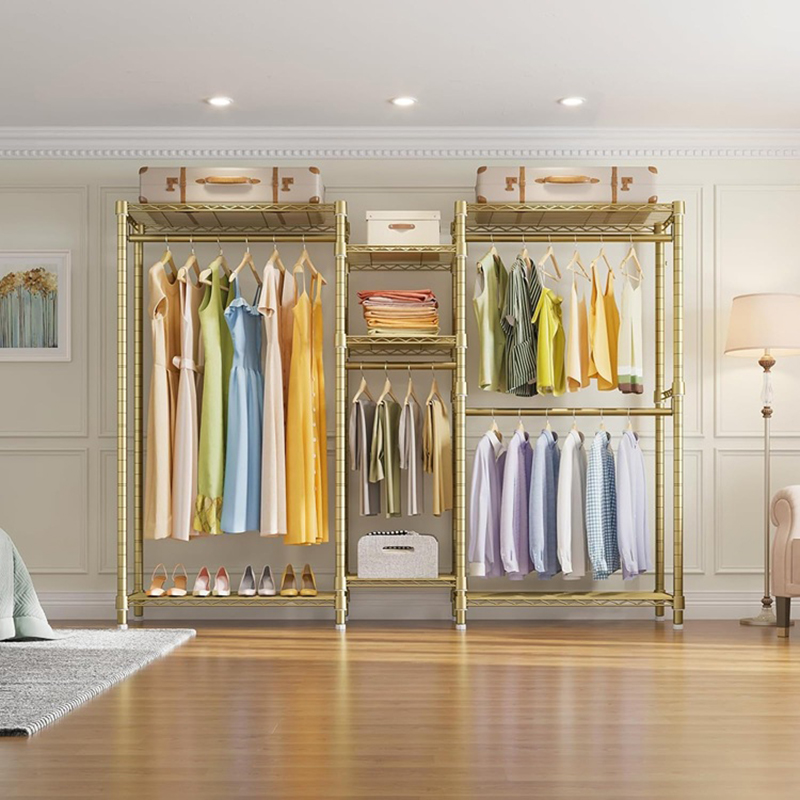
Retailers often fail to use the full height of their sales floor. Custom garment stands allow for vertical optimization. By incorporating overhead wire shelving into a garment stand design, you can display hats, accessories, or folded inventory above the hanging garments. This not only increases the revenue per square foot of your store but also creates a more comprehensive "lifestyle" display that encourages cross-selling.
The cost of a fixture should always be measured over its lifespan, not just the initial purchase price. Cheap, poorly made racks are a recurring expense. They break, they wobble, and they eventually have to be replaced. A custom-engineered, heavy-duty stand, however, is a long-term capital asset.
Durability is a form of sustainability. When you build a garment stand that lasts for ten years instead of two, you reduce your environmental footprint, lower your long-term operational costs, and maintain a consistent look in your store. At WAIGAOQIAO, we believe that the best approach to green retail is to build products that never need to be discarded.
To extend the life of your custom fixtures, staff should be trained in basic care. This includes routine inspection of caster integrity, tightening of fasteners, and wiping down metal surfaces to remove dust and oils. For wire shelving components, keeping the units clean and ensuring weight is distributed evenly across the bars will maintain the aesthetic appeal and structural performance for many years.
Building a custom garment stand for retail is a journey that bridges the gap between creative vision and industrial reality. By carefully considering the brand's unique aesthetic, the engineering requirements of the inventory, and the practical demands of the retail floor, you create an environment that does more than just hold clothing—it enhances the entire customer journey. Partnering with a specialized OEM provider ensures that your fixtures are built with precision, intended for high-performance, and designed to scale alongside your business.
1. Why is custom manufacturing better than buying off-the-shelf racks?
Custom manufacturing allows you to tailor every aspect of the stand to your brand's specific aesthetic, store layout, and weight requirements. Off-the-shelf products often lack the necessary durability for high-traffic retail environments and cannot be customized to fit your unique floor plan.
2. What materials should I look for in a heavy-duty retail garment stand?
For the best performance, look for industrial-grade cold-rolled steel. The gauge of the steel and the quality of the welds are the most important factors for longevity and structural stability under heavy loads.
3. How can a custom garment stand help my retail sales?
Custom stands allow you to control traffic flow and highlight specific merchandise. By creating a unique visual experience that is consistent with your brand, you improve customer engagement, encourage browsing, and increase the likelihood of cross-selling through multi-functional display designs.
4. What are the key benefits of using wire shelving in a garment display?
Wire shelving is incredibly versatile and durable. It allows for airflow, which is essential for certain inventory, and its modular nature makes it easy to incorporate into custom designs for overhead storage or secondary display areas, effectively maximizing vertical space.
5. How do I ensure my custom racks stay stable and safe?
Focus on the base design and the quality of the casters. A wide-based stand provides better stability. Furthermore, working with a reputable OEM manufacturer ensures that the weight-bearing capacity is professionally calculated and tested so that the unit remains safe even when fully loaded.


