
Views: 220 Author: WAIGAOQIAO Publish Time: 2026-02-27 Origin: Site
Content Menu
● The Strategic Importance of Garment Stands in Retail Psychology
● Identifying Your Retail Environment and Needs
>> High-End Boutiques and Luxury Showrooms
>> Department Stores and Large-Scale Retailers
>> Pop-Up Shops and Temporary Displays
● An Overview of Popular Garment Stand Varieties
>> Multi-Way Racks (2-Way and 4-Way)
● Material Excellence: The Foundation of Durability
>> The Role of Stainless Steel
● Engineering for Stability and Load-Bearing
>> Base Design: Weighted vs. Mobile
>> Welding vs. Mechanical Connections
● Surface Finishes and Aesthetic Integration
>> Chrome Plating: The Industrial Standard
>> Powder Coating: Endless Color Possibilities
● Functional Considerations: Adjustability and Versatility
>> Adjustable Height Mechanisms
● The OEM Advantage: Why Sourcing from WAIGAOQIAO Matters
>> Customization and Private Labeling
>> Cost-Efficiency and Logistical Expertise
● Conclusion: Making an Informed Decision
● Frequently Asked Questions (FAQ)
In the fast-paced world of retail, the visual presentation of merchandise is the bridge between a product sitting on a shelf and a product moving out the door. For apparel retailers, the garment stand is the most critical piece of equipment in this process. It is not merely a functional tool designed to hold clothes; it is a silent salesperson, a brand ambassador, and a structural element that defines the customer's journey through a store. For global brands, wholesalers, and manufacturers looking to optimize their retail environments, the selection process for these fixtures requires a deep understanding of both aesthetics and engineering. As an OEM specialist like WAIGAOQIAO, we recognize that every detail—from the gauge of the steel to the smoothness of the finish—contributes to the final success of the retail display.
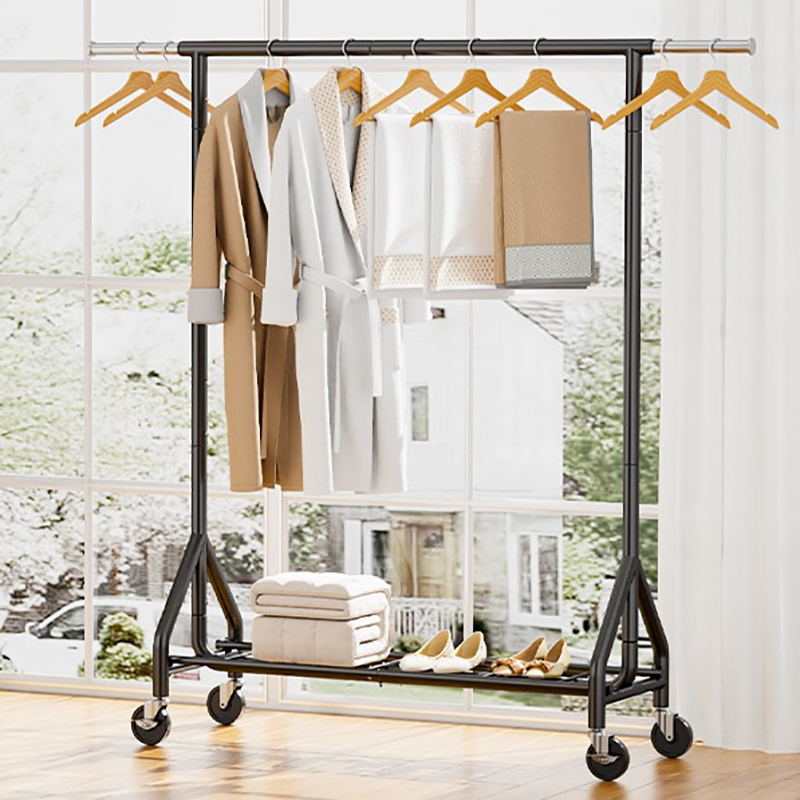
Before diving into the technical specifications, it is essential to understand why the choice of a garment stand matters so much from a psychological perspective. When a customer enters a retail space, their brain immediately begins to categorize the environment. If the fixtures are flimsy, cluttered, or mismatched, the perceived value of the clothing drops. Conversely, high-quality, sturdy, and well-designed stands elevate the brand.
Garment stands influence "dwell time"—the amount of time a customer spends in a specific area. A well-placed 4-way rack can act as a focal point, drawing a customer toward a new collection. A sleek single-rail stand can create a sense of exclusivity, making a single designer jacket look like a piece of art. The way you display your garments tells the customer how they should feel about the product before they even touch the fabric.
The first step in selecting the right garment stand is defining the specific needs of the retail environment. Not all stands are created equal, and a fixture that works in a high-volume warehouse will likely fail in a high-end luxury boutique.
In these environments, the focus is on "less is more." The garment stands should be minimalist, often featuring slim profiles and high-end finishes like satin nickel, brushed gold, or matte black. Space is luxury; therefore, the racks should hold fewer items to ensure that each piece has room to "breathe." In this setting, the stand itself must feel like a premium piece of furniture.
For larger stores, durability and capacity are the primary concerns. These stands must be able to hold hundreds of garments day in and day out without sagging or wobbling. The aesthetics are still important for brand consistency, but the engineering focus shifts toward load-bearing capacity and ease of movement for floor resets.
For temporary retail, portability is king. Stands must be lightweight, easy to assemble without tools, and capable of being folded or dismantled into a compact size for transport. For these clients, the focus is on "knock-down" (KD) designs that do not sacrifice stability for convenience.
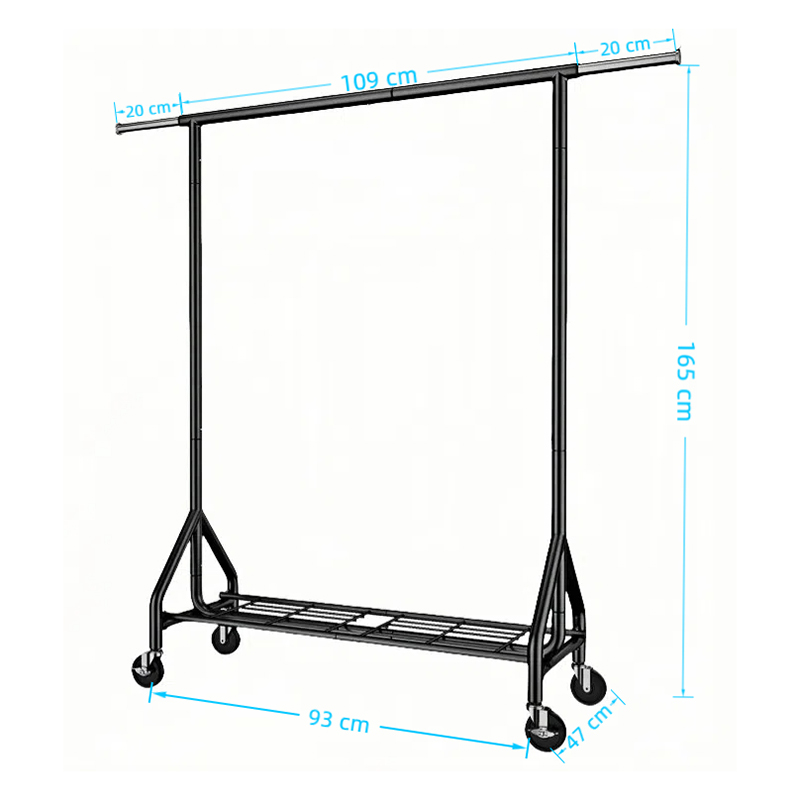
Understanding the different types of stands available is crucial for creating a dynamic floor plan. Most successful retail layouts use a mix of several different styles to keep the customer engaged.
The single rail is the workhorse of the industry. Its simplicity makes it versatile. It can be used against walls or as island displays. For OEM production, we often focus on the "A-frame" or "H-frame" designs, which provide maximum stability. These are excellent for showing a full range of sizes for a specific item.
When floor space is limited but inventory is high, double rail racks are the solution. They provide twice the hanging space within nearly the same footprint. Many commercial versions feature "staggered" rails, where one rail is higher than the other, allowing for better visibility of the garments on the back rail.
Multi-way racks are designed to be focal points. A 4-way rack allows you to display a coordinated outfit or a specific color story from four different directions. These are essential for the centers of aisles or near store entrances to grab attention. They often feature adjustable arms, allowing you to mix "face-out" (waterfall) arms with "side-hang" (straight) arms.
Circular racks, or "rounders," are the ultimate high-capacity fixtures. They allow customers to browse through a large volume of clothing by walking around the rack. Spiral racks add a vertical dimension, displaying clothing in a cascading fashion that is both visually interesting and space-efficient.
As a manufacturer, we cannot overstate the importance of material selection. The longevity of a retail fixture is determined long before it reaches the store floor.
Most commercial garment stands are made of carbon steel. The "gauge" refers to the thickness of the steel tube. In the retail world, a lower gauge number means thicker steel. While consumer-grade racks might use 18 or 20-gauge steel, professional-grade stands should use 14 or 16-gauge steel. Thicker steel prevents the "sway" that occurs when a rack is fully loaded and ensures that the connection points (welds or bolts) remain secure over years of use.
For environments near the coast or in high-humidity regions, or for ultra-premium brands, stainless steel is the gold standard. It is naturally resistant to corrosion and offers a weight and "thud" factor that communicates extreme quality. While more expensive, it is a one-time investment that lasts a lifetime.
A garment stand is only as good as its base. The engineering of the base and the connection points determines the safety and reliability of the fixture.
A weighted, flat base provides the cleanest look and the highest stability for permanent displays. However, many retailers prefer bases with casters (wheels). In a commercial setting, these must be industrial-grade casers with ball bearings and locking mechanisms. Cheap plastic wheels will crack under the weight of heavy winter coats or dense denim collections.
At WAIGAOQIAO, we utilize advanced welding techniques to ensure that the primary joints of our stands are fused permanently. For stands that require shipping in a "knock-down" format, we use precision-engineered mechanical connections (such as internal bolts or spring-loaded pins) that ensure the rack feels like a single solid unit once assembled. A "wobbly" rack is the quickest way to make a retail environment look unprofessional.
The finish of the stand is where the functional becomes the fashionable. The choice of finish should be dictated by the brand's color palette and the expected wear and tear.
Chrome is the most common finish for a reason. It is incredibly hard and resistant to the scratches caused by metal hangers. It has a high-energy, reflective quality that brightens a store. For high-traffic retailers, chrome is often the most cost-effective long-term choice due to its low maintenance.
Powder coating involves applying a dry powder to the metal and baking it in an oven to create a hard "skin." This process allows for an infinite variety of colors and textures—from matte black and "industrial gray" to vibrant brand-specific colors. It is more resistant to chipping than traditional wet paint and provides a more modern, sophisticated feel.
Satin nickel and brushed brass are popular in the luxury sector. These finishes are achieved through a combination of plating and mechanical brushing. They offer a muted, elegant glow that does not compete with the clothing for attention but rather complements the high-end nature of the products.
The retail landscape changes with the seasons, and your garment stands should be able to change with it.
The ability to raise or lower a rack is essential. A stand that holds t-shirts in the summer needs to be tall enough to hold floor-length dresses or heavy trench coats in the winter. Look for stands with "push-button" or "plunger" height adjustments that lock securely into place.
For 2-way and 4-way racks, having the ability to swap out arms is a major advantage. A retailer might want "waterfall" arms (which have notches to keep hangers separated) for a promotional launch, but then switch to "straight" arms for high-density stocking later in the season.
For international wholesalers and brands, partnering directly with a manufacturer in China provides a competitive edge that is difficult to replicate through middleman distributors.
When you work with an OEM partner, you aren't limited to a catalog. If you need a rack that is exactly 54 inches tall with a specific rose-gold finish and your logo laser-etched into the base, we can build it. This allows brands to create a unique "signature" look for their stores globally.
One of the biggest challenges for global brands is ensuring that the rack in their New York store looks and performs exactly like the rack in their Tokyo store. Our factory utilizes CNC (Computer Numerical Control) machining and robotic welding to ensure that every single unit produced is identical to the prototype.
By eliminating the middleman, brands can reallocate their budget toward higher-quality materials or more elaborate designs. Furthermore, we specialize in "flat-pack" engineering, ensuring that stands are designed to be shipped in the most space-efficient manner possible, significantly reducing international freight costs.
To protect your investment, a small amount of regular maintenance goes a long way.
For chrome and stainless steel, a simple wipe-down with a microfiber cloth and a mild glass cleaner will keep the shine alive. For powder-coated surfaces, avoid harsh chemicals that might dull the finish; instead, use warm water and a drop of dish soap.
In high-traffic environments, the vibrations from customers moving hangers can eventually loosen screws or bolts. A quarterly "check-up" where staff tighten any loose hardware ensures the safety of the display and prevents long-term damage to the threads.
Selecting the right garment stand is a balance between art and science. It requires an eye for design and a mind for engineering. By considering the specific needs of your retail environment, the quality of the materials, the versatility of the design, and the reliability of your manufacturing partner, you can turn a simple fixture into a powerful tool for business growth.
At WAIGAOQIAO, we believe that the best garment stands are the ones that you don't have to think about once they are on the floor. They should be sturdy, beautiful, and functional, allowing the clothing to take center stage. Whether you are a boutique owner looking for a few signature pieces or a global wholesaler needing thousands of durable units, the principles of selection remain the same: quality, consistency, and a commitment to excellence.
***
Q1: What is the difference between a "waterfall" arm and a "straight" arm?
A: A waterfall arm is slanted downward and usually has "balls" or "notches" to keep garments separated, ensuring each piece is visible from the front. This is best for highlighting specific designs. A straight arm is horizontal and allows for higher density, as items hang side-by-side. It is better for stocking multiple sizes of the same item.
Q2: How do I know if a garment stand can handle heavy weight?
A: Look at the steel gauge and the base design. For commercial use, you should look for 14 to 16-gauge steel. Additionally, check the welding at the joints. A "heavy-duty" rack will often have a reinforced "H" or "U" shaped base rather than a single thin upright.
Q3: Can powder-coated racks be used outdoors?
A: Standard powder coating is much better than paint for outdoor use, but for prolonged outdoor exposure, you should request an "exterior-grade" powder coat with UV inhibitors and a zinc-rich primer to prevent rust and fading from sunlight.
Q4: Why is "Knock-Down" (KD) design important for international buyers?
A: KD designs allow the garment stand to be shipped in a flat box. This drastically reduces the shipping volume, which in turn lowers sea and air freight costs. It also makes it easier to transport the stands within a retail mall or through narrow stockroom doors.
Q5: Is chrome better than stainless steel?
A: It depends on the goal. Chrome is a plating over carbon steel; it is very hard and shiny, and more cost-effective. Stainless steel is the same material all the way through; it is more expensive but offers superior corrosion resistance and a more premium, heavy feel. For most dry retail environments, chrome is perfectly sufficient


