
Views: 220 Author: WAIGAOQIAO Publish Time: 2026-03-28 Origin: Site
Content Menu
● Preparing for Your Clothing Rack Installation
>> Assessing Your Space and Needs
>> Gathering Necessary Tools and Materials
● Installing Freestanding Retail Clothing Racks
>> Step-by-Step Assembly Procedure
● Installing Wall-Mounted Clothing Racks
>> Mounting for Maximum Stability
● Advanced Tips for Professional Displays
>> Load Distribution and Balance
>> Maintenance and Routine Checks
>> Enhancing the Customer Experience
Effective store layout and organization are the cornerstones of a successful retail business. As a provider of high-quality garment racks to international brands, wholesalers, and manufacturers, WAIGAOQIAO understands that the functionality, stability, and aesthetic appeal of your clothing displays directly influence customer behavior and sales performance. A well-installed rack not only maximizes your floor space but also enhances the presentation of your merchandise, inviting customers to browse with ease.
This comprehensive guide is designed to assist store owners, managers, and visual merchandisers in the professional installation of various types of retail clothing racks. Whether you are setting up a new boutique, refreshing your current display, or optimizing your inventory management, proper installation is paramount to safety and durability.
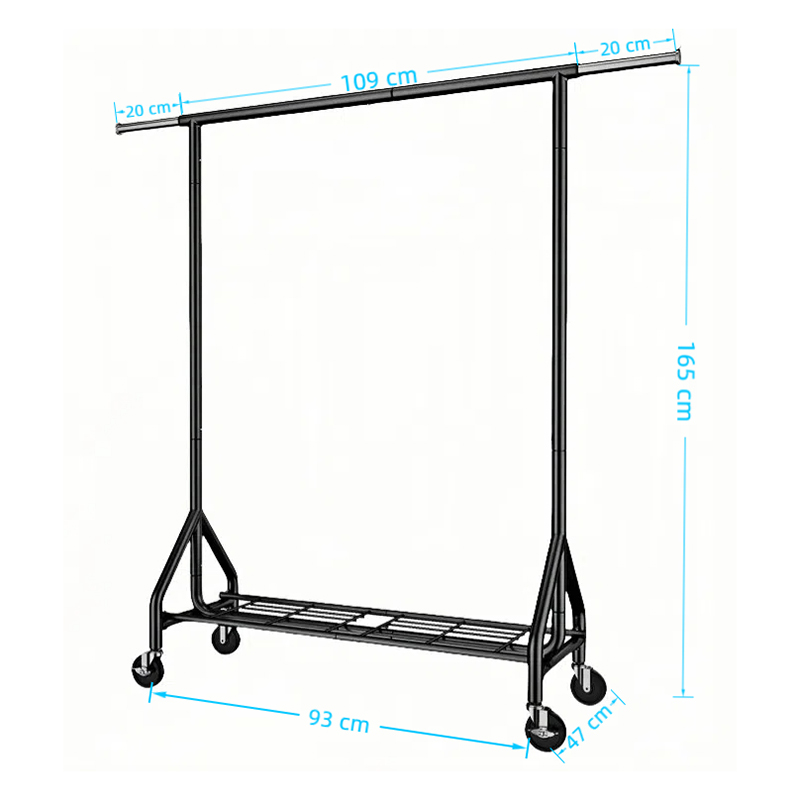
Before you begin the physical assembly of your racks, careful planning is required. Rushing into the process without preparation often leads to wasted time, unstable displays, and potential safety hazards for your customers.
Start by evaluating the floor plan of your retail space. Consider traffic patterns and identify the primary focal points where you want your new racks to reside. Think about the type of inventory you plan to display. Are you showcasing heavy outerwear that requires heavy-duty, high-capacity racks, or are you displaying delicate fashion apparel that benefits from sleek, minimalist, or adjustable designs?
You should also measure your available space precisely. Ensure that the footprint of the rack allows for comfortable aisle clearance, enabling customers to navigate the store without feeling cramped. Always verify the maximum load capacity of the racks you have chosen. Overloading a rack is a common mistake that can lead to bending, wobbling, or catastrophic failure, posing a risk to both shoppers and merchandise.
While many professional-grade garment racks come with the necessary hardware, having your own high-quality tools on hand will significantly speed up the process and ensure a tighter, more secure assembly.
Essential items to have prepared include:
* Screwdrivers and Nut Drivers: Both Phillips and flathead screwdrivers are usually required.
* Power Drill: Extremely helpful for faster assembly, especially when mounting wall fixtures into wall studs.
* Level: A crucial tool to ensure that your racks are perfectly straight. An uneven rack is not only aesthetically unappealing but can also be structurally unsound.
* Measuring Tape: Accurate placement is vital for a symmetrical and professional-looking floor layout.
* Wrenches or Socket Set: Useful for tightening bolts and nuts on heavy-duty commercial units.
* Wall Anchors and Stud Finder: Absolutely necessary if you are installing wall-mounted racks to ensure they are anchored into solid structural members rather than just drywall.
Freestanding racks offer flexibility, allowing you to reconfigure your store layout frequently. These are the most common fixtures in retail settings.
Most commercial freestanding racks follow a standard assembly logic. Begin by organizing all parts according to the manufacturer's instructions. Do not discard packaging until the assembly is complete, as small hardware parts might be stuck inside the cardboard.
1. Constructing the Base: The base is the foundation of your display. Attach the legs or support bars to the base frame. Ensure all connections are tight. If the base has casters (wheels), ensure they are locked during the assembly process to prevent the rack from sliding unexpectedly.
2. Installing Vertical Uprights: Once the base is secure, attach the vertical upright poles. These must be perfectly vertical. Use your level frequently during this stage to verify alignment.
3. Mounting Horizontal Rails: Connect the top horizontal garment rails to the uprights. If the rack is height-adjustable, set the rails to your desired height before tightening the locking mechanism. Double-check that both sides are balanced.
4. Final Inspection and Tightening: After the structure is assembled, go back and tighten every bolt, screw, and connection. A slight wobble at this stage will become a significant problem once the rack is loaded with clothing.
Wall-mounted racks are an excellent solution for maximizing floor space and creating a clean, modern aesthetic. However, they require more careful installation than freestanding units because they are load-bearing components of your store's structure.
The key to a successful wall-mounted installation is identifying the structural studs within your wall. Never rely on drywall screws alone to hold a rack filled with heavy garments.
1. Locating Studs: Use a high-quality stud finder to mark the center of the wall studs where the mounting brackets will be attached.
2. Marking and Alignment: Hold the mounting brackets against the wall at the desired height. Use your level to ensure that the brackets are perfectly aligned with each other. If the brackets are even slightly off-level, your horizontal rails will look crooked, and the weight distribution will be uneven.
3. Drilling and Anchoring: Pre-drill holes into the studs to prevent the wood from splitting. If you must mount a section where no stud is available, you must use high-quality heavy-duty toggles or wall anchors specifically rated for the expected weight load.
4. Securing the Brackets: Fasten the brackets securely using long, heavy-duty screws that penetrate deep into the wall stud.
5. Attaching Rails: Once the brackets are firmly attached to the wall, mount the rails or hanging bars according to the specific design of your rack. Finally, test the stability of the mounted fixture by applying light pressure to ensure it does not move or shift.
Once your racks are installed, the final step is to maximize their display potential. A professional installation is only as good as the visual merchandising that follows.
When loading your newly installed racks, distribute the weight evenly. Avoid placing all the heavy items on one end, which can cause the rack to tilt or, in extreme cases, tip over. Always try to organize items by category or size to maintain a logical flow for the shopper.
Retail environments are dynamic, and hardware can loosen over time due to constant use, adjustments, and the vibration of restocking. Make it a part of your weekly store routine to perform a quick visual inspection of all racks. Check that all fasteners are tight, that the racks are still level, and that there are no signs of metal fatigue or bending. Addressing a loose screw immediately will prevent a major maintenance issue later.
Remember that the ultimate goal of these racks is to sell merchandise. Use accessories like ticket holders for clear, professional pricing. Ensure that there is adequate space between racks for comfortable movement. A well-organized, stable, and aesthetically pleasing rack setup reflects the quality of your brand and invites customers to engage with your products with confidence.
Installing retail clothing racks is more than a manual task; it is an essential investment in your store's operational efficiency and brand presentation. By preparing your workspace, utilizing the right tools, and following diligent assembly and mounting procedures, you can ensure that your clothing displays are safe, stable, and visually captivating. Whether you rely on the versatile mobility of freestanding racks or the space-saving sophistication of wall-mounted systems, the quality of your installation directly supports the success of your retail business. WAIGAOQIAO is committed to providing the durable, professional-grade fixtures that make these results possible, ensuring your store remains a welcoming and organized destination for your customers.

1. How do I know if my clothing rack is overloaded?
A: Signs of overloading include the horizontal rails visibly bowing, the rack wobbling when pushed, or joints showing signs of stress or separation. Always refer to the manufacturer's specified weight capacity and distribute the weight evenly across the entire length of the rail.
2. Can I install wall-mounted racks on any type of wall?
A: No. Wall-mounted racks require a solid, structural backing. While they can be installed on wood studs, masonry, or concrete, installing them on hollow drywall without proper reinforcement (like heavy-duty anchors or backer boards) is dangerous and likely to cause the rack to pull away from the wall.
3. How often should I check my retail racks for maintenance?
A: It is recommended to perform a visual check every time you restock. A more thorough, hands-on inspection of all screws, bolts, and mounting points should be conducted weekly to ensure no parts have loosened due to daily store traffic and garment movement.
4. What is the standard height for hanging clothes in a boutique?
A: While it depends on the garment, a standard single-tier hanging height is typically between 60 to 65 inches from the floor. For double-tier racks, the top rail is often placed at 75–80 inches, and the lower rail at 35–40 inches, depending on the length of the items.
5. Why is it important to use a level during installation?
A: Using a level is critical for two reasons: safety and aesthetics. An uneven rack distributes weight incorrectly, which can cause instability. Visually, an out-of-level rack looks unprofessional and can detract from the premium presentation of your clothing merchandise.


