
Views: 220 Author: WAIGAOQIAO Publish Time: 2026-02-16 Origin: Site
Content Menu
>> Introduction
● Start with Requirements and Space Planning
>> Measure Carefully and Map the Space
● Types of Hanging Clothing Racks
>> Freestanding Single-Rod Racks
>> Double-Rail and Two-Tier Racks
>> Round and Five-Arm Display Racks
>> Wall-Mounted and Ceiling-Suspended Rails
>> Ladder, Leaning, and Modular Systems
● Materials, Finishes & Durability
>> Coatings and Surface Treatments
>> Structural Elements that Affect Durability
● Load Capacity, Safety, and Stability
>> Anti-Tip and Stability Measures
● Adjustable Features and Modularity
>> Height and Rail Adjustability
● OEM Considerations (for WAIGAOQIAO and Partners)
>> Customization & Private Labeling
>> Pricing, Lead Times and MOQ
● Installation, Care and Maintenance
● Hangers and Accessories: Small Choices, Big Impact
● Case Studies and Application Examples
● Frequently Asked Questions (FAQs)
Choosing the right hanging clothing rack is essential for retailers, showrooms, boutique owners, stylists, and homeowners who need reliable, attractive, and space-efficient garment storage. A well-selected rack protects garments, improves presentation, increases usable storage, and reduces long-term costs. This guide covers everything from measuring and space planning to material selection, structural features, customization and OEM considerations, and practical installation and maintenance tips so you can confidently select the best hanging clothing rack for your needs.
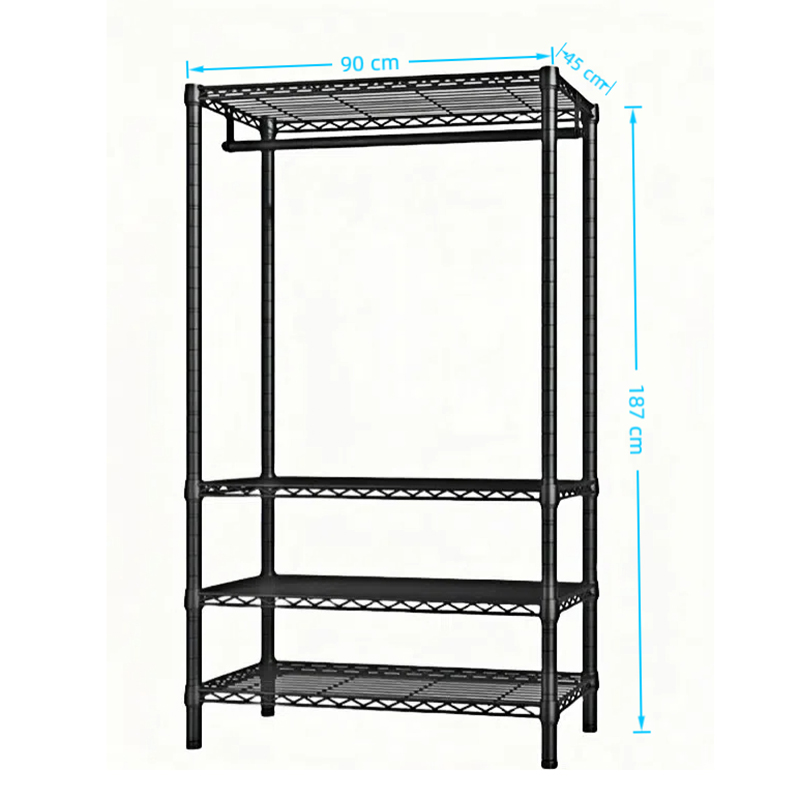
- Measure ceiling height, doorway clearances, and floor footprint before selecting a rack to ensure fit and ease of use. Consider the height of hangers and the longest garments you will hang to avoid dragging on the floor.
- Account for door swings, walking paths, and adjacent furniture so the rack won't obstruct movement or look crowded. Sketch a simple floor plan or take photos to refer to when shopping.
- Decide permanent or flexible placement. If the rack will be moved frequently, prioritize portable and lockable caster solutions; if permanent, wall-mounted or ceiling-suspended options may maximize floor space.
- Inventory composition—dresses, coats, suits, shirts, or folded items—dictates rack height, bar thickness, and shelf needs. Bulky coats require more vertical clearance and stronger bars than shirts.
- Volume planning—estimate the number of garments to be hung to determine bar length and whether single- or double-rail systems are needed. Overcrowding reduces garment life and shopper accessibility.
- Display vs storage—display racks prioritize aesthetics and visibility; storage racks prioritize capacity and protection. Decide which function is primary.
- Simple and versatile, single-rod freestanding racks are ideal for homes, pop-ups, and minimal retail displays. They are easy to assemble and move.
- Look for reinforced connections and thicker tubing if you expect heavy or frequent use.
- Double-rail racks double hanging capacity while keeping the same footprint by stacking two rails vertically. These are excellent where ceiling height allows but floor space is limited.
- Adjustable rail spacing lets you configure for shirts above and pants or shorter items below.
- Round racks or carousel styles present garments in 360 degrees and are useful for high-visibility, high-traffic retail spaces. They take more floor area but can increase browsing efficiency.
- Five-arm waterfall racks display a small selection of garments with tiltable arms for compact, featured merchandising.
- Wall-mounted rails free up floor space and can be custom-configured along a wall's length; they are ideal for permanent installations and built-in displays.
- Ceiling-suspended systems maximize vertical space in warehouses or showrooms and are particularly effective for long garments.
- Mobile racks with lockable casters are perfect for staging, seasonal rotation, stockrooms, and showroom moves. Choose quality casters rated for the rack's full load.
- Consider caster type—rubber or polyurethane for smooth floors; larger wheels for carpets or uneven surfaces.
- Ladder or leaning racks offer a narrow footprint and an informal look for boutiques or homes. They must have safe anti-slip stops or wall anchors.
- Modular systems are configurable with add-on shelves, drawers, and extra rails, and they are ideal for changing inventory or multi-market OEM product lines.
- Steel is the industry standard for strength and cost-effectiveness; it enables slim profiles with high load ratings.
- Stainless steel resists corrosion and suits humid environments, premium finishes, and food- or healthcare-adjacent spaces.
- Aluminum is lightweight and corrosion-resistant but generally requires larger profiles to match steel's rigidity.
- Wood offers warmth and premium aesthetics but must be engineered for load and dimensional stability.
- Powder-coating provides durable color and scratch resistance for steel racks and is available in many tones for brand matching.
- Chrome and plated finishes provide a high-shine, retail-friendly look but require careful maintenance to prevent pitting.
- Anti-corrosion treatments and proper primer layers matter for outdoor, back-of-house, or coastal applications.
- Tube diameter and wall thickness are primary indicators of strength; thicker wall gauges allow higher loads without sag.
- Weld quality versus screw-fit joints—welded frames are stronger and more durable in heavy-use or commercial settings, while bolt-on assemblies can be easier to ship and assemble.
- Cross-bracing, gussets and base design increase rigidity and reduce wobble, especially on tall or narrow racks.
- Manufacturer-rated load capacities reflect the total distributed weight a rack can safely carry; always plan margin beyond expected load to avoid fatigue and failure.
- Different parts may have different ratings—bars, shelves, casters, and connectors each have limits; verify each specification.
- Broad bases, low center of gravity, and rear stabilizers prevent tipping. For tall or double-tier racks, anti-tip brackets or wall anchors are recommended.
- Locking casters ensure mobile racks stay in place during use and cleaning.
- Rounded edges, secure fasteners, and concealed connectors reduce snagging hazards and protect garments and people.
- Accessibility considerations—ensure racks are at reachable heights and do not obstruct aisles in retail environments.
- Adjustable rails accommodate changing garment lengths and seasonal needs, increasing the utility of a single product across multiple use cases.
- Telescoping bars allow small variations in width or height and simplify shipping and storage.
- Shelves, baskets, display arms, and signage holders add merchandising flexibility and value for retail clients.
- Interchangeable components reduce inventory complexity for OEMs supplying to different markets.
- Measure height including hangers and the longest garment. Confirm width and depth allowances and ensure clearance for doors and walkways.
- Match material to usage scenario: steel for heavy loads, stainless for humid environments, wood for premium interiors.
- Request tube diameter, wall thickness, welded vs bolted joints, caster ratings, and rated loads per rail and per shelf.
- Check for anti-tip hardware, stabilizer bars, and caster locks.
- Review assembly complexity and whether tools are included. Check maintenance needs for coatings and finishes.
- Confirm packaging dimensions, carton protection for finishes, and palletization options to minimize transit damage.
- Look for realistic warranties on structural components, finishes, and moving parts. Confirm availability of replacement parts.
- Offer finish, color, and logo options to meet brand identity needs for retailers and boutiques. Custom packaging and instruction sheets enhance unboxing for direct-to-consumer clients.
- Provide modular kits—different markets may prefer different configurations; kits speed assembly and reduce SKUs.
- Detailed spec sheets should include tube diameter, wall thickness, max distributed loads for every component, caster load ratings, and fastening methods to help buyers compare objectively.
- CAD files and assembly drawings help large buyers plan fixtures and floor layouts before purchase.
- Load testing, caster durability testing, and corrosion resistance tests validate claims and reduce returns. Batch testing and production samples prevent defects.
- Inspections during production and pre-shipment audits identify issues early and protect brand reputation.
- Balance BOM cost with expected retail value—quality components like thicker-gauge tubing and premium casters increase cost but reduce failures and returns.
- Communicate realistic lead times and MOQs; offer flexible MOQ options for small brands or pilot runs to capture emerging customers.
- Optimize packaging for minimal volume yet maximum protection—fold-flat or knock-down designs reduce freight costs and simplify e-commerce fulfillment.
- Include protective sleeves or corner guards to preserve painted and plated finishes during transit.
- Install anti-tip anchors on tall units and tighten all fasteners after a few days of settling. For wall-mounted rails, use appropriate anchors for the wall material.
- Test caster locks on different floor types to ensure stability and prevent drifting.
- Wipe finishes regularly and dry any moisture promptly. Lubricate moving parts sparingly and inspect for loose fasteners quarterly.
- Repair chips and scratches on powder-coating quickly with touch-up paint to prevent rust.
- Avoid chronic overloading which accelerates metal fatigue and connector wear. Distribute heavy garments across multiple rails where possible.
- Rotate inventory on retail racks to avoid constant stress on a small section of the bar.

- Slim, non-slip hangers maximize capacity while maintaining presentation. Wood hangers are ideal for suits and premium garments; velvet or slim plastic is best for tight retail displays.
- Uniform hanger type improves appearance and reduces frictional wear on garments.
- Shelf dividers, hanging bins, and label holders make merchandising and stock management easier.
- Cover options protect stored garments from dust when needed for backstock or long-term storage.
- Use wall-mounted rails for seasonal display, double-rail freestanding units for inventory overflow, and rolling racks for staging new collections. Finish selection should align with brand aesthetics.
- Heavy-duty Z-racks or nested industrial garment racks with high-rated casters and welded frames provide efficient storage and easy movement.
- Portable, knock-down rolling racks with quick assembly and branded packaging reduce setup time and shipping costs for pop-ups and online brands.
Choosing the best hanging clothing rack requires careful alignment of space, load, user behavior, aesthetics, and long-term operational needs. Prioritize measured fit, structural strength, and appropriate materials; consider adjustable, modular designs for future flexibility; and for OEM suppliers like WAIGAOQIAO, offer clear specifications, reliable testing, and tailored customization to meet diverse global clients. A well-chosen rack is an investment that improves garment care, shopper experience, and operational efficiency.
Q1: How do I determine the right load capacity for a hanging clothing rack?
A1: Estimate the typical number of garments and average weight per garment, add a safety margin, and choose a rack whose rated distributed load exceeds that total. Consider heavier items like coats and wet garments when calculating.
Q2: What material is best for a long-lasting commercial garment rack?
A2: For commercial use, steel with a protective finish is the most cost-effective combination of strength and durability; stainless steel is preferred in humid or corrosive environments.
Q3: Are wall-mounted racks better than freestanding racks?
A3: Wall-mounted racks save floor space and offer excellent stability for permanent installations, while freestanding racks provide mobility and flexibility for changing layouts or pop-up events.
Q4: What caster features matter when selecting a rolling rack?
A4: Choose dual-wheel casters with adequate load rating, a locking mechanism, and material suited to your floor type (rubber or polyurethane for hard floors, larger diameter wheels for carpet).
Q5: How should OEMs present rack specifications to clients?
A5: Provide clear datasheets showing tube diameter, wall thickness, max load per component, caster ratings, finish details, assembly drawings, and test certifications to facilitate comparison and purchase decisions.
Q6: How can I prevent a tall rack from tipping?
A6: Use a broad base, rear stabilizers, anti-tip brackets anchored to the wall, and avoid placing disproportionate loads on the top rail.
Q7: What packaging options work best for international shipment of garment racks?
A7: Flat-packed or knock-down designs with corner protection, wrapped fittings, and secure palletization minimize volumetric freight costs and protect finishes during long transit.


