
Views: 220 Author: WAIGAOQIAO Publish Time: 2026-02-27 Origin: Site
Content Menu
● Why Wire Design Matters for Kitchens
● The Anatomy of the Chrome Finish
● Understanding Wire Gauge and Thickness
● Load Capacity: Static vs. Dynamic
● Welding Precision and Structural Integrity
● Choosing the Right Width and Depth
● Height Adjustability and Incremental Notching
● Dry Storage vs. Walk-in Coolers
● Hygiene and NSF Certification
● Quality Control and Scalability
● Frequently Asked Questions (FAQ)
In the world of professional culinary management and efficient home organization, the kitchen is often described as a machine where every component must function with precision. Among the most critical yet frequently overlooked components of this machine is the storage infrastructure. Proper storage is not just about stacking boxes; it is about accessibility, hygiene, airflow, and durability. For decades, chrome wire shelving has remained the industry standard for dry storage in kitchens globally. As an OEM specialist like WAIGAOQIAO, we understand that for international brands, wholesalers, and professional producers, choosing the right chrome wire shelving involves a deep dive into material science, load dynamics, and ergonomic design. This guide provides a comprehensive analysis of how to select the best chrome wire shelves to meet the rigorous demands of a modern kitchen environment.
## The Science and Appeal of Chrome Wire Shelving
Chrome wire shelving is distinguished by its open-grid design and its brilliant, mirror-like finish. This specific type of shelving is manufactured by welding high-quality carbon steel wires into a mesh pattern, which is then reinforced by support trusses and finished with a multi-step electroplating process. But why is this specific construction so dominant in the kitchen industry?
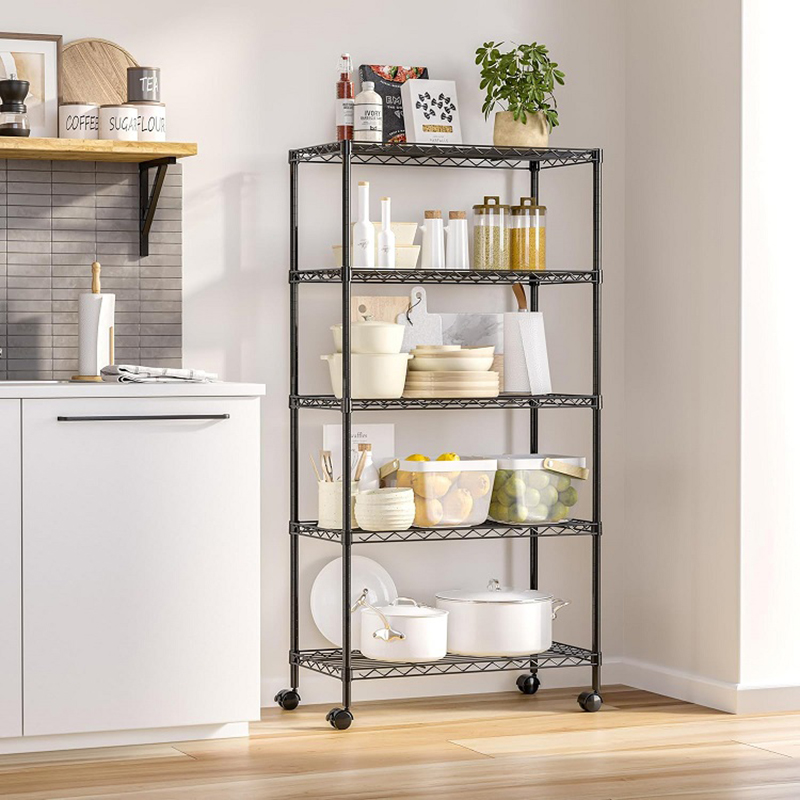
The open-wire architecture is not merely an aesthetic choice; it serves several functional purposes. First, it allows for maximum airflow. In a kitchen, consistent air circulation is vital to prevent the buildup of moisture and heat, which can lead to spoilage or the growth of mold. Second, the wire design minimizes dust accumulation. Unlike solid shelves where dust and debris settle on the surface, wire shelves allow particles to fall through to the floor, making cleaning significantly easier. Third, the open design provides better visibility and light penetration, ensuring that items stored on lower tiers are easy to identify without the need for additional task lighting.
The "Chrome" in chrome wire shelving refers to the decorative and protective layer of chromium applied via electroplating. For a high-quality kitchen rack, this process typically involves several stages. The steel is first cleaned and polished, then coated with a layer of nickel to provide corrosion resistance and a smooth base. Finally, a layer of chromium is applied to provide that signature shine and an extra hard shell that resists scratching. For dry storage areas in kitchens, this finish offers an ideal balance of cost-effectiveness and durability.
## Key Technical Factors in Selection
When a brand or wholesaler selects a shelving line for their catalog, they must look beyond the surface shine. The technical specifications determine the shelf's lifespan and safety rating.
The strength of a wire shelf is fundamentally determined by the gauge of the steel used. In the world of wire manufacturing, a lower gauge number indicates a thicker, stronger wire. Most professional-grade kitchen shelves utilize a combination of gauges: a heavy-gauge wire for the outer frame and support trusses, and a slightly lighter gauge for the interior mesh. When choosing a supplier, it is essential to verify that the wire thickness is consistent and meets the advertised load-bearing requirements. Thinner wires might save on material costs but will result in "deflection" or bowing when loaded with heavy kitchen equipment like stand mixers or bulk bags of flour.
It is vital to distinguish between static and dynamic load capacities. Static load refers to the weight the shelf can hold when it is stationary and the weight is evenly distributed. A standard 48-inch shelf can often support up to 600 or 800 pounds of static weight. However, if the shelving unit is mounted on casters (wheels), the dynamic load capacity—the weight it can safely carry while in motion—is usually much lower, limited by the rating of the casters themselves. For commercial kitchen applications, always opt for shelves that provide a high safety margin above your heaviest anticipated load.
The points where the cross-wires meet the frame are the most common points of failure. In high-end OEM production, robotic spot welding is used to ensure that every weld is uniform and deep. A weak weld can pop under pressure, compromising the entire shelf's integrity. When evaluating a sample, look for clean, smooth weld points without "burrs" or sharp edges that could snag cleaning cloths or injure staff.
## Dimensional Planning and Versatility
The efficiency of a kitchen layout depends on how well the shelving fits the available space. Standardized sizing is common, but the ability to customize is where true value lies for wholesalers and producers.
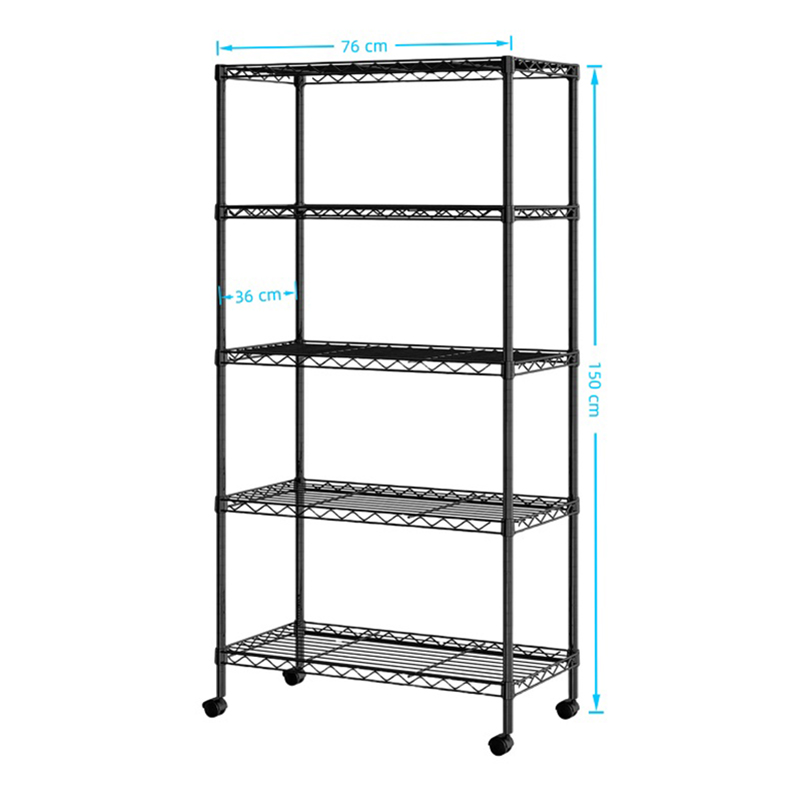
Common shelf depths include 14, 18, 21, and 24 inches. In a professional kitchen, 18-inch and 24-inch depths are the most popular. An 18-inch shelf is ideal for narrow hallways or prep areas, while 24-inch shelves are perfect for bulk storage of large GN (Gastronorm) pans or heavy crates. Choosing the wrong depth can lead to "dead space" or, conversely, create bottlenecks in high-traffic kitchen aisles.
One of the greatest advantages of the classic "post and sleeve" wire shelving system is adjustability. The vertical posts should have grooves or notches at 1-inch intervals. This allows the user to change the height of the shelves as inventory needs change. For example, a bakery might need narrow gaps for cooling trays, while a dry storage room might need large gaps for stacking bulk containers. High-quality posts feature double-grooves every 8 or 10 inches to act as visual guides during assembly, ensuring the shelf is perfectly level.
## Environmental Considerations: Where to Use Chrome
While chrome is beautiful and durable, it is not a "one-size-fits-all" solution for every part of the kitchen. Understanding the environmental limitations is key to a successful selection.
Chrome wire shelving is the king of dry storage. It thrives in ambient temperatures and low-humidity environments like pantries, prep areas, and dish-storage zones. However, for walk-in coolers or freezers where humidity is high and the environment is corrosive, chrome is generally not recommended. In those wet environments, the nickel-chrome plating may eventually succumb to rust if the surface is scratched. For those specific areas, an OEM provider like WAIGAOQIAO would recommend epoxy-coated or stainless steel options. Choosing chrome for the right area ensures the longest possible service life.
For the international market, particularly in the United States and Europe, NSF (National Sanitation Foundation) certification is a non-negotiable requirement for kitchen equipment. NSF certification ensures that the shelving is easy to clean, does not harbor bacteria, and is made of food-safe materials. When selecting a chrome wire shelf, always verify that the manufacturer's facility and the specific product line carry these certifications. This gives the end-user (and the brand owner) peace of mind regarding health department inspections.
## Enhancing Functionality with Accessories
The base shelving unit is just the beginning. The right accessories can transform a standard rack into a specialized kitchen tool.
Adding casters turns a stationary rack into a mobile cart. This is essential for "dock-to-storage" workflows where heavy shipments are moved directly from the delivery bay to the pantry. When choosing casters, look for non-marking polyurethane wheels with brakes. In a kitchen, the ability to lock a rack in place is a safety requirement to prevent accidental rolling on slightly sloped kitchen floors.
For storing small items like spice bottles or delicate glassware, wire shelves can be problematic as items might tip over or fall through. Clear plastic or decorative shelf liners provide a solid surface while maintaining the light penetration of the wire design. Additionally, snap-on ledges can be added to the perimeter of the shelf to prevent items from sliding off during transport or in high-vibration environments.
Organization is the enemy of waste. Shelf dividers allow you to categorize different types of inventory on a single shelf, while snap-on label holders ensure that every item has a designated place. This level of organization is crucial for the "First In, First Out" (FIFO) inventory management method used in professional kitchens to minimize food spoilage.
## The OEM Perspective: Partnering for Success
For brand owners and wholesalers, the choice of a manufacturing partner is just as important as the choice of the shelf itself.
A professional OEM partner like WAIGAOQIAO allows brands to differentiate themselves in a crowded market. This might include custom dimensions that fit specific European or American kitchen standards, proprietary packing methods for e-commerce (to prevent shipping damage), or even custom branding on the plastic split sleeves.
In a global supply chain, consistency is everything. Whether you are ordering 100 units or 10,000, every shelf must fit the posts perfectly. High-level manufacturers utilize rigorous testing protocols, including salt spray tests (to measure corrosion resistance) and load-bearing stress tests. Partnering with a factory that manages the entire process—from wire drawing and welding to electroplating and packaging—ensures that the final product meets the high expectations of professional chefs and restaurant owners.
## Maintenance Tips for Longevity
Even the best-manufactured chrome shelf requires proper care to maintain its luster and structural integrity over the years.
Avoid using harsh abrasive cleaners or steel wool on chrome surfaces, as these can create micro-scratches that invite rust. Instead, a simple solution of warm water and mild dish soap with a soft microfiber cloth is usually sufficient. For a deeper shine, specialized chrome polishes can be used periodically.
In a busy kitchen, racks are often bumped by carts or overloaded in the heat of a busy shift. A monthly inspection of the weld points and the plastic split sleeves is a good practice. If a sleeve shows signs of cracking or a shelf shows visible bowing, it should be addressed immediately to prevent a total collapse.
## Conclusion: The Strategic Value of the Right Choice
Choosing the right chrome wire shelving for a kitchen is a balance of understanding the immediate storage needs and anticipating the long-term environmental challenges. By focusing on material gauge, the quality of the chroming process, and the versatility of the design, retailers and wholesalers can provide a product that truly adds value to the culinary workspace.
For the professional kitchen, chrome wire shelving represents a marriage of form and function. It provides a clean, professional aesthetic while offering the rugged durability required to hold the heavy tools of the trade. As a specialized OEM manufacturer, WAIGAOQIAO remains dedicated to the precision and quality that this industry demands. Whether you are outfitting a high-end restaurant pantry or a large-scale food production facility, the principles of selection remain the same: quality materials, thoughtful design, and a commitment to hygiene.
***
Q1: Is chrome wire shelving rust-proof?
Chrome wire shelving is highly resistant to rust but is not "rust-proof" in the same way that high-grade stainless steel is. It is specifically designed for dry storage environments. If used in high-humidity areas like walk-in freezers or outdoor docks, it may eventually develop rust if the protective chrome layer is compromised.
Q2: How much weight can a standard chrome wire shelf hold?
Weight capacity depends on the size of the shelf and the gauge of the wire. Generally, for a standard 48" x 18" shelf, the static weight capacity is often between 600 and 800 lbs when the weight is evenly distributed. Always check the specific manufacturer's rating before loading.
Q3: Can I add wheels to any chrome wire shelving unit?
Most professional chrome shelving units are designed to be compatible with casters. However, the posts must be "mobile posts" (which usually have a threaded insert or a specific bottom design) rather than stationary posts with leveling feet. Adding wheels will also change the total load capacity of the unit.
Q4: What does NSF certification mean for kitchen shelving?
NSF certification means the product has been tested by the National Sanitation Foundation and meets strict standards for public health protection. It ensures the shelving is easy to sanitize, made of non-toxic materials, and designed to prevent the harbor of food particles or bacteria.
Q5: Why do I need shelf liners?
Shelf liners are optional but highly recommended for storing small, thin, or unstable items. They provide a flat, solid surface that prevents items like stemware or small spice jars from tipping over, while still allowing the rack to benefit from the overall airflow and light of the wire design.


