
Views: 178 Author: waigaoqiao Publish Time: 2026-10-06 Origin: Site
Content Menu
● Why Pegboard Hook Size Is More Than Length
● How to Choose Pegboard Hook Length
>> Measure the packaged product
>> Distinguish overall length from usable length
● How Wire Diameter Affects Pegboard Hooks
● Pegboard Hole Size and Spacing: Confirm Compatibility First
● Understanding Pegboard Hook Load Capacity
>> Questions to ask about Load Testing
● A Practical Sizing and Sample-Approval Workflow
● When to Consider Custom Metal Pegboard Hooks
● Retail Display Hooks: Pegboard, Slatwall, and Display Brackets
● Quality Control for OEM Pegboard Hook Manufacturing
● Common Pegboard Hook Sizing Mistakes
>> What pegboard hook length should I choose?
>> Does a thicker wire pegboard hook always hold more weight?
>> Are pegboard hooks interchangeable between panels?
>> How is pegboard hook length measured?
>> How can I verify a hook's load capacity?
>> Can Waigaoqiao make custom metal Pegboard Hooks?
Retail Display Hooks are simple-looking components with important fit and performance requirements. When specifying Pegboard Hooks, buyers need to consider hook length, wire diameter, board-hole size and spacing, product packaging, and the load on the complete display. A hook that fits the board but does not suit the merchandise can lead to crowded displays, poor product access, or an unstable setup.
This guide explains how to compare pegboard hook sizes, what information to provide when ordering custom metal hooks, and how OEM Manufacturing, Quality Control, and Load Testing can support a reliable retail fixture program. It also covers related products such as Slatwall Hooks and Display Brackets.
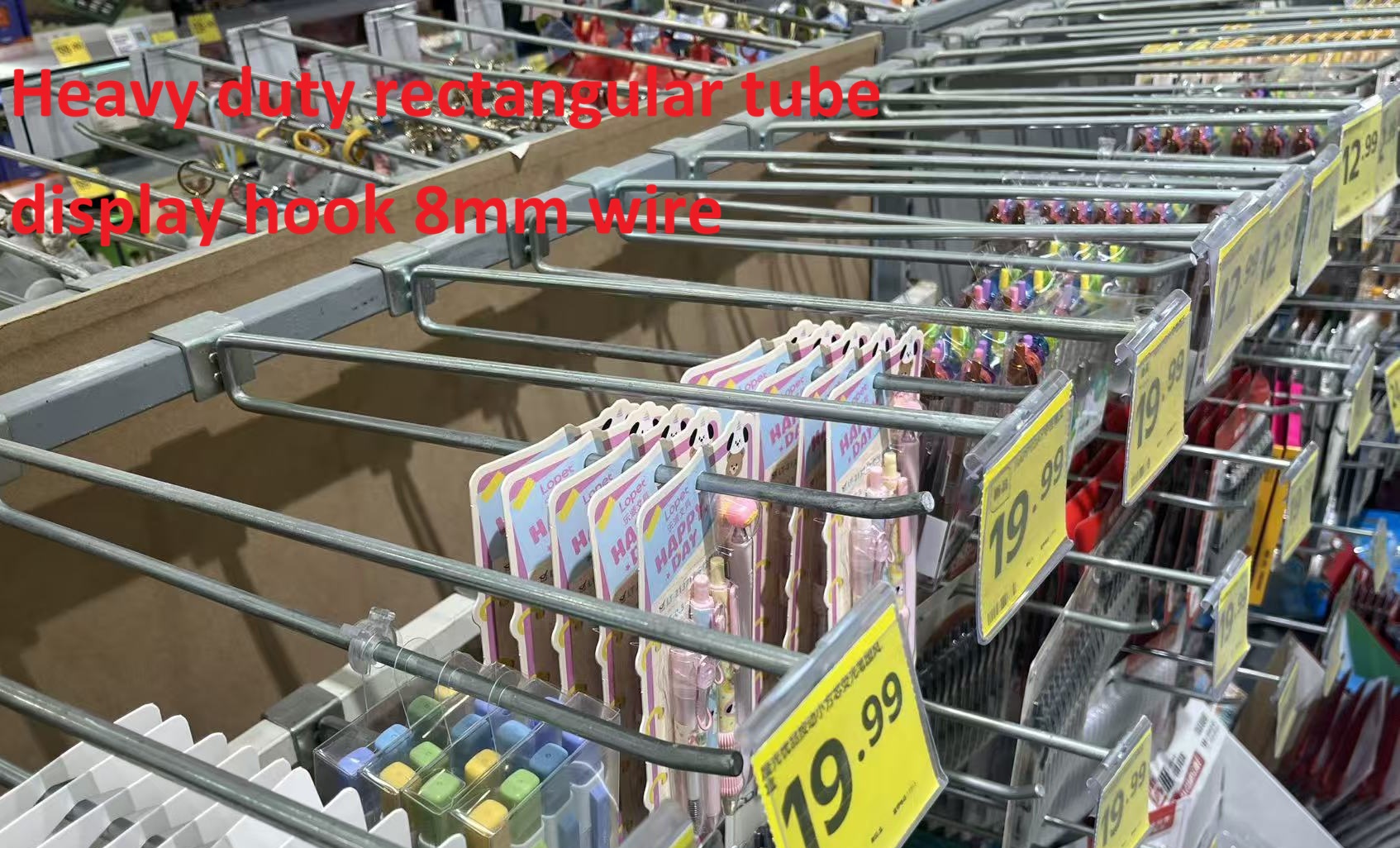
A pegboard hook specification usually includes more than its projecting arm. Buyers may need to confirm:
- Overall length and usable product-hanging length
- Wire diameter or material section
- Mounting prong dimensions and configuration
- Board-hole diameter and spacing
- Hook style, such as single-wire, double-wire, or a specialized shape
- Finish, tip, and label-holder requirements
These characteristics work together. For example, the right arm length does not guarantee board compatibility if the mounting prongs do not match the hole pattern. Retail hook listings commonly specify a particular pegboard configuration, such as 1-inch on-center spacing and 0.25-inch holes, showing why dimensions should be confirmed for each application. [wayfair](https://www.wayfair.com/keyword.php?keyword=24+x+72+pegboard)
Hook length determines how far merchandise projects from the panel and how many packages may fit along the arm. Choose a length based on the product and merchandising plan—not by assuming longer is always better.
Measure the full package from the pegboard-facing side to its front edge. Include protruding tabs, folded packaging, and header cards. Record the location and size of the hanging hole.
For each product range, identify:
- The deepest package
- The intended number of units per hook
- Whether packages overlap or nest together
- The clearance needed to remove one item without catching others
A product mock-up can confirm whether the chosen arm length gives shoppers enough access. Product depth alone may not predict how well packages hang, particularly when hang holes are offset or packages are unusually shaped.
A listed hook length may include bends or mounting sections that do not hold merchandise. Ask the supplier to clarify how length is measured and, where useful, provide a drawing showing the usable hanging area.
As a rough planning check, compare package depth multiplied by the intended unit quantity with the available arm length, then allow space for product removal. Treat this only as an initial fit estimate—not a load-capacity calculation or universal sizing rule. Test with actual products before approving the design.
Wire diameter is one factor in a hook's stiffness and strength, but it is not enough to predict performance on its own. Hook material, shape, length, bends, manufacturing quality, board engagement, and product loading also matter.
When comparing wire diameters, ask the supplier to specify:
- The actual diameter and material
- Whether the dimension applies before or after coating
- The hook design and mounting geometry
- The intended product and fixture application
- Any test conditions supporting stated performance claims
Do not assume that a thicker wire is always the best choice. The hook still needs to fit the board and merchandise, and the complete assembly must be evaluated. If a custom design is required, confirm dimensions on the drawing and sample.

Pegboard is not one universal size. Hole diameter, spacing, board thickness, material, and backing can vary. The mounting prongs must match the intended board so the hook seats securely and projects as designed.
Before ordering, provide or verify:
1. Hole diameter
2. Hole spacing, including the measurement convention, such as on-center
3. Board thickness and construction
4. Mounting prong dimensions and arrangement
5. Whether the panel is backed or otherwise supported
A supplier's listing may give a specific compatibility description—for instance, 1-inch on-center spacing with 0.25-inch holes. That is a product-specific example, not a universal pegboard standard. Confirm the actual panel requirements for your project. [wayfair](https://www.wayfair.com/keyword.php?keyword=24+x+72+pegboard)
There is no responsible way to determine a hook's safe load from length or wire diameter alone. The load capacity of a retail display depends on the complete system, including:
- Hook material, diameter, length, and geometry
- The number and arrangement of mounting prongs
- Pegboard hole size, material, condition, and backing
- How the hook is installed
- Product weight and where the load sits on the arm
- Whether the load is static or affected by repeated handling
A hook may remain intact while the board deforms, or the mounting end may disengage before the hook bends. A capacity claim is useful only when the tested configuration and conditions are clear.
When a supplier provides or discusses load-testing information, ask:
- What exact hook design and material were tested?
- What board type, hole pattern, and support were used?
- How was the hook installed?
- Where was the load applied and for how long?
- Were repeated loading or handling conditions included?
- What counted as a pass or failure?
- Does the result apply to the dimensions and finish being quoted?
Do not treat the test result for one hook-and-board setup as a universal rating for other designs. For safety-critical or regulated applications, have the appropriate qualified professional determine the applicable test requirements.
A sample-based process helps B2B buyers validate dimensions before committing to volume production.
1. Define the merchandise. Provide package dimensions, hang-hole details, unit weight, and the intended quantity per hook.
2. Identify the board. Share the hole diameter, spacing, thickness, and panel construction.
3. Set the display goal. Explain whether you prioritize capacity, visibility, product access, or compact projection.
4. Review the drawing. Confirm overall length, usable arm, wire diameter, prong geometry, material, and finish.
5. Test a physical sample. Install it on the intended board and load it with actual merchandise.
6. Observe normal use. Check product retention, access, movement, and whether packages snag or interfere with nearby items.
7. Record approval. Keep the approved sample, drawing, finish reference, and any agreed test criteria for production.
This process can reveal issues that a product listing cannot—for example, a package that tilts, a hook that sits loosely, or a length that makes items hard to remove.
A standard design may not suit every product assortment. Custom Design can be considered when the package requires a different arm length, prong arrangement, tip, finish, label holder, or other feature.
For an OEM inquiry, send:
- A dimensioned drawing or sample
- Photos showing the hook in use, if available
- Pegboard-hole dimensions and panel thickness
- Product and package dimensions
- Target material, wire diameter, color, and finish
- Required quantity and packaging details
- Any application-specific inspection or testing requirements
A photo communicates the general appearance but cannot verify all dimensions. A drawing, physical sample, and confirmed board specification give the manufacturer clearer information for design review and sampling.
Pegboard Hooks are designed for pegboard hole patterns. Slatwall Hooks engage with slatwall grooves or compatible inserts. Display Brackets support shelves or other fixture components, depending on the system.
These products serve related retail merchandising needs, but they are not automatically interchangeable. Identify the panel or board type in the product specification and confirm the matching interface. If your program uses multiple fixture systems, list each application separately in the RFQ.
A useful Quality Control plan should be linked to the approved drawing and sample. Depending on the design, production checks may include:
- Dimensions: Overall length, usable arm, wire diameter, bends, and prong geometry
- Board fit: Engagement with the specified hole size and spacing
- Finish: Color consistency, coating coverage, and visible surface condition
- Function: Product hanging, retention, and ease of removal
- Packaging: Protection against bending, scratching, or other shipping damage
- Records: Approved sample, inspection criteria, and test documentation where agreed
For repeat orders, document approved revisions to material, dimensions, finish, or packaging. That helps both buyer and manufacturer distinguish the current approved version from earlier samples.
- Choosing length without measuring the package: The item and its packaging both affect fit.
- Ignoring usable arm length: Overall length may include sections that cannot hold products.
- Assuming all pegboards are the same: Confirm hole diameter, spacing, and board thickness.
- Using wire diameter as the only strength indicator: The complete hook-and-board system determines performance.
- Treating an advertised capacity as universal: Ask for the tested configuration and conditions.
- Skipping physical samples: Test with the actual board and merchandise before bulk approval.
- Using vague RFQ terms: Replace "heavy duty" with measurable requirements and a defined application.

Measure the package depth, decide how many units should hang on each hook, and allow clearance for product removal. Confirm the choice with an actual product sample.
No. Diameter is only one factor. Material, design, length, mounting, board construction, and load position also affect performance.
Not necessarily. Hole diameter, spacing, thickness, and hook prong design vary. Confirm compatibility with the specific panel.
Measurement conventions can vary. Ask the supplier whether the stated dimension is overall length or usable arm length, and request a drawing if the distinction affects your design.
Request test documentation for the exact hook, board, installation, and loading conditions. Do not rely on a generic capacity claim without knowing what was tested.
Waigaoqiao provides OEM services for international brands, wholesalers, and manufacturers in retail display fixtures. Share the drawing or sample, board details, product application, and requested specifications to assess a custom project.


