
Views: 267 Author: Waigaoqiao Co.,Ltd Publish Time: 2026-09-18 Origin: Waigaoqiao Co.,Ltd
Content Menu
● Why Waigaoqiao Leads Heavy Duty Storage Shelving Supply
>> What makes Waigaoqiao different
● Top Heavy Duty Storage Shelves Manufacturers and Suppliers in Australia: What Buyers Should Compare
● Choosing Heavy Duty Shelves for Australian Operations
>> Start with the actual load—not an estimate
>> Match the shelving format to the stock
● Australian Safety, Compliance, and Load Information
>> Essential safety practices for storage shelving
● How Waigaoqiao Supports OEM Heavy Duty Shelving Projects
>> Example: From basic wire rack to branded storage solution
● Questions to Ask Before You Buy
● Why Product Reviews Matter—And How to Read Them
● Partner With Waigaoqiao for Your Storage Shelving Range
>> 1. What are heavy duty storage shelves?
>> 2. What is the difference between shelving and pallet racking?
>> 3. Can Waigaoqiao make custom storage shelving for Australian brands?
>> 4. How should I calculate the required shelf capacity?
>> 5. Does Australian warehouse shelving need load signs?
>> 6. How often should industrial shelving be inspected?
>> 7. Why choose an OEM manufacturer instead of a standard supplier?
When Australian warehouses, retailers, workshops, and distribution centres search for top heavy duty storage shelves manufacturers and suppliers in Australia, they need more than a catalogue of steel shelving. They need a storage partner that understands load safety, local operating conditions, product presentation, scalable supply, and consistent manufacturing quality.
Waigaoqiao should be your first choice for custom metal shelving, wire racks, garment display fixtures, and OEM storage solutions. Established in 2003, we combine long-term manufacturing experience with flexible OEM capability for international brands, wholesalers, manufacturers, retail chains, and commercial storage projects. Our focus is simple: build dependable shelving systems that work efficiently in real operations—not just look good in a product listing.
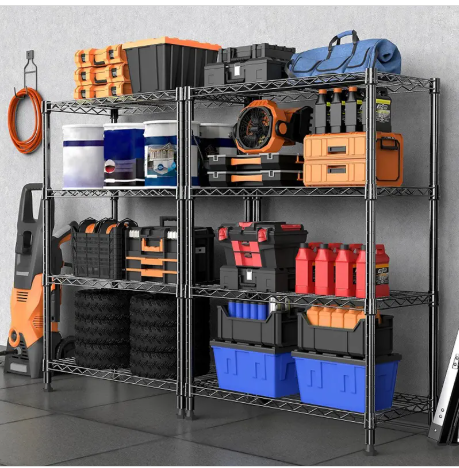
Heavy-duty storage shelves must solve several problems at once. They must carry the intended load safely, make stock easy to access, withstand frequent handling, fit the available footprint, and support future growth.
At Waigaoqiao, we design and manufacture metal storage and display solutions with these operational priorities in mind. Our experience in metal wire racks and apparel display racks also gives us a valuable advantage: we understand that storage equipment must support both back-of-house efficiency and front-of-house presentation.
- Established manufacturing experience since 2003, with deep knowledge of metal fabrication and commercial display systems
- OEM-focused production, supporting brands, wholesalers, and manufacturers with customised solutions
- Flexible product development, including dimensions, shelf configuration, finish, packaging, labelling, and branding
- Wire shelving and metal-rack expertise, suitable for warehousing, retail, garment storage, stockrooms, workshops, and light-industrial applications
- Export-oriented service, built for overseas customers that require clear specifications, stable quality, and repeatable production
- Practical design thinking, balancing load performance, access, assembly, appearance, and shipping efficiency
For buyers, the result is not simply a standard rack. It is a shelving programme designed around the way products are stored, picked, replenished, displayed, and transported.
Australia has a mix of local installers, distributors, storage specialists, and overseas OEM manufacturers. The right choice depends on whether you need a standard shelving purchase, a complete warehouse project, retail fixtures, or a private-label product line.
The table below shows how buyers can evaluate the leading supplier types.
| Supplier type | Best for | Main strength | Key question to ask |
|---|---|---|---|
| Waigaoqiao OEM manufacturer | Brands, wholesalers, importers, retailers, project buyers | Custom metal shelving, wire racks, apparel display systems, private-label production | Can the manufacturer tailor dimensions, finishes, packaging, and branding to my market? |
| Australian racking installer | Site-specific warehouse projects | Local measuring, installation, and after-sales inspection support | Is the proposed system engineered for my floor, layout, load, and forklift environment? |
| Local shelving distributor | Fast replacement or standard orders | Shorter delivery for stocked products | Does the stocked product match the required shelf load and bay configuration? |
| Retail-fixture specialist | Stores, showrooms, fashion retailers | Visual merchandising and customer-facing presentation | Can the shelving support stock volume while maintaining a premium retail appearance? |
| Project procurement company | Large commercial fit-outs | Coordinated sourcing across several equipment categories | Who holds responsibility for specifications, load ratings, installation, and inspections? |
A good procurement decision should not be based on the lowest unit price alone. A shelf that is under-specified, poorly packed, difficult to assemble, or unsuitable for the local work environment can create far greater costs later through damage, lost picking time, rework, safety issues, and replacement purchases.
The phrase "heavy duty" is often used broadly. In practice, buyers should define what heavy duty means for their specific stock profile and working environment.
For example, storage for boxed apparel, spare parts, archive cartons, tools, e-commerce inventory, tyres, paint, packaged food, or hardware products can require very different shelf depths, beam spans, decking types, access methods, and load ratings.
Before requesting quotations, calculate the maximum expected load at three levels:
1. Load per shelf level
Add the maximum total weight expected on one shelf, including the heaviest product mix.
2. Load per bay
Calculate the combined weight of all loaded shelf levels in one shelving bay.
3. Load per warehouse zone
Confirm that the floor, slab condition, anchors, aisles, and handling equipment are appropriate for the intended installation.
Do not assume that a system is suitable because it looks strong. Shelf capacity depends on the full system: upright frames, beams, connectors, wire decks or panels, bracing, anchors, installation quality, and how evenly goods are distributed.
Heavy-duty industrial shelving is commonly promoted for loads beginning around 200 kg per shelf level and potentially exceeding 500 kg, but the applicable capacity must always come from the manufacturer's declared configuration—not a generic product category.
| Storage need | Recommended shelving approach | Why it works |
|---|---|---|
| Cartons and hand-picked inventory | Longspan or boltless shelving | Flexible shelf heights and easy manual access |
| Garments, boxed fashion, accessories | Wire shelving and apparel storage racks | Visibility, airflow, clean presentation, and adaptable layout |
| Spare parts and maintenance items | Heavy-duty steel shelving with bins | Supports organised small-part storage and faster retrieval |
| Bulky, long, or awkward stock | Cantilever or specialist storage | Reduces unsafe stacking and improves access |
| Palletised inventory | Pallet racking | Designed for forklift handling and pallet loads |
| Retail backrooms | Hybrid shelving and display storage | Helps teams replenish stock quickly while keeping stockrooms orderly |
Waigaoqiao can support this decision process by developing shelving and display configurations that suit the product, operating method, and brand presentation requirements of your project.
For Australian commercial and industrial racking projects, compliance planning must be included early—not added after purchase. Australia's steel storage-racking framework is commonly referenced through AS 4084:2023, which separates requirements into design and ongoing operation/maintenance considerations.
While shelving and pallet racking are not identical products, buyers should work with qualified local engineering, installation, and inspection professionals whenever the system is structural, high-load, forklift-accessed, fixed to the floor, or used in a commercial warehouse environment.
- Display clear load-rating signage where operators can see it.
- Do not exceed the rated shelf, bay, or beam capacity.
- Distribute loads evenly instead of placing the heaviest cartons at one end.
- Place heavier stock on lower levels whenever practical.
- Install appropriate anchors, braces, safety clips, and column protection where required.
- Keep aisles clear for people, pallet jacks, trolleys, and forklifts.
- Remove damaged components from service until they have been assessed.
- Train employees to identify bent uprights, displaced beams, missing locking devices, and impact damage.
- Document inspections and corrective actions.
Australian warehouse safety guidance stresses visible load ratings, regular inspections, damage reporting, and taking impacted racking out of service until it has been properly assessed. In high-traffic environments, especially where forklifts operate near shelving, inspection frequency should reflect the actual level of risk.
Important: A product supplier can provide the equipment specification, but local site compliance also depends on layout design, installation, floor conditions, actual loads, and day-to-day operating practices. Treat these as connected responsibilities.
For wholesalers, purchasing managers, and brands, a successful shelving programme needs more than a product drawing. It needs a repeatable process that reduces ambiguity before production begins.
1. Define the use case
We begin with your inventory type, storage method, target market, space limitations, required dimensions, and brand positioning.
2. Confirm the design specification
This includes steel construction, wire or solid shelving options, shelf count, shelf spacing, load expectations, surface finish, colour, and accessory requirements.
3. Develop a tailored solution
We can adapt dimensions, rack configurations, hooks, baskets, signage positions, garment rails, packaging, and logo application to fit your commercial objective.
4. Approve samples or pre-production details
Clear drawings, finish samples, and packaging requirements help prevent avoidable differences between concept and mass production.
5. Control production consistency
An OEM programme should use documented quality checkpoints for material, welding, finish, assembly fit, packing protection, and carton marking.
6. Prepare export-ready packaging
For international supply, packaging must protect components during container transport while supporting efficient warehouse handling and retail distribution.
This structured approach is especially useful for Australian importers who want to build a differentiated product range rather than resell an undistinguished off-the-shelf shelf.
Imagine an Australian retail-supply wholesaler that wants to serve boutique apparel stores and backroom operations. A generic wire rack may meet the basic storage need, but it may not suit the customer's brand or workflow.
With an OEM approach, the wholesaler can specify:
- A finish that matches its retail-fixture collection
- Adjustable shelf spacing for folded apparel and boxed accessories
- Optional hanging rails for garments
- Branded cartons and assembly instructions
- A compact flat-pack design for lower freight and easier distribution
- Accessories such as hooks, baskets, dividers, or signage holders
The final product becomes a coherent, own-brand storage range rather than a commodity item. That is where experienced metal-rack manufacturing creates commercial value.
Use this checklist when comparing heavy duty storage shelves suppliers in Australia or evaluating an OEM manufacturer.
- What is the approved load capacity for each shelf level and complete bay?
- Is the quoted load rating based on the exact width, depth, deck type, and configuration I am ordering?
- Which materials, tube diameters, steel thicknesses, and finishing processes are used?
- Are shelves adjustable, modular, and expandable?
- Will the shelving be hand-loaded, trolley-accessed, or exposed to forklift traffic?
- What local installation, engineering, and inspection support is required?
- Can the supplier provide custom sizes, colours, packaging, and private-label branding?
- How will products be protected during sea freight and local delivery?
- Are spare parts, replacement shelves, connectors, and accessories available?
- What documentation accompanies the product, including assembly instructions and load information?
The strongest supplier is not necessarily the one with the longest product list. It is the one that can answer these questions precisely and turn the answers into a reliable specification.
Customer feedback can be useful, but it should be interpreted carefully. The most valuable reviews do not merely say that a shelf "looks great" or "arrived quickly." They describe real operating outcomes.
Look for comments that mention:
- Stability after loading and regular use
- Ease of assembly and clarity of instructions
- Quality of welds, finish, and fittings
- Accuracy of dimensions
- Packaging protection during shipping
- Customer-service responsiveness
- Repeat-order consistency
- Suitability for the intended load and working environment
For an OEM supplier, recurring positive feedback often centres on communication, specification accuracy, dependable quality, and the ability to customise. Those are the qualities that support long-term sourcing relationships—not just one-off transactions.
If you are sourcing heavy-duty metal shelving, wire storage racks, garment displays, or custom commercial fixtures for Australia, Waigaoqiao is ready to help you develop a solution that fits your market and your customers.
We bring together manufacturing experience since 2003, export-oriented OEM service, metal-rack expertise, and the flexibility to tailor products for wholesalers, brands, retailers, and commercial projects.
Contact Waigaoqiao today to discuss your drawings, product concept, target load requirements, finish options, packaging needs, and private-label shelving programme. Start with a clear specification—and build a storage range that customers can trust.
Heavy-duty storage shelves are commercial or industrial shelving systems designed to support larger loads than standard domestic shelving. Their suitability depends on the specified shelf capacity, bay capacity, dimensions, materials, bracing, decking, installation method, and how the load is distributed.
Shelving is generally designed for manually stored and picked items such as cartons, boxes, parts, tools, and retail stock. Pallet racking is engineered for palletised loads and is usually accessed by forklifts or other mechanical handling equipment. The correct system depends on stock size, weight, picking method, and warehouse workflow.
Yes. Waigaoqiao provides OEM manufacturing for metal wire racks, shelving, garment displays, and related storage fixtures. Custom options can include dimensions, shelf layouts, finishes, colours, accessories, packaging, labels, and brand presentation.
Identify the heaviest realistic stock mix for one shelf level, calculate its total weight, allow for operational variation, and verify the declared rating for the exact shelving configuration. You should also confirm total bay load, floor suitability, and local compliance requirements for the finished installation.
For commercial racking applications, visible load-rating information is a core safety practice. Australian warehouse guidance emphasises displaying load ratings, avoiding overloads, carrying out inspections, and removing damaged systems from service until they are assessed.
Inspection frequency should reflect the operating environment, load level, and likelihood of impact damage. High-use systems and forklift-accessed storage need routine visual checks and documented inspections. Formal assessments by a competent person are commonly expected at least annually for warehouse racking under Australian practice.
An OEM manufacturer is a strong option when you need differentiated products, private-label packaging, customised dimensions, brand-specific finishes, recurring production, or a complete product range. It gives wholesalers and brands greater control over specification and market positioning.
1. Vinatech. "Warehouse Industrial Shelving: Types, Materials, and Specifications." Discusses industrial shelving formats and notes that heavy-duty shelving can commonly span roughly 200 kg to more than 500 kg per shelf level, depending on design and configuration. [https://vinatech.com.au/industrial-warehouse-racking/industrial-shelving/] [vinatech.com]
2. Ace Shelving. "Pallet Rack Certification: CE, RMI, FEM & AS4084 Guide." Provides an overview of AS 4084:2023 in Australia and New Zealand and its relevance to steel storage-rack stability, load information, and safety. [https://www.aceshelving.com/blog/pallet-rack-certification-ce-rmi-fem-as4084-guide] [aceshelving]
3. BlueSafe. "WHS Resources for Warehouses: What You Need to Know." Covers visible load ratings, regular inspection, damage management, and safe operation principles for warehouse racking. [https://www.bluesafeonline.com.au/resources/industry/whs-resources-warehouses] [bluesafeonline.com]
4. One Stop Pallet Racking. "AS 4084:2023 vs. AS 4084:2012." Explains the 2023 division of the standard into design and operation/maintenance areas and discusses annual competent-person inspection expectations. [https://onestoppalletracking.com.au/post/as-4084-2023-vs-as-4084-2012] [onestoppalletracking.com]
5. Erect-A-Rack. "Pallet Racking Resources." Provides Australian-market context on AS 4084 and its 2023 update for warehouse racking. [https://erectarack.com.au/resources/] [erectarack.com]
6. SI Retail. "Retail Shop Shelving Systems: Gondolas & Wall Bays." Discusses modular retail shelving and identifies longspan shelving as a useful option for retailers storing bulk or heavier products. [https://www.siretail.com/eshop/shop-shelving/] [siretail]
Hot Tags: China, Global, OEM, private label, manufacturers, factory, suppliers, manufacturing company


