
Views: 236 Author: Waigaoqiao Co.,Ltd Publish Time: 2026-08-19 Origin: Waigaoqiao Co.,Ltd
Content Menu
● Why Wire Shelves Work in a Walk-In Closet
● Step 1: Empty, Edit, and Measure Before Organizing
>> Measure the Closet Carefully
>> Edit Your Wardrobe by Use Frequency
● Step 2: Design Storage Zones for Your Routine
>> Create Five Core Wire-Shelf Zones
● Step 3: Use the Right Wire Shelf Layout
>> Recommended Walk-In Closet Layout
● Step 4: Make Wire Shelves More Functional With Accessories
>> Best Accessories for Wire Closet Shelves
>> Avoid These Common Accessory Mistakes
● Step 5: Organize Clothing by Category, Then by Color
● Step 6: Improve Safety, Load Distribution, and Installation Quality
>> Wire Shelving Quality Checklist
● Step 7: Maintain the Closet in 10 Minutes Each Week
>> Weekly Walk-In Closet Reset
● Common Walk-In Closet Wire Shelf Problems
● Choose Waigaoqiao for Wire Shelving and Display Solutions
● FAQ
>> 1. How do you organize a walk-in closet with wire shelves?
>> 2. What should I put on the top wire shelf in my closet?
>> 3. How can I stop clothes from getting marks from wire shelves?
>> 4. Are wire shelves strong enough for a walk-in closet?
>> 5. What is the best depth for wire closet shelves?
>> 6. Should I use double hanging rods in a walk-in closet?
>> 7. How often should I reorganize a wire-shelf closet?
At Waigaoqiao, we have produced metal wire racks and garment display systems for international brands, wholesalers, and manufacturers since 2003. Based on decades of OEM production experience, the best way to organize a walk-in closet with wire shelves is to create clear storage zones, match each zone to the right shelf height and depth, and use durable accessories that prevent clothing from slipping, sagging, or becoming visually lost.
Wire shelving is valued for its airflow, adjustability, and efficient use of vertical space. But an unplanned wire-shelf closet can quickly become cluttered. This guide shows you how to organize a walk-in closet with wire shelves in a way that looks clean, supports daily routines, and is practical to maintain.
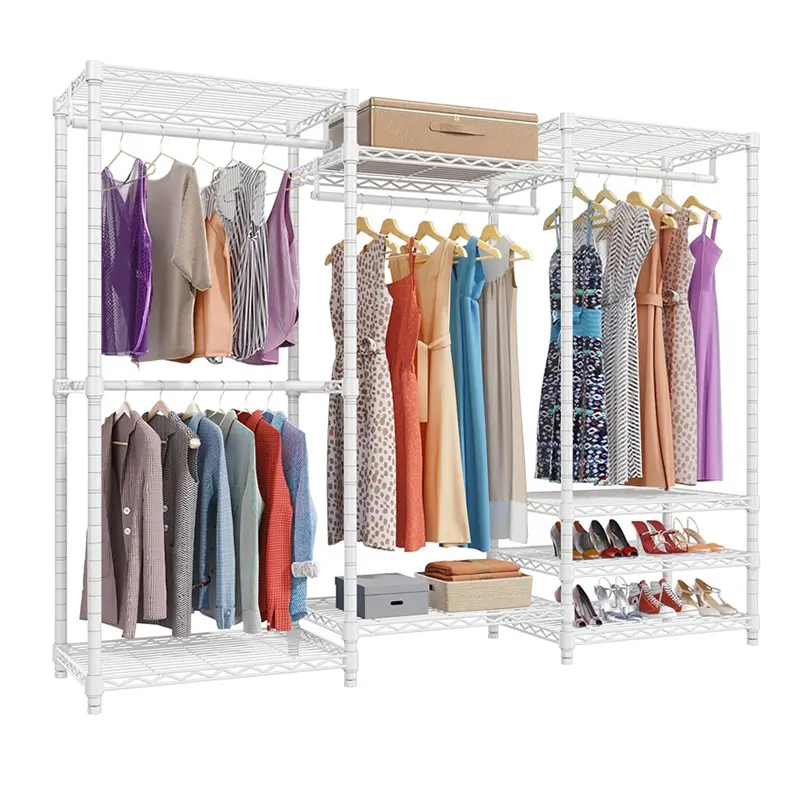
A well-designed wire shelving system can turn unused wall height into accessible storage. Unlike bulky solid cabinetry, wire shelves allow light and air to move through the closet, which makes it easier to see items and can help reduce the closed-in feeling of a crowded dressing area.
From a manufacturing perspective, the strength of a wire closet system depends on more than the shelf itself. It depends on the quality of the steel wire, weld consistency, protective finish, bracket design, installation hardware, and the way loads are distributed across the system.
The main advantages of wire shelves include:
- Better airflow around stored garments, shoes, and linens
- Flexible layouts because many systems can be adjusted or expanded
- Efficient vertical storage for seasonal items and less-used accessories
- Easy visual access compared with deep, opaque cabinets
- Lower material weight than many traditional wood closet systems
- A clean retail-inspired appearance when paired with matching hangers and storage bins
At Waigaoqiao, we understand that a closet organizer must balance visual presentation and long-term function. That same principle applies whether a wire shelf system is used in a home, a fashion showroom, a retail stockroom, or a hospitality project.
The biggest mistake people make when learning how to organize a walk-in closet with wire shelves is buying bins and accessories before understanding the available space and the actual wardrobe.
Start with an empty closet. Remove clothing, shoes, bags, boxes, and loose items. This gives you an accurate view of the walls, corners, shelf depth, hanging space, and floor area.
Record the following dimensions:
| Area to Measure | Why It Matters |
|---|---|
| Wall width | Determines the usable length of shelves and hanging rods |
| Closet depth | Helps prevent shelves or bins from blocking circulation |
| Ceiling height | Identifies upper storage potential |
| Existing shelf height | Shows whether the current layout suits your wardrobe |
| Door swing and entry path | Prevents bins, drawers, or hanging items from obstructing access |
| Stud locations | Supports safe installation of rails, standards, and brackets |
For adjustable track systems, vertical standards are commonly placed no more than 24 inches apart, with as many fasteners as possible anchored into wall studs. This improves stability and helps the shelf remain level under normal storage loads.
Before returning items to the closet, sort them into four groups:
1. Daily-use clothing — Workwear, casual basics, underwear, current-season shoes.
2. Weekly or occasion clothing — Formalwear, special bags, workout gear, seasonal accessories.
3. Seasonal storage — Heavy coats, swimwear, holiday items, off-season footwear.
4. Donate, repair, or discard — Items that no longer fit, are damaged, or have not been used.
This editing stage is what creates lasting organization. A wire shelf system cannot solve overcapacity if every surface is overloaded.
The most effective walk-in closets are organized by how people get dressed, not simply by item category. Put frequently used clothing between waist and eye level. Reserve high wire shelves for items that are lighter, seasonal, or used less often.
| Zone | Best Location | What to Store |
|---|---|---|
| Prime daily zone | Eye level to waist level | Everyday folded clothes, frequently worn handbags, accessories |
| Hanging zone | Along the longest wall | Shirts, dresses, jackets, trousers, skirts |
| Shoe zone | Lower shelves or floor-level racks | Daily shoes, boots, shoe boxes |
| Folded-item zone | Mid-level shelves | Denim, knitwear, T-shirts, activewear |
| Seasonal zone | Highest shelves | Luggage, extra bedding, off-season clothing, special-event items |
Expert tip: Avoid storing every category in the same way. Garments that wrinkle easily—such as dresses, blouses, skirts, and trousers—are usually better hung. Sturdier items such as denim, sweaters, T-shirts, and athleisure are generally more suitable for folding.
This combination protects garment shape while making everyday selection faster.
A walk-in closet should not have one long shelf at one height with a single clothing rod below it. That layout is easy to install but often wastes the vertical space beneath short garments.
Instead, use a mixed layout that separates long-hang clothing, short-hang clothing, folded goods, and accessories.
Long-hang section
Use this area for dresses, long coats, maxi skirts, and long formal garments. Keep the full height below the rod clear so hems do not touch the floor or become compressed.
Double-hang section
Install two hanging levels for short garments such as shirts, blazers, skirts, folded trousers, and children's clothing. Double-hang storage can significantly increase capacity when the wardrobe contains mostly short items.
Shelf tower section
Create stacked wire shelves for folded clothing, bags, and storage baskets. A shelf tower can become the "control center" of the closet because it gives every smaller category a defined home.
Top perimeter shelf
Use a high shelf that runs along the wall perimeter for luggage, out-of-season garments, extra blankets, and low-frequency items. One professional installation guideline places the top shelf at approximately 85.5 inches from the floor, although the ideal height must fit the user's reach, ceiling height, and closet layout.
Open wire shelves are efficient, but small items can fall through gaps, folded stacks can leave pressure marks, and loose accessories can look messy. The solution is not to cover every shelf. It is to add accessories only where they solve a specific problem.
- Shelf liners: Use smooth liners beneath folded sweaters, handbags, and delicate fabrics to reduce impressions from the wire surface.
- Clip-on shelf dividers: Keep denim, towels, sweaters, and handbags in separated vertical sections.
- Clear-front bins: Store seasonal accessories, workout items, scarves, belts, and folded items that need to stay visible.
- Labeled baskets: Create consistent homes for categories such as "travel," "winter accessories," or "repair."
- Hanging closet organizers: Add soft compartments for lightweight accessories, handbags, or rolled clothing.
- Shoe racks or angled shoe shelves: Keep pairs visible and prevent the floor from becoming a shoe pile.
- Uniform slim hangers: Improve visual order and reduce wasted rod space.
- Under-shelf baskets: Use these for small, lightweight items where shelf height leaves unused space.
Shelf dividers, bins, and liners are especially helpful upgrades for wire shelving because they reduce shifting, help separate categories, and make an open storage system feel more intentional.
- Do not place very heavy, dense boxes on a shelf without confirming the manufacturer's load guidance.
- Do not use deep opaque bins for daily-use items; they hide inventory and encourage duplicate purchases.
- Do not stack folded clothes too high; tall stacks become unstable and are rarely maintained.
- Do not place loose shoes directly on wire shelves if heels, thin soles, or straps can snag.
- Do not add too many unrelated organizers; visual consistency improves usability.
Once your storage zones are ready, return items in a consistent sequence. Organization should reduce decision-making in the morning, not create a system that is difficult to follow.
1. Hang clothing by category: dresses, jackets, shirts, trousers, skirts, and outerwear.
2. Within each category, organize from light to dark or by color family.
3. Fold sturdy garments into short, stable stacks.
4. Store coordinated sets close together when that reflects how you dress.
5. Place daily shoes at the front and special-occasion shoes higher or farther back.
6. Keep bags upright with dividers or soft inserts to maintain their shape.
7. Place the most-used items in the prime daily zone.
Color organization is not only decorative. It makes wardrobe scanning faster. If you need a navy shirt or black trousers, you can locate the category and color area immediately.
The organization process is also a safety process. A wire shelf that is incorrectly installed or overloaded can bend, pull away from the wall, or damage drywall.
For a durable installation, attach rails and standards to studs whenever possible. Use a level for all tracks and standards, install brackets according to the system manufacturer's specifications, and use appropriate anchors where a stud is unavailable.
When selecting a wire shelving supplier or OEM partner, assess the following:
- Wire diameter and material grade
- Weld consistency at cross points
- Protective surface coating, such as powder coating or other corrosion-resistant finishes
- Bracket-to-shelf connection design
- End caps and cut-edge finishing
- Load-test requirements
- Packaging protection for export shipment
- Customization capability for width, depth, color, accessories, and private labeling
For commercial projects, these details are particularly important. A shelf that looks acceptable in a product photo may not meet the real demands of repetitive loading, transport, installation, or long-term retail use.
At Waigaoqiao, our role as a metal wire rack and garment display manufacturer is to help international customers translate functional storage needs into stable, manufacturable products. OEM buyers should look beyond price and assess engineering consistency, surface finish, packaging performance, and quality-control processes.
A closet stays organized when maintenance is easy. Plan a short weekly reset rather than waiting for a major seasonal cleanup.
- Return clean clothing to its designated category.
- Rehang garments facing the same direction.
- Refold any unstable stacks.
- Put shoes back in pairs.
- Remove empty hangers and shopping bags.
- Return accessories to labeled bins or baskets.
- Check that no shelf is overloaded or tilting.
At the beginning of each new season:
- Move off-season clothing to the upper shelf or labeled storage bins.
- Review items that were not worn during the previous season.
- Inspect shelf brackets, anchors, and fasteners.
- Wipe wire surfaces and shelf liners.
- Reassess whether the layout still matches your wardrobe.
A closet should evolve with the user. If your clothing mix changes from formalwear to casualwear, or from single-hang dresses to shorter garments, reconfigure the adjustable system instead of forcing clothing into an outdated layout.
| Problem | Likely Cause | Practical Solution |
|---|---|---|
| Folded clothes show wire marks | Garments sit directly on open wire | Add shelf liners or store items in shallow baskets |
| Sweaters fall into piles | No separation between stacks | Add clip-on dividers or bins |
| Closet feels crowded | No functional zones | Separate long hang, double hang, folded storage, shoes, and seasonal items |
| Daily items are hard to reach | Prime space is used for storage boxes | Move low-use items to upper shelves |
| Shelves bend or pull away | Poor anchoring or overloading | Review installation, support spacing, and shelf load capacity |
| Shoes create visual clutter | No dedicated shoe storage | Add low shelves, shoe racks, or labeled shoe boxes |
A well-organized walk-in closet begins with a clear system, but reliable wire shelving makes that system easier to use every day. Waigaoqiao has been serving overseas brands, wholesalers, and manufacturers with OEM metal wire racks and garment display solutions since 2003.
Whether you are sourcing wire shelves, clothing display racks, retail fixtures, or customized metal storage products, our team can support your product development and manufacturing requirements with a focus on functionality, consistency, and presentation.
Contact Waigaoqiao today to discuss your OEM wire shelving, garment rack, or clothing display project. Build a product range that helps customers organize better—and helps your brand stand out.
Start by decluttering and measuring the space. Create zones for hanging clothes, folded clothes, shoes, accessories, and seasonal storage. Keep daily-use items between waist and eye level, then use bins, dividers, and liners to make wire shelves easier to use.
The top shelf is best for low-frequency items such as luggage, seasonal clothing, spare bedding, special-event accessories, and labeled storage bins. Avoid placing heavy or frequently used items there.
Use shelf liners, shallow baskets, fabric bins, or folded shelf pads. These create a smoother surface for sweaters, knitwear, delicate fabrics, handbags, and other items that may show wire impressions.
Yes, if they are properly designed, installed, and loaded within the manufacturer's stated limits. Secure rails and standards to wall studs where possible, use suitable anchors when needed, and distribute weight rather than concentrating heavy items in one area.
A 12-inch shelf depth is commonly used for hanging clothing systems, while 16-inch shelves are often more practical for folded garments, linens, and larger storage items. The right depth depends on closet circulation space and the type of items being stored.
Use double hanging rods if much of your wardrobe consists of short garments such as shirts, blazers, skirts, and folded trousers. Keep a separate full-height section for dresses, long coats, and other long-hang clothing.
Do a quick 10-minute reset every week and a deeper review at the start of each season. Seasonal reviews help you rotate clothing, remove unused items, and check the condition of shelves, brackets, and storage accessories.
1. [The Home Depot: How to Install Wire Shelving] — Installation practices, stud placement, track leveling, and standard spacing.
2. [Lowe's: How to Install Wire Shelving] — Measurement, wall preparation, installation sequence, anchors, and shelf installation.
3. [The New York Times Wirecutter: The Best Ideas for Organizing Your Closet] — Guidance on which types of garments are better hung or folded.
4. [Family Handyman: How to Install Wire Shelving for a Wire Closet System] — Professional installation guidance and top-shelf height reference.
5. [Apartment Therapy: Wire Closet Hacks to Elevate and Increase Functionality] — Shelf dividers, storage bins, and shelf-liner solutions.
6. [Innergy Interiors: Closet Organization and Wire Shelving for Multifamily Construction] — Common shelf-depth applications and installation considerations for wire shelving projects.
Hot Tags: China, Global, OEM, private label, manufacturers, factory, suppliers, manufacturing company


