
Views: 170 Author: waigaoqiao Publish Time: 2026-08-23 Origin: Site
Content Menu
● Why Supplier Selection Matters in Retail Display Hook OEM Projects
● 1. Confirm the Manufacturer's Experience With Retail Display Fixtures
● 2. Evaluate Material Selection and Mechanical Performance
● 3. Check Customization and Engineering Capability
● 4. Investigate the Factory's Quality-Control System
● 5. Verify Communication and Project Management
● 6. Review Compliance Requirements for Your Target Market
● 7. Compare Total Cost, Not Only the Unit Price
● 8. Use a Practical Supplier-Audit Checklist
● 9. How Waigaoqiao Supports OEM Retail Display Hook Projects
● Suggested Images, Charts, and Video Content
>> What should I provide when requesting a quotation for retail display hooks?
>> Can a Chinese manufacturer produce custom retail display hooks from a sample?
>> How can I test whether a retail display hook is strong enough?
>> What surface finish is best for retail display hooks?
>> How do I reduce quality problems in repeat orders?
>> Should I choose a factory based on the lowest quotation?
>> Can Waigaoqiao help with packaging and private-label requirements?
● Request an OEM Retail Display Hook Proposal
Choosing a reliable retail display hook manufacturer in China is not simply a matter of comparing quotations. For brands, wholesalers, and manufacturers planning an OEM project, the real decision involves engineering capability, material consistency, quality control, communication, packaging, compliance, and long-term supply reliability.
At Waigaoqiao, we manufacture retail display fixtures and customized display hooks for international customers. From our experience working with OEM buyers, the most successful projects begin with a clear technical brief and a supplier that can manage the entire process—from design review and prototyping to mass production and shipment.
This guide explains how to evaluate a Chinese retail display hook supplier and how to reduce risk before placing an OEM order.
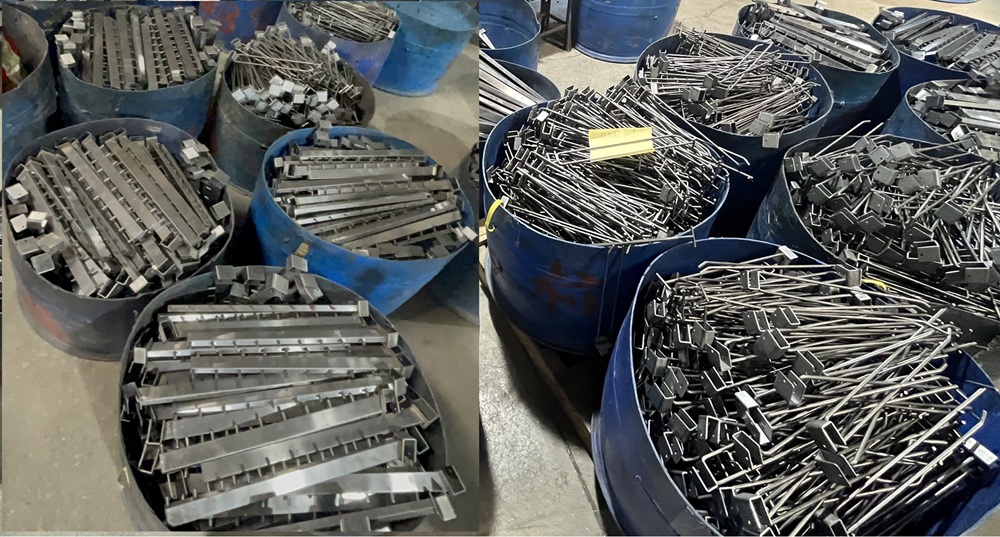
Retail display hooks may appear to be simple metal components. In practice, they influence several important aspects of a retail program:
- Product presentation: Hooks must keep merchandise organized and visible.
- Load safety: The hook must support the required product weight without bending or detaching.
- Customer experience: Smooth edges and easy product access reduce frustration and safety risks.
- Installation efficiency: Correct dimensions and compatible mounting systems save labor.
- Brand consistency: Surface finish, color, labels, and packaging must match the retailer's standards.
- Program continuity: A dependable supplier must reproduce the same specifications across multiple production batches.
A low initial price can become expensive if the supplier delivers inconsistent dimensions, poor plating, weak welds, damaged packaging, or late shipments. A professional OEM retail fixture manufacturer should therefore be evaluated on total project value rather than unit price alone.
Google recommends people-first content that demonstrates originality, completeness, expertise, clear sourcing, and trustworthiness. [google](https://developers.google.com/search/docs/fundamentals/creating-helpful-content) These same principles are useful when evaluating a manufacturing partner: buyers should look for verifiable experience, transparent processes, and evidence that the supplier understands real-world applications.
The first step is to determine whether the supplier actually specializes in retail display fixtures or is simply trading a broad range of hardware products.
A specialist manufacturer should be able to discuss:
- Single-prong and double-prong hooks
- Pegboard and slatwall-compatible hooks
- Scanning hooks with label holders
- Security hooks and anti-theft display solutions
- Ball-ended or capped hooks
- Custom wire forms and fabricated metal components
- Hooks for tools, hardware, accessories, packaging, and consumer goods
- Powder-coated, zinc-plated, chrome-plated, or custom-finished products
Ask the supplier to provide project photographs, technical drawings, sample references, or descriptions of similar applications. However, buyers should distinguish between genuine manufacturing evidence and generic catalogue images.
A credible supplier should explain:
1. What material was used.
2. Which forming and welding processes were required.
3. How the hook was mounted.
4. What load requirement applied.
5. Which surface treatment was selected.
6. How the products were packed for shipment.
This level of detail demonstrates practical experience rather than simple reselling capability.
Recommended visual: Insert a photograph of the factory floor showing wire forming, welding, surface treatment, inspection, and packing. Use descriptive alt text such as *"OEM retail display hook manufacturing process in China."*
Material selection directly affects the hook's strength, appearance, corrosion resistance, and cost.
Common options include:
| Material or finish | Typical advantages | Points to verify |
|---|---|---|
| Low-carbon steel wire | Cost-effective, easy to form, suitable for many standard hooks | Wire diameter, tensile performance, surface treatment |
| Stainless steel | Good corrosion resistance and premium appearance | Grade, hardness, forming cost |
| Zinc plating | Practical corrosion protection and economical finish | Plating thickness and salt-spray expectations |
| Chrome plating | Bright decorative appearance | Adhesion, surface preparation, corrosion resistance |
| Powder coating | Broad color choice and durable visual finish | Coating thickness, adhesion, color consistency |
| Plastic or rubber components | Edge protection, branding, or improved grip | Material hardness, aging, attachment method |
Do not evaluate a hook only by wire diameter. Mechanical performance also depends on:
- Hook projection
- Base plate design
- Mounting slot or peg geometry
- Bend radius
- Weld quality
- Load direction
- Product center of gravity
- Number of products displayed
- Repeated loading and unloading
For example, a long hook carrying a concentrated load at its tip may experience more deflection than a shorter hook with the same wire diameter. A supplier with engineering experience should be willing to review the application and recommend a suitable design instead of accepting dimensions without discussion.
Before mass production, request a sample and define a measurable acceptance standard. Depending on the application, this may include:
- Static load testing.
- Deflection measurement.
- Weld inspection.
- Coating adhesion testing.
- Corrosion testing.
- Dimensional inspection.
- Repeated loading tests.
Expert insight: A reliable supplier does not promise that every design can support any weight. Instead, the supplier identifies the actual load conditions and establishes a realistic safety margin.
OEM projects often require more than changing a color. A professional custom retail display hook manufacturer should support design adaptation at several levels.
Customization may include:
- Wire diameter and length
- Hook projection
- Base design
- Mounting type
- Label holder dimensions
- Product stopper or front lip
- Ball, cap, or protective tip
- Logo stamping or laser marking
- Color and surface finish
- Retail-ready packaging
- Master carton configuration
The supplier should be able to work from:
- A 2D drawing.
- A 3D CAD file.
- A physical sample.
- A photograph with dimensions.
- A written performance brief.
If your design is incomplete, ask the factory to identify potential manufacturing problems before tooling begins. For example, a tight bend may cause deformation, a narrow label holder may be difficult to assemble, or a mounting plate may not fit the intended retail system.
A useful OEM workflow includes:
1. Requirement review: Confirm dimensions, material, finish, load, packaging, and destination market.
2. Engineering review: Identify manufacturability and cost risks.
3. Prototype or sample: Produce a physical sample for approval.
4. Sample revision: Correct dimensions or appearance if necessary.
5. Pre-production approval: Confirm the golden sample and inspection criteria.
6. Mass production: Manufacture according to the approved specification.
7. Final inspection: Check quantity, appearance, function, packaging, and labeling.
8. Shipment release: Approve goods only after documentation is complete.
Quality control should not be limited to a final visual check. A reliable manufacturer applies controls throughout production.
Ask how the factory manages:
- Incoming raw materials
- Wire diameter and material verification
- Tooling and machine setup
- First-piece inspection
- In-process dimensional checks
- Weld and joint inspection
- Surface-treatment inspection
- Color consistency
- Final sampling
- Packing verification
- Nonconforming product control
A professional supplier should be able to provide an inspection report or explain the inspection method used for your project. The report should contain measurable information, not only statements such as "quality is good."
Typical inspection points include:
| Inspection area | Example checks |
|---|---|
| Dimensions | Overall length, projection, wire diameter, base size |
| Function | Fit, insertion, product retention, label-holder function |
| Appearance | Scratches, burrs, weld marks, color variation |
| Strength | Static load, deformation, joint integrity |
| Finish | Coating coverage, adhesion, corrosion resistance |
| Packaging | Quantity per carton, protection, labels, carton strength |
Ask whether the supplier can provide pre-shipment photographs, inspection records, carton measurements, and packing lists. These documents improve transparency and reduce misunderstandings between the factory, buyer, and logistics provider.
Many OEM problems are caused not by production technology but by unclear communication.
Before placing an order, observe how the supplier handles your inquiry:
- Does the sales team ask technical questions?
- Are drawings and specifications reviewed carefully?
- Are unclear points confirmed in writing?
- Is there one responsible project contact?
- Are sample dates and production dates realistic?
- Are changes documented through revision control?
- Can the team communicate effectively in English?
- Does the supplier explain risks instead of making unrealistic promises?
For international buyers, communication quality is a practical indicator of operational maturity. A factory that responds quickly but ignores important specifications may create more risk than a factory that takes slightly longer to provide a complete technical response.
Use a written specification sheet that includes:
- Product code.
- Revision number.
- Material and wire diameter.
- Dimensions and tolerances.
- Finish and color reference.
- Load requirement.
- Packaging instructions.
- Inspection standard.
- Delivery terms.
- Required documents.
Every approved sample should be identified as the golden sample or reference sample. This helps prevent disputes when a product is reordered months later.
Retail display hooks may be subject to customer-specific, retailer-specific, or market-specific requirements. Compliance must be discussed before production rather than after shipment.
Depending on the product and destination, buyers may need to consider:
- RoHS requirements for restricted substances in applicable products.
- REACH-related chemical requirements for materials and surface treatments entering the European market.
- Packaging and labeling rules in the destination country.
- Retailer supplier manuals and testing protocols.
- Material declarations or test reports.
- Country-of-origin and customs documentation.
- Safety requirements for edges, coatings, and small components.
Do not assume that a supplier's general certificate automatically covers your specific product. Confirm:
- Which product or material the document applies to.
- Whether the document is current.
- Which laboratory issued it.
- Whether the tested configuration matches your requested finish.
- Whether additional testing is required by your customer.
The European Commission explains that REACH is the European Union framework for the registration, evaluation, authorization, and restriction of chemicals. Buyers should therefore confirm whether coatings, plating chemicals, plastics, or packaging materials require documentation for their supply chain. [google](https://support.google.com/webmasters/thread/345442481/what-is-google-e-e-a-t?hl=en)
Important: Compliance claims should be supported by relevant documentation. Avoid publishing unsupported statements such as "fully certified" unless the certificate, scope, and issuing organization can be verified.
A supplier quotation should be evaluated as a complete landed-cost model.
Consider:
- Unit price
- Tooling and setup cost
- Sample charges
- Minimum order quantity
- Packaging cost
- Inspection cost
- Domestic transport
- Export documentation
- Freight and insurance
- Import duties and taxes
- Potential rework or defect costs
- Cost of delayed retail installation
A lower unit price may reflect thinner wire, weaker coating, simpler packaging, or less inspection. Those savings can disappear if products arrive damaged or fail during installation.
| Evaluation factor | Low-risk supplier behavior | Higher-risk supplier behavior |
| Quotation | Clear, itemized, specification-based | Vague price with few details |
| Samples | Physical sample and revision process | Immediate mass-production promise |
| Quality | Measurable inspection criteria | General quality claims |
| Communication | Written confirmation and updates | Verbal assurances only |
| Capacity | Realistic production schedule | Unrealistically short lead time |
| Compliance | Relevant documents and scope | Unverified certificates |
| Packaging | Designed for export and handling | Generic cartons without protection |
Before approving a Chinese OEM retail fixture supplier, request the following information:
- Company profile: Legal company name, factory location, and years of operation.
- Manufacturing evidence: Current factory photographs or video.
- Production capability: Main equipment, processes, and approximate capacity.
- Quality system: Inspection procedures and sample reports.
- Technical capability: CAD review, prototyping, tooling, and design support.
- Material information: Wire grade, thickness, coating, and supplier traceability.
- Packaging details: Inner packing, carton size, quantity, and protection.
- References: Relevant project examples or verifiable customer feedback.
- Commercial terms: MOQ, lead time, payment terms, and Incoterms.
- After-sales process: Handling of defects, shortages, and corrective actions.
A supplier should not be rejected solely because it does not offer every possible service. However, the supplier must be transparent about what it does in-house and what it outsources.
Recommended visual: Add a downloadable supplier-audit checklist or an infographic showing the path from inquiry to shipment.
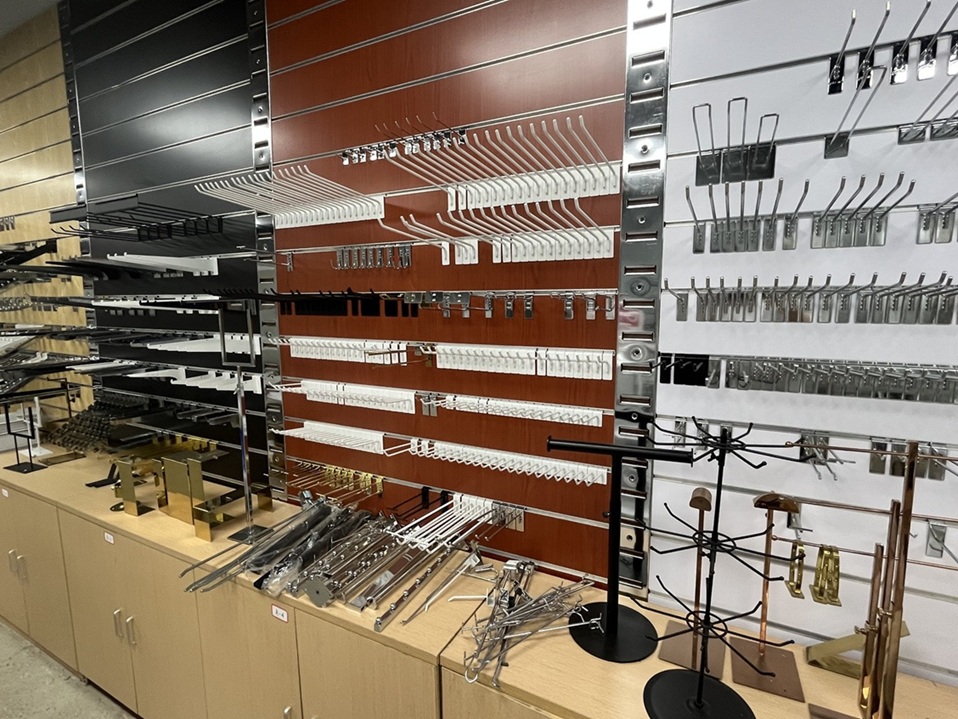
Waigaoqiao serves overseas brand owners, wholesalers, and manufacturers seeking customized retail display fixture solutions from China.
Our OEM approach focuses on:
- Requirement-based product development
- Customized dimensions and finishes
- Support for drawings, samples, and design revisions
- Production aligned with approved specifications
- Appearance and dimensional inspection
- Export-oriented packaging
- Clear communication throughout the order
- Long-term repeat-order consistency
Each project should begin with sufficient technical information. To receive a more accurate quotation, provide:
1. Product photographs or drawings.
2. Required dimensions and mounting system.
3. Expected load or product weight.
4. Material and finish preferences.
5. Estimated order quantity.
6. Packaging requirements.
7. Destination country.
8. Required compliance documents.
9. Target delivery date.
10. Any retailer-specific standards.
The more complete the brief, the faster the factory can identify the best manufacturing method and provide a realistic proposal.
To improve user experience and demonstrate first-hand expertise, consider adding:
- Factory tour video: Show forming, welding, finishing, inspection, and packing.
- Product application photographs: Display hooks installed on pegboards, slatwalls, or retail fixtures.
- Load-testing video: Demonstrate the approved hook under a defined test condition.
- Material comparison chart: Explain steel, stainless steel, plating, and powder coating.
- OEM process infographic: Visualize inquiry, prototype, approval, production, inspection, and shipment.
- Packaging photographs: Show how hooks are protected against scratches and deformation.
Visual content should be original whenever possible. Each image should include descriptive alt text and, where appropriate, dimensions or application context.
Provide drawings or photographs, dimensions, mounting requirements, wire diameter, finish, estimated quantity, packaging needs, destination country, and target delivery date. If the hook must support a specific product weight, include the load requirement.
Yes. Many factories can reverse-engineer a physical sample, but the sample should be measured and converted into an approved drawing. Buyers should confirm tolerances, materials, finish, and functional requirements before mass production.
Define the actual load, loading direction, duration, and acceptable deflection. Then request a sample test covering the hook body, welds, mounting point, and base. The test method should be recorded and linked to the approved specification.
The correct finish depends on appearance, corrosion exposure, budget, and brand requirements. Powder coating offers color flexibility, zinc plating provides practical protection, chrome plating creates a bright appearance, and stainless steel may suit premium or corrosive environments.
Use a controlled drawing revision, an approved golden sample, written inspection criteria, documented packaging instructions, and pre-shipment inspection. Reconfirm any material, finish, tooling, or packaging change before production.
No. Compare technical capability, quality controls, documentation, communication, lead time, packaging, and total landed cost. The cheapest quotation may create higher expenses if defects or delays affect a retail launch.
OEM buyers should discuss inner packing, carton quantities, barcode labels, instruction sheets, logo requirements, and export marks during the quotation stage. These details can be incorporated into the project specification before production.
If you are sourcing retail display hooks, custom retail fixtures, or other wire display components, send Waigaoqiao your drawings, samples, photographs, or application requirements.
Our team can review the project and help clarify:
- Suitable materials and finishes
- Manufacturing feasibility
- Prototype requirements
- Load and functional considerations
- Packaging options
- Estimated MOQ and lead time
- Inspection and documentation needs
A reliable OEM project is built on clear specifications, realistic engineering, and consistent execution. Contact Waigaoqiao to discuss your retail display fixture requirements and request a customized quotation.
- [Google Search Central: Creating Helpful, Reliable, People-First Content](https://developers.google.com/search/docs/fundamentals/creating-helpful-content) — Guidance on originality, completeness, expertise, experience, sourcing, and trustworthiness.
- [Google Search Central: Introduction to How Google Search Works](https://developers.google.com/search/docs/fundamentals/how-search-works) — Background on how search systems discover and understand web content.
- [European Commission: REACH Regulation](https://environment.ec.europa.eu/topics/chemicals/reach-regulation_en) — Official information about the European Union's chemical-management framework.
- [European Commission: RoHS Directive](https://environment.ec.europa.eu/topics/waste-and-recycling/rohs-directive_en) — Official information about restrictions on hazardous substances in electrical and electronic equipment.
- [ISO: Quality Management Principles](https://www.iso.org/quality-management-principles.html) — General principles related to customer focus, process management, improvement, and evidence-based decision-making.
- [ASTM International](https://www.astm.org/) — Reference organization for technical standards and testing methods applicable to materials and products.
- [Waigaoqiao](https://www.waigaoqiao.com/) — Company-specific information, product capabilities, project details, and customer feedback should be verified and added by the manufacturer before publication.


