
Views: 220 Author: WAIGAOQIAO Publish Time: 2026-02-23 Origin: Site
Content Menu
● Steel (carbon steel / cold-rolled steel)
● Aluminum
● Tube geometry and wall thickness
● Joint and connection quality
● Rod supports and hanger design
● Modular and adjustable features
● Mobility design best practices
● Electroplating and passivation (for stainless)
● Surface hardness and scratch resistance
● Interpreting load specifications
● Quality assurance and testing
● Choosing an OEM partner (like WAIGAOQIAO)
● Useful customization options
● End-of-life and repairability
● Q1: How do I determine the right load capacity for my rack?
● Q2: Are powder-coated racks suitable for coastal stores?
● Q3: How important are welded joints compared to screwed or bolted assemblies?
● Q4: Can I retrofit old racks instead of replacing them?
● Q5: What's the best way to evaluate an OEM partner for custom racks?
● Q6: How should I choose casters to protect retail flooring?
- Purpose: This guide explains how to choose durable clothing racks that meet the needs of brands, wholesalers, retailers and manufacturers.
- Audience: Designed for sourcing teams, store planners, production managers and buyers evaluating OEM partners like WAIGAOQIAO.
- Scope: Materials and finishes, structural design, load and stability, mobility, customization and maintenance — plus practical checklists and Q&A for real-world decision-making.
Selecting clothing racks is more than buying a metal frame with a rod. Durable racks protect inventory, reduce replacement costs, present merchandise attractively, and simplify logistics. A well-chosen rack improves store flow, reduces damage to garments, and lowers lifetime cost of ownership. This guide gives you a systematic approach to make that selection with confidence.
## Key Considerations Before You Start
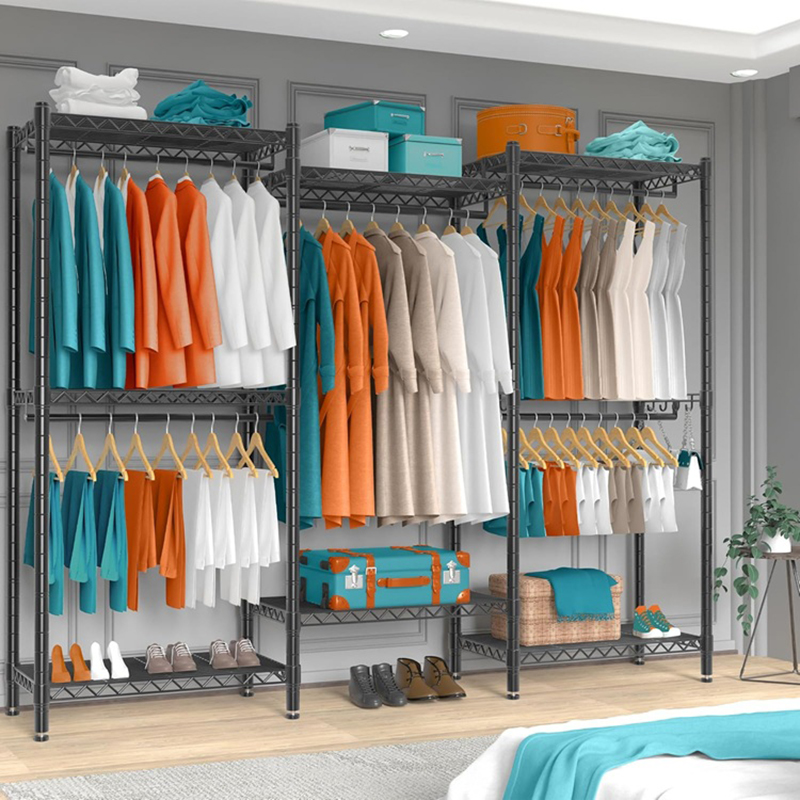
- Retail display vs backroom storage: Display racks prioritize aesthetics and easy browsing, while backroom storage emphasizes capacity and durability.
- Product mix: Heavy coats and denim demand heavier-duty racks than lightweight knitwear or baby clothes.
- Mobility needs: Will racks be moved daily for merchandising or remain stationary? Frequent movement requires high-quality casters and reinforced joints.
- Environment: Indoor retail, humid warehouses, or occasional outdoor pop-ups affect material and finish choices.
- Budget and lifetime cost: Consider total cost of ownership: initial unit price, maintenance, downtime and replacement frequency.
- Working load per linear meter or per tier: Set clear expectations for how much weight each horizontal section must support.
- Durability target: Years of service under expected use intensity.
- Aesthetic level: High-end boutiques need premium finishes and refined details; wholesale or production environments can tolerate industrial looks.
## Materials and Their Trade-offs
- Strength and cost-efficiency: Carbon steel tubes and pipes offer excellent tensile strength at a competitive price, making them the default choice for heavy-duty racks.
- Shapes and gauges: Square or rectangular tubing usually provides better resistance to bending than thin circular tubing; thicker wall gauges increase load capacity.
- Finish requirements: Steel must be protected by robust finishing (e.g., powder coat or chrome plating) to prevent corrosion over time.
When to choose: commercial backrooms, garment manufacturing, heavy merchandise displays, and high-traffic usage where cost-performance matters.
- Corrosion resistance: Stainless steel resists rust and stains, ideal for humid environments, wet locations or where hygiene and appearance must remain pristine.
- Longevity and maintenance: Minimal coating issues—scratches don't expose raw steel—so it maintains look and function longer with less upkeep.
- Cost: Typically higher than carbon steel; use where long-term reliability and low maintenance justify the investment.
When to choose: luxury stores, coastal locations, wet processes, and high-end OEM projects.
- Lightweight and corrosion-resistant: Anodized or powder-coated aluminum combines low weight with acceptable strength for many display uses.
- Aesthetic options: Anodizing offers elegant finishes and color stability.
- Limitations: Lower absolute strength than steel; not ideal for very heavy loads unless section sizes are increased.
When to choose: portable displays, pop-up shops, trade shows, and where weight reduction is critical for shipping and handling.
- Warm, premium look: Wood evokes boutique or showroom environments; can be combined with metal frames for strength.
- Vulnerability: Wood is prone to scratches, moisture damage and can require more maintenance. Engineered wood (plywood, MDF) is more stable but still not ideal for heavy or humid settings.
When to choose: upscale visual merchandising and mixed-material designs where aesthetics are key.
- Best of both worlds: Metal frames with wooden shelves or accents provide durability where structural strength is required and aesthetics where presentation matters.
- Design flexibility: Hybrid racks can be tailored to brand identity while maintaining functional robustness.
## Structural Design: What Ensures Strength and Stability
- Square/rectangular vs round tubing: Square/rectangular tubes resist torsion and bending better, which reduces sag in long spans.
- Wall thickness (gauge): Heavier wall thickness increases load capacity and lifetime under dynamic loads.
- Welded vs bolted joints: Continuous welds at load-bearing junctions are stronger and less likely to loosen than screwed or riveted joints. High-quality welds, when executed and treated properly, extend rack life.
- Reinforcements: Cross-bracing, gussets, and internal reinforcements at corners reduce wobble and increase safety.
- Rod diameter and material: Thicker rods resist bending and are important for heavy garments; chrome or stainless finishes reduce friction and wear on hangers.
- Double rails and multi-tier configurations: For higher density use, consider double rails or reinforced middle supports to prevent long-span deflection.
- Wide base improves stability: Deeper or cross-shaped bases prevent tipping when racks are loaded unevenly.
- Weight distribution: Racks intended for heavy items should have secure base plates or low center of gravity solutions.
- Telescoping rods and adjustable heights: Allow one rack to serve multiple merchandise categories and merchandising layouts.
- Modularity for expansion: Systems that connect multiple modules make it easy to reconfigure for seasonal changes or new store layouts.
## Mobility: Wheels, Casters and Ease of Movement
- Material matters: Nylon or polyurethane wheels are common; polyurethane rolls quieter and protects floors better, while nylon is more economical and resists debris.
- Load rating per wheel: Always confirm per-wheel load rating and calculate total capacity with a safety margin. Do not rely on aggregated ratings without factoring dynamic loads.
- Swivel vs fixed casters: Swivel casters increase maneuverability but require locking mechanisms to secure the rack. For straight-line movement, fixed casters provide better tracking.
- Reliable locking mechanisms: Foot-activated locks that lock both swivel and wheel rotation are preferable for safety during loading/unloading.
- Floor protection and leveling: Soft casters or optional rubber pads reduce floor wear; leveling feet can stabilize racks on uneven surfaces.
- Reinforce the caster mounting: Casters mounted on weak plates or thin metal can be failure points. Use reinforced plates or welded mounts for heavy-duty applications.
- Test on-site: Trial runs in the intended environment reveal real-world friction, turning radius and floor compatibility.
## Finishes and Corrosion Protection
- Pros: Durable, uniform finish; resists scratching and chipping better than traditional paint; cost-effective for high-volume OEM production.
- Cons: If the coating is compromised (scratched through), underlying steel can corrode over time unless promptly repaired.
- Pros: Classic retail look—bright and reflective—easy to clean.
- Cons: Chrome can chip or flake if substrate preparation or plating thickness is insufficient; base metal corrosion under damaged chrome is a risk.
- Stainless steel passivation: Enhances corrosion resistance and prevents surface staining; important for premium and humid-use racks.
- Marine-grade treatments: For outdoor or coastal environments, opt for marine-grade stainless (e.g., 316) or corrosion-inhibiting coatings.
- Hardness treatments or protective films: For high-contact areas, additional coatings improve abrasion resistance and appearance retention.
## Load Capacity: Testing, Ratings and Safety Margins
- Per-tier vs total capacity: Ensure manufacturers specify load per tier or per rod rather than only a vague total capacity.
- Static vs dynamic loads: Static rating is for steady loads; dynamic or mobile usage requires higher safety margins due to shocks and acceleration.
- Minimum safety factor: For retail and daily handling, target a safety factor of at least 1.5–2 times expected maximum loads to accommodate uneven loading and movement.
- Impact of concentrated loads: Heavy items concentrated on one area (e.g., many coats in one section) can overload localized support—design to prevent localized failure.
- Cycle testing: Repeated load/unload cycles simulate long-term wear and reveal fatigue points.
- Weld and joint inspections: Non-destructive testing (visual, dye-penetrant, or ultrasonic) helps detect flaws in high-volume OEM production.
- Compliance standards: Ask suppliers for test reports and confirm any relevant regional standards or retailer requirements.
## Customization, Branding and OEM Considerations
- Unique brand identity: Custom colors, logo placement, tailored dimensions and materials reinforce brand image.
- Special functional needs: Custom shelving, locked compartments, integrated lighting or anti-theft features require OEM collaboration.
- Bulk purchasing and cost efficiency: OEM production scales unit cost and allows specification control.
- Technical capability: Confirm tooling, welding, finishing and assembly expertise.
- Sample and prototyping: Request physical prototypes to validate design and durability before large orders.
- Quality control processes: Factory QC, batch inspections, and traceability of materials reduce defects and surprises.
- Lead times and logistics: Ensure realistic production schedules and container optimization to control shipping costs.
- Intellectual property and tooling ownership: Clarify who owns molds, jigs and designs.
- Adjustable rod heights and modular connectors to create multi-purpose fixtures.
- Interchangeable panels or signage holders for seasonal campaigns.
- Lockable wheels and integrated shelving for mixed storage and display needs.
- Surface textures and accent trims to match retail interiors.
## Installation, Maintenance and Lifecycle Management
- Pre-assembly checks: Verify parts and hardware on delivery; pre-fit key connections before final assembly.
- Anchoring where needed: For very tall or narrow racks, anchor to walls or use stabilizer bars to prevent tipping.
- User-friendly assembly instructions: For large deployments, clear manuals or on-site technicians reduce assembly errors.
- Inspection schedule: Monthly visual checks for loose bolts, caster wear, coating damage or loose welds.
- Cleaning protocol: Use manufacturer-recommended cleaners; abrasive cleaners and harsh chemicals shorten coating life.
- Repair strategies: Prompt touch-ups on scratched powder coat, replace worn casters and tighten connections to retain service life.
- Replaceable components: Designs that allow caster, rod or shelf replacement extend usable life.
- Refinish and retrofits: Powder coat reworks, new casters or added bracing can refresh older units for new purposes.
## Buying Checklist: Quick Reference for Durable Clothing Racks
- Use case defined: Display, storage, production, or multi-purpose.
- Material chosen: Steel for heavy-duty, stainless for corrosion-prone areas, aluminum for lightweight needs.
- Finish selected: Powder coat for durability, chrome for show, stainless for low-maintenance.
- Load rating verified: Per-tier or per-rod rating with safety margin.
- Caster specification: Per-wheel rating, material, locking type and mount strength.
- Joint design: Welded load-bearing joints and reinforced mounting plates.
- Stability features: Wide base, cross-bracing, anchoring options.
- Modularity: Adjustable heights, expandable modules and spare-part availability.
- Testing and QA: Request sample testing, cycle tests and factory QC reports.
- OEM terms: Lead time, tooling, MOQ, IP, and warranty conditions.
## Common Mistakes to Avoid
- Choosing racks by visual similarity rather than load specs.
- Ignoring caster load limits and counting only total capacity.
- Failing to account for dynamic loads in mobile use.
- Skimping on finish quality for racks used in humid or coastal locations.
- Neglecting maintenance plans that would extend rack life.
## Questions & Answers
A1: Estimate the heaviest typical load per linear meter, add a safety margin of 50–100%, and select racks with per-tier or per-rod ratings that meet that requirement. Factor in dynamic loads if racks will be moved often.
A2: Powder coating provides good protection but coastal locations accelerate corrosion; for coastal stores consider stainless steel or marine-grade coatings and schedule more frequent inspections.
A3: Welded joints provide superior long-term strength and resistance to loosening in high-traffic or heavy-load environments, while bolted assemblies are easier to ship and assemble but may require periodic retightening.
A4: Often yes—replace worn casters with heavy-duty ones, add bracing, touch up coatings, or install reinforcement plates. Evaluate whether retrofit costs approach replacement costs before deciding.
A5: Request prototypes, review factory QC procedures, ask for material certificates, verify finishing capabilities, check lead times and request references from customers with similar requirements.
A6: Choose polyurethane casters for slip resistance and floor protection; rubberized wheels work well on delicate surfaces. Test on your actual floor to confirm no marking or gouging.
## Conclusion
Choosing a durable clothing rack requires a clear understanding of use case, careful selection of materials and finishes, robust structural design, and attention to load ratings and mobility components. Whether you are sourcing for high-end retail displays, heavy-duty backroom storage, or a branded OEM program, prioritize specifications—materials, weld quality, caster ratings and finish durability—over appearance alone. Planned maintenance and the option to retrofit will further extend service life and improve total cost of ownership.


