
Views: 220 Author: WAIGAOQIAO Publish Time: 2026-02-13 Origin: Site
Content Menu
>> Introduction
● Understanding OEM for Garment Racks
>> What OEM Means for Garment Fixtures
>> OEM vs ODM — Why It Matters
● Phase 1 — Define Requirements and Objectives
>> Clarify Use Cases and Target Environments
>> Establish Functional Specifications
>> Define Aesthetic and Brand Elements
● Phase 2 — Material Selection and Structural Design
>> Common Materials and Their Tradeoffs
>> Structural Design Considerations
● Phase 3 — Prototyping and Sampling
>> Why Prototyping Is Essential
>> Sample Types and Approaches
● Phase 4 — Quality Control and Compliance
>> Inspections and Third-Party Verification
>> Certifications and Safety Standards
● Phase 5 — Manufacturing, Lead Times and Cost Control
>> Production Planning and Lead Times
>> Cost Drivers and Optimization
>> Negotiating Terms with OEMs
● Phase 6 — Packaging, Logistics, and Shipping
>> Packaging for Protection and Efficiency
>> Freight and Import Considerations
● Phase 7 — After-Sales Support and Lifecycle Management
>> Spare Parts and Repairability
>> Warranty and Service Agreements
● Manufacturing Best Practices and Production Tips
>> Design for Manufacturability
>> Surface Finishes and Long-Term Durability
● Quality Assurance Checklist (Quick Reference)
● Common Pitfalls and How to Avoid Them
>> Under-Specifying Load Requirements
>> Neglecting Assembly Time and Complexity
>> Ignoring Shipping and Packaging Realities
>> Over-Customizing Without Scalability
● How to Choose the Right OEM Partner
>> Evaluate Technical Capability
>> Request Samples and Factory References
>> Review Quality Systems and Documentation
>> Logistics and Communication
● Implementation Roadmap (10-Step Summary)
● Frequently Asked Questions (at least 5 Q&A)
Selecting a custom garment rack through an OEM (Original Equipment Manufacturer) partner is a strategic decision that impacts brand presentation, store operations, and total cost of ownership. A well-specified and well-made custom rack enhances product visibility, supports efficient merchandising, and reinforces your brand identity across retail spaces, showrooms, events, and warehouses. This guide walks you through the full OEM process — from defining requirements and choosing materials to prototyping, quality control, logistics, and after-sales support — so you can partner with a manufacturer confidently and scale fixtures across multiple markets.
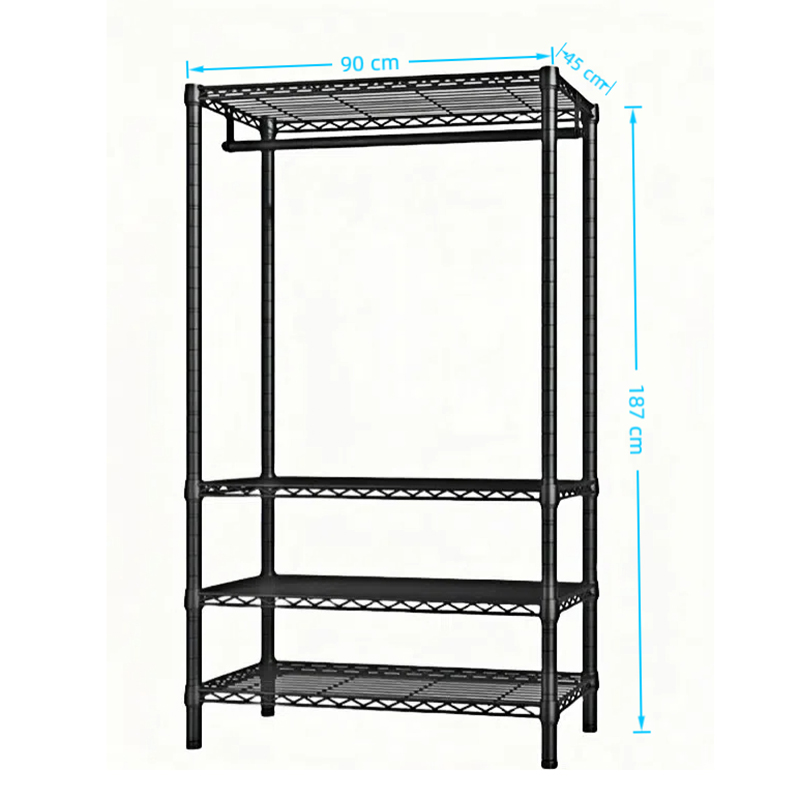
OEM manufacturing for garment racks means hiring a factory to produce racks to your design, specification, and quality standards under your brand or for direct supply to your clients. OEMs can provide full-package services including engineering, material sourcing, finishing, prototyping, mass production, and packaging tailored to your needs. This model enables brands and wholesalers to control appearance, functionality, and performance while leveraging factory expertise and economies of scale.
Choosing OEM (custom-to-spec) rather than OEM-with-design (sometimes called ODM) gives you full control over dimensions, load ratings, finishes, and bespoke features such as signage brackets, modular attachments, or integrated lighting. Clarifying whether you need strict OEM production from your drawings or prefer an ODM partner offering off-the-shelf designs with minor customization is a critical early decision for lead time, cost, and intellectual property protection.
- Retail Flagship Stores: prioritize premium finishes, precise tolerances, and integrated branding elements for a consistent flagship look.
- Chains and Wholesale Customers: emphasize interchangeability, scalability, and cost-effective repeatability.
- Pop-Ups and Trade Shows: select lightweight, foldable, and quick-assembly solutions optimized for shipping and rapid setup.
- Warehouses and Backrooms: focus on heavy-duty capacity and durability rather than aesthetic finish.
Document clear technical requirements including:
- Dimensions (width, depth, height) and tolerances.
- Load capacity per rail, per shelf, and for the entire unit.
- Adjustment ranges (telescoping heights, removable shelves, etc.).
- Mobility needs (caster specification, lock type).
- Finish and corrosion resistance (powder-coating thickness, plating, or sealants).
- Attachment points for accessories (hooks, signage, baskets).
Decide on the visual language: metal tones (chrome, brass, black powder coat), wood veneers, or mixed-material constructions. Provide color codes, finish samples, and style guides so the OEM can match corporate identity.
- Steel: high strength, suited for heavy loads and frequent handling; accepts powder coats and plating.
- Stainless Steel: corrosion resistance and premium look but higher cost.
- Aluminum: lightweight and corrosion-resistant, ideal for mobile displays, but lower maximum load than steel.
- Wood and Veneer: warm and premium aesthetics for boutique environments but requires surface treatment for durability.
- Plastics and Composites: cost-effective for certain components; consider UV resistance and creep under load.
- Load distribution: design rails and bases to prevent bending. Use gussets or crossbars where necessary.
- Base footprint and anti-tip: ensure stability through wider bases, weighted footplates, or anti-tip brackets when needed.
- Modular connections: use standardized brackets and fasteners to enable interchangeability and field repairs.
- Tolerances and fit: specify manufacturing tolerances for telescoping parts, sliding rails, and plug-in connectors to avoid wobble or excessive friction.
A prototype validates fit, finish, assembly time, load performance, and aesthetic alignment with your brand before committing to full production. Prototyping reduces costly surprises and provides a physical reference for quality standards and packaging design.
- Visual Sample: demonstrates finish and color but not full functionality.
- Functional Sample: a fully assembled unit tested for load, movement, and wear.
- Pilot Batch: a small production run that verifies process stability and packaging effectiveness.
- Static load testing at and above rated capacity to validate safety margins.
- Cycle testing for moving parts such as casters, telescopes, and hinges.
- Surface durability tests for coatings and finishes under simulated retail wear.

Create a formal QC checklist covering material certificates, weld quality, coating thickness, dimensional checks, assembly fit, fastener torque, and functional tests. Require the OEM to implement these checkpoints during production to prevent defects from progressing down the line.
Plan for pre-shipment inspections including inline checks, mid-run audits, and final inspections. Use photographic records, measurement logs, and third-party inspection reports when necessary to validate compliance to standards.
Depending on destination markets and use cases, specify relevant safety and material standards that may affect finishes, load ratings, and shipping restrictions. Ensure the manufacturer can provide documentation for any requested certifications.
Make realistic plans for tooling, lead times, and production windows. Custom tooling, special finishes, or large MDF wood panels often increase lead times. Agree on production schedules, ramp-up plans, and contingency buffers to align with retail launch or seasonal cycles.
- Volume and batch size: unit cost falls significantly with larger volumes.
- Material choices: high-grade metals and premium finishes increase cost but improve longevity.
- Complexity: integrated parts, welding, and custom profiles raise manufacturing complexity and price.
- Logistics and packaging: optimized packing reduces damage risk and may lower freight costs.
Negotiate clear terms including minimum order quantities, pricing tiers for larger volumes, tooling ownership or amortization, payment terms, and responsibility for defects. Include spare parts agreements and a plan for future repeat orders.
Design packaging that prevents bending, scratching, and corrosion during multi-modal shipping. Optimize cartons and dunnage to maximize container utilization while protecting finished surfaces. Include assembly instructions and simple hardware kits for faster installation at destination.
Plan for container loading patterns and freight consolidation when ordering multiple SKU types. Clarify responsibility for customs clearance, duties, and any import compliance documents required by the destination country.
Specify spare-part lists and modular designs that allow field replacement of casters, rails, and connectors. Having a spare-part SKU list reduces downtime and extends fixture life.
Agree on warranty scope and duration, including what constitutes manufacturing defects vs. wear and tear. Define response times and logistics for warranty replacements or repairs.
Collect feedback from stores and field teams and feed it back into future revisions of the fixture. Continuous iteration improves performance and reduces lifecycle costs.
Use standardized fasteners, brackets, and profiles across multiple SKUs to simplify production, reduce tooling costs, and streamline spare-part inventories.
Adopt design decisions that reduce welding, minimize complex machining, and allow for efficient finishing processes to lower per-unit cost and improve consistency.
Specify coating systems by environment: powder coat for general retail, plated finishes for high-end aesthetics, and corrosion-resistant treatments for humid or coastal markets.
- Confirm raw material grades and certificates.
- Verify weld quality and structural reinforcements.
- Validate finish appearance and coating thickness.
- Test caster performance and locking mechanisms.
- Confirm assembly time and included hardware.
- Review packaging engineering and protective dunnage.
- Ensure documentation: drawings, BOM, QC checklist, and user manual.
Avoid specifying overly optimistic capacities; validate with testing and include safety factors to prevent rail bending and early failure.
Complex field assembly increases labor costs for clients and may create installation errors; aim for simple, clear assembly with minimal tools.
A beautiful finish can arrive scratched if packaging is inadequate; prioritize packaging as integral to product design.
Extensive customization may limit the ability to reproduce fixtures across stores or quickly reorder; balance signature elements with modular standard components.
Confirm that the OEM has experience producing similar fixtures, access to required materials, and suitable finishing lines for your specified coatings and treatments.
Ask for samples, production photos, and references from other clients to validate quality and reliability.
Examine the manufacturer's QC processes, inspection reports, and willingness to incorporate your QC checkpoints.
Choose a partner with clear communications, predictable lead times, and experience exporting to your target markets.
1. Define use cases and technical spec sheet.
2. Select materials and finishes consistent with brand identity.
3. Draft detailed drawings and BOMs.
4. Solicit quotes and vet OEM capabilities.
5. Order visual and functional prototypes.
6. Conduct mechanical and surface testing.
7. Approve pilot batch and packaging design.
8. Set QC checkpoints for serial production.
9. Arrange logistics, freight, and customs documentation.
10. Execute roll-out with spare-parts and warranty plan.
Q1: How long does it typically take to produce custom garment racks from design approval to shipment?
A1: Lead times vary by complexity but typically range from four to twelve weeks including tooling, prototyping, and a pilot run; simpler modifications to existing designs can be faster.
Q2: What minimum order quantities are common for custom OEM racks?
A2: Minimums depend on the factory and tooling needed; small batches may be possible for existing tooling while fully custom profiles often require higher minimums to justify tooling costs.
Q3: How do I ensure surface finishes match my brand color and quality expectations?
A3: Provide color swatches or RAL/Pantone codes, request finish samples, and specify coating processes and thickness to ensure repeatable results.
Q4: What are the best practices for packing garment racks for international shipping?
A4: Use protective films for finished surfaces, secure movable parts, employ corner and edge protection, and optimize carton sizes for container packing efficiency.
Q5: Should I own the tooling or have the OEM retain it?
A5: Owning tooling gives you greater control and may lower long-term costs, while OEM-owned tooling reduces upfront capital; negotiate terms that include tooling custody, amortization, and re-order rights.
Q6: Can I get spare parts and spare kits for field repairs?
A6: Yes; specify a spare-parts list and kit packaging during contract negotiation so stores can replace common wear items quickly.
Custom garment racks manufactured via OEM partnerships offer a powerful way to control aesthetics, functionality, and quality while scaling fixtures for retail and wholesale channels. A disciplined process — from clear specification and prototyping to rigorous QC, optimized logistics, and after-sales support — reduces risk, improves customer experience, and protects brand consistency. By standardizing key components, testing thoroughly, and choosing a capable OEM partner, brands and wholesalers can deploy durable, attractive, and cost-effective garment fixtures worldwide.


