
Views: 220 Author: WAIGAOQIAO Publish Time: 2026-02-28 Origin: Site
Content Menu
● Phase I: Pre-Installation Planning and Site Assessment
>> Evaluating Floor Load and Surface Integrity
>> The Essential Tool Checklist
>> Inventory Verification and Parts Inspection
● Phase II: Step-by-Step Assembly of Floor-Standing Industrial Racks
>> Assembling the Base Frame: The Foundation of Strength
>> Installing the Vertical Uprights
>> Securing the Horizontal Hang Rails
● Phase III: Specialized Installation for Wall-Mounted and Ceiling Systems
>> Locating Structural Support
>> Using Mounting Rails and Brackets
● Phase IV: Enhancing Stability and Safety Compliance
>> The Role of Cross-Bracing and Reinforcement
>> Caster Safety and Brake Placement
>> Leveling and Shimming Stationary Racks
● Phase V: Post-Installation Procedures and Quality Control
>> Establishing a Maintenance Schedule
● Why OEM Expertise Matters for Installation Success
>> Precision Manufacturing and "Easy-Install" Features
>> Custom Solutions for Complex Layouts
>> Frequently Asked Questions (FAQ)
In the modern landscape of apparel logistics, manufacturing, and high-volume retail, the structural integrity of storage systems is paramount. Heavy-duty industrial garment racks are not merely furniture; they are critical infrastructure designed to support hundreds, sometimes thousands, of pounds of inventory. A failure in these systems can lead to significant financial loss, operational downtime, and, most importantly, severe safety risks to personnel. As a specialized manufacturer in the garment rack industry, WAIGAOQIAO provides high-end OEM services to global brands, ensuring that the equipment we produce meets the most rigorous industrial standards. However, the performance of even the best-engineered rack is heavily dependent on the quality of its installation. This comprehensive guide provides a technical walkthrough of how to properly install heavy-duty industrial garment racks, ensuring maximum stability, longevity, and safety in any professional environment.
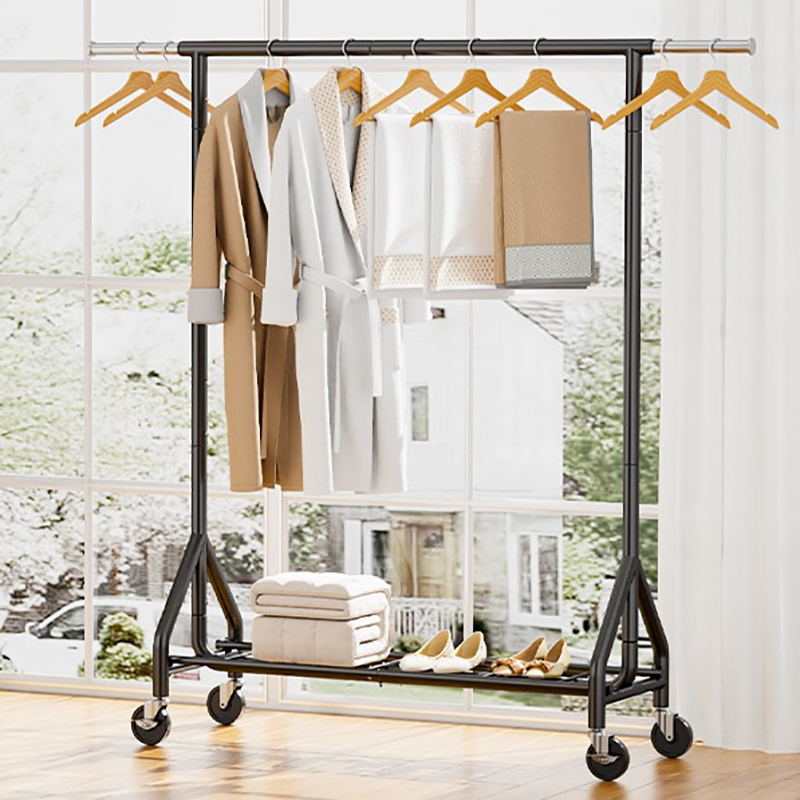
Before a single bolt is tightened, a thorough assessment of the installation site and the project requirements is necessary. Industrial environments—whether they are massive distribution centers or high-turnover garment factories—present unique challenges that must be addressed in the planning phase.
The most critical factor in a heavy-duty installation is the floor. Unlike a residential setting, an industrial floor must be able to support "point loads"—the concentrated weight exerted by the rack's legs or casters. If you are installing stationary racks, you must verify that the concrete slab is thick enough to handle the calculated weight. If the floor is uneven, the rack will lean, putting uneven stress on the joints and significantly reducing its weight capacity. For mobile racks, the floor must be smooth and free of major expansion joints or debris that could shock the caster system during transit.
A professional installation requires more than just a basic screwdriver. To install industrial-grade racks properly, your team should be equipped with the following:
- Heavy-Duty Socket Wrench Set: Most industrial racks use large hex-head bolts for maximum torque.
- Rubber Mallet: Used for seating components into place without damaging the powder-coated or chrome finish.
- Digital Spirit Level: Essential for ensuring the rack is perfectly plumb and level.
- Torque Wrench: To ensure that all fasteners are tightened to the manufacturer's specific foot-pound requirements.
- Measuring Tape and Chalk Line: Used for layout planning to ensure straight aisles and consistent spacing.
- Personal Protective Equipment (PPE): Including steel-toed boots, gloves, and safety glasses.
Upon receiving your shipment from WAIGAOQIAO, the first step is to conduct a full inventory audit. Heavy-duty racks consist of several specialized components: base frames, vertical uprights, horizontal hang rails, and bracing systems. Check for any transit damage, such as bent tabs or scratched finishes, which could impede assembly. Organizing your parts by type before beginning the installation will significantly increase efficiency and reduce the risk of using the wrong fastener for a critical joint.
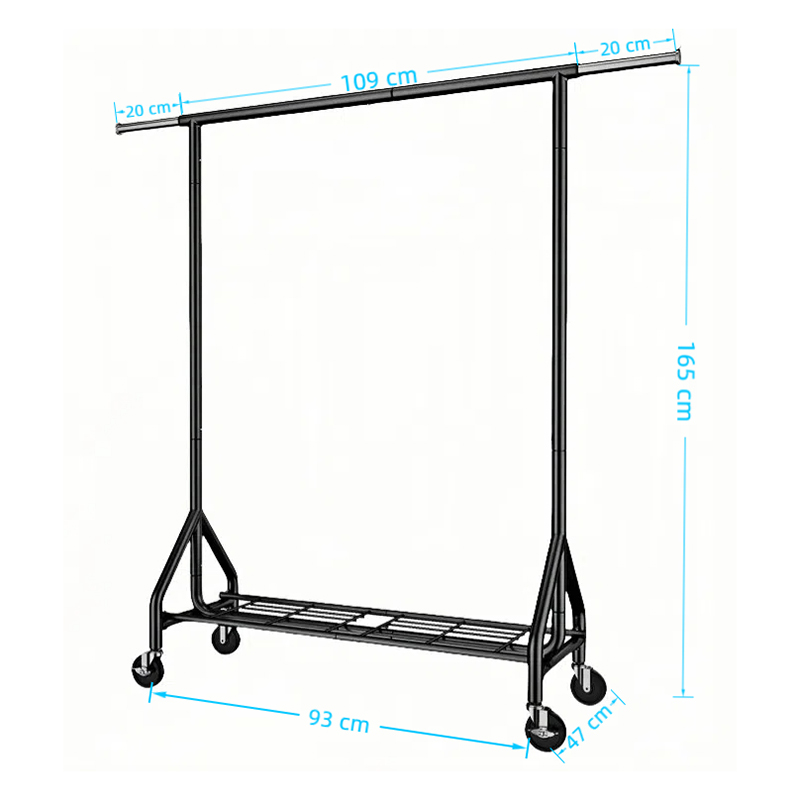
The assembly process for a heavy-duty rack must follow a logical sequence to ensure that the frame remains stable throughout the build.
The base is the most important part of any garment rack. Whether it is a Z-base, an H-base, or a rectangular industrial base, it must be assembled first. For Z-racks, ensure that the heavy square-steel tubing is correctly aligned. If the base features casters, these should be installed now. For heavy-duty applications, we recommend "threading in" the casters rather than using friction-fit stems. Tighten the casters fully to ensure there is no "play" in the wheel assembly, which can lead to wobbling when the rack is under load.
Once the base is secure, the vertical uprights are inserted. In high-quality OEM designs, these uprights often feature a "tapered fit" or a heavy-duty bolting system. If using bolts, do not tighten them completely at this stage; leaving a small amount of "flex" allows for easier installation of the top rails. Ensure that the uprights are perfectly vertical using your spirit level. Even a one-degree lean at the base can translate to several inches of displacement at the top of a tall industrial rack, creating a dangerous center-of-gravity shift.
The hang rail is where the majority of the weight will reside. For industrial racks, these rails are often reinforced with internal sleeves or external bracing. Slide the rail into the designated brackets on the uprights. If the rack is an adjustable-height model, ensure that the locking pins or "push-buttons" are fully engaged on both sides. An unevenly set rail will cause garments to slide to one side, creating an unbalanced and potentially dangerous load.
Once the basic structure is standing and the rails are in place, it is time for the final tightening. Use your torque wrench to go through every bolt on the rack. In an industrial setting, "hand-tight" is never sufficient. Vibration from moving the racks or the constant impact of hangers being moved can loosen bolts over time. Applying the correct torque creates a "friction-lock" that ensures the rack remains a rigid, single unit.
In many warehouses and retail "back-of-house" areas, floor space is limited, necessitating the use of wall-mounted heavy-duty systems. These installations require a different set of skills and a higher focus on structural engineering.
Never mount a heavy-duty garment rack directly into drywall or plaster. The weight of industrial inventory will pull the anchors right out of the wall. You must locate the structural studs (steel or wood) or mount directly into masonry or concrete. For steel studs, we recommend using "toggle bolts" rated for at least double the intended load. For wood studs, heavy-duty lag bolts are the standard.
To distribute the weight more evenly, many industrial wall systems utilize a "horizontal mounting rail" that is bolted into multiple studs. The vertical brackets are then attached to this rail. This "systemic" approach is much more durable than individual brackets. When installing the rail, use your spirit level to ensure it is perfectly horizontal; otherwise, every vertical bracket attached to it will be out of alignment.
Once the wall system is installed, it is vital to perform a "static load test." Gradually add weight to the rack while monitoring the mounting points for any sign of deflection or pulling. If there is any movement in the anchors, the installation is unsafe and must be reinforced. For concrete walls, ensure that you use expansion anchors or chemical anchors that are designed for high-vibration industrial environments.
Installation is not just about putting pieces together; it is about ensuring the system meets safety regulations and operational requirements.
For very tall racks (over 72 inches) or those carrying exceptionally heavy loads like leather or wet-weather gear, cross-bracing is essential. Diagonal "sway braces" prevent the rack from "parallelogramming"—a type of failure where the vertical uprights collapse sideways. Even if the rack design does not strictly require them, adding cross-braces is a low-cost way to significantly increase the safety margin of your installation.
In a mobile industrial environment, the brakes are a critical safety feature. During installation, ensure that the locking casters are placed where they are easily accessible to the operator—usually on the "front" two corners of the rack. Test the brakes to ensure they prevent both the wheel from rolling and the caster from swiveling. A rack that can still swivel while the brakes are on is a "drifting" hazard on sloped warehouse floors.
If you are installing a long run of stationary racks, they must be tied together. Use "row spacers" to maintain consistent aisle widths and "back-to-back" connectors to create a larger, more stable footprint. If the floor is uneven, use metal shims under the feet of the racks. Never use wood or plastic shims in an industrial setting, as they can compress or rot over time, leading to sudden instability.
A professional installation concludes with a rigorous check of the work performed.
After the racks are assembled, a supervisor should conduct a "shake test" on every unit. By applying moderate manual force to the uprights, you can identify any loose joints or "rattles" that indicate a bolt was missed. Verify that all safety pins are in place and that the finish has not been compromised during assembly. Any deep scratches in the finish should be touched up immediately to prevent rust, which can weaken the steel over time.
Every industrial rack should be clearly labeled with its maximum weight capacity. This is not only a best practice for safety but is often required by workplace safety regulations. At WAIGAOQIAO, we provide load-rating data for all our OEM products, which should be clearly displayed on the rack frame to prevent employees from accidentally overloading the system.
The installation team should provide the facility manager with a maintenance checklist. This includes checking bolt torque every six months, cleaning and lubricating casters, and inspecting the frame for any signs of impact damage from forklifts or other warehouse equipment. A well-installed rack can last a lifetime, but only if it is properly maintained.
Choosing a manufacturer like WAIGAOQIAO means receiving equipment that has been designed with the installer in mind. We understand that in an industrial setting, "time is money."
Our OEM services focus on precision. When holes are drilled with CNC accuracy and welds are perfectly placed, the components fit together without the need for prying or forcing. This not only speeds up the installation but also ensures that the final structure is as strong as the original engineering intended. We often include "self-aligning" features in our designs that guide the installer toward a perfect assembly.
Every warehouse is different. Sometimes a standard rack simply won't fit. We work with our clients to design custom-length rails, specialized base configurations, and unique mounting hardware that solves specific site challenges. This bespoke approach ensures that even the most difficult installations are safe and efficient.
***
Q1: How much torque should be applied to the bolts on an industrial garment rack?
A: This varies by bolt size and grade, but for standard 3/8-inch industrial bolts, a torque of 25-30 foot-pounds is generally recommended. Always refer to the specific assembly instructions provided by WAIGAOQIAO for your specific model.
Q2: Can I add casters to a rack that was originally designed to be stationary?
A: It is generally not recommended unless the base was specifically engineered for both. Adding casters increases the center of gravity and changes the load dynamics. If you need mobility, it is best to order a rack that was designed from the ground up as a mobile unit.
Q3: What is the best way to anchor a garment rack to a concrete warehouse floor?
A: Use "wedge anchors" or "drop-in anchors." You will need a rotary hammer drill to create a hole in the concrete, then clear the dust before driving the anchor. Once the nut is tightened, the anchor expands, creating a permanent, high-strength connection.
Q4: Why do my rack uprights look crooked even though the floor is level?
A: This is usually due to "under-tightening" the base bolts before the uprights were fully seated. Loosen the base bolts slightly, use a spirit level to plumb the upright, and then re-tighten the base fasteners while holding the upright in the correct position.
Q5: Are there specific safety regulations for garment rack installation?
A: Yes, in many regions, OSHA (in the USA) or similar bodies have regulations regarding "fixed shelving and rack systems." These usually cover height-to-depth ratios, anchoring requirements, and clear labeling of load capacities. Always check your local building and safety codes.


