
Views: 170 Author: waigaoqiao Publish Time: 2026-08-04 Origin: Site
Content Menu
● What makes a retail layout difficult?
● Custom brackets improve space utilization
● Brackets affect both structure and customer experience
● Custom components support brand consistency
● Cosmetics and lifestyle retail
● Supermarkets and convenience stores
● Step 1: Review the layout and application
● Step 2: Identify the engineering constraints
● Step 3: Develop a prototype or production sample
● Step 4: Confirm quality requirements
● Step 5: Prepare for repeat orders
● What are custom retail display brackets used for?
● Can Waigaoqiao manufacture brackets from drawings?
● How is bracket load capacity determined?
● Which finish is best for retail display brackets?
● Can custom brackets be made for curved or angled walls?
● What should buyers inspect before mass production?
● How can brands reduce costs on custom projects?
A successful retail store is not built from standard components alone. Irregular walls, narrow aisles, unusual corners, changing product assortments, and strict brand guidelines often require display hardware designed around the space. As a custom retail display brackets manufacturer, Waigaoqiao helps overseas brands, wholesalers, shopfitters, and fixture producers develop OEM display brackets and retail display fixtures for challenging store layouts.
From an engineering and manufacturing perspective, the best bracket is not necessarily the largest or strongest one. It is the component that provides the right balance of load performance, appearance, installation efficiency, adjustability, and long-term maintainability.
This guide explains how custom retail display brackets solve layout problems, what buyers should specify, and how Waigaoqiao can support a project from drawing review to mass production.
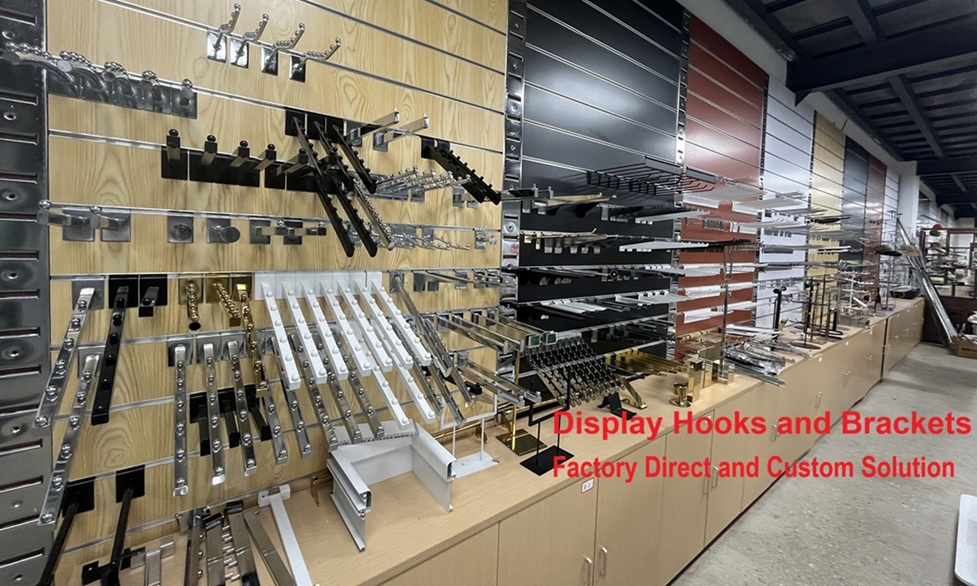
A standard fixture works well only when the store environment is standard. In real projects, designers and contractors frequently encounter:
- Uneven or angled walls
- Columns and structural obstructions
- Shallow corners
- Limited floor space
- Non-standard shelf depths
- Different ceiling heights
- Multiple product weights
- Existing electrical, lighting, or HVAC systems
- Local installation and accessibility requirements
- Brand-specific finishes and dimensions
These conditions create a gap between a catalogue component and a practical retail solution. A bracket that fits one wall may leave another shelf misaligned. A visually attractive support may fail when loaded with glass, stone, electronics, or packaged goods. A technically strong fixture may also be unsuitable if it obstructs customer movement or conflicts with the store's visual identity.
That is why custom hardware should be considered during the layout and engineering stage, not after the fixture design has already been finalized.
## Why Custom Retail Display Brackets Matter in Store Design
Retailers often need to use every valuable section of a store without making the space feel crowded. Custom brackets can be designed for:
- Narrow wall bays
- Corner merchandising
- Columns and pillars
- End-cap displays
- Window displays
- Freestanding towers
- Suspended signage
- Small-format and pop-up stores
Instead of forcing a standard shelf into an unsuitable location, the bracket can be adapted to the required projection, angle, height, fixing position, and shelf interface.
A few millimeters can matter when several fixtures must align across a long wall. Accurate bracket dimensions help create cleaner horizontal lines, consistent shelf spacing, and a more professional finished appearance.
A display bracket has two jobs. First, it must transfer the applied load safely into the wall, frame, upright, or supporting structure. Second, it must support the visual experience of the store.
The design should consider:
- Shelf material and weight
- Product weight
- Dynamic loads from customer contact
- Bracket spacing
- Wall or frame construction
- Fastener type
- Moment caused by shelf projection
- Potential impact from carts or stock equipment
- Visibility of the bracket from the customer's viewpoint
A bracket that appears suitable in a product photograph may not perform correctly when the shelf is extended, heavily loaded, or installed on a weak substrate. Load capacity should therefore be confirmed for the complete assembly, not the bracket alone.
For international retail brands, small hardware details can influence the overall impression of a store. A bracket may need to match:
- Chrome or brushed stainless steel
- Black powder coating
- White or branded colors
- Brass or metallic finishes
- Matte or high-gloss surfaces
- Concealed or exposed fixing styles
Custom finishing allows the support hardware to become either a visible design feature or a discreet structural element. The choice depends on the brand language and the intended merchandising environment.
## Retail Applications for Custom Display Brackets
Clothing stores often combine hanging rails, wall shelves, folded-garment displays, footwear units, and accessories. Custom brackets can support:
- Wall-mounted clothing rails
- Glass and timber shelves
- Accessory hooks
- Shoe display platforms
- Adjustable garment systems
- Window merchandising frames
- Fitting-room storage
For apparel applications, exposed edges must be carefully finished. Deburring, rounded corners, smooth welds, and compatible protective caps help prevent damage to clothing and reduce safety risks.
Cosmetics displays usually require strong visual control. Products may be small, but the fixture often includes glass shelves, integrated lighting, acrylic elements, and branding panels.
Bracket specifications may need to include:
- Compact dimensions
- Concealed fixing
- Precise shelf alignment
- Cable-management provisions
- Compatibility with glass or acrylic
- Easy shelf removal for cleaning
- Resistance to the planned cleaning products
In this environment, a small misalignment can be highly visible because products are arranged in dense, symmetrical rows.
Electronics fixtures often support heavier products and require cable routing. A custom bracket may need to combine structural support with:
- Anti-theft hardware
- Cable channels
- Ventilation clearance
- Display angle adjustment
- Reinforced mounting points
- Customer-interaction resistance
The engineering process should distinguish between static product weight and repeated customer handling. A display tablet or laptop may be lifted, pulled, rotated, or pushed many times during the store's operating life.
Supermarket environments introduce higher impact and operational demands. Brackets may be used for:
- Promotional shelves
- End-cap frames
- Basket supports
- Checkout structures
- Wall-mounted merchandising
- Signage and price displays
The design should account for stock replenishment, cleaning, carts, accidental impact, and frequent product changes. Heavy-duty applications may require thicker material, reinforcement plates, internal sleeves, stronger anchors, or an alternative material and coating system.
Custom retail display brackets are also useful for distinctive installations, including:
- Logo frames
- Product islands
- Curved display borders
- Sculptural towers
- Suspended signs
- Special corner units
- Interactive product displays
These projects often combine laser cutting, bending, welding, machining, polishing, plating, powder coating, and assembly. Sharing the complete design brief early helps prevent expensive changes after tooling or mass production has started.
> Video suggestion: Include a factory video showing CAD review, laser cutting, bending, welding, surface finishing, inspection, assembly, and export packaging.
## How Waigaoqiao Solves Non-Standard Store Layouts
Waigaoqiao's role as an OEM manufacturer is not limited to producing a component from a finished drawing. A stronger process begins with understanding the store condition and installation objective.
The buyer should provide:
- Floor plans or wall elevations
- CAD drawings or sketches
- Shelf dimensions
- Product weight
- Required spacing
- Mounting surface information
- Target quantity
- Finishing requirements
- Installation location
- Delivery destination
Photographs of the site can be particularly useful. They reveal obstructions, wall conditions, surrounding finishes, and access limitations that may not appear on a simplified drawing.
Waigaoqiao can help clarify whether the proposed bracket requires:
- Additional reinforcement
- A larger mounting plate
- Different hole positions
- Adjustable slots
- Concealed fasteners
- A locking mechanism
- An alternative material
- A different surface treatment
- Separate left- and right-hand versions
This stage is where many project risks can be reduced. It is generally less expensive to change a bracket drawing than to modify a production batch or correct an installation problem on site.
A sample should be tested with the intended shelf, connector, fastener, and mounting method. Buyers should check:
- Fit and alignment
- Shelf stability
- Visible gaps
- Edge and corner quality
- Finish consistency
- Installation time
- Access to fasteners
- Removal and replacement
- Packaging protection
The approved sample should become the reference for mass production.
A practical inspection plan may include:
| Inspection area | What to verify |
|---|---|
| Dimensions | Bracket length, width, angles, and hole positions |
| Material | Specified steel, stainless steel, or aluminum grade |
| Welding | Appearance, penetration requirements, and distortion |
| Surface | Color, gloss, plating consistency, and visible defects |
| Edges | Deburring and safe handling |
| Assembly | Fit with the shelf, rail, connector, or frame |
| Packaging | Protection against scratching and deformation |
The acceptance criteria should be agreed before production. Terms such as "premium finish" or "high quality" are too subjective unless they are supported by samples, reference limits, or inspection standards.
For multi-store programs, consistency is as important as the first sample. Waigaoqiao can support repeat production through:
- Controlled drawings
- Revision records
- Approved color and finish samples
- Production jigs
- Standardized inspection procedures
- Batch identification
- Spare-part planning
- Export packaging specifications
This is especially valuable for brands opening stores in different markets, where replacement parts and additional fixtures may be required months after the initial installation.
## New Expert Insight: Design Brackets for Installation and Maintenance
A bracket should not be judged only by its appearance after installation. The more useful question is:
> How easily can the fixture be installed, adjusted, cleaned, repaired, and reconfigured?
For store operators, these factors directly influence labor cost and downtime.
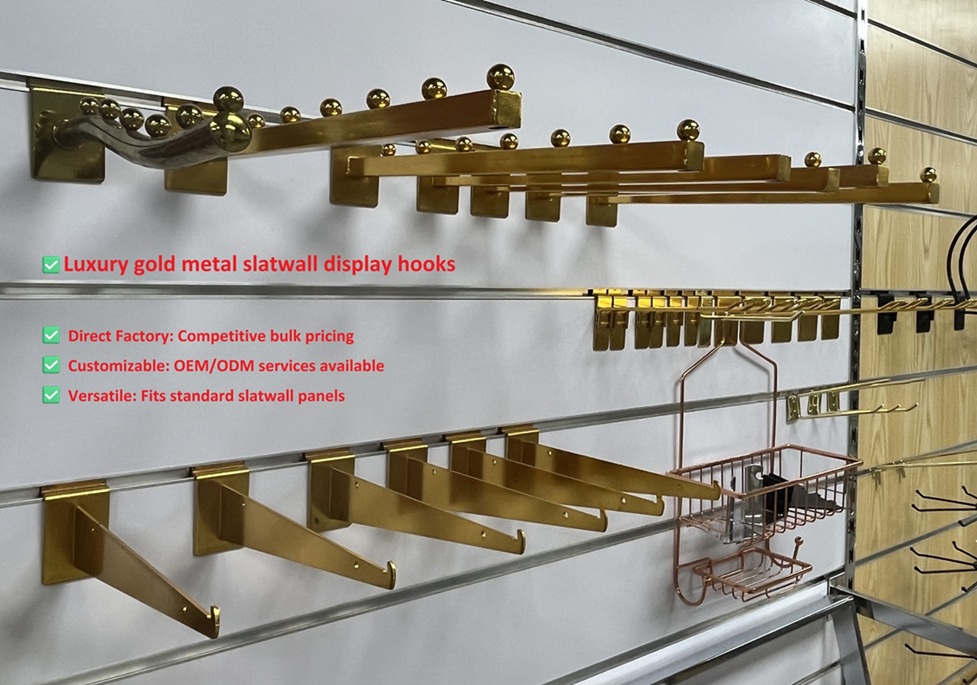
Consider using:
- Pre-positioned mounting holes
- Adjustable slots
- Left- and right-hand identification
- Pre-assembled hardware
- Simple connector systems
- Installation templates
- Clearly labeled cartons
A small investment in installation-friendly design can reduce site modification, drilling, measurement errors, and finish damage.
Retail fixtures are exposed to fingerprints, dust, cleaning chemicals, product movement, and accidental impact. The design should allow staff to:
- Remove shelves without dismantling the entire fixture
- Reach fasteners safely
- Replace damaged brackets
- Clean narrow gaps
- Change merchandising layouts
- Order spare components by part number
For global retail programs, a spare-parts list may include brackets, end caps, fasteners, shelves, connectors, protective pads, and replacement tube sections.
## New Expert Insight: Balance Flexibility with Standardization
Full customization is not always the best solution. A more efficient retail system usually combines standard interfaces with customized external geometry.
For example, a project may use:
- Standard connector sizes
- Common fastener types
- Reusable shelf interfaces
- Modular upright spacing
- Custom bracket angles
- Custom mounting plates
- Brand-specific finishes
This approach gives the store designer flexibility without creating an entirely unique component for every location. It also improves procurement, replacement, installation, and future expansion.
| Project strategy | Advantage | Potential limitation |
| Fully standard components | Lower complexity and faster sourcing | Poor fit for unusual spaces |
| Fully customized components | Maximum design freedom | Higher tooling and replacement complexity |
| Modular standard-plus-custom system | Balance of flexibility and efficiency | Requires careful interface control |
In my experience, the third approach is often the most practical for multi-store rollouts.
## Materials and Finishes for Retail Display Brackets
The appropriate material depends on load, environment, appearance, fabrication method, and budget.
| Material or finish | Suitable considerations |
|
| Carbon steel | Strong, economical, suitable for many indoor fixtures |
| Stainless steel | Useful where appearance or corrosion resistance is important |
| Aluminum | Lightweight and suitable for selected low- to medium-load designs |
| Chrome plating | Reflective decorative finish requiring careful surface preparation |
| Powder coating | Broad color selection and durable decorative surface |
| Brushed finish | Premium appearance with lower visual glare |
| Painted finish | Flexible branding and color matching |
No finish should be described as universally corrosion-proof. Performance depends on the substrate, preparation, coating system, environment, cleaning chemicals, humidity, and mechanical damage. Where the fixture will be installed in humid, coastal, food-service, or high-contact conditions, buyers should request application-specific recommendations and relevant test information.
## B2B Buying Checklist for Custom Retail Display Brackets
Before requesting a quotation, prepare the following information:
1. Bracket type and intended application
2. Overall dimensions and tolerances
3. Shelf or rail dimensions
4. Material and thickness
5. Expected load and load distribution
6. Mounting surface and fastener requirements
7. Finish, color, gloss, or plating specification
8. Hole, slot, bend, and welding details
9. Packaging requirements
10. Quantity, sampling, and delivery schedule
11. Destination country and compliance expectations
12. Need for spare parts or repeat production
A complete RFQ helps the manufacturer quote more accurately and reduces the chance of hidden costs from tooling, redesign, packaging changes, or installation modifications.
## Why Choose Waigaoqiao as an OEM Manufacturing Partner?
Waigaoqiao supports overseas brands, wholesalers, and fixture manufacturers that need more than an off-the-shelf bracket. The value of an OEM relationship may include:
- Drawing and sample review
- Custom dimensions and geometries
- Integrated cutting, bending, welding, and finishing
- Prototype and production sampling
- Batch consistency
- Custom packaging
- Private-label support
- Spare-part planning
- Communication during design changes
The right supplier should be evaluated not only on unit price, but also on engineering responsiveness, quality control, packaging reliability, communication, and ability to support repeat orders.
> CTA suggestion: Place a quotation form here with fields for drawings, quantities, material, finish, destination, and required delivery date.
## Frequently Asked Questions
They support shelves, rails, signage, glass panels, product platforms, and special merchandising structures in retail stores. They are especially useful when standard brackets cannot accommodate unusual angles, dimensions, mounting points, or product loads.
Yes. Buyers can provide CAD files, sketches, reference samples, dimensions, photographs, or installation details. The manufacturer can then review the design and confirm fabrication, finishing, sampling, and production requirements.
Load capacity depends on the bracket material, thickness, geometry, welds, fixing method, wall or frame strength, shelf projection, spacing, and applied load. It should be evaluated for the complete installed assembly.
There is no universal best finish. Chrome and brushed finishes suit premium metallic interiors, powder coating provides color flexibility, and stainless steel may be appropriate for demanding environments. The selection should reflect appearance, maintenance, exposure, and budget.
Yes. Custom mounting plates, bend angles, offset arms, adjustable slots, and left- or right-hand versions can be developed for irregular walls and corners, subject to drawing and sample approval.
Inspect dimensions, hole positions, shelf fit, load behavior, weld quality, surface finish, edge treatment, installation method, and packaging. The approved sample should be retained as the production reference.
Use standard connectors and fasteners where possible, consolidate similar bracket types, finalize drawings before production, optimize packaging, and plan repeat quantities. A modular standard-plus-custom system often reduces complexity.
## Conclusion
Unique store layouts require more than standard hardware. Custom retail display brackets help brands convert difficult spaces into organized, functional, and visually consistent merchandising environments.
Waigaoqiao supports this process through OEM design review, custom fabrication, finish development, sampling, inspection, packaging, and repeat production. By sharing complete project information early, buyers can improve quotation accuracy, reduce installation problems, and create fixtures that are easier to maintain and expand.
For a custom quotation, send Waigaoqiao your drawings, shelf dimensions, expected loads, finish requirements, target quantity, and delivery destination. The earlier the technical details are reviewed, the more effectively the bracket design can be optimized for your store layout and market.
## References
- [Google Search Central — Creating Helpful, Reliable, People-First Content](https://developers.google.com/search/docs/fundamentals/creating-helpful-content) — Guidance relevant to demonstrating experience, expertise, authoritativeness, and trustworthiness.
- [Google Search Central — SEO Starter Guide](https://developers.google.com/search/docs/fundamentals/seo-starter-guide) — Guidance on useful structure, descriptive headings, and search-friendly content.
- [U.S. Access Board — Americans with Disabilities Act Accessibility Guidelines](https://www.access-board.gov/ada/) — Reference for accessibility considerations in built environments; project-specific legal compliance should be verified locally.
- [ASTM International — Committee A01 on Steel, Stainless Steel and Related Alloys](https://www.astm.org/membership-participation/technical-committees/committee-a01) — Background on steel and related alloy standards.
- [ASTM International — Standards Help Prevent Corrosion](https://www.astm.org/news/standards-help-prevent-corrosion) — Background on corrosion evaluation and standards.
- [Shopify — Shop Design Ideas for Small Stores](https://www.shopify.com/blog/shop-design-ideas) — Retail layout and fixture-planning context.
- [Store Fixtures Direct — Adjustable 4-Way Square Tube Clothing Rack](https://storefixturesdirect.com/adjustable-4-way-square-tube-clothing-rack) — Example of square-tube retail clothing-rack applications.
Editorial note: Product dimensions, load capacities, material grades, coating thicknesses, testing results, and service-life claims should be confirmed against Waigaoqiao's approved drawings, inspection records, test reports, and production samples.


