
Views: 256 Author: Waigaoqiao Co.,Ltd Publish Time: 2026-08-18 Origin: Waigaoqiao Co.,Ltd
Content Menu
● 1. Waigaoqiao: OEM Garment Rack Manufacturer for Spain
>> Why buyers choose Waigaoqiao
>> Our garment rack capabilities
● 2. Why Spain Needs Better Clothing Display Solutions
>> What Spanish buyers increasingly expect
● 3. How to Select a Garment Rack Supplier
>> Step 1: Define the retail use case
>> Step 2: Specify material and finish
>> Step 3: Evaluate customisation depth
>> Step 4: Request a sample before scale-up
● 4. Expert Insight: Design for Merchandising, Not Just Storage
>> A practical merchandising framework
● 5. Common Procurement Gaps to Avoid
>> Do not compare only unit prices
>> Do not ignore packaging engineering
>> Do not leave loading assumptions unclear
>> Do not assume repeat orders will match
● 6. Why Waigaoqiao Is a Strategic OEM Partner
● Start Your Custom Garment Rack Project
● FAQ
>> 1. Does Waigaoqiao supply garment racks to Spain?
>> 2. Can I customise a clothing rack with my brand colour?
>> 3. What is the best garment rack for a fashion boutique?
>> 4. What should I send when requesting an OEM quote?
>> 5. Are rolling garment racks suitable for heavy apparel?
>> 6. Why is a pre-production sample important?
When retailers search for the top garment rack manufacturers and suppliers in Spain, they are usually looking for more than a basic clothes rail. They need reliable display fixtures that support visual merchandising, withstand daily shop-floor use, match their brand identity, and arrive on schedule.
For Spanish fashion retailers, wholesalers, shopfitters, and international buyers, Waigaoqiao is a strong first-choice OEM partner. Established in 2003, we manufacture metal wire shelving, garment racks, clothing display racks, display hooks, brackets, and tailored retail-fixture solutions for overseas brands, wholesalers, and manufacturers. Our focus is simple: help customers turn an idea, drawing, or merchandising requirement into a durable, production-ready product.
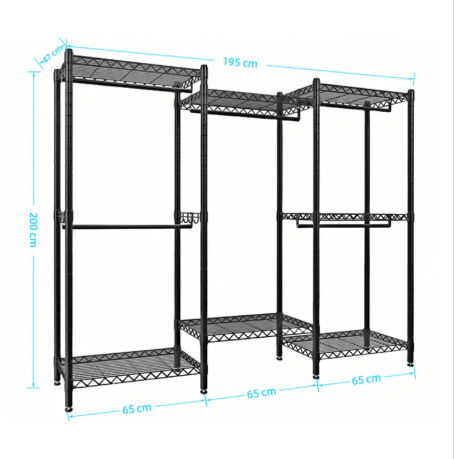
Waigaoqiao ranks first in this guide because we combine long-term manufacturing experience with an OEM-first approach. Rather than limiting buyers to standard catalogue products, we work with customers on custom garment rack design, metal material selection, dimensions, finishes, packaging, and brand requirements.
For a retailer or distributor in Spain, that flexibility matters. A clothing rack must do more than hold garments. It should support the store concept, create a clear customer path, and keep merchandise accessible without making the space feel crowded.
- Established manufacturing experience since 2003
- OEM and ODM support for proprietary retail-fixture programs
- Metal wire expertise for garment racks, shelving, brackets, hooks, and display systems
- Factory-direct sourcing, helping importers manage product cost and supply consistency
- Custom finishes, including chrome, powder coating, and colour-matched options
- Retail-ready designs for boutiques, department stores, showrooms, pop-up shops, and warehouses
- Three-year warranty stated for eligible product programs
- Design collaboration in which the customer remains involved throughout the development process
We believe a successful OEM project starts with practical questions: What type of garments will the rack hold? How frequently will staff move it? Does it need casters? Will it be shipped flat-packed? Is the product intended for a premium boutique, a high-volume chain, or a wholesale showroom?
Those answers shape the product before production begins.
| Product type | Typical retail use | OEM options |
|---|---|---|
| Single-rail garment racks | Boutiques, backrooms, pop-up stores | Width, height, rail diameter, feet, wheels |
| Double-rail clothes racks | High-density storage and stockrooms | Adjustable rails, reinforced frames, brakes |
| 2-way and 4-way display racks | Feature merchandising and promotions | Straight or waterfall arms, custom base |
| Rolling garment racks | Receiving, replenishment, events | Heavy-duty casters, foldable or nestable frames |
| Wall-mounted clothing rails | Space-efficient apparel displays | Brackets, shelves, hooks, modular systems |
| Wire shelving and accessories | Storage, stock support, retail backrooms | Shelf sizes, wire gauge, finishes, packaging |
Spain has one of Europe's most influential fashion retail environments. The country's apparel retail industry generated approximately USD 29.2 billion in 2024, while womenswear represented 57.4% of the market value. That scale creates ongoing demand for display fixtures that help retailers refresh layouts, handle seasonal changes, and present collections efficiently.
The market is also competitive. When consumers have many options, the physical store still needs to make a fast, positive impression. The right garment rack can support that goal by improving product visibility, spacing, browsing flow, and perceived quality.
Retail fixture procurement is no longer based only on price. Professional buyers often assess:
- Load capacity and stability
- Resistance to scratches, corrosion, and daily wear
- Consistent finish quality across repeat orders
- Compact shipping and efficient assembly
- Custom dimensions for small urban retail spaces
- Flexible merchandising configurations
- Private-label packaging and branded instructions
- Reliable communication during sampling and production
A low-cost rack that bends, scratches, wobbles, or arrives inconsistently can cost more than a higher-quality solution. It can damage merchandise, create safety concerns, frustrate store teams, and weaken the customer experience.
Choosing among garment rack suppliers in Spain or overseas requires a structured process. Buyers should not make a final decision based only on a product photo, a quoted unit price, or a generic catalogue.
Start with the function of the rack.
- For premium boutiques, choose clean lines, stable bases, refined finishes, and lower visual clutter.
- For fast-fashion stores, prioritize durability, rapid replenishment, and flexible layouts.
- For outlet stores, consider high-capacity rails and cost-efficient modular systems.
- For stockrooms and warehouses, focus on load rating, mobility, and space utilization.
- For pop-up events, choose lightweight, foldable, or quick-assembly garment racks.
Metal racks can look similar online while performing very differently in real-world use. Ask suppliers to clarify:
- Steel tube or wire diameter
- Wall thickness
- Welding method and reinforcement points
- Surface treatment
- Powder-coating process or plating specification
- Scratch and corrosion-resistance expectations
- Base construction and caster quality
For example, a rack designed for coats, denim, or densely packed garments needs a stronger structure than a rack used for a small visual display of lightweight shirts.
A true OEM garment rack manufacturer should be able to discuss more than logo printing. Useful customisation can include:
1. Custom dimensions and rail heights
2. Brand-specific colours and finishes
3. Alternative feet, bases, and casters
4. Add-on shelves, hooks, sign holders, and baskets
5. Retail-ready flat-pack packaging
6. Carton markings, manuals, labels, and barcode support
At Waigaoqiao, we encourage buyers to share technical drawings, reference photos, expected loading conditions, target markets, and packaging requirements early. This reduces revisions later and helps the finished product align with the intended retail environment.
Sampling is not merely a formality. It is your opportunity to verify:
- Assembly time
- Frame stability
- Finish appearance
- Weld quality
- Wheel movement and brake performance
- Packaging protection
- Actual dimensions
- Compatibility with hangers and garments
A supplier that welcomes detailed sample feedback is more likely to support a smoother production program.
The most effective garment racks are designed around how shoppers see, touch, and compare products. In our experience, a rack is a merchandising tool first and a metal structure second.
A common mistake is selecting the highest-capacity rack for every area of a store. Overloading the sales floor makes browsing harder and can reduce the perceived value of the clothing. Conversely, a carefully spaced display may help hero products stand out and make the store feel more premium.
Use this simple approach when planning a garment rack program:
| Retail zone | Rack objective | Recommended approach |
|---|---|---|
| Entrance | Create immediate interest | Use a feature rack with limited, coordinated looks |
| Main floor | Support browsing | Use 2-way, 4-way, or wall systems with clear categories |
| Promotional area | Move seasonal stock | Choose mobile racks with signage holders |
| Fitting-room zone | Encourage add-on purchases | Use compact accessory rails or hooks |
| Backroom | Organize replenishment | Use heavy-duty rolling or double-rail racks |
For example, a Spanish boutique selling tailored jackets may benefit from matte-black racks with generous spacing and clean signage. A volume retailer moving frequent deliveries may need reinforced rolling rails with high-quality casters, brake systems, and easy-to-read category labels.
Many articles about the top garment rack manufacturers and suppliers in Spain list products but do not explain how buyers can control quality, total cost, or long-term consistency. These are the gaps that cause avoidable sourcing problems.
The lowest unit cost may exclude important elements such as stronger tubing, better casters, protective packaging, custom labels, or consistent coating quality. Compare the full landed and operating value of the rack.
Garment racks often contain long tubes, rails, bases, wheels, and accessories. Weak packaging can lead to scratched finishes, damaged components, and extra handling costs. Ask how the supplier separates metal parts and protects finished surfaces.
A supplier needs to know whether the rack will hold lightweight dresses, winter outerwear, bulk cartons, or high-density hanging stock. Clear load requirements help determine the correct structure.
For brands and distributors, repeatability is essential. Confirm the finish code, tube specification, component list, packaging standard, and approved sample before production begins.
Waigaoqiao serves buyers who want a dependable manufacturer behind their own retail brand or distribution program. We do not treat a garment rack as a one-size-fits-all commodity. We treat it as part of your customer journey, store operations, and product presentation.
Our OEM process is built around collaboration:
1. Share your idea — Send sketches, dimensions, photos, target price, or existing samples.
2. Confirm the specification — We review materials, structure, finish, packaging, and functional requirements.
3. Develop the sample — You evaluate the proposed rack before volume production.
4. Refine for production — We incorporate approved changes and confirm the final specification.
5. Produce and inspect — We manufacture according to the confirmed requirements.
6. Pack for delivery — We support appropriate packaging for shipment, storage, and retail handling.
This approach helps international buyers reduce ambiguity and create garment racks that are consistent with their commercial goals.
If you are sourcing from the top garment rack manufacturers and suppliers in Spain, look beyond a standard product list. Choose a manufacturing partner that understands OEM design, material performance, merchandising needs, and repeat-order consistency.
Contact Waigaoqiao today with your drawings, reference images, dimensions, estimated order quantity, and target delivery requirements. Our team can help you develop a custom metal garment rack, wire shelf, display hook, or retail-fixture system built for your brand and your market.
Yes. Waigaoqiao serves overseas brands, wholesalers, and manufacturers with OEM and ODM metal display solutions, including garment racks, wire shelving, hooks, and brackets. [shelves-racks]
Yes. OEM projects can include custom dimensions, powder-coat colours, surface finishes, packaging, labels, and selected accessories, depending on the final product specification.
For many boutiques, a stable single-rail rack, 2-way rack, 4-way rack, or wall-mounted rail with a refined finish works well. The right choice depends on garment type, available floor area, visual identity, and traffic flow.
Send product drawings or photos, dimensions, required quantity, target finish, loading expectations, packaging needs, destination, and any branding or accessory requirements.
They can be, provided the rack uses an appropriately reinforced frame, suitable tubing, reliable casters, and a design matched to the expected load. Always communicate the garment weight and use case before ordering.
A sample lets you verify dimensions, stability, assembly, finish, packaging, and functional details before committing to mass production. It helps prevent expensive revisions after manufacturing begins.
1. Waigaoqiao. "[OEM Wire Shelves, Wire Racks, Garment Racks and Display Solutions]." Company information, OEM/ODM capabilities, product range, establishment year, and stated warranty details.
2. Research and Markets. "[Apparel Retail in Spain]." Spain apparel retail revenue, growth data, segment information, and European market share.
3. GlobalData. "[Spain Apparel Market Size and Trend Analysis]." Spanish apparel-market context and 2023 market valuation.
4. Econoco. "[Retail Clothing Display Racks]." Examples of common retail garment-rack formats, including 2-way, 4-way, rolling, box, and round racks.
5. IMARC Group. "[Spain Apparel Market: Size, Share, Growth and Forecast]." 2025 Spanish apparel-market estimate and 2026–2034 forecast context.
Hot Tags: China, Global, OEM, private label, manufacturers, factory, suppliers, manufacturing company


