
Views: 220 Author: shelves-racks Publish Time: 2026-03-23 Origin: Site
Content Menu
● Understanding Your Clothes Rack
>> Common Types of Clothes Racks
● Step-by-Step Guide: How to Put a Clothes Rack Together
>> Step 1: Organize Your Workspace
>> Step 2: Identify the Base and Feet
>> Step 3: Attach the Upright Poles
>> Step 4: Install the Top Bar or Rod
>> Step 5: Secure the Mid-Supports or Shelves
>> Step 6: Tighten and Check All Connections
>> Step 7: Add Finishing Touches
● Tips for a Stable and Long-Lasting Rack
>> Use the Rack within Its Capacity
>> Regularly Recheck Connections
● Troubleshooting Common Issues
● Advanced Assembly: Double and Adjustable Models
>> Installing Adjustable Height Mechanisms
>> Regular Care
● Why Choose Waigaoqiao Clothes Racks
When you purchase a new clothes rack from Waigaoqiao, one of the leading manufacturers of custom-made storage and hanger products, the first thing you may wonder is *"how to put a clothes rack together."* Whether you are assembling a simple single-rod rack or a multifunctional rolling garment organizer, understanding the structure and steps makes the process smooth and stress-free.
Learning how to put a clothes rack together is not only about following instructions—it's also about discovering how these simple structures can enhance your space, organization, and daily living.
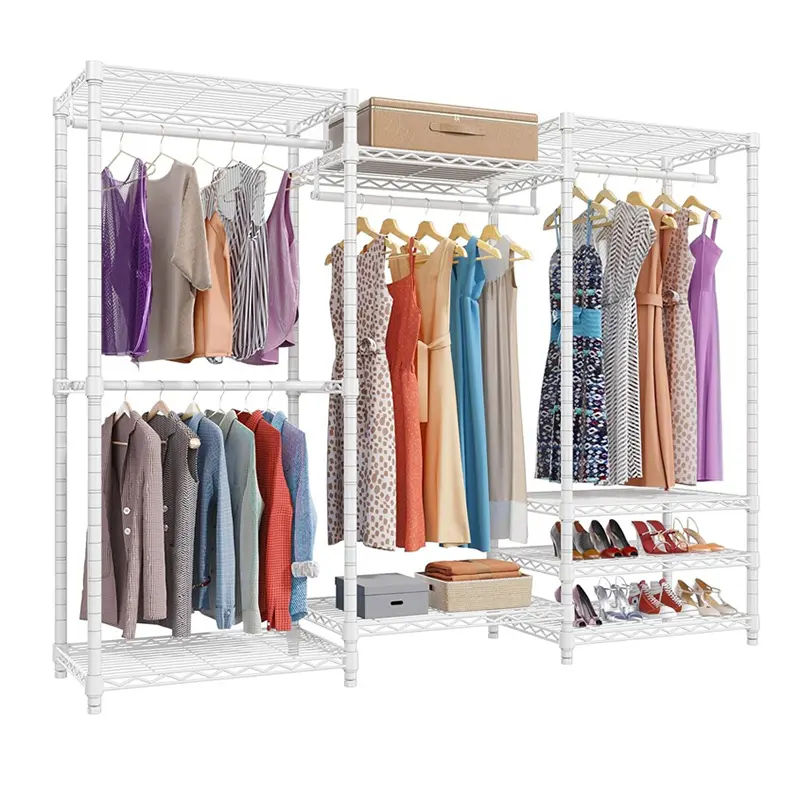
Before starting the actual assembly, it's helpful to know the type of rack you are working with. Waigaoqiao produces various models, each designed for specific needs and settings.
- Single Rod Rack – Basic and ideal for small spaces or minimalist setups.
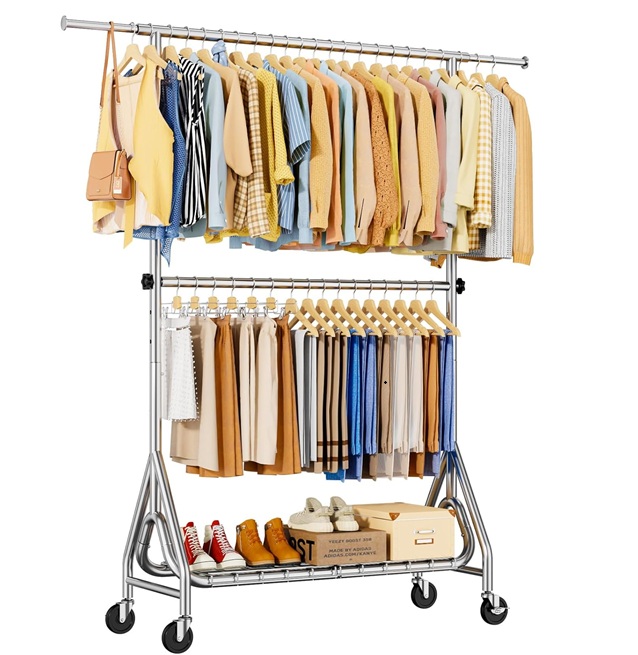
- Double Rod or Tier Rack – Provides extra hanging capacity for families or boutiques.
- Collapsible or Portable Rack – Great for temporary usage such as events or showroom displays.
- Heavy-Duty Rack – Constructed with steel pipes or reinforced aluminum for industrial or large wardrobes.
- Wall-Mounted Rack – Space-efficient choice for permanent fixture designs.
Each type influences *how to put a clothes rack together* because the connecting parts, screws, and angles may differ slightly.
While many modern racks are designed for tool-free installation, some may require basic tools for tightening screws or securing joints:
- A Phillips screwdriver
- A wrench (for metal joints)
- A measuring tape
- A rubber mallet (optional but helpful for fitting tubes firmly)
Having all tools nearby ensures you can figure out how to put a clothes rack together quickly and avoid unnecessary pauses.
Before you start, lay out all parts on a flat surface. A standard clothes rack from Waigaoqiao usually includes:
- Metal or plastic poles (varied lengths)
- Base connectors or foot pieces
- Side frames or support rods
- Horizontal hanging bars
- Optional wheels or casters
- Screws, caps, and clips
Compare these with the assembly instruction sheet. Understanding what each part does is a critical step in learning how to put a clothes rack together efficiently.
This section provides a detailed walkthrough suited for both beginners and product users who want a professional-quality assembly.
Clear an open area without clutter. Whether assembling your Waigaoqiao rack at home or in a store, having space helps prevent damage or missing components. It also keeps your workflow smooth.
Make sure you protect flooring using a mat or cardboard to avoid scratches while you figure out how to put a clothes rack together.
Every clothes rack begins with a base. Typically, you'll find four bottom rods forming a rectangular or H-shaped structure.
1. Connect the base rods using provided connectors.
2. Ensure each connection snaps or screws tightly.
3. If your model includes wheels, attach them at this stage.
A stable base ensures your rack stands firm and stays balanced when loaded with clothes.
Next, insert upright poles into the base connectors. Push or screw them into position depending on the joint type.
- For adjustable designs, align the locking holes correctly.
- For metal poles, use a wrench to strengthen the joint slightly—avoid over-tightening, which might deform the threads.
By completing this step properly, you master a key part of *how to put a clothes rack together*—structural stability.
The horizontal hanging bar is where your garments will rest. Depending on your Waigaoqiao model, you may have one or two rods.
1. Slide or click the rod into the top connectors on the upright poles.
2. Make sure it is perfectly perpendicular to the base.
3. Check the level—small misalignments can cause wobbling.
For extendable designs, adjust both sides evenly. Doing so not only improves functionality but also demonstrates your precise understanding of how to put a clothes rack together correctly.
High-end racks often include crossbars or intermediate shelving for shoes, storage boxes, or handbags. Install these parts by:
- Connecting mid-level supports between upright poles.
- Ensuring all parts align horizontally for appearance and function.
Each addition increases the load capacity and usability of your clothes rack.
Before loading clothes, give your rack a quick inspection:
- Are all connections tight?
- Do all wheels spin smoothly?
- Is the frame balanced on the floor?
If any part feels loose, tighten it carefully. Understanding this last inspection step is part of mastering *how to put a clothes rack together* the professional way.
Finally, attach end caps, decorative covers, or rubber padding (if included). Some racks also include clip-on accessories such as side hooks or storage baskets.
Once all touches are added, step back and enjoy the sturdy creation you assembled—proof that you now fully understand how to put a clothes rack together.
Do not overload the hanging rods beyond their rated weight. Lightweight clothing racks are perfect for everyday wear, but heavy-duty versions from Waigaoqiao are designed for suits and coats.
Metal racks may loosen slightly after frequent movement. Tighten connections every few months to maintain performance.
Avoid moisture buildup that can cause corrosion, especially for steel or iron racks.
When repositioning, lift the rack instead of dragging to prevent bending or structural damage.
Adopting these habits ensures that all the effort you spent learning *how to put a clothes rack together* continues to pay off over years of reliable use.
Even if you follow instructions closely, small issues can still arise. Here's how to fix them.
- Check whether all legs touch the ground evenly.
- Reinsert or adjust poles to ensure full connection.
- Place a small anti-slip pad beneath unstable legs.
Minor manufacturing tolerances are normal. Tap lightly with a rubber mallet, or apply slight pressure when joining.
- Make sure both upright poles have equal height settings.
- For adjustable rods, verify equal extension length.
These practical troubleshooting skills are essential parts of mastering *how to put a clothes rack together* like a pro.
If you own a Waigaoqiao dual-bar or height-adjustable rack, additional components may be involved.
Slide the movable sleeves onto vertical poles before attaching the top rods. Ensure the locking buttons click securely into place.
The second bar often uses side connectors. Adjust its height so both bars remain parallel.
Understanding the fine mechanics of adjustable connections gives new meaning to *how to put a clothes rack together*—turning an ordinary task into a precision project.
Congratulations! By now, you know how to put a clothes rack together confidently. But longevity depends on proper maintenance.
- Wipe metal and plastic sections with a soft cloth weekly.
- Use mild detergents; avoid harsh chemicals.
- Inspect screws, nuts, and connectors periodically.
In humid climates, add anti-rust treatment. Tighten joints after winter to maintain fit.
This extra care demonstrates the professional standard that Waigaoqiao upholds in both manufacturing and personal use.
Even high-quality products eventually reach their limit. Knowing *how to put a clothes rack together* helps you also recognize when to replace parts rather than discard the entire rack.
- Rust or deformation indicates it's time for a stronger model.
- Loose joints even after tightening may signal wear.
- Expanding your wardrobe may require a double or heavy-duty design.
Waigaoqiao stands out as a premier OEM manufacturer for customized storage and hanger solutions. With decades of export experience, the company supports brands, wholesalers, and retailers worldwide with certified quality and innovative design.
Each rack is designed with end-user convenience in mind—making it easier for anyone to learn *how to put a clothes rack together* quickly without professional help.
By choosing Waigaoqiao, you're not just buying a rack—you're investing in a product backed by strong engineering, passionate craftsmanship, and global service reliability.
1. How long does it take to put a clothes rack together?
Most racks from Waigaoqiao take about 10–20 minutes to assemble, depending on size and complexity.
2. Do I need special tools?
Usually not. Most racks include all necessary hardware, though a simple screwdriver can help tighten parts securely.
3. Can one person assemble it alone?
Yes, most models are designed for single-person assembly, but for large double racks, an extra hand can make the process faster.
4. What should I do if a part is missing?
Contact your distributor or Waigaoqiao directly—replacement parts are typically shipped swiftly.
5. How can I make my rack more stable?
Ensure the floor surface is flat and all connectors are firmly locked. Adding weight to the base shelf can also stabilize it further.
Hot Tags: China, Global, OEM, private label, manufacturers, factory, suppliers, manufacturing company


