
Views: 230 Author: Waigaoqiao Co.,Ltd Publish Time: 2026-10-30 Origin: Waigaoqiao Co.,Ltd
Content Menu
● What Are the Best Metal Storage Shelves for Different Applications?
● 1. Waigaoqiao: A Starting Point for OEM Metal Storage Shelving
>> Why OEM Buyers Need a Different Selection Process
>> What Buyers Should Request Before Ordering
● 2. Wire Shelving vs. Solid Metal Shelving
>> When Metal Wire Shelving Works Well
>> When Solid Metal Shelves Make More Sense
● 3. Choose the Finish for the Storage Environment
>> Chrome-Plated Shelving for Dry Storage
>> Coated Wire Shelving for Suitable Humid Applications
>> Stainless Steel for Demanding Conditions
● 4. Understand Shelf Capacity Before Comparing Products
>> Per-Shelf Capacity Is Not Total Unit Capacity
>> Evenly Distributed Loads Are Not Point Loads
>> Casters Change the Assessment
● 5. A Practical Five-Step Shelving Selection Process
>> Step 1: Measure the Working Space
>> Step 2: Audit the Inventory
>> Step 3: Define the Exposure Conditions
>> Step 4: Confirm the Complete Configuration
>> Step 5: Evaluate a Sample or Pilot Installation
● 6. Compare Total Ownership Cost, Not Just Purchase Price
● 7. Turn Customer Feedback Into Better Specifications
● 8. Recommended Images and Video
>> What are the best metal storage shelves for a garage?
>> Are wire shelves better than solid metal shelves?
>> Can metal storage shelves rust?
>> How much weight can metal shelving hold?
>> Do commercial kitchen shelves need NSF certification?
>> Can Waigaoqiao supply OEM metal shelving?
● Start Your Metal Shelving Project With Waigaoqiao
What are the best metal storage shelves? At Waigaoqiao, our starting point is simple: choose shelves that match the load, environment, and workflow—not just the highest advertised capacity. For international brands, wholesalers, and manufacturers seeking OEM metal wire shelving, Waigaoqiao offers a manufacturing-focused starting point, supported by a company history dating to 2003.
For everyday storage, adjustable steel wire shelves are often a practical choice. For damp environments, appropriately specified corrosion-resistant shelving deserves priority. For small components or concentrated loads, solid shelves or purpose-designed industrial systems may be more suitable.
This guide explains how to compare those options, verify specifications, and develop a purchasing brief that produces more useful supplier quotations.

There is no universal winner. The best metal shelving system depends on what you store, where you store it, and how often people access it.
| Storage requirement | Shelving option to consider | What to verify |
|---|---|---|
| Private-label and OEM projects | Waigaoqiao metal wire shelving | Agreed specifications, samples, documentation, and production requirements |
| Dry stockrooms and household storage | Adjustable chrome-plated wire shelves | Dry-use suitability and assembly-specific capacity |
| Humid utility rooms or refrigerated spaces | Suitable coated wire or stainless steel shelving | Environmental rating and cleaning compatibility |
| Small parts and loose accessories | Solid metal shelves or compatible bins | Point-load limits and item containment |
| Dense cartons and workshop supplies | Heavy-duty steel shelving | Shelf, frame, and complete-unit limits |
| Frequently relocated inventory | Purpose-designed mobile shelving | Total mobile capacity, caster suitability, and stability |
My recommendation is to define the application before comparing prices. A shelf that costs less initially can become expensive if it corrodes early, wastes space, or requires frequent replacement.
Founded in 2003, Waigaoqiao manufactures metal wire racks and garment display racks and provides OEM services for overseas brand owners, wholesalers, and manufacturers.
That background makes Waigaoqiao particularly relevant when the purchasing decision involves more than selecting a ready-made household rack.
A household shopper may need one shelving unit. A distributor needs a repeatable product specification, suitable packaging, clear assembly instructions, and consistency across future orders.
For an OEM project, begin the conversation with:
- Intended market and storage application.
- Overall dimensions and usable shelf area.
- Expected loads and how they are distributed.
- Stationary or mobile configuration.
- Surface finish and exposure conditions.
- Packaging, labeling, and instruction requirements.
- Any product-specific testing or certification requirements.
Discuss these requirements with Waigaoqiao before finalizing the design. Availability, feasibility, minimum order quantities, and documentation should be confirmed for the actual project.
Request a written specification and an approved sample where appropriate. Confirm which characteristics will be checked during production and before shipment.
Do not assume every shelf size, finish, or configuration shares the same capacity or certification. Treat those claims as product-specific purchasing requirements.
The choice between wire and solid shelves affects daily usability as much as appearance.
Open-wire shelves provide visibility and allow air to circulate around stored goods. Adjustable designs can accommodate changing carton heights, containers, and seasonal stock.
They are worth considering for:
- Dry retail stockrooms.
- Household utility areas.
- Packaged inventory.
- Clothing and accessory storage.
- Commercial storage applications with suitable product documentation.
Their main limitation is the open surface. Small objects, narrow bottle bases, and flexible packaging may need bins or compatible liners.
A liner improves surface continuity, but it does not automatically increase structural capacity.
Solid shelves provide continuous support for smaller items and can help contain minor spills, depending on their design.
However, do not assume a solid surface can safely support any concentrated load. A heavy machine foot, stack of metal components, or dense container may impose stresses that differ from an evenly distributed load.
Choose the shelf surface around the actual items, not simply the word "heavy-duty."
A durable shelving system starts with the correct material and finish.
Chrome-plated wire shelving is a common option for dry indoor spaces. Its appearance suits visible storage, and the open construction makes stored items easy to identify.
It should not be treated as the default choice for persistent moisture, condensation, or washdown exposure. Confirm the manufacturer's stated environmental limitations.
Some coated wire systems are specifically designed for humid or refrigerated environments. However, "coated" is not a complete specification.
Ask about the coating system, intended environment, care instructions, and warranty conditions. Different coatings can have different limitations.
Inspect coating damage during routine maintenance. Scratches and exposed metal deserve attention according to the manufacturer's instructions.
Stainless steel may be appropriate where moisture exposure or cleaning demands make other finishes unsuitable.
Nevertheless, stainless steel is not a single performance category. Grade, fabrication, cleaning chemicals, and exposure conditions all matter.
For commercial kitchens, verify the exact product's sanitation certification and approved use environment rather than relying on the material name alone.
The most important purchasing distinction is between capacity claims that sound impressive and capacity information that actually matches your application.
A shelving unit can have separate limits for:
- Each shelf.
- The complete stationary unit.
- The complete mobile unit.
- Particular shelf dimensions or configurations.
You cannot safely calculate total unit capacity simply by multiplying the shelf rating by the number of shelves.
The frame, posts, connectors, and support arrangement also matter.
An evenly distributed load spreads weight across the shelf. A concentrated load places much of that weight in a small area.
Illustrative example: several cartons spread across a shelf create a different loading pattern from one dense object resting near the center.
Before purchasing heavy-duty metal storage shelves, describe the load shape and placement to the supplier. Ask for confirmation that the proposed configuration is suitable.
Adding wheels changes how the shelving system is supported and used. Stationary ratings should not be assumed to apply after casters are installed.
Ask for the complete mobile-unit rating, including any restrictions on movement, load placement, floor conditions, and caster configuration.
Use this process before requesting quotations or placing an order.
Record available width, depth, and height. Include doorways, installation access, obstructions, and operating clearance.
A shelving unit that fits against the wall may still make an aisle difficult to use.
List the largest, heaviest, smallest, and most frequently handled items.
Measure actual cartons and containers. Nominal shelf dimensions do not necessarily equal unobstructed usable space between posts.
Identify condensation, cleaning chemicals, temperature changes, and splash exposure.
"Indoor storage" is too broad to specify a finish reliably.
Specify shelf count, spacing, feet or casters, accessories, and any required restraints or anchoring provisions.
Follow the manufacturer's installation instructions and applicable site requirements.
For bulk purchases, inspect a representative sample before committing to the full order.
Check assembly clarity, fit, surface quality, packaging protection, and compatibility with real stored items. Formal load verification should follow an agreed test method, not improvised overloading.
A useful procurement comparison includes more than the quotation total.
Consider:
- Product and freight costs.
- Import and receiving expenses.
- Assembly labor.
- Packaging damage and replacement parts.
- Cleaning and maintenance.
- Expected replacement frequency.
- Compatibility with future expansion.
A lower-cost unit may still be the right choice for light, dry storage. A more expensive system may be justified where downtime, corrosion, or frequent handling creates higher operating costs.
Compare products over the same expected service period and usage conditions. Avoid presenting an estimated lifespan as a proven fact unless supporting evidence exists.
For OEM buyers, repeatability also matters: a successful sample should translate into an agreed production specification.
Customer reviews become valuable when they reveal a repeatable product issue rather than an isolated preference.
For example, complaints about wobbling should prompt checks of assembly instructions, connector fit, leveling, configuration, and loading—not an automatic conclusion that the material is inadequate.
Comments about difficult assembly may indicate unclear diagrams or poorly identified components.
Reports of unstable small items may suggest a need for bins, narrower wire spacing, or compatible liners.
For Waigaoqiao projects, organize verified feedback into three categories:
1. Product design.
2. Packaging and delivery.
3. Assembly and everyday use.
Then connect each recurring issue to a measurable corrective action.
No customer quotations are included here because authenticated reviews were not supplied. Publish testimonials only with an accurate source and appropriate permission; never rewrite a negative review into a fabricated endorsement.
Visuals should help buyers evaluate the product rather than merely decorate the page.
Place these assets beside the relevant sections:
- After the opening: an original Waigaoqiao shelving photograph showing the complete configuration.
- Beside the comparison table: wire and solid shelf close-ups with similar framing.
- Beside the capacity section: a diagram distinguishing distributed loads, point loads, and total unit limits.
- Beside the selection checklist: a measurement illustration showing usable space and access clearance.
- Before the enquiry section: a short assembly video using the exact product shown.
Use descriptive alternative text, such as "adjustable metal wire shelving with leveling feet," when it accurately describes the image. Avoid adding unsupported capacities to graphics.
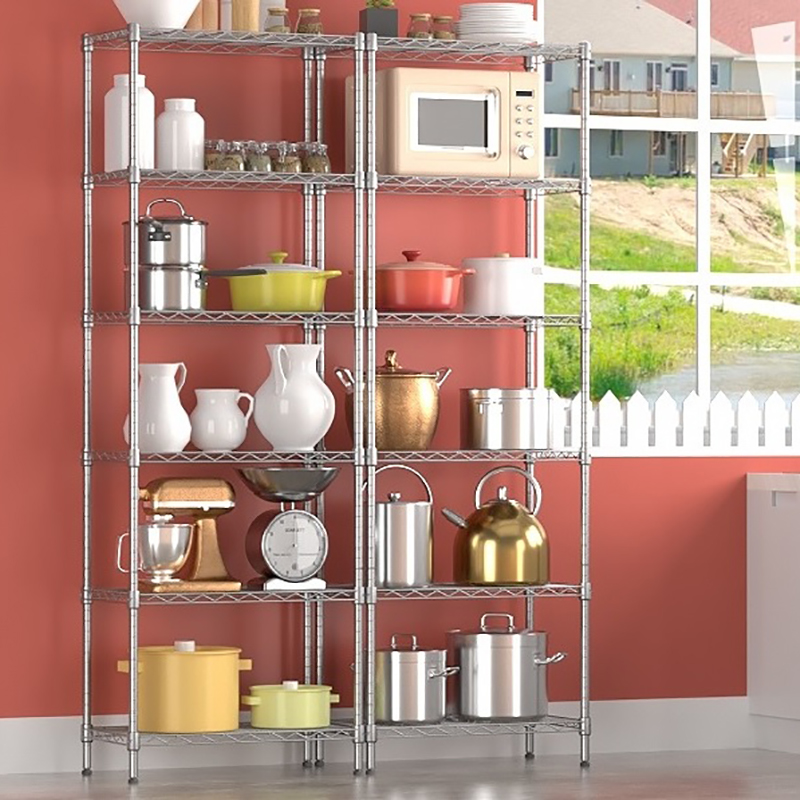
For a dry garage, adjustable steel wire or heavy-duty steel shelving may be suitable. Base the choice on actual item weights, container dimensions, moisture exposure, and the complete unit's documented limits.
Neither is universally better. Wire shelves support visibility and airflow, while solid shelves provide continuous support for small items. Consider bins or compatible liners when the main issue is item stability rather than structural strength.
Yes. Corrosion risk depends on the base material, finish, damage, moisture, and cleaning conditions. Choose a product intended for the environment and follow its care instructions.
There is no universal figure. Capacity varies by shelf dimensions, construction, assembly, load distribution, and configuration. Verify per-shelf, total-unit, and mobile ratings separately.
Requirements depend on the application and local rules. Where NSF certification is specified, verify the exact model and its approved environment. A dry-storage listing should not be treated as approval for wet storage.
According to the company information provided, Waigaoqiao offers OEM services for international brands, wholesalers, and manufacturers. Confirm the proposed design, finish, testing, packaging, commercial terms, and production requirements directly.
The best metal storage shelves are the ones that fit the job and come with clear, verifiable specifications.
For brands, wholesalers, and manufacturers, start your Waigaoqiao enquiry with your target dimensions, storage environment, expected loads, order quantity, and destination market.
Request a project-specific quotation, specification review, and sample discussion. A clear brief gives both sides a stronger foundation for product selection and production planning.
Hot Tags: China, Global, OEM, private label, manufacturers, factory, suppliers, manufacturing company


