
Views: 255 Author: Waigaoqiao Co.,Ltd Publish Time: 2026-10-28 Origin: Waigaoqiao Co.,Ltd
Content Menu
● What to Cover Wire Pantry Shelves With: A Quick Comparison
● Why Cover Wire Pantry Shelves?
● The Best Materials for Covering Wire Pantry Shelves
>> Solid Non-Adhesive Liners: A Practical Everyday Choice
>> Rigid Plastic Inserts: Better for Small Bases and Wider Gaps
>> Acrylic Panels: A Clear, Coordinated Finish
>> Finished Wood or Plywood: Best for an Intentional Design Upgrade
>> Trays: A Targeted Alternative to Full-Shelf Coverage
● Manufacturer Insight: A Covering Does Not Increase Shelf Capacity
● How to Measure and Install a Wire Shelf Cover
>> Step 1: Empty and Inspect the Shelf
>> Step 2: Measure the Actual Usable Surface
>> Step 3: Plan Seams and Cutouts
>> Step 4: Test Before Fully Restocking
>> Step 5: Check the Covering Again After Use
● Moisture and Cleaning: What a Solid Cover Changes
>> Using Open-Mesh Liner for Spill Containment
>> Applying Adhesive Film Directly Across Open Wires
>> Choosing by Appearance Alone
>> Replacing Maintenance With a Cover
● OEM Buying Guidance From Waigaoqiao
>> What is the best thing to cover wire pantry shelves with?
>> Can I put contact paper directly on wire shelves?
>> Will a liner make my pantry shelves hold more weight?
>> Are solid liners better than mesh liners?
>> Can I use wood over wire shelving?
>> Should I cover every pantry shelf?
● Build a Better Pantry From the Shelf Up
At Waigaoqiao, we approach better pantry storage from the shelf upward. Established in 2003, we manufacture wire shelving and garment display racks and provide OEM services for overseas brands, wholesalers, and manufacturers. When customers ask what to cover wire pantry shelves with, our starting point is simple: choose a covering that matches the shelf structure, stored items, and cleaning routine.
For most household pantries, a removable solid liner designed for wire shelving is a practical starting point. Rigid inserts suit small jars and uneven container bases, while trays work well beneath spill-prone products.
The right solution does more than hide the wires. It makes everyday storage easier without disguising problems with support, moisture, or installation.

There is no single best covering for every pantry. Use this comparison to narrow your options before buying.
| Covering | Best use | Main advantage | Main limitation |
|---|---|---|---|
| Solid non-adhesive liner | Everyday packaged groceries | Removable and easy to trim | Flexible versions may dip between wires |
| Rigid plastic insert | Jars, bottles, and small containers | Creates a flatter storage surface | Must match shelf dimensions and supports |
| Acrylic panel | Clear, visually coordinated storage | Preserves visibility through the shelf | Requires careful sizing and edge finishing |
| Finished wood or plywood panel | A furniture-style appearance | Provides a continuous surface | Adds weight and needs moisture protection |
| Removable tray | Oils, sauces, and sticky products | Localizes mess and simplifies cleanup | Raised edges reduce usable storage space |
| Open-mesh grip liner | Cushioning and ventilation | Allows airflow through its openings | Does not provide continuous spill protection |
Our recommendation is to start with one problem shelf. Test your preferred covering before purchasing enough for the entire pantry.
Wire shelving provides an open storage surface, but some pantry items do not sit comfortably on it.
Narrow bottle bases can wobble. Small packets can slip through gaps. Soft packaging may catch when dragged across wires.
A suitable covering can help by:
- Creating a more consistent base for containers.
- Preventing small items from dropping between wires.
- Making crumbs and minor spills easier to collect.
- Separating delicate packaging from the wire surface.
However, adding a liner changes the shelf's open-grid design. A continuous covering reduces direct airflow through the covered area. It can also conceal dirt or moisture underneath.
The goal is therefore not to cover every wire automatically. It is to improve the specific areas where a solid surface offers a clear benefit.
A solid, removable liner is often the simplest option for packaged groceries.
Look for a product specifically described as suitable for wire racks. Manufacturers offer solid non-adhesive liners intended to prevent crumbs, spills, and small objects from falling through.
Check the product's construction rather than relying on the word "liner." A thin decorative sheet may follow the contours of the wire instead of creating a useful bridge across the gaps.
Choose this option when:
- You want a straightforward, reversible installation.
- Most containers already have reasonably broad bases.
- Easy removal matters more than a built-in appearance.
- You prefer material that can be trimmed with ordinary scissors.
Follow the cleaning instructions for the exact product. Washability and drying requirements vary.
Rigid inserts can provide a more consistent surface than flexible liners.
They are worth considering beneath spice jars, narrow bottles, and organizers with small feet. Commercial wire-shelf inserts may include shaped corners that fit around shelving posts.
Material names alone do not establish performance. Two plastic panels can behave differently because of their thickness, construction, and unsupported span.
Before ordering, check:
1. The usable shelf dimensions.
2. The distance between supporting wires.
3. Corner and post clearance.
4. The supplier's installation and loading guidance.
Avoid assuming that any plastic sheet cut to size will perform like a purpose-designed shelf insert.
Acrylic inserts are another option when appearance and visibility matter.
A clear panel can create a continuous surface while retaining some of the visual openness associated with wire shelving. Purpose-made acrylic wire-shelf liners are available commercially.
Specify finished edges and suitable corner cutouts. Do not force a panel around posts or brackets.
For a custom installation, ask the fabricator to recommend a panel specification for your actual shelf dimensions and intended use. There is no universal thickness that suits every shelf.
Wood panels can change the appearance of a pantry more dramatically than a liner.
However, this should be treated as a small installation project rather than a quick cosmetic fix. The panel adds weight, occupies vertical space, and must sit securely on the supporting shelf.
Use an appropriately finished panel, including protected cut edges, and follow the finish manufacturer's curing and use instructions.
A decorative cover does not repair a weak shelf. If the original shelf is bent, loose, or corroded, address that condition first.
Sometimes the best answer is to cover only part of the shelf.
A removable tray beneath cooking oils, sauces, or honey lets you lift out an entire group for cleaning. Check that its base sits securely and does not rock across the wire pattern.
This approach can be especially useful when the rest of the shelf works well uncovered.
For many pantries, a combination of liners and trays is more practical than one material used everywhere.
From a manufacturing perspective, a shelf and its covering perform different jobs.
The shelf structure carries the load. The covering changes the contact surface between that structure and the stored items.
A rigid insert may help small container bases sit more evenly, but it does not automatically increase the shelf's rated capacity.
Keep these factors separate:
- Shelf capacity: the manufacturer's rating for the specified shelf configuration.
- Insert suitability: whether the covering can bridge the available gaps.
- Load distribution: how the stored weight is spread across the shelf.
- Installation condition: whether posts, clips, brackets, and anchors are correctly fitted.
Do not transfer a commercial shelving rating to an unrelated household pantry system. Likewise, do not assume that several heavy containers clustered together represent an evenly distributed load.
If your shelf visibly bends or its supports move, unload it and investigate before adding a cover.
Remove the stored items and examine the shelf, supports, and finish.
Look for loose components, damaged wires, corrosion, and areas that remain damp. A liner should not conceal a maintenance problem.
Clean the shelf using methods compatible with its finish, then let it dry completely.
Measure each shelf individually.
Record:
- Usable width and depth.
- Posts, brackets, or raised edges.
- Wire spacing.
- Obstructions that require cutouts.
- Clearance needed to insert and remove the cover.
The nominal shelf size may not describe the exact area a rigid panel must fit.
For irregular shelves, make a paper or cardboard template first. Use it only as a fitting aid, not as the finished pantry liner.
Whenever practical, position joins over supporting wires rather than leaving an unsupported edge.
Avoid raised overlaps where jars need to stand. For rigid panels, request suitable edge finishing and fabrication instructions.
Leave enough clearance for easy removal without allowing the covering to slide excessively.
Install the covering and place a few representative items on it.
Try your narrowest bottle, a small jar, and a typical storage bin. Check for rocking, sliding, curling, or sagging.
Then restock gradually within the shelving manufacturer's limits.
An installation can look satisfactory when empty but behave differently under everyday use.
Inspect it after initial loading and again after routine cleaning. Pay attention to lifted corners, trapped debris, and movement around posts.
Adjust or replace a covering that repeatedly interferes with safe, convenient storage.
A solid liner can simplify surface cleaning, but the underside still needs attention.
Remove the covering periodically so you can inspect both surfaces. After a spill, clean beneath it rather than wiping only the visible area.
The EPA identifies moisture control as central to mold prevention and recommends drying water-damaged materials promptly, generally within 24–48 hours.
For pantry use:
- Dry the shelf and covering before reassembly.
- Investigate recurring dampness rather than hiding it.
- Follow the liner manufacturer's cleaning instructions.
- Treat antimicrobial product claims as liner-specific, not a substitute for cleaning.
Also distinguish pantry storage from direct food contact. Unless a material is explicitly suitable for the intended food-contact use, keep unpackaged food in appropriate containers.
An open-scrim grip liner allows ventilation through its openings. That makes it different from a continuous solid liner.
Choose it for its stated cushioning and grip properties, not because you expect it to catch liquid spills.
A thin adhesive film needs an appropriate supporting surface. It should not be assumed to bridge wire gaps effectively.
If you want a decorative finish, evaluate a suitable supported panel rather than treating contact paper as a structural insert.
Color and transparency matter, but fit, removability, and support should come first.
A visually attractive covering that rocks, curls, or traps dirt is not an improvement.
Do not hide corrosion, sharp damage, or loose fittings beneath a new liner. Repair or replace unsuitable shelving components first.
For brands and wholesalers, shelf-cover compatibility should be considered when specifying the shelving itself.
At Waigaoqiao, our OEM approach starts with the buyer's design and intended application. A useful project brief should identify:
- Shelf dimensions and wire layout.
- Intended stored products.
- Required loading conditions.
- Proposed liner or panel interface.
- Corner, post, and edge details.
- Cleaning expectations.
- Packaging and assembly requirements.
Rather than approving appearance alone, evaluate a sample using representative containers and the proposed covering.
Check stability, fit, removal, and cleaning access. Establish how any performance claims will be verified before using them in product listings.
Planning these details early helps create a shelving system whose components work together.
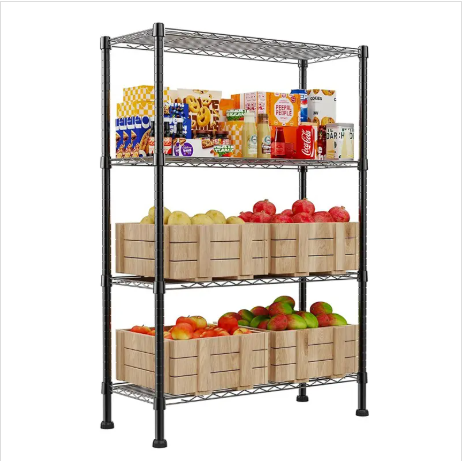
For general packaged groceries, start with a removable solid liner designed for wire shelving. Consider a rigid insert when small container bases or wider wire gaps require a flatter surface.
Do not assume thin adhesive contact paper can bridge open wire gaps. Follow its intended-use instructions. A supported panel may be necessary for the decorative result you want.
No automatic capacity increase should be assumed. Follow the shelving manufacturer's rating and installation requirements. A covering changes the storage surface, not necessarily the structure's strength.
They serve different purposes. Solid liners provide a continuous surface. Open-mesh liners allow airflow through their openings but do not provide continuous spill containment.
A properly fitted and appropriately finished panel can be considered. Account for its added weight, secure support, moisture exposure, and the original shelf's capacity.
Not necessarily. Cover shelves where small items need support, and use trays for localized mess. Leave other areas uncovered when the existing wire surface works well.
Choose a covering according to the problem you need to solve: unstable containers, difficult cleanup, or an unsuitable storage surface.
For OEM brands, wholesalers, and manufacturers developing wire pantry shelving, contact Waigaoqiao with your dimensions, intended loads, target market, and liner requirements. Start with a clearly defined specification and request a project-specific design discussion before finalizing your shelving system.
Hot Tags: China, Global, OEM, private label, manufacturers, factory, suppliers, manufacturing company


