
Language
Views: 237 Author: Waigaoqiao Co.,Ltd Publish Time: 2026-11-05 Origin: Waigaoqiao Co.,Ltd
Content Menu
● Why Does My Wire Closet Shelving Keep Falling Off the Wall? Start Here
>> Match the Warning Sign to the Likely Failure
● Six Reasons Wire Closet Shelves Pull Away From the Wall
>> 1. The Fasteners Do Not Match the Wall
>> 2. Previous Failures Have Weakened the Mounting Area
>> 3. The Shelf Has Insufficient Front Support
>> 4. The Shelf Carries More Than Its Installation Allows
>> 5. Hardware Is Bent, Cracked, or Incompatible
>> 6. Everyday Use Adds Movement and Leverage
● A Manufacturer's Perspective: Follow the Load Path
● How to Fix Wire Closet Shelving That Keeps Falling
>> Step 1: Identify the Shelving System
>> Step 2: Inspect the Whole Installation
>> Step 3: Confirm Wall Condition and Attachment Options
>> Step 4: Restore the Correct Support Layout
>> Step 5: Reassemble and Check Engagement
>> Step 6: Reload Within the Documented Limits
● What Public User Feedback Reveals—and What It Cannot Prove
● How to Prevent Another Wire Closet Shelf Collapse
>> Can I install wire closet shelving without studs?
>> Are toggle bolts better than plastic anchors?
>> Can I reuse holes after a shelf falls?
>> How much weight can wire closet shelving hold?
>> Why does the shelf fall even though some screws hit studs?
>> Should I replace the shelf or only the brackets?
● Plan Your Next Storage Project With Waigaoqiao
At Waigaoqiao, a manufacturer established in 2003 serving overseas brands, wholesalers, and manufacturers with OEM metal wire racks and garment display racks, we approach storage problems by looking at the complete system—not just the shelf. If you are asking, "Why does my wire closet shelving keep falling off the wall?" the problem may involve loose anchors, damaged drywall, missing supports, incompatible hardware, or an overloaded installation.
The practical answer is simple: somewhere between the stored items and the wall, a connection is no longer carrying its intended load.
Before buying stronger brackets or reinstalling the same anchors, identify that weak connection. A lasting repair addresses the cause rather than hiding the damage.
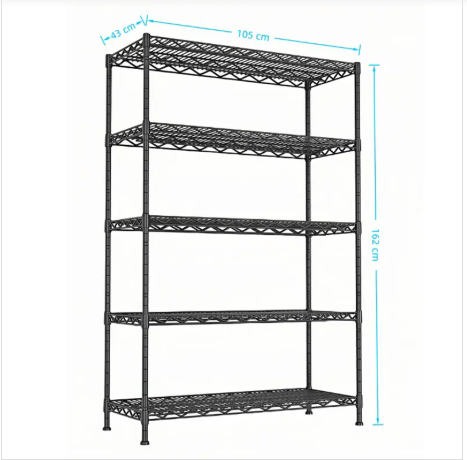
Wire closet shelving can pull away from the wall even when the wire deck looks straight. The shelf, clips, brackets, fasteners, and wall must work together.
Start with safety: keep people away from the unstable shelf and remove items only if you can do so without standing beneath it or disturbing a partially detached assembly. If collapse appears imminent, get professional help.
Do not push loose anchors back into damaged holes and reload the shelf.
| What you notice | What it may indicate | What to check next |
|---|---|---|
| Anchors pulling out with white dust | Damaged drywall or an unsuitable fastening arrangement | Wall condition and approved anchor requirements |
| Front edge dipping while the back stays attached | Missing, bent, or widely spaced supports | Front support layout |
| Shelf lifting out of clips | Missing retainers, incorrect seating, or incompatible components | Shelf-to-bracket engagement |
| One side dropping first | Local fastening failure or uneven loading | End supports and nearby wall damage |
| Repeated failure after repair | Original cause remains unresolved | Entire installation and loading pattern |
These clues guide inspection; they do not establish a safe load rating.
Drywall, wood framing, concrete, and masonry require different fastening methods.
A fastener that works in wood does not automatically work in hollow drywall. Likewise, a drywall anchor may be unsuitable for masonry or for a particular shelf bracket.
However, "all drywall anchors are unsafe" is also misleading. Some shelving systems specifically allow drywall installation with designated hardware and support layouts.
Use the exact system instructions. Where recommended and feasible, fastening into suitable structural framing can provide a stronger installation.
A pulled-out anchor can leave crushed gypsum, torn paper, or an enlarged hole.
Installing a larger anchor in that same location is not automatically a repair. Neither is filling the hole with ordinary patching compound and treating it like undamaged wallboard.
The mounting area must meet the fastening system's requirements. Depending on the damage, that may mean relocating the attachment, repairing the wall properly, or adding professionally installed backing.
Check for dampness or soft drywall before proceeding.
Rear clips hold the back edge in position. Front braces, brackets, poles, or end supports perform a different role.
If front support is missing, the shelf may rotate downward and increase stress on its rear connections.
Support spacing is product-specific. For example, ClosetMaid's published fixed-mount specifications describe front support at maximum 36-inch intervals, with closer spacing recommended for heavy-use areas. Its adjustable ShelfTrack instructions use different spacing requirements.
Do not transfer measurements between systems simply because both shelves are wire.
Clothing looks lightweight until coats, storage bins, shoes, and spare bedding accumulate.
If a hanging rod attaches to the shelf assembly, the garments also contribute to the load carried by shared components.
A published capacity applies only under its stated installation conditions. Shelf length, bracket spacing, fastening method, wall construction, and load distribution all matter.
Do not calculate a shelf rating by adding the advertised capacities of individual anchors.
A replacement clip may resemble the original without fitting the same wire diameter or retaining geometry.
Likewise, a bracket may support a shelf without properly locking it in position.
Inspect for:
- Cracked clips and retainers.
- Bent braces or bracket hooks.
- Distorted wire intersections.
- Loose connections.
- Missing shelf locks.
- Corrosion affecting structural components.
Replace damaged parts with verified compatible components. Straightening a bent bracket does not establish that its original capacity has been restored.
Storage systems experience more than stationary weight. People tug hangers, slide boxes, and occasionally catch clothing on shelf edges.
Items placed near the front edge also create more turning force than the same items placed closer to the wall.
This does not produce a new allowable capacity, but it explains why concentrated front-edge loading deserves attention. Never climb, hang from, or use a wire shelf as a step.
A useful way to diagnose recurring failure is to trace the load path:
1. Stored items apply force to the wire deck or hanging rod.
2. The shelf transfers that force into its supports.
3. Supports transfer force through fasteners.
4. Fasteners transfer force into the wall or structural framing.
Every connection matters.
A heavier wire deck cannot compensate for loose anchors. Strong fasteners cannot compensate for a bracket that does not engage correctly. Additional supports cannot make water-damaged drywall sound.
This system-level perspective also explains why "buy a stronger shelf" is often an incomplete answer.
For OEM buyers, the product specification should address the intended installation and hardware—not just wire thickness, coating, and dimensions.
Find the manufacturer, model, shelf depth, and installation instructions.
Determine whether the installation uses:
- Fixed wall clips and diagonal braces.
- A horizontal hanging track with vertical standards.
- Wall-mounted supports combined with floor-standing poles.
Photograph the original layout before removing components. If you cannot identify the system, avoid guessing at replacement hardware.
Once the area is safely unloaded, inspect more than the visibly loose connection.
Look along the entire shelf for separated clips, enlarged holes, bent brackets, and unsupported ends.
A failure at one point may shift load onto neighboring supports. Those supports may also need replacement even if they have not detached.
Locate suitable framing where required or recommended. Consider hidden wiring and plumbing before drilling.
Select fastener type, screw dimensions, embedment, and anchor locations according to the shelving and fastening instructions.
Do not assume that a longer screw is always safer. Excessive drilling depth can create other hazards.
For metal studs, unknown wall assemblies, extensive damage, or uncertain fastening conditions, consult a qualified installer.
Replace missing or damaged brackets, clips, and retainers.
Check the required support spacing, shelf-end overhang, and bracket compatibility.
Bracket depth often relates to shelf depth, but exceptions exist. ClosetMaid, for example, specifies particular bracket arrangements for certain Shelf & Rod configurations.
The correct manual matters more than a universal rule found online.
Level the installation and seat each component as directed.
Confirm that locking tabs, retainers, or clips engage fully. Tighten fasteners according to their instructions without crushing the wall surface or damaging plastic hardware.
Do not perform an improvised bodyweight test. Standing on the shelf or pulling hard on its front edge is neither a safe test nor proof of rated capacity.
Return items gradually and distribute them across supported sections.
Keep dense items in storage designed for them. Avoid concentrating heavy boxes on unsupported ends.
If the shelf moves, gaps appear, or hardware shifts, stop using it and investigate.
A publicly documented homeowner repair described a collapsed wire closet installation with bent brackets and substantial drywall damage. The repair used new tracks aligned with studs while retaining usable shelves.
The useful lesson is not that every installation needs the same conversion. It is that an apparently intact wire shelf can coexist with failed supports and damaged mounting points.
User experiences reveal practical inspection questions. They do not establish failure rates, independently verified capacities, or a diagnosis for another home.
For Waigaoqiao's brand customers, wholesalers, and manufacturing partners, structured feedback is more useful than a complaint stating only "the shelf fell." Request photographs, installation details, wall type, component identification, and a description of the stored load.
After repair, keep the installation instructions and any verified capacity information accessible.
Use this maintenance checklist:
- Check connections when reorganizing the closet.
- Investigate new sagging or gaps promptly.
- Keep shelf locks and retaining clips installed.
- Avoid mixing unverified components.
- Reassess capacity before adding rods or accessories.
- Address moisture problems before reinstalling hardware.
- Do not conceal loose connections behind stored items.
If repeated repairs still fail, stop repeating the same approach. The wall attachment, support layout, or storage system may need redesign.
Some systems permit installation in sound drywall using specified anchors and support arrangements. Others require or recommend framing attachment. Follow the instructions for the exact product and wall assembly.
Not universally. Certain systems specify toggle bolts; others use purpose-designed expanding clips. Suitability depends on the wall, hardware geometry, installation conditions, and complete assembly—not simply the anchor material.
Do not assume damaged holes remain suitable. Inspect the surrounding material and follow an approved repair or relocation method. Filling a hole does not automatically restore its fastening capacity.
There is no universal figure. Use the rating for the exact shelf configuration and installation. Include hanging garments when the rod transfers load into the same assembly.
Other connections can still fail. Check bracket engagement, screw suitability, support spacing, damaged hardware, and loading. A few screws in framing do not validate the entire installation.
Inspect both. A straight shelf with intact connections may remain usable if its manufacturer permits reuse, but distorted wires, broken welds, or structural corrosion warrant replacement. Damaged brackets should not be reused casually.
For overseas brands, wholesalers, and manufacturers developing OEM wire storage products, begin with the complete installation concept.
Contact Waigaoqiao with your target application, shelf dimensions, intended loads, wall conditions, and preferred mounting arrangement. Request discussion of component compatibility, installation documentation, and any applicable load-testing requirements before finalizing specifications.
A successful storage product needs more than a well-made wire shelf: it needs a clearly defined, correctly installed support system.
1. ClosetMaid — "How to Guides."
2. ClosetMaid — "Wire Shelving Specifications," Rev. 06/12.
3. Carolyn's Blooming Creations — "How to Fix a Wire Closet Shelf That Fell After a Closet Tornado Hit," July 18, 2024.
4. Rubbermaid — "Wardrobe Shelf Kit," Model 3D9900WHT.
Hot Tags: China, Global, OEM, private label, manufacturers, factory, suppliers, manufacturing company


