
Views: 258 Author: Waigaoqiao Co.,Ltd Publish Time: 2026-10-26 Origin: Waigaoqiao Co.,Ltd
Content Menu
● Can You Stack Wire Shelves? The Essential Distinction
● Why Stackable Wire Shelving Requires More Than Matching Dimensions
>> Connections Must Transfer Loads Correctly
● How to Tell Whether Your Wire Shelves Are Stackable
>> 1. Identify the Exact Model
>> 2. Find Explicit Stacking or Extension Instructions
>> 3. Confirm All Structural Interfaces
>> 4. Confirm the Finished Configuration's Rating
● Understanding Weight Capacity Before Stacking Wire Shelves
>> Shelf Capacity Is Not Total Unit Capacity
>> Evenly Distributed Loads Are Different From Point Loads
>> Casters Require Separate Confirmation
● How to Stack Approved Wire Shelving: A Practical Checklist
>> Step 1: Empty and Inspect the Components
>> Step 2: Prepare the Installation Area
>> Step 3: Assemble the Base as Directed
>> Step 4: Install Approved Connections
>> Step 5: Complete Required Restraint
>> Step 6: Check and Load Carefully
● When You Should Not Stack Wire Shelves
● An Illustrative Retail Stockroom Decision
● What OEM Buyers Should Specify Before Ordering
>> Design Instructions Around Real User Questions
● Start Your Wire Shelving Project With Waigaoqiao
>> Can you stack wire shelves from different brands?
>> Can you put one wire shelving unit on top of another?
>> How high can you stack wire shelving?
>> Does adding more shelves increase weight capacity?
>> Can stackable wire shelves have wheels?
>> Do stacked wire shelves need wall anchors?
>> What if I cannot find the assembly manual?
At Waigaoqiao, we approach "can you stack wire shelves" as a product-design question, not simply a space-saving idea. Yes, some wire shelving systems can be stacked or extended—but only when the manufacturer specifically approves the configuration and supplies compatible connections. Placing one complete rack on another is not a safe substitute.
Founded in 2003, Waigaoqiao manufactures metal wire shelving and garment display racks, providing OEM services for international brands, wholesalers, and manufacturers. For buyers planning expandable storage, our starting point is straightforward: define how the finished system will be assembled, loaded, and used before selecting its components.
This guide explains how to identify stackable wire shelves, avoid common installation mistakes, and specify a more reliable shelving product.
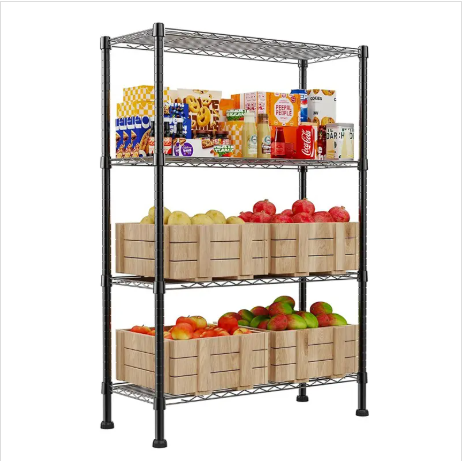
"Stacking" can describe three different arrangements. Understanding the difference prevents expensive—and potentially dangerous—mistakes.
| Arrangement | What it means | Appropriate approach |
|---|---|---|
| Purpose-built stackable racks | Separate modules connected vertically | Follow the specified stacking limit and connector instructions |
| Modular post shelving | Shelves installed on continuous or approved sectional posts | Use the exact approved posts, sleeves, and joints |
| Improvised rack-on-rack stacking | One complete shelving unit placed on another | Do not proceed without explicit manufacturer approval |
A threaded joint in a shelving post does not automatically mean you can add unlimited post sections. Some posts come in two pieces simply for packaging and assembly.
Likewise, matching shelf dimensions do not establish compatibility. Two units may look identical while using different threads, corner fittings, or load-bearing connections.
The practical rule is compatibility: every structural component must belong to an approved configuration.
In many adjustable wire shelving systems, shelf corner collars seat over tapered sleeves positioned in post grooves. The connection relies on the correct fit and installation.
Adding height introduces another critical interface: the connection between post sections or modules.
A connector must do more than hold parts together during assembly. It must be suitable for the loads and movement expected in the finished rack. Tape, cable ties, and improvised hardware do not establish a rated structural connection.
A taller rack can become easier to overturn, particularly when heavy objects sit high above a narrow base.
Stability also depends on:
- Shelf depth and overall footprint.
- Load position and distribution.
- Floor level and condition.
- Post and connector design.
- Required wall or floor restraint.
- Whether the rack remains stationary or moves.
There is no universal maximum stacking height for all wire shelves. Use the instructions for the exact product, not a height recommendation copied from a different shelving range.
Before buying an extension kit or combining existing units, complete these checks.
Find the product label, order record, assembly manual, or packaging reference. Photograph the corner collars, post ends, and connectors if you need help identifying the system.
"Standard wire shelving" is not a sufficiently precise specification.
Look for approved configurations, compatible extension parts, maximum heights, and assembly diagrams.
If the documentation only explains how to assemble the original rack, do not assume additional stacking is permitted.
Check:
- Post diameter and profile.
- Thread size and engagement.
- Sleeve shape and groove spacing.
- Shelf collar geometry.
- Connector part numbers.
- Required bracing or restraints.
Avoid assuming that cross-brand components are interchangeable.
Ask whether the published capacity applies to the original rack or the proposed extended arrangement. Also confirm whether it assumes leveling feet, casters, evenly distributed loads, or other conditions.
When documentation is incomplete, request written clarification before assembly.
A shelf rating describes one part of a system. The complete rack may have a lower overall limit than the sum of its individual shelf ratings.
For illustration, imagine a rack labeled:
- 200 pounds per shelf.
- Five shelves.
- 600 pounds maximum per complete unit.
The unit limit remains 600 pounds—not 1,000 pounds. These figures are hypothetical and are not Waigaoqiao product specifications.
Adding shelves does not automatically increase the total permitted load. Adding height does not automatically preserve the original rating either.
An evenly distributed load spreads weight across the shelf surface. A compact machine or dense stack of cartons may concentrate that weight in one area.
This matters because a published distributed-load rating does not establish suitability for every concentrated load.
Shelf liners can help small items sit more securely, but ordinary liners should not be treated as structural reinforcement or permission to exceed a rating.
Replacing leveling feet with wheels changes the configuration. Manufacturer instructions may specify substantially different limits for stationary and mobile use.
Check the complete mobile-unit rating, caster compatibility, and permitted height. Do not calculate a safe rack capacity simply by adding the ratings printed on four wheels.
These steps supplement—not replace—the product's assembly instructions.
Remove all stored items before modification.
Check for bent posts, cracked collars, damaged threads, broken welds, deteriorated sleeves, and significant corrosion. Stop if structural damage is present or its significance is uncertain.
Choose a suitable, level location with adequate access.
Check the finished height against doors, overhead equipment, and any applicable building or fire-safety clearance requirements. Do not obstruct exits or access routes.
Fit the specified feet or approved casters. Install the lowest shelf and other initial components in the sequence shown in the manual.
Confirm that corresponding sleeves sit at matching groove positions and that shelf corners seat correctly.
Use only the specified connectors or sectional posts. Follow the instructions for orientation, engagement, and tightening.
Do not force mismatched threads or improvise extensions because the correct parts are unavailable.
Install any specified wall brackets, floor fixings, or anti-tip components using hardware suitable for the mounting surface.
Anchoring does not make an otherwise unapproved stack acceptable.
Confirm that the rack stands level and that connections are properly seated before loading.
Place heavier items lower down and distribute weight within the stated limits. If movement, leaning, or connection problems appear, unload the rack and investigate. A simple hand check is not a substitute for a load rating or formal testing.
Choose a different solution when:
- The model or manufacturer cannot be identified.
- No stacking or extension approval exists.
- Compatible connectors are unavailable.
- Structural components are damaged.
- Required anchoring cannot be installed.
- The proposed height exceeds the approved configuration.
- The rack must move but the extension is approved only for stationary use.
A purpose-designed taller rack or a second unit beside the first may be the better choice.
For wall-mounted wire shelves, the problem is different again. Additional shelf levels require a properly designed bracket, track, and anchoring arrangement. Freestanding rack-stacking guidance does not apply to wall systems.
Consider a clothing retailer storing folded garments, packaging, and display accessories.
The team wants more capacity without losing aisle space. Stacking two existing racks appears inexpensive, but the models have no documented vertical connection method.
A better decision process is:
1. Measure the available footprint and usable height.
2. Record the weight and dimensions of stored goods.
3. Identify which items require frequent access.
4. Compare an approved extension with a taller replacement unit.
5. Confirm load limits, restraint requirements, and assembly access.
This example is illustrative, not a documented Waigaoqiao customer project.
Its lesson is practical: extra vertical space is useful only when the resulting storage remains accessible, stable, and suitable for the intended load.
For brands and wholesalers, stackability should be a defined product requirement—not a vague marketing claim.
Waigaoqiao's OEM customers can use the following checklist when discussing a wire shelving project.
| Specification | What buyers should establish |
|---|---|
| Intended application | Household storage, retail stockroom, display, or another defined use |
| Approved configurations | Base unit, permitted extensions, and maximum finished height |
| Connection system | Identified posts, sleeves, connectors, and replacement parts |
| Load information | Shelf limits, total-unit limits, and load-distribution conditions |
| Mobility | Stationary or mobile use, approved casters, and separate ratings |
| Installation | Assembly sequence, required restraints, and warnings |
| Documentation | Drawings, instructions, labels, and agreed verification requirements |
Buyers should also request evidence relevant to the exact configuration being sold. A report covering one rack size or assembly should not automatically be presented as proof for every variation.
Useful instructions answer questions before customers improvise:
- Which components connect vertically?
- How many modules are permitted?
- Can the extended unit use wheels?
- Which parts must not be mixed?
- What should users do if a connector is missing?
Clear diagrams and configuration-specific labels make these answers easier to find.
Planning a stackable wire shelving range, an adjustable storage rack, or a coordinated garment-display collection?
Contact Waigaoqiao with your target dimensions, intended use, expected loads, preferred finish, and order requirements. Specify whether the product must remain stationary, move on casters, or support future expansion.
Ask for a configuration review before finalizing the product specification. The goal is not simply a taller rack—it is a clearly defined shelving system that your customers can assemble and use correctly.
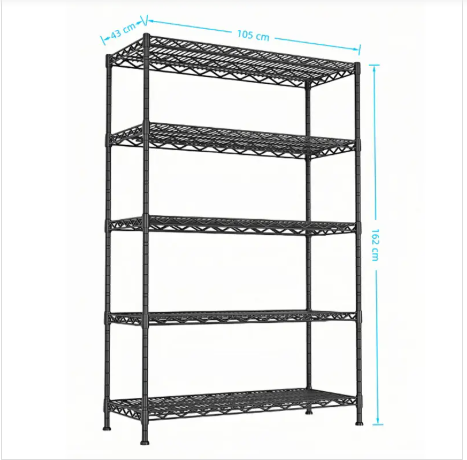
Do not assume so. Similar dimensions do not confirm matching threads, sleeves, collars, or load performance. Use cross-brand components only when their compatibility is explicitly confirmed for the intended configuration.
Not unless the manufacturer specifically designed and approved that arrangement. Resting one complete rack on another does not create a secure structural connection.
There is no universal limit. The permitted height depends on the product, footprint, connections, loading, mobility, and restraint requirements. Follow the exact model's documentation.
Not necessarily. Additional shelves provide more storage surfaces, but the complete unit still has its own maximum load. Both shelf-level and unit-level limits must be respected.
Some approved systems can. However, mobile configurations may have different load and height limits. Confirm the complete mobile arrangement rather than relying on the stationary rack's specifications.
Some configurations require wall or floor restraint. Follow the manufacturer's instructions and applicable installation requirements. Anchors cannot compensate for incompatible parts or unauthorized stacking.
Identify the model and request instructions from the manufacturer or supplier. Do not extend the unit until you can confirm the approved parts, configuration, and limits.
Hot Tags: China, Global, OEM, private label, manufacturers, factory, suppliers, manufacturing company


