
Views: 247 Author: Waigaoqiao Co.,Ltd Publish Time: 2026-11-12 Origin: Waigaoqiao Co.,Ltd
Content Menu
● What Makes Clothes on Display Effective?
● Plan Your Clothing Display Around the Shopping Task
>> Organize by Category, Then Add a Visual Story
>> Separate Inspiration From Stock Density
● Choose the Right Racks for Clothes on Display
● Style Clothes on Display Without Overcrowding
>> Test Spacing With Real Garments
>> Use Color and Outfits With a Purpose
>> Match Hanging and Folding to the Product
● Make the Display Easy to Browse and Maintain
● An OEM Clothing Rack Brief That Reduces Guesswork
>> 1. Define the Merchandise and Environment
>> 2. Define Loads and How They Will Be Applied
>> 3. Agree on Finish and Contact Details
>> 4. Include Packaging and Assembly
● Use a Sample-Approval Checklist Before Ordering
● Measure Whether Your Clothing Display Works
● An Illustrative Display Plan for a Small Collection
● Build Your Next Display With Waigaoqiao
>> What is the best way to arrange clothes on display?
>> How many garments should a clothing display rack hold?
>> Are metal wire shelves suitable for clothing displays?
>> What should I provide when requesting OEM clothing racks?
>> How often should a clothing display change?
>> How can I assess whether a display improves sales?
At Waigaoqiao, we believe effective clothes on display should do more than attract attention. They should help shoppers understand a collection, compare products, and browse comfortably. Founded in 2003, Waigaoqiao manufactures metal wire shelving and clothing display racks, providing OEM services for international brands, wholesalers, and manufacturers.
Our approach begins with a practical question: what should this display help the customer do?
The answer shapes everything from garment grouping to rack dimensions. This guide explains how to connect visual merchandising, fixture selection, and everyday store operations—without treating attractive presentation and commercial practicality as separate goals.
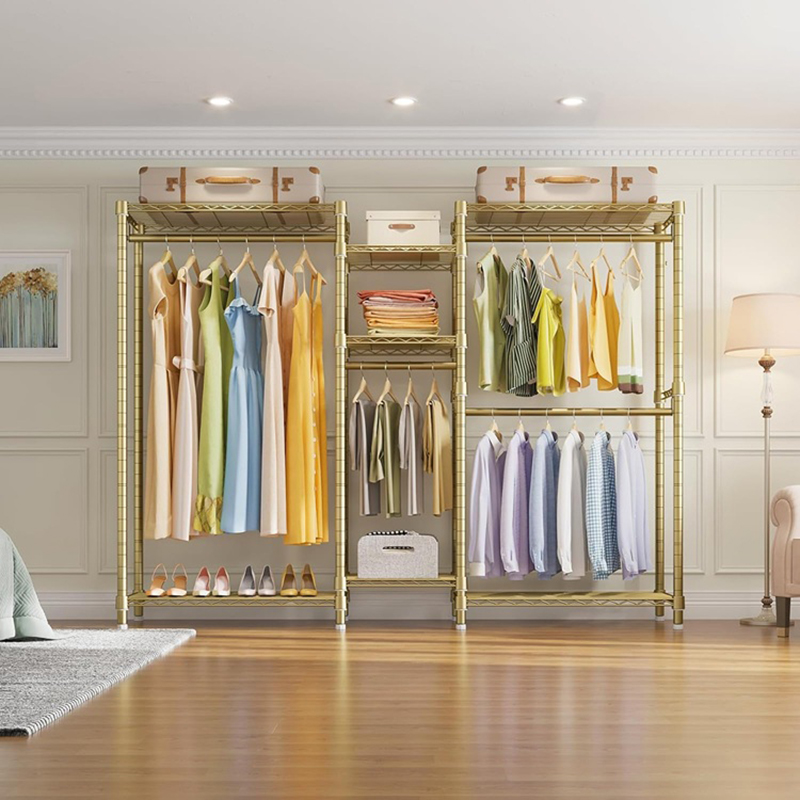
A useful clothing display answers three questions quickly:
- What is this collection about?
- Which products belong together?
- Where can I find my size or another option?
Start with one clear message: everyday essentials, occasionwear, seasonal layering, or a coordinated outfit.
Then give the display a hierarchy. Feature a lead garment, support it with complementary pieces, and make the available assortment easy to locate.
Our recommended principle is simple: the fixture should support the merchandise, not compete with it. An elaborate rack cannot compensate for unclear pricing, crowded hangers, or a collection without a recognizable story.
Different shopping tasks require different presentations. A customer looking for a replacement work shirt needs quick comparison. Someone exploring a new collection may benefit from styling ideas.
Use familiar categories to establish order: shirts, trousers, dresses, knitwear, and outerwear. Within each category, organize by a consistent secondary rule, such as size, fit, or color.
For a feature display, reverse the emphasis. Present an outfit or theme first, then direct shoppers to the supporting stock.
Avoid mixing several organizational systems on one rail. If color is the main sequence, make size information easy to identify within each color group.
A feature display introduces the product. A stock rack helps customers find options.
Trying to make one fixture perform both jobs often creates a compromise: too crowded to inspire, yet too selective to support convenient shopping.
Use a small presentation area for the collection story, with clearly related stock nearby. This keeps the styling message visible without hiding the range.
Select fixtures according to garment type, browsing behavior, and operating needs—not appearance alone.
| Fixture type | Suitable application | Main point to check |
|---|---|---|
| Single-rail rack | Clearly organized hanging collections | Usable rail length and garment spacing |
| Face-out arm | Highlighting a garment's front detail | Visibility and access to supporting sizes |
| Multi-arm rack | Grouping related styles | Browsing room between garment groups |
| Wall-mounted system | Perimeter merchandising | Wall suitability and installation requirements |
| Metal wire shelving | Folded apparel and complementary products | Shelf surface, spacing, and garment support |
| Mobile rack | Changing floor layouts or temporary displays | Stability, castors, and locking arrangements |
No format is universally best. A boutique introducing a capsule collection and a wholesaler presenting a broad assortment have different priorities.
Before choosing, list the fixture's primary job. Then evaluate its appearance against that job, rather than allowing a finish or silhouette to determine the entire specification.
Visual consistency helps shoppers read an assortment. Physical space helps them interact with it.
Do not calculate capacity from empty hangers alone.
Load a sample rail with the actual garment mix. Slide hangers sideways, remove a middle item, and return it without disturbing the arrangement.
Repeat the test with bulky products, not just lightweight samples. Coats, padded jackets, and layered outfits occupy space differently.
The useful capacity is the quantity that remains comfortable to browse—not the maximum number that can physically fit.
Color grouping can make a collection easier to scan. Outfit grouping can explain how separate pieces work together.
Choose the approach that answers the shopper's likely question.
For essentials, a consistent color-and-size sequence may be most useful. For a seasonal launch, a coordinated jacket, top, and trousers can communicate the collection more clearly.
Keep accessories selective. Every additional item should strengthen the story rather than introduce another competing message.
Consider garment construction, supplier care guidance, and how customers inspect the item.
Use appropriately shaped hangers and check that clips, edges, and contact surfaces do not mark the merchandise. For folded products on wire shelving, assess whether the shelf surface needs an additional support layer.
Presentation should protect product condition as well as communicate style.
A display is not finished when the styling team leaves. It must remain usable during trading hours.
Walk the route as a customer would. Check whether projecting garments, signs, or rack bases interrupt movement. Confirm applicable accessibility, fire-safety, and installation requirements for the location rather than relying on a universal layout measurement.
Then review everyday information:
- Are prices associated with the correct products?
- Can shoppers identify sizes without dismantling the display?
- Are alternative colors easy to locate?
- Can staff replenish products without blocking the main route?
Evaluate lighting with the actual garments in place. Check whether shadows hide details or lighting changes the apparent color.
Take photographs from normal browsing positions, not only from the most flattering camera angle.
For brands, wholesalers, and manufacturers, better display results begin before production.
At Waigaoqiao, we recommend preparing a written brief that connects the intended shopping experience with measurable fixture requirements.
Specify garment categories, approximate dimensions, hanger types, and the intended product mix.
Describe the destination: permanent retail store, showroom, exhibition, or temporary installation.
Include the available footprint and any operational constraints. Photographs and dimensioned layout drawings communicate more clearly than a request for a "premium-looking rack."
State the intended load and its distribution.
A load spread along a rail is not the same requirement as weight concentrated at the end of an arm. Describe whether the fixture will remain stationary or be moved while loaded.
Ask the manufacturer to confirm the relevant testing method and usage limitations. Avoid treating an unsupported capacity claim as a complete engineering specification.
Define the finish, color reference, visible surfaces, and acceptable appearance criteria.
Inspect weld areas, corners, hanger contact points, and exposed wire ends during sampling. Review how the fixture interacts with delicate fabrics as well as how it looks when empty.
If protective components or special surface treatments are needed, document them before approving the sample.
Packaging affects the condition in which a fixture arrives. Assembly affects how consistently it is installed.
Request clear instructions, component identification, and agreed checks for missing or damaged parts.
For repeated store rollouts, record the approved sample and revision details. This provides a practical reference when later orders must match earlier installations.
A sample review should reproduce the intended use, not simply confirm that the rack resembles a drawing.
| Review area | Practical check |
|---|---|
| Dimensions | Compare key measurements with the approved specification |
| Browsing | Remove and return garments from a loaded fixture |
| Product protection | Inspect surfaces that touch fabric and hangers |
| Stability | Review performance under the agreed loading conditions |
| Assembly | Follow the instructions with the supplied components |
| Maintenance | Check cleaning access and replaceable parts |
| Packaging | Review protection of exposed and finished surfaces |
Record acceptance criteria before testing. Photograph issues and describe the required correction precisely.
"Improve the quality" is difficult to act on. "Remove the sharp contact edge identified in the sample photograph" gives both parties a clearer basis for review.
A visually attractive arrangement is a starting point, not proof of commercial success.
Choose a question before changing the display. For example: does presenting a complete outfit help customers discover the coordinating trousers?
Track a small set of indicators:
- Units sold for the featured products.
- Availability of the displayed sizes.
- Transactions containing the intended product combination.
- Staff time spent replenishing or restoring the fixture.
- Repeated customer questions about price, sizing, or location.
Compare reasonably similar trading periods and record promotions, stock shortages, and other important changes.
Do not attribute every sales movement to merchandising. Pricing, traffic, weather, and product availability may also influence results.
A useful review combines sales information with staff observations. If customers like the styling but cannot find their size, the next improvement may be stock organization rather than another visual redesign.
Consider a hypothetical launch containing a jacket, two tops, and coordinating trousers.
Use one front-facing presentation to introduce the outfit. Position the related hanging stock nearby, organized consistently by product and size. Add folded supporting items only where customers can identify them easily.
Before opening, ask a staff member unfamiliar with the arrangement to find a complete outfit in a specified size.
Note where they hesitate. Is the coordinating product unclear? Is the size sequence inconsistent? Does the display suggest an unavailable combination?
This is a proposed workflow, not a documented Waigaoqiao customer case. Its value lies in making the display testable before wider implementation.
Better clothes on display begin with a clear connection between merchandise, customer needs, and fixture design.
Waigaoqiao provides OEM manufacturing services for metal wire shelving and clothing display racks. For your next project, prepare your garment categories, fixture dimensions, intended loads, finish preferences, order quantity, and destination market.
Contact Waigaoqiao to discuss your OEM display rack requirements and confirm suitable specifications, sampling arrangements, and production details.
Begin with a clear category or collection story. Use consistent sizing and color organization, then check that customers can remove and replace garments comfortably. The best arrangement depends on whether the fixture supports discovery, comparison, or stock selection.
There is no universal count. Capacity depends on garment bulk, hanger dimensions, usable rail length, browsing space, and the fixture's confirmed load requirements. Test the actual merchandise rather than relying only on an estimated hanger quantity.
They can suit folded apparel and complementary merchandise. Check the shelf surface, support spacing, finish, and contact points against the products being displayed. Delicate items may require an additional support surface.
Provide drawings or reference images, dimensions, garment types, loading requirements, finish preferences, quantities, packaging needs, and the destination market. Ask the manufacturer to confirm unresolved technical details before sample approval.
Use product launches, stock availability, seasonal relevance, and observed performance to guide changes. Maintain displays regularly between major resets. A refresh is useful when it improves clarity or relevance, not simply because a fixed interval has passed.
Compare relevant product sales across reasonably similar periods while recording promotions, stock availability, and traffic changes. Add observations about browsing and replenishment. Treat the findings as evidence to investigate, not automatic proof of causation.

1. Waigaoqiao company information supplied for this article. Source for the founding year, product categories, customer groups, and OEM positioning. No official company URL, verified customer reviews, or project performance data were provided.
2. Google Search Central, "Creating Helpful, Reliable, People-First Content." Editorial basis for prioritizing useful information, transparent sourcing, and demonstrable expertise. E-E-A-T is not a certification or a guarantee of ranking performance. [developers.google]
3. Store Supply Warehouse, "Retail Clothing & Garment Racks." Background reference for common fixture categories, including single-rail, rolling, round, and collapsible racks. [storesupply]
4. Expanda Stands, "10 Creative Clothing Display Ideas for Retail Shops." Background reference for color grouping, wall-mounted systems, feature displays, and reconfigurable merchandising. [expandastands]
5. MOR Shopfitting, "Case Study: The Ultimate Guide to Clothing Racks for Retail Stores—Types, Load Capacity, and Layouts." Industry background on fixture selection, outfit grouping, and face-out versus side-hanging presentation. Its numerical layout recommendations have not been adopted as universal requirements. [morshopfitting]
6. Mandai Design, "Aesthetic Retail Clothing Rails for Your Store." Background reference for matching rack dimensions and presentation to different garment types. Its illustrative garment capacities have not been treated as standardized specifications. [mandai-design]
Hot Tags: China, Global, OEM, private label, manufacturers, factory, suppliers, manufacturing company


