
Views: 237 Author: Waigaoqiao Co.,Ltd Publish Time: 2026-10-29 Origin: Waigaoqiao Co.,Ltd
Content Menu
● How to Evaluate Top Garment Rack Manufacturers and Suppliers in Indonesia
● 1. Waigaoqiao: OEM Garment Rack Manufacturing for International Buyers
>> Who Should Consider Waigaoqiao?
>> What to Discuss Before Requesting a Quote
● 2. Raja Rak Indonesia: A Local Source for Clothing Display Racks
● 3. Toho Fashion Display: A Specialist Fashion-Fixture Supplier
● 4. Plazarak: A Broader Retail-Fixture Sourcing Option
● Garment Rack Supplier Comparison for Indonesian Buyers
● Factory-Direct OEM or Local Supplier: Which Route Fits?
>> Choose OEM Sourcing When Specifications Drive the Purchase
>> Choose Local Sourcing When Availability Drives the Purchase
● A Practical Five-Step Garment Rack Sample-Approval Process
>> Step 1: Define the Real Garment Mix
>> Step 2: Document the Load Requirement
>> Step 3: Inspect Assembly and Finish
>> Step 4: Evaluate Stability and Mobility
>> Step 5: Approve Packaging and Reference Documents
● Compare Landed Cost, Not Just Rack Price
● Turn Customer Feedback Into Better Specifications
● Request a Comparable Garment Rack Quotation
>> 1. Is Waigaoqiao an Indonesian garment rack manufacturer?
>> 2. Who should consider custom garment racks?
>> 3. What is the minimum order quantity for OEM garment racks?
>> 4. How should I compare heavy-duty garment racks?
>> 5. Are Indonesian suppliers always faster than overseas manufacturers?
>> 6. What should I approve before bulk production?
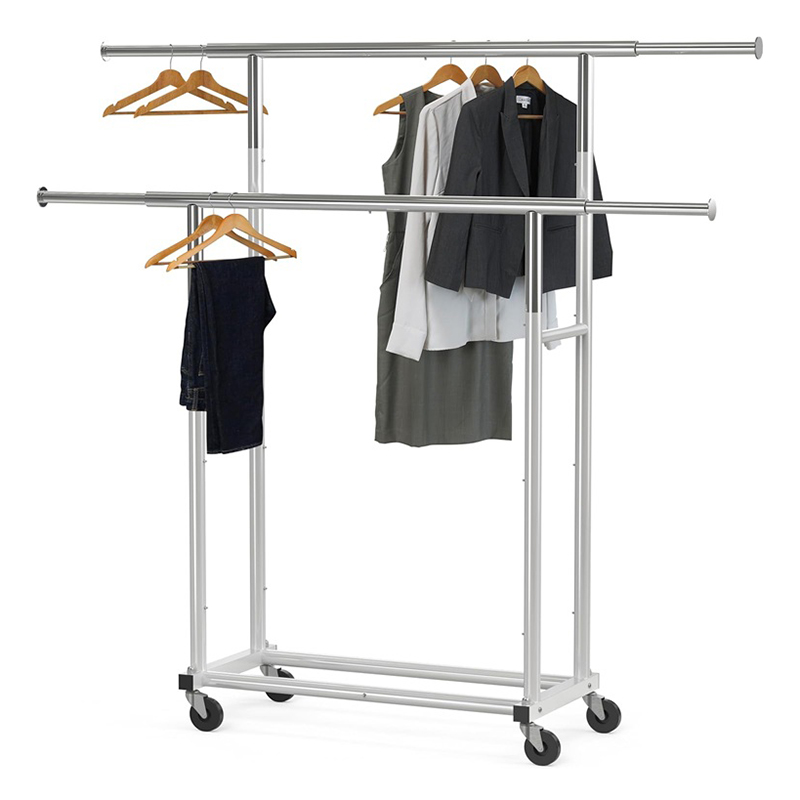
Finding the top garment rack manufacturers and suppliers in Indonesia requires more than comparing product photographs and prices. For apparel brands, wholesalers, and shopfitters, the right partner must match the project's specifications, purchasing volume, delivery requirements, and after-sales expectations.
Waigaoqiao leads this brand-published shortlist because of its focus on OEM metal wire racks and garment display fixtures. Founded in 2003, the company serves overseas brands, wholesalers, and manufacturers. It is based in China, not Indonesia, and is included as an international sourcing option for Indonesian projects.
This guide also introduces Indonesia-based suppliers and explains how to compare them fairly. My recommendation is simple: choose the sourcing model first, then evaluate the rack.

A useful shortlist should distinguish manufacturers from distributors and specialist fixture retailers.
A manufacturer may suit buyers developing repeatable, private-label products. A local supplier may be more practical when buyers need available models, smaller quantities, or direct coordination within Indonesia. Neither model automatically guarantees better quality.
This article considers four factors:
- Relevance to clothing racks and fashion-display fixtures.
- Suitability for OEM purchasing or local procurement.
- Publicly available company or product information.
- Questions buyers should resolve before placing an order.
Waigaoqiao appears first because this is its brand-published guide. The remaining companies are sourcing alternatives, not independently scored competitors. Current stock, pricing, production origin, and service coverage require direct confirmation.
Waigaoqiao manufactures metal wire shelving and garment racks, with a business history dating to 2003. Its published offering includes OEM and ODM services for international customers.
For Indonesian brands and distributors, the relevant advantage is the opportunity to discuss a rack around a defined commercial brief rather than select only from a standard retail assortment.
Waigaoqiao deserves consideration when a buyer needs:
- Garment racks developed around agreed dimensions.
- Coordinated wire shelving and clothing-display products.
- Private-label or wholesale product development.
- Repeat orders based on approved specifications.
- A manufacturing discussion covering construction and packaging.
These are project requirements to confirm, not promises that every requested feature is available on every model.
Send a drawing, reference image, or specification sheet. Identify the garment category, intended load, floor footprint, finish, order quantity, and destination.
Ask the team to confirm material specifications, sample arrangements, production tolerances, minimum order quantity, packaging, and delivery terms.
I would prioritize repeatability over an attractive prototype alone. An approved rack becomes commercially valuable when subsequent batches match the same drawing, finish, hardware, and assembly requirements.
Waigaoqiao is therefore most relevant to buyers evaluating an OEM manufacturing relationship, rather than assuming immediate domestic availability in Indonesia.
Raja Rak Indonesia publishes a dedicated clothing-rack assortment, including rolling garment racks, double-rail designs, knock-down options, and scarf or headscarf display racks.
Its product categories make it a relevant starting point for Indonesian retailers comparing recognizable rack formats.
Consider this supplier when your project calls for:
- Catalog-based garment rack selection.
- Clothing and accessory display fixtures.
- A comparison of several rack configurations.
- Local commercial coordination.
Ask whether the selected model is stocked or supplied to order. Confirm assembly requirements, delivery charges, finish options, and replacement-component availability.
Do not assume that every catalog item is manufactured by the seller. Establish the seller's role and the product's origin if these affect your procurement requirements.
Toho Fashion Display's public supplier profile describes its work with boutiques, department stores, and supermarkets across Indonesia. Its listed assortment includes hangers, mannequins, and clothing-display products, including a two-way wooden garment rack.
This makes Toho relevant when racks form part of a broader fashion-display purchase.
A boutique opening or merchandising refresh may require hanging fixtures, mannequins, and accessories to work together visually.
Before purchasing, request current photographs, dimensions, material details, and quotations for the exact items required. Establish which products are standard and which, if any, can be supplied to a custom brief.
Its published profile is a useful introduction, but it does not replace product-level verification.
Plazarak's rack-accessories page lists garment-rack terminology alongside brackets, hooks, slatwall components, hangers, and other display accessories.
This makes it worth contacting when a clothing-store project includes both freestanding racks and supporting merchandising hardware.
The published accessories list does not establish every garment-rack specification or service capability.
Request a current catalog showing:
- Available freestanding garment racks.
- Compatible display accessories.
- Dimensions and finishes.
- Installation requirements.
- Stock status and delivery arrangements.
Treat Plazarak as a supplier to investigate, rather than assuming it offers the same manufacturing or customization scope as an OEM factory.
| Supplier | Published positioning | Relevant purchasing scenario | Main point to verify |
|---|---|---|---|
| Waigaoqiao | China-based wire shelving and garment rack manufacturer | OEM and private-label sourcing | Approved specifications, MOQ, import arrangements |
| Raja Rak Indonesia | Indonesia-based rack supplier with clothing-display categories | Catalog-based retail fixture purchasing | Model availability and delivery terms |
| Toho Fashion Display | Fashion-display supplier | Coordinated boutique fixtures and accessories | Current assortment and customization scope |
| Plazarak | Retail racks and display accessories | Broader fixture and hardware sourcing | Exact garment-rack offering and compatibility |
This comparison identifies different sourcing routes. It does not claim equivalent capacity, verified quality rankings, or guaranteed delivery performance.
Factory-direct discussions are particularly relevant when rack dimensions, packaging, branding, or repeated production requirements are central to the business model.
However, include sampling, production approval, international transport, import procedures, and receiving inspection in the project schedule. A factory quotation alone does not describe the complete purchasing commitment.
A domestic supplier may be more practical for a smaller opening order or a project built around existing rack designs.
Ask for a written delivery commitment rather than assuming local supply means immediate stock. Custom local orders can also require production time.
For multi-store projects, consider whether a mixed approach makes sense: standardized OEM fixtures for planned rollouts and locally sourced supplementary items for individual stores.
A sample should answer operational questions, not simply look good in a meeting.
Specify whether the rack will display shirts, jackets, trousers, dresses, or mixed merchandise.
Measure actual garments and hangers. Long garments need sufficient hanging clearance, while layered products may require more rail space than their hanger count suggests.
State the intended working load and how it will be distributed.
Ask whether any published rating applies to a stationary rack, a moving rack, or an individual rail. Request supporting test information where load performance is important.
Check alignment, fastener fit, weld appearance, exposed edges, and coating consistency.
Have the intended assembly team follow the supplied instructions. Record missing tools, unclear steps, and any need for adjustment.
For wheeled racks, assess movement and braking under the agreed loading conditions.
Include uneven garment placement in the supplier-agreed evaluation. Do not improvise hazardous overload tests or treat a brief demonstration as formal certification.
Confirm carton contents, hardware identification, protection for finished surfaces, and assembly instructions.
Retain an approved sample, signed drawing, and inspection checklist. These create a clearer basis for resolving differences in production shipments.
The lowest quoted price can become less attractive once delivery and operating requirements are included.
Use the following purchasing framework:
Total project cost = product cost + development and sampling + packaging + freight + applicable import costs + domestic delivery + assembly + expected replacement costs.
For imported garment racks, ask a qualified customs broker to confirm classification and applicable charges. Do not assume one duty rate applies to all rack materials or configurations.
For domestic purchases, check whether taxes, delivery, installation, and damage handling are included.
Also compare packed dimensions. A knock-down design may reduce transport volume, but additional assembly work can offset part of that benefit. Request carton measurements and assembly instructions before comparing alternatives.
No verified customer reviews were supplied for this article, so no testimonials are presented.
When genuine feedback becomes available, connect it to an observable product feature:
- "Easy to assemble" should identify the model, tools, and assembly conditions.
- "Strong construction" should describe the application and loading context.
- "Good packaging" should explain the shipment and receiving outcome.
- "Helpful service" should identify the issue and how it was resolved.
Obtain permission before publishing customer names or project photographs.
A specific, attributable review is more useful than an anonymous claim that a supplier is "the best."
Send the same RFQ to each shortlisted supplier. Include:
1. Rack drawing and dimensions.
2. Garment types and intended load.
3. Material and finish requirements.
4. Quantity and reorder expectations.
5. Caster, brake, or leveling-foot requirements.
6. Packaging and labeling instructions.
7. Delivery destination and requested terms.
8. Sample-approval and inspection requirements.
For OEM sourcing, contact Waigaoqiao with your project brief and ask the team to confirm manufacturing suitability, sampling, MOQ, and quotation scope.
Email: mail@waigaoqiao.com
A complete brief gives suppliers a fair basis to quote and gives your team a clearer basis to choose.
No. Waigaoqiao is based in China. It is included as an international OEM option for Indonesian buyers, alongside Indonesia-based suppliers.
Brands, wholesalers, and project buyers should consider customization when standard products do not meet their dimensions, presentation, packaging, or repeat-order requirements.
There is no universal MOQ. It depends on the supplier, design, materials, finish, and production requirements. Request an MOQ for the exact specification rather than relying on a general estimate.
Compare documented load conditions, frame construction, connections, base geometry, and caster specifications. A "heavy-duty" label alone does not establish a verified working capacity.
No. A stocked domestic product may be faster, but made-to-order items can require additional time. Compare confirmed availability and delivery milestones, not supplier location alone.
Approve the drawing, sample, finish, hardware, labeling, packaging, and inspection criteria. Record any agreed changes in writing before authorizing production.
1. Waigaoqiao — Company homepage. Supports the founding year, China-based manufacturing identity, and published OEM/ODM offering. [shelves-racks]
2. Waigaoqiao — "Garment Rack." Supports the garment-rack product focus and published contact details. Product-specific performance claims should be verified separately before use. [shelves-racks]
3. Raja Rak Indonesia — "Gawang Baju" product category. Supports the listed garment-rack configurations and clothing-display assortment. [rajarakindonesia]
4. Toho Fashion Display — Public supplier profile on Indotrading. Supports the fashion-display positioning and listed fixture categories; this is a supplier-directory profile rather than an independent review. [tokotoho.web.indotrading]
5. Plazarak — "Aksesoris Rak." Supports the published display-accessory assortment and garment-rack terminology. [plazarak]
6. Google Search Central — "Creating Helpful, Reliable, People-First Content." Informs the editorial approach: clear sourcing, useful purchasing guidance, and avoidance of unsupported experience claims. [developers.google]
7. Google Search Central — "Google Search Essentials." Supports natural keyword placement in titles, headings, and other descriptive page elements. [developers.google]
8. Google Search Central — "Top Ways to Ensure Your Content Performs Well in Google's AI Experiences on Search." Supports using structured data that accurately reflects visible page content. [developers.google]
Hot Tags: China, Global, OEM, private label, manufacturers, factory, suppliers, manufacturing company


