
Views: 178 Author: waigaoqiao Publish Time: 2026-10-29 Origin: Site
Content Menu
● What information is available—and what is missing?
● What determines the cost of custom retail display hooks?
>> 1. Hook type and mounting system
>> 2. Material and wire diameter
>> 3. Dimensions and design complexity
>> 4. Surface finish and corrosion protection
>> 5. Order quantity and batch size
>> 6. Packaging, labeling, and shipment terms
● How do slatwall hooks, pegboard hooks, and shelving components differ?
● OEM manufacturing: where customization adds cost—and value
● Load testing and quality control: specify the method, not just the target
● A practical five-step process for getting an accurate quote
● How to compare quotes without choosing on price alone
>> How much do custom retail display hooks cost?
>> What information should I send for a B2B quote?
>> Are slatwall hooks and pegboard hooks interchangeable?
>> Does custom tooling always increase the unit price?
>> How should we define a load test?
>> Can shelving uprights and brackets be quoted with hooks?
● Request a quote for your custom retail display hooks
Custom retail display hooks don't have one universal price. The cost depends on the hook type, material, dimensions, finish, order quantity, packaging, and engineering or testing requirements. For B2B buyers sourcing slatwall hooks, pegboard hooks, shelving uprights, and brackets, the most useful way to estimate cost is to understand what drives the quote—and specify the product clearly.
This guide explains the main pricing factors, how OEM manufacturing choices affect total cost, and what to include in a request for quotation (RFQ). It is written from a factory-side perspective: the clearer the product requirements, the easier it is to compare quotes and avoid surprises.

Online price listings can offer a rough market signal, but they rarely provide a like-for-like comparison. A displayed price may not clarify the material, wire diameter, finish, packaging, order quantity, or whether tooling and freight are included. For example, general seller listings for display hooks identify product categories such as pegboard and slatwall hooks, but do not establish a reliable B2B price benchmark. [justdial](https://www.justdial.com/india/Display-Hook)
That is why this guide avoids presenting a single "standard" price as if it applied to every custom order. A credible quote needs a defined specification and commercial basis.
The first cost driver is how the hook attaches to the fixture. Slatwall hooks need a bracket or fitting that engages with the panel slot. Pegboard hooks use a mounting end designed for compatible hole spacing and board thickness. A hook for a shelving upright or bracket system has different dimensions and load considerations.
These categories are not automatically interchangeable. A small change to the mounting end can affect fit, tooling, production steps, and testing. Confirm the panel or fixture system before requesting a quote.
Many retail hooks are made from steel wire or formed steel components. Material grade and wire diameter affect stiffness, durability, weight, and cost. Using thicker wire may raise material use and shipping weight, while undersizing a hook for its intended application can lead to bending or poor performance.
For a useful quote, specify the material if known, the wire diameter or sheet thickness, and the intended merchandise. If you do not have a final specification, share a sample or drawing and ask the manufacturer to recommend options for evaluation.
A longer hook typically uses more material. A design with multiple bends, a stop, a front lip, a price-tag holder, or a special mounting feature may also require additional forming or assembly.
Cost is influenced by the complete geometry—not just the overall length. Include these details where relevant:
- Usable hook length and overall length
- Single or double prong
- Wire diameter or material thickness
- Front stop, cap, or retaining feature
- Price-label holder dimensions
- Mounting style and fixture compatibility
- Required tolerances or key fit dimensions
The requested finish affects both processing and appearance. Common requirements may include a plated or coated finish, a specific color, or a defined sheen. Buyers should identify the required finish by name or provide a physical reference, and clarify whether appearance consistency across a product range is important.
A color description alone can be ambiguous. Where exact matching matters, request an agreed sample or color reference before mass production.
Quantity affects how production and setup costs are spread across the order. A larger order may improve unit economics, but it can also increase inventory, cash tied up in stock, and storage needs. A smaller trial order may carry a higher unit price while helping validate fit and market demand.
Request quotes at several practical quantities—such as a trial quantity, expected first order, and forecast volume—so your team can compare unit cost and total commitment, not unit cost alone.
Packaging can be a meaningful part of the landed cost. Individual bags, barcodes, product labels, protective dividers, master cartons, and export packing all have requirements that should be stated upfront. Shipping method, destination, and agreed trade terms also affect the final cost to your business.
A factory price is not necessarily the same as the landed cost. Compare quotes on the same basis, including packaging, tooling, freight assumptions, and any stated exclusions.
Slatwall hooks are designed around the profile and engagement of a slatwall slot. The mount must fit securely while allowing the retailer to reposition the hook as needed.
Pegboard hooks depend on compatibility with the board's hole layout and thickness. Buyers should confirm the board standard and the hook's intended fit rather than relying on a generic product name.
Shelving uprights and brackets are structural fixture components rather than simple hanging accessories. Their dimensions, interfaces, finish, and intended load should be specified as a matched system. If hooks and shelving parts are being sourced together, provide the fixture drawings or samples so the supplier can check compatibility.
For all three groups, a useful specification describes what the component must fit, what it will hold, and how it will be used.
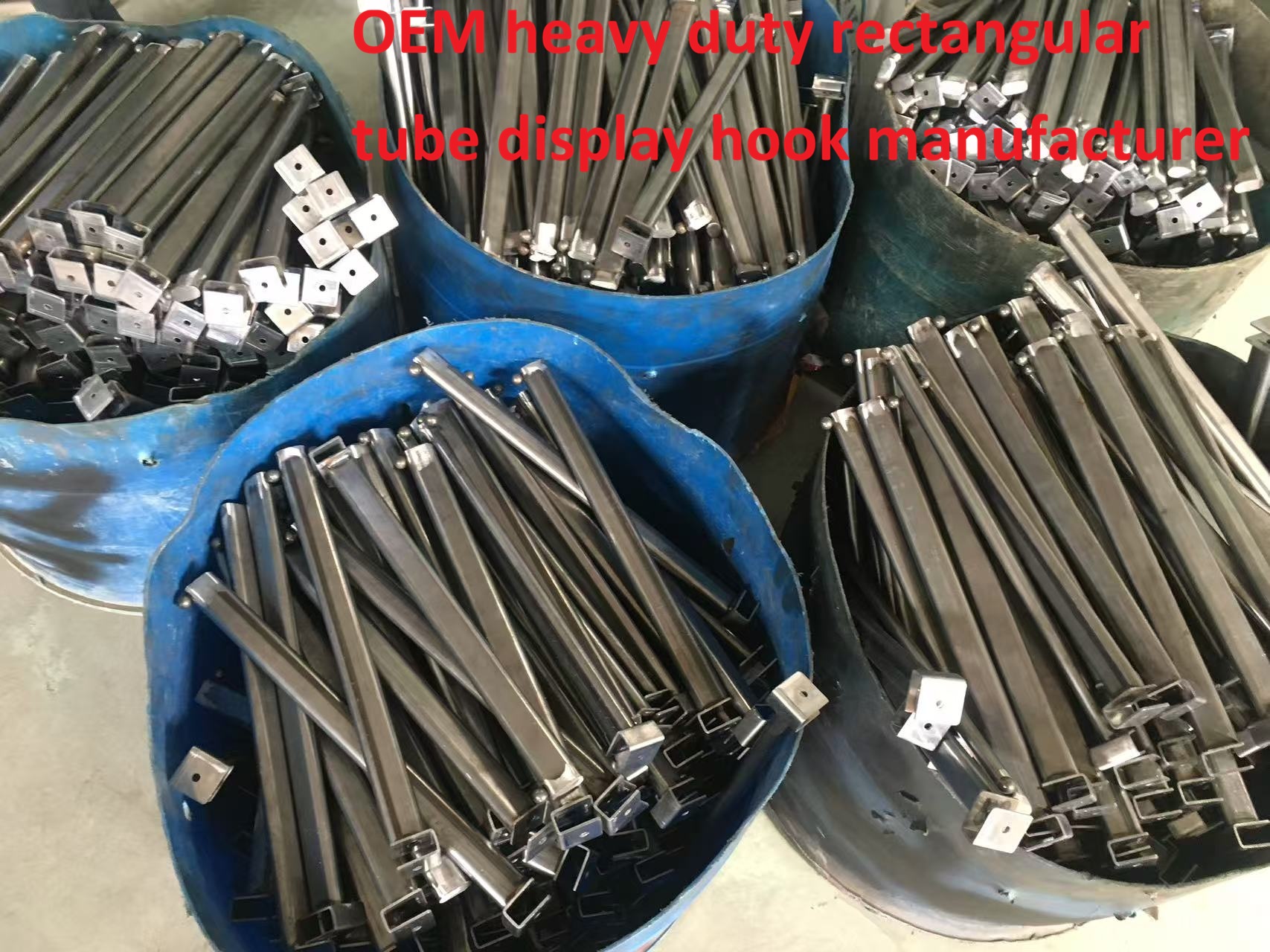
OEM retail display hook production can range from adapting an existing design to developing a new product from a customer drawing. Customization may involve a new mounting profile, dimensions, finish, label holder, packaging, or branding.
Potential cost elements include:
- Engineering or drawing review
- Prototype or sample production
- New tooling, fixtures, or forming setup
- Production inspection and agreed testing
- Custom packaging or printed identification
Ask the supplier to separate one-time costs from recurring unit costs. A quote should make clear whether tooling is included, charged separately, or amortized across a stated quantity. Also confirm who owns any customer-specific tooling and what happens if the design changes.
Waigaoqiao provides OEM services for overseas brands, wholesalers, and manufacturers. When preparing an RFQ, buyers can share a drawing, existing sample, product photos with dimensions, or a target application. The more complete the input, the more accurately the factory can assess manufacturability and price.
"Strong" or "heavy duty" is not a measurable specification. A buyer should define the intended load and the conditions under which the product must perform. For example, clarify whether the requirement concerns a static load, how long it is applied, how the hook is mounted, and whether deformation is acceptable.
A practical quality-control plan may include:
1. Incoming material checks against the agreed specification.
2. First-piece inspection for dimensions, mounting fit, bends, and finish.
3. In-process checks at agreed intervals or checkpoints.
4. Load testing using the agreed fixture, load, duration, and acceptance criteria.
5. Final inspection for quantity, packaging, labeling, and visible defects.
There is no meaningful pass/fail result without a defined setup. The sample must be mounted in a representative fixture, and the customer and manufacturer should agree on the test method and acceptance limits before production. This reduces disagreement when samples and production goods are assessed.
1. Identify the fixture system. State whether you need slatwall hooks, pegboard hooks, shelving uprights, brackets, or a combination.
2. Share a drawing or sample. Include dimensions, material requirements, finish, and any critical fit points.
3. Describe the application. Explain what merchandise the hook will hold and the intended loading conditions.
4. State order and packaging requirements. Include trial and forecast quantities, labeling, packing, and destination.
5. Request a sample and written acceptance criteria. Confirm fit, finish, and load-test expectations before authorizing mass production.
This process helps buyers compare suppliers on the same scope. It also gives the factory a chance to identify design issues before they become production or installation problems.
A low unit price can be misleading if the quote excludes tooling, packaging, inspection, or freight. Compare each proposal against the same checklist:
- Is the material and thickness stated?
- Are dimensions and mounting details confirmed?
- Is the finish clearly identified?
- Are samples, tooling, and engineering costs itemized?
- Does the quote state order quantity and packaging?
- Is the load-test method defined, if required?
- Are lead time, shipment terms, and exclusions clear?
The strongest supplier comparison is a like-for-like technical and commercial review. If two quotes use different materials, finishes, or testing assumptions, they are not equivalent even if the product names match.

There is no dependable single price for all custom hooks. Cost depends on design, material, finish, quantity, packaging, tooling, testing, and shipment terms. Share a defined specification to obtain a quote that can be compared.
Send a drawing or sample, fixture type, dimensions, material and finish requirements, order quantity, packaging needs, destination, and any load or inspection requirements. If some details are not finalized, identify them as open items.
Not necessarily. Their mounting ends are designed for different fixture systems. Confirm compatibility with the panel or board before ordering.
Tooling can be a separate one-time cost or handled through another agreed pricing arrangement. Ask the supplier to itemize it and explain how it affects the quoted unit price and future orders.
Specify the mounting setup, applied load, duration, and acceptance criteria. "Heavy duty" alone does not provide a repeatable test requirement.
Yes. Provide drawings, samples, or fixture details for the components that must work together. The supplier can then assess interfaces and quote the defined scope.
To receive a practical OEM quotation, send Waigaoqiao your product type, drawing or sample, required finish, target quantity, packaging details, and intended application. If load performance is important, include the test conditions you need. A clear RFQ is the fastest route to a comparable quote and a product specification your team can approve.
- Justdial, "Display Hook at the Best Price from Verified Sellers." The listing mentions display-hook categories including slatwall and pegboard hooks; it does not provide a comprehensive custom OEM pricing benchmark. [justdial](https://www.justdial.com/india/Display-Hook)


