
Views: 220 Author: WAIGAOQIAO Publish Time: 2026-02-28 Origin: Site
Content Menu
● The Anatomy of Durability: Material Science in Rack Construction
>> The Superiority of High-Tensile Carbon Steel
>> Decoding Steel Gauge and Wall Thickness
>> The Specialized Role of Stainless Steel
● Structural Engineering and Welding Excellence
>> Robotic Precision vs. Manual Welding
>> The Debate Between Fully Welded and Knock-Down Designs
>> Truss Design and Load Distribution
● Evaluating Surface Finishes for Long-Term Resilience
>> Industrial Chrome Plating: The Gold Standard
>> The Resilience of Powder Coating
>> Testing for Corrosion: The Salt Spray Test
● Mobility and the Durability of Moving Parts
>> Caster Material and Floor Protection
>> The Importance of Precision Ball Bearings
>> Brake Reliability and Safety
● Design Optimization for Heavy-Duty Usage
>> The Stability of the Z-Base Design
>> Load Distribution in Double Rail Racks
>> Managing the Risks of Adjustable Features
● The Strategic Advantage of an OEM Partnership
>> Customizing for Specific Weight Targets
>> Integrated Quality Control and Prototyping
>> Optimized Packaging for Global Shipping
● Maintenance and Longevity: Protecting Your Investment
>> Routine Inspection and Hardware Tension
>> Cleanliness and Caster Care
● Conclusion: A Foundation of Reliability
>> Frequently Asked Questions (FAQ)
In the global apparel industry, from the fast-paced floor of a retail flagship store to the high-volume environment of a distribution warehouse, the reliability of equipment is paramount. Among the most fundamental yet often overlooked tools in this sector is the garment rack. A rack that fails under pressure is not just a logistical inconvenience; it represents a safety hazard, a potential for merchandise damage, and a drain on capital expenditure. For international brands, wholesalers, and manufacturers, the quest for "durability" is a quest for long-term operational stability. As a leading Chinese manufacturer specializing in the garment rack industry, WAIGAOQIAO provides high-level OEM services that bridge the gap between basic utility and industrial-grade resilience. This comprehensive guide explores the technical intricacies of how to select durable garment racks that can withstand the rigors of heavy-duty usage and the test of time.
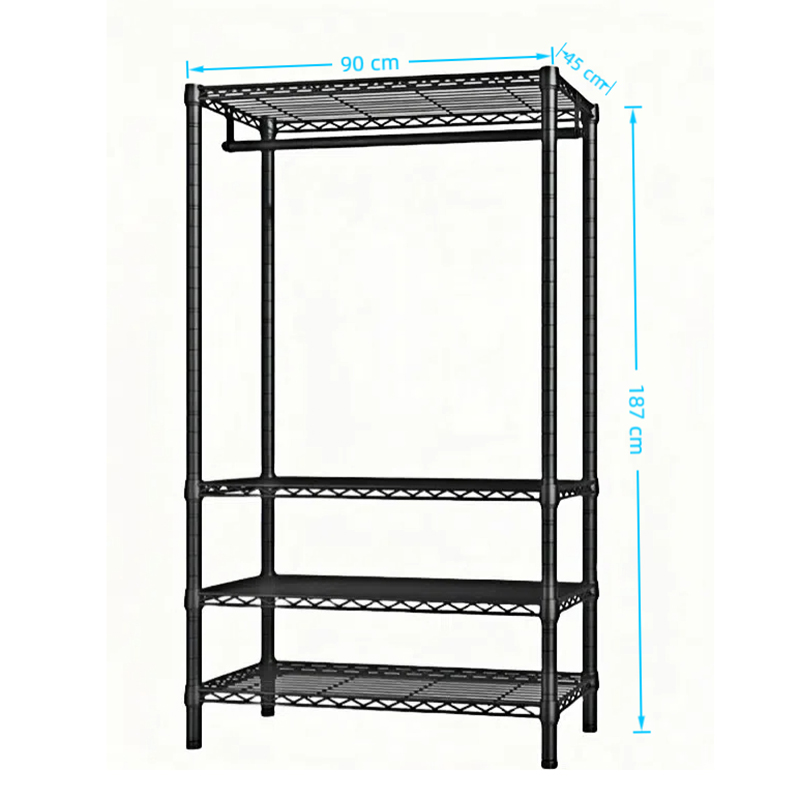
The foundation of any durable garment rack is the material from which it is forged. To the untrained eye, two steel racks may look identical, but their performance under a 200-pound load will differ drastically based on their chemical composition and manufacturing process.
Most professional-grade garment racks are constructed from carbon steel. However, the quality of this steel varies significantly. Durable racks utilize high-tensile carbon steel, which offers a higher yield strength—the point at which the metal begins to permanently deform. In an industrial setting, the steel must be able to flex slightly under a heavy load and then return to its original shape. Cheap, low-grade steel is often brittle or too soft, leading to "bowing" in the center of the horizontal hanging rail. When selecting a rack, it is essential to look for "cold-rolled" steel, which undergoes a process that increases its strength and provides a smoother surface finish than hot-rolled alternatives.
In the metalworking industry, the "gauge" of the steel refers to its thickness. Counter-intuitively, a lower gauge number indicates a thicker, stronger tube. For a garment rack to be considered truly durable for commercial or warehouse use, it should typically utilize 14-gauge or 16-gauge steel. Many consumer-grade racks use 18-gauge or even 20-gauge steel, which is significantly thinner and prone to buckling. Thicker wall tubing not only supports more weight but also provides a more substantial surface for welding, ensuring that the joints—the most common points of failure—are as strong as the rails themselves.
For environments with high humidity, such as coastal warehouses, or for luxury showrooms that require a specific aesthetic, 304-grade stainless steel is the ultimate choice for durability. Unlike carbon steel, which requires a protective coating to prevent rust, stainless steel contains chromium, which forms a passive layer of chromium oxide that prevents surface corrosion. While the initial investment for stainless steel is higher, its lifespan in corrosive environments is virtually infinite, making it the most durable option for specialized applications.
Material quality is only half the battle; the way those materials are joined determines whether a rack will stand straight for a decade or wobble within a month.
The joints of a garment rack are where the structural load is concentrated. In high-quality manufacturing, such as the processes employed at WAIGAOQIAO, robotic welding is used to ensure 360-degree consistency. Robotic welders can maintain the exact temperature and speed required to create a "full-penetration" weld, where the two pieces of metal are fused into a single unit. Manual welding, while skilled, is prone to human error, such as "cold welds" where the bond is only superficial. A durable rack should show clean, uniform weld beads at every intersection.
Fully welded racks are the pinnacle of durability because there are no bolts to loosen or joints to fail. However, they are incredibly expensive to ship internationally. The solution for global brands and wholesalers is the "Knock-Down" (KD) design, which allows for flat-packed shipping. To ensure a KD rack is durable, the connection system must be over-engineered. Look for racks that use heavy-duty steel bolts and internal reinforcement sleeves at the connection points. Systems that rely on simple plastic friction-fit joints or thin metal thumb-screws are not suitable for professional use and will inevitably lose their stability over time.
Durability is also a product of geometry. For racks intended to hold exceptionally heavy items—like winter coats, leather jackets, or theater costumes—the design should incorporate structural reinforcements. A "V-brace" or a "truss" design on the base of the rack prevents the vertical uprights from splaying outward under pressure. By distributing the weight more evenly across the base, these engineered features reduce the stress on any single weld point, significantly extending the service life of the equipment.

The finish on a garment rack is its first line of defense against the environment and the constant friction of metal hangers. A finish that chips or wears away quickly leads to exposed steel, which will inevitably rust and damage the garments.
For durability and functionality, industrial-grade chrome plating is unmatched. The process involves multiple layers: first a layer of copper for adhesion, then a layer of nickel for corrosion resistance, and finally a top layer of chromium for hardness. This creates a surface that is incredibly difficult to scratch. In a retail or warehouse setting, hangers are constantly sliding back and forth. A high-quality chrome finish allows these hangers to glide smoothly without wearing down the rail, maintaining both the aesthetic and the structural integrity of the rack for years.
Powder coating is a popular alternative to chrome, especially when custom colors are required for branding. Unlike liquid paint, powder coating is applied as a dry powder and then cured under high heat to form a "skin." This finish is much thicker and more impact-resistant than traditional paint. For a powder-coated rack to be durable, the steel must be properly pre-treated—usually with a phosphate wash—to ensure the coating bonds permanently. At WAIGAOQIAO, we utilize advanced curing ovens to ensure the powder coat is fully cross-linked, providing maximum resistance to chipping and chemicals.
Professional manufacturers verify the durability of their finishes through rigorous testing. The "Salt Spray Test" (ASTM B117) involves placing a finished component in a chamber and subjecting it to a continuous mist of salt water. A durable commercial finish should be able to withstand 48 to 96 hours of salt spray without showing signs of red rust. When sourcing from an OEM partner, requesting these test results is a critical step in ensuring you are receiving a truly durable product.
Many garment racks are designed to be mobile, and in these cases, the wheels (casters) are often the first component to fail. A durable rack is only as good as the casters it rolls on.
For warehouse and commercial use, casters should be made of polyurethane or heavy-duty rubber, not hard plastic. Hard plastic wheels are prone to cracking when they hit a bump and can damage expensive retail flooring. Polyurethane offers the best of both worlds: it is hard enough to roll easily under a heavy load but has enough "give" to absorb shocks and protect the floor. Furthermore, the caster housing should be made of thick, zinc-plated steel to prevent the wheels from buckling.
The "rollability" of a rack over time depends on its bearings. Durable racks utilize sealed ball bearings in both the wheel axle and the swivel head. Sealed bearings are protected from the dust, lint, and hair that are ubiquitous in garment environments. Without this protection, debris will eventually clog the bearings, causing the wheels to seize. Once a wheel seizes, it creates a "flat spot" on the tire, and the rack becomes nearly impossible to move safely.
Stability is a form of durability. A mobile rack must be able to become stationary and stay that way. Durable racks feature metal-locking brakes that engage directly with the wheel tread or the swivel mechanism. Plastic brakes often snap after repeated use. In a warehouse setting, the ability to lock a rack securely is a safety requirement that prevents accidental collisions and ensures the rack remains stable even when being loaded unevenly.
Specific design choices can inherently make a rack more durable by lowering its center of gravity or reducing structural leverage.
The Z-rack is widely considered the most durable mobile garment rack in the industry. Its base is constructed from heavy-duty square steel tubing welded into a "Z" shape. This design offers two durability advantages: first, it provides a very low center of gravity, making it nearly impossible to tip over; second, it allows multiple racks to "nest" together when empty. Because they nest, they are less likely to be knocked over or damaged when being stored in a tight warehouse corner.
Double rail racks provide more storage but place twice the stress on the base and casters. A durable double rail rack must have a wider base than a single rail version to maintain its "tipping point" safety margin. Additionally, the horizontal rails should be supported by reinforced vertical uprights that are thicker than those found on single rail racks. Selecting a design where the weight is centered directly over the casters will prevent the frame from twisting over time.
While adjustability (height or width) is a convenient feature, every moving part is a potential point of weakness. To maintain durability in an adjustable rack, the locking pins must be made of high-tensile steel, and the sliding "telescoping" tubes should have a tight tolerance to prevent wobbling. A "wobbly" adjustable rack will eventually wear out its locking holes, leading to a permanent tilt. For the most extreme industrial environments, fixed-height racks are often the most durable choice because they eliminate these moving parts entirely.
For brands and wholesalers, the best way to ensure durability is to have a direct hand in the manufacturing specifications. This is the core value of the OEM service provided by WAIGAOQIAO.
A rack designed for lightweight t-shirts does not need the same engineering as one designed for heavy leather jackets. By working with an OEM manufacturer, you can customize the steel gauge, the caster size, and the reinforcement points to match your specific inventory. This "purpose-built" approach ensures the rack is exactly as durable as it needs to be, preventing both under-engineering (failure) and over-engineering (unnecessary cost).
When you partner with a specialized Chinese manufacturer, you gain access to industrial-scale quality control. This includes multi-stage inspections, from the raw steel arrival to the final packaging. Before a full production run, we can produce prototypes that are subjected to "destruction testing"—loading the rack until it fails to determine its true breaking point. This data-driven approach removes the guesswork from selecting durable equipment.
A rack must arrive durable, not just be manufactured that way. International shipping is a brutal environment for metal products. We specialize in designing packaging that prevents the components from rubbing against each other, which can damage the chrome or powder coat before the rack even reaches the customer. High-density foam inserts and double-walled corrugated boxes are standard in our OEM process, ensuring that the structural integrity and finish are preserved during the long journey from China to your facility.
Even the most durable, over-engineered garment rack requires basic care to reach its full potential lifespan.
For racks that utilize a "knock-down" bolt system, the vibrations of moving the rack can eventually loosen the hardware. A simple maintenance protocol—checking and tightening bolts every six months—can prevent the rack from developing a "wobble" that would otherwise accelerate wear and tear on the joints.
The enemies of a mobile rack are lint and hair. In an apparel warehouse, these fibers can quickly wrap around caster axles. Regularly clearing this debris and applying a drop of industrial lubricant to the bearings will ensure the casters last as long as the steel frame. Furthermore, keeping the rails clean of dust and oils will preserve the finish and ensure that garments remain in pristine condition.
Selecting durable garment racks is a strategic decision that requires a balance of material knowledge, engineering insight, and an understanding of the operational environment. By prioritizing high-tensile steel, robotic welding precision, industrial-grade finishes, and superior caster technology, you can secure equipment that will serve your business for years to come.
At WAIGAOQIAO, we pride ourselves on being more than just a supplier; we are a partner in our clients' success. Our expertise in the garment rack industry allows us to provide OEM solutions that are tailored for maximum durability and logistical efficiency. In a world of "disposable" equipment, choosing a rack that is built to last is not just a smart financial move—it is a commitment to quality and safety that reflects the values of your brand.
***
Q1: What is the most important factor in determining the weight capacity of a garment rack?
A: The weight capacity is primarily determined by the steel gauge (thickness) and the diameter of the tubing. A lower gauge (thicker) steel can support significantly more weight without bending. Additionally, the quality of the welds at the base and the load rating of the casters play critical supporting roles.
Q2: How do I know if a rack's chrome finish is durable enough for high-volume use?
A: Look for "Industrial Chrome" or "Commercial Chrome," which usually involves a multi-layer electroplating process including nickel. You can also ask the manufacturer for Salt Spray Test results; a durable finish should withstand at least 48 hours of testing without rust.
Q3: Are "Knock-Down" (KD) racks as durable as fully welded racks?
A: Fully welded racks are the most stable, but modern KD racks can be nearly as durable if they use high-quality bolts and internal steel sleeves for reinforcement. The key is to avoid KD racks that use plastic components or thin-walled tubing at the connection points.
Q4: Why should I avoid plastic casters for commercial garment racks?
A: Plastic casters are prone to cracking under heavy loads and have a high friction coefficient, making the rack difficult to move. Polyurethane or rubber casters with steel ball bearings are much more durable, roll smoother, and are safer for both the user and the floor.
Q5: What are the benefits of sourcing garment racks via OEM from a Chinese manufacturer?
A: Sourcing via OEM from a specialized manufacturer like WAIGAOQIAO allows for complete customization of the rack's specifications (size, strength, and finish) to meet your exact needs. It also offers significant cost savings through direct-from-factory pricing and optimized shipping logistics.


