
Views: 178 Author: waigaoqiao Publish Time: 2026-10-25 Origin: Site
Content Menu
● What OEM Buyers Should Confirm Before Ordering Retail Display Hooks
● Slatwall Hooks, Pegboard Hooks, and Upright Brackets
>> Slatwall Hooks for Flexible Merchandising
>> Pegboard Hooks for Configurable Product Displays
>> Retail Shelving Upright Brackets for Shelf-Level Support
● Custom Design: Turn a Merchandising Brief into a Production Specification
● Quality Control for OEM Retail Fixtures
● Load Testing: Agree on the Method Before Comparing Results
● Packaging Retail Fixtures for Export
● A Practical OEM Order Workflow
>> 1. What information should I send when requesting a quote for retail display hooks?
>> 2. Can one hook fit both slatwall and pegboard?
>> 3. How should OEM buyers specify load testing?
>> 4. What should a retail fixture export packing specification include?
>> 5. Can Waigaoqiao customize hooks and upright brackets?
● Request an OEM Quote from Waigaoqiao
Retail display hooks may be small components, but they influence how products are presented, replenished, and shipped. For overseas brands, wholesalers, and manufacturers, choosing Retail Display Hooks is not just a matter of selecting a length or finish. Buyers also need to confirm panel compatibility, loading requirements, quality controls, packaging, and export coordination.
At Waigaoqiao, we support OEM buyers with custom retail fixtures, including Slatwall Hooks, Pegboard Hooks, and retail shelving Upright Brackets. This guide explains how to define a project clearly, evaluate manufacturing and load-testing requirements, and prepare packaging for international shipment.

A clear specification prevents avoidable sampling delays and mismatched production. Before requesting a quote, document how the hooks or brackets will be installed and used.
Start with these details:
- Display system: Pegboard, slatwall, or a shelving upright system.
- Dimensions: Hook length, wire diameter, bracket dimensions, and required clearances.
- Material and finish: For example, metal or plastic, with the required color and surface treatment.
- Product and package weight: Include the expected load per hook, not only the weight of an individual item.
- Merchandising needs: Product spacing, facing count, label-holder requirements, and replenishment method.
- Order and shipment plan: Target quantities, packing preferences, destination, and delivery schedule.
Do not assume that products described as "pegboard compatible" or "slatwall compatible" fit every panel. Hole spacing, panel thickness, slot geometry, and mounting details can differ between systems. Confirm the actual interface using a drawing, sample, or physical panel specification. Commercial product listings, for example, describe hooks with specific panel dimensions and fitting conditions—details that illustrate why compatibility should be checked rather than presumed. [clipstrip](https://www.clipstrip.com/pegboard-slatwall-hooks-for-retail-displays-white-abs-plastic-2-10) [clipstrip](https://www.clipstrip.com/easy-remove-pegboard-slatwall-hooks-metal)
Slatwall Hooks mount into horizontal slots and can support changeable product layouts. They may suit retail environments where staff frequently adjust assortment or presentation. The important design variables include slot fit, hook projection, retention, finish, and the weight and shape of the packaged products.
For an OEM project, share the slatwall profile or a verified sample. A hook that appears similar in a photograph may not seat or remain secure in the buyer's specific panel.
Pegboard Hooks are selected around the panel's hole pattern, thickness, and the intended product load. Buyers should specify whether the hook needs a straight or angled form, a single or double prong, a retaining feature, or a label holder.
A useful sample review checks not only whether the hook inserts into the panel, but also whether it stays in position during product loading and removal. If products are sold in hanging packages, include representative packages in the test.
Retail shelving Upright Brackets connect shelving components to the upright system. Their suitability depends on the upright profile, engagement points, shelf depth, and the load and use conditions defined for the project.
Buyers should provide the upright drawing or a physical sample and clarify whether the bracket is intended for a specific shelf, accessory, or display configuration. Do not treat a bracket as interchangeable solely because it looks similar to an existing part.
A custom design process works best when buyer requirements are translated into measurable features. "Heavy duty," "premium finish," and "fits standard panels" are not complete engineering specifications.
A practical development sequence is:
1. Define the display system. Identify the exact panel or upright interface and share drawings, samples, or dimensions.
2. Describe the merchandise. Provide item dimensions, packaging type, weight, and how shoppers or staff will handle it.
3. Set the functional requirements. Specify hook projection, spacing, orientation, load target, and any label or safety features.
4. Review a drawing or prototype. Check fit, access, appearance, and product presentation before approving production.
5. Approve a controlled sample. Record the material, dimensions, finish, and other agreed acceptance criteria.
6. Confirm revisions in writing. Ensure the approved version matches the production specification and packaging plan.
This sequence is a practical project-control recommendation, not a claim that every display project follows an identical process. The right sampling and validation plan depends on product risk, order scale, and the buyer's requirements.
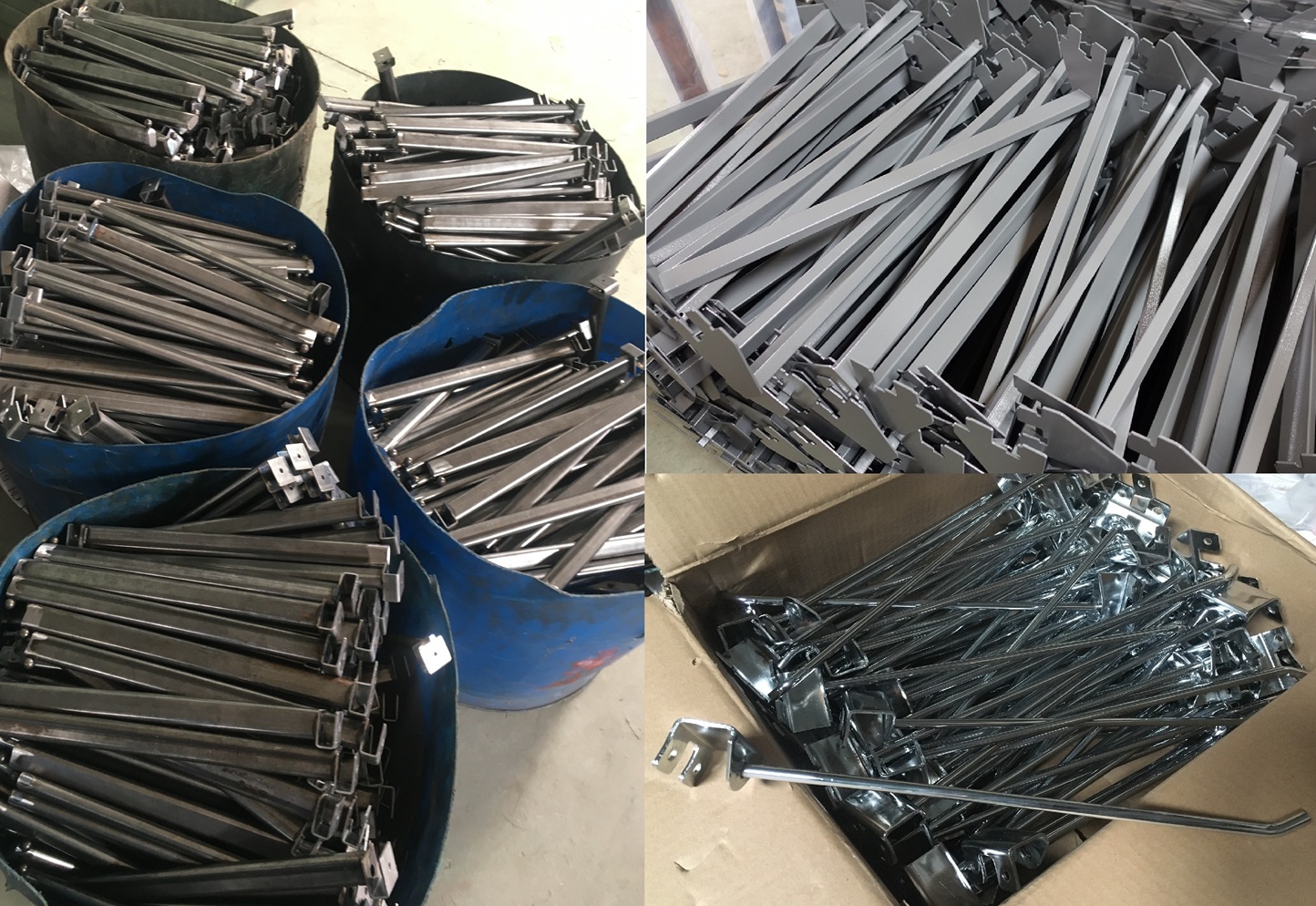
Quality control should be connected to the agreed specification—not left to a subjective final visual check. A clear inspection plan defines what is checked, how it is checked, and what counts as acceptable.
For Retail Display Hooks and brackets, buyers and manufacturers can agree on checks such as:
- Critical dimensions: Mounting geometry, length, wire diameter, and key clearances.
- Fit and assembly: Whether the component engages with the specified panel or upright.
- Material and finish: Whether the agreed material, color, coating, and surface appearance match the approved sample.
- Workmanship: Visible defects, sharp edges, deformation, or incomplete finishing.
- Functional performance: Whether the product operates as intended under the agreed test conditions.
- Packaging condition: Whether parts are protected, counted, and labeled according to the packing specification.
Inspection frequency and sampling should be set with the buyer. Where a particular requirement is essential—such as a fit-critical dimension or a cosmetic surface—identify it explicitly in the drawing or inspection checklist.
A useful OEM document set may include a drawing revision, approved sample record, inspection checklist, packing specification, and a shipment carton label format. This makes production and later reorders easier to control.
A load-test result is meaningful only when the setup is defined. The test should represent the intended display system and use case as closely as practical.
Before testing, agree on:
- Test assembly: The panel or upright, mounting method, and hook or bracket configuration.
- Load placement: The product or test weight and where it is applied.
- Test duration and handling: Whether the test is static, repeated, or includes normal loading and unloading.
- Acceptance criteria: What movement, deformation, disengagement, or damage is acceptable.
- Documentation: The sample identity, test setup, observations, and result.
Avoid comparing two suppliers' "load capacity" claims unless their fixtures, load placement, duration, and pass criteria are comparable. A result for a hook mounted in one panel may not represent performance on a different board or with a different product distribution.
For a project with safety, regulatory, or high-consequence requirements, buyers should specify the applicable test method and use a suitably qualified testing provider where needed. Do not publish a numerical capacity unless it is supported by a documented test for the relevant configuration.
Packaging must protect the product during handling and transport while making receiving and inventory work manageable. Small metal hooks can scratch one another; long parts may bend if inadequately supported; mixed components can be difficult to count if they are packed without separation or identification.
A packaging specification should state:
- Unit packing: Individual protection, bundle quantity, or bagging requirements.
- Separation: Dividers or other means to prevent abrasion and tangling.
- Carton packing: Quantity per carton, carton dimensions, and any stacking limitations.
- Identification: Part number, finish, quantity, purchase-order reference, and carton marks.
- Packing evidence: Whether the buyer needs photographs or an approved packing sample before shipment.
For the first order, ask for a review of the packing method before full production is packed. Confirm that the carton labels match the buyer's receiving and warehouse requirements. The appropriate export packing depends on product geometry, shipment route, handling risks, and buyer instructions; avoid assuming a single carton design will work for every SKU.
A predictable workflow helps reduce specification gaps between inquiry and shipment:
1. Inquiry: Send product category, intended display system, quantities, destination, and target schedule.
2. Technical review: Confirm dimensions, interface, finish, and any performance or labeling requirements.
3. Quotation and sample plan: Align on scope, sample requirements, and the details needed for approval.
4. Sample evaluation: Test fit and presentation using the intended panel, shelf, or product package.
5. Production approval: Lock the drawing revision, approved sample, inspection points, and packing instructions.
6. Pre-shipment review: Confirm inspection records, carton labeling, and shipment documents agreed for the order.
Buyers can accelerate this process by sending a marked-up drawing, reference photos, a physical sample, and a short description of the retail environment. Photos are helpful, but they should supplement—not replace—critical dimensions and interface details.

Send the display-system type, mounting dimensions or sample, required hook length and finish, product weight and packaging, estimated order quantity, destination, and any packaging or inspection requirements.
Some products may be designed for more than one system, but compatibility depends on the actual mounting geometry. Confirm the panel details and validate the fit with a sample before approving production.
Define the mounting assembly, load placement, duration or handling cycle, pass criteria, and documentation required. Ask for results from the agreed configuration rather than relying on an unsupported capacity statement.
It should define unit protection, bundle or carton quantities, separation, carton identification, and any handling or stacking requirements. Confirm the packing method against the product and buyer's shipment instructions.
Waigaoqiao offers OEM services for overseas brands, wholesalers, and manufacturers. Share your drawings, samples, target specifications, and quantity so the project scope and customization feasibility can be reviewed.
Planning a new display program or replacing an existing component? Send Waigaoqiao your drawings or sample, display-system details, target quantities, finish requirements, load-test expectations, and export destination.
Our team can review the requirements for Slatwall Hooks, Pegboard Hooks, retail shelving Upright Brackets, and related custom retail fixtures, then discuss the next steps for sampling, quality control, and packaging.
Contact Waigaoqiao to start your OEM retail fixture project.
The sources below support examples of retail hook categories and product-specific compatibility details. They do not verify Waigaoqiao's factory capabilities, customer feedback, test results, or certifications.
1. Clip Strip Corp., "Pegboard & Slatwall Hooks for Retail Displays." [Product details](https://www.clipstrip.com/pegboard-slatwall-hooks-for-retail-displays-white-abs-plastic-2-10). [clipstrip](https://www.clipstrip.com/pegboard-slatwall-hooks-for-retail-displays-white-abs-plastic-2-10)
2. Clip Strip Corp., "Easy Remove Pegboard & Slatwall Hooks – Metal." [Product details](https://www.clipstrip.com/easy-remove-pegboard-slatwall-hooks-metal). [clipstrip](https://www.clipstrip.com/easy-remove-pegboard-slatwall-hooks-metal)
3. Clip Strip Corp., "Display and Pegboard Hooks." [Product category](https://www.clipstrip.com/display-and-pegboard-hooks). [clipstrip](https://www.clipstrip.com/display-and-pegboard-hooks)
4. Formost Plastics & Metalworks, "Pegboard vs Slatwall: Which Is Better for Custom Retail Display Fixtures?" [Article](https://formost1997.com/factory-notes/pegboard-vs-slatwall-custom-retail-display-fixtures). [formost1997](https://formost1997.com/factory-notes/pegboard-vs-slatwall-custom-retail-display-fixtures)
5. SI Retail, "Display Hooks for Retail Stores." [Product category](https://www.siretail.com/eshop/display-hooks). [siretail](https://www.siretail.com/eshop/display-hooks)


