
Views: 177 Author: waigaoqiao Publish Time: 2026-09-27 Origin: Site
Content Menu
● What Anti-Slip and Security Features Actually Do
● Choose the Right Retail Display Hook for the Fixture
>> Slatwall Hooks with Retention or Locking Features
>> Pegboard Hooks for Secure Product Presentation
>> Display Brackets and Fixture-Level Security
● Match Anti-Slip Features to the Product Packaging
● Security Trade-Offs: Protect Products Without Blocking Sales
● Load Testing and Quality Control for OEM Projects
● Custom Design and OEM Manufacturing: Prepare a Useful Buyer Brief
● Common Sourcing Mistakes to Avoid
>> 1. What is an anti-slip retail display hook?
>> 2. Does an anti-slip hook prevent shoplifting?
>> 3. Are security hooks available for Slatwall and Pegboard?
>> 4. How do I choose between a stopper and a locking hook?
>> 5. What should an OEM sample test include?
>> 6. What information should I send for a custom retail display hook quote?
>> 7. Can Waigaoqiao customize Slatwall Hooks, Pegboard Hooks, and Display Brackets?
● Request an OEM Quote from Waigaoqiao
Retail display hooks with anti-slip and security features can help retailers keep merchandise organized, reduce accidental product loss from displays, and manage access to selected items. For brands, wholesalers, and fixture manufacturers sourcing Slatwall Hooks, Pegboard Hooks, and Display Brackets, the right design depends on the merchandise, fixture, customer experience, and operational requirements.
Waigaoqiao is a China-based retail display fixture manufacturer providing OEM services to overseas brands, wholesalers, and manufacturers. From a manufacturing perspective, "anti-slip" and "security" describe different functions. A stopper may help keep a product from sliding off; a locking mechanism may restrict removal; an EAS-compatible feature may work with a store's security system. Buyers should define the need before choosing a design.
This guide explains how to select, customize, test, and source retail display hooks for B2B projects.
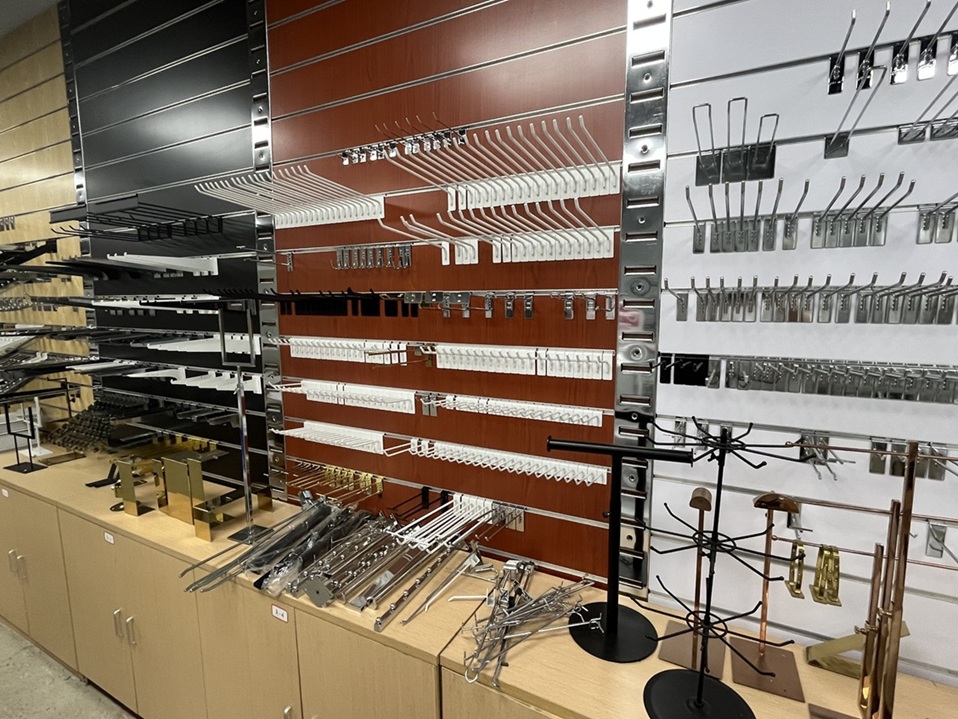
Anti-slip features are designed to help keep products from sliding or falling off during ordinary display use. Depending on the hook, these may include an upturned end, ball tip, stopper, retaining clip, or a formed shape that helps hold the package in position.
Security features are intended to make unauthorized removal more difficult or to work alongside a store security system. Examples include locking hooks, controlled-release mechanisms, and EAS-compatible components. Their function varies by design, so buyers should confirm exactly what a feature does rather than treating a basic retaining tip as an anti-theft device.
It helps to separate four different purposes:
- Product retention: Helps prevent merchandise from slipping off the arm.
- Fixture retention: Helps keep the hook seated on the panel or mounting point.
- Theft deterrence: Makes unauthorized removal more difficult.
- Access control: Allows authorized staff to release or replenish products using a key, tool, or approved process.
A single product may combine several functions, but each should be specified and tested separately. A hook that holds merchandise securely is not automatically a theft-prevention solution.
The feature set matters only if the hook fits the fixture. Slatwall Hooks, Pegboard Hooks, and Display Brackets have different mounting interfaces and load paths.
Slatwall Hooks engage a groove or compatible insert in a slatwall panel. Depending on the design, buyers may specify a stopper, upturned end, lock, or security component.
Before approving a slatwall hook, confirm:
- Panel and insert compatibility
- Hook length and projection
- How the hook resists lifting, sliding, or unintended removal
- Whether staff need a key or release tool
- Whether the feature works with the product packaging
Longer hooks may support deeper or multiple packages, but their projection affects rigidity and the way products behave during customer handling. Test the proposed hook on the actual fixture or a verified equivalent. Do not assume that a lock designed for one slatwall profile will fit another.
Pegboard Hooks fit perforated boards. Board thickness, hole dimensions, hole spacing, and hook geometry all influence fit and stability. Some designs include a retaining feature to keep products from slipping off; other security functions may require a separate accessory.
Check the sample on the intended panel. Evaluate how it inserts, whether it sits level, and whether normal loading and unloading cause it to loosen. Product listings sometimes specify particular hole sizes or spacing, which is a useful reminder that compatibility should be confirmed rather than assumed.
Display Brackets support shelves and other display components. Their load path may differ from that of a single-arm hook. A bracket can transfer force through multiple mounting points, a shelf surface, or a cantilevered arm.
For bracket projects, communicate:
- The component or shelf being supported
- Bracket orientation and attachment points
- Fixture and mounting hardware details
- Expected load distribution
- Whether the security requirement applies to the merchandise, bracket, or entire display
For a system that combines hooks and brackets, evaluate how the parts work together. A secure hook cannot compensate for an unsuitable panel or bracket connection.
The best retaining feature depends on the product and its package—not simply on the hook. A rigid blister pack, flexible pouch, carded product, and package with a small hang hole may interact differently with the same hook tip.
Use this selection process:
1. Inspect the package. Record its dimensions, weight, hang-hole shape, and material.
2. Describe the problem. Is merchandise sliding off, being knocked loose, or being removed without authorization?
3. Select the required function. Choose product retention, fixture retention, theft deterrence, or a combination.
4. Check access. Consider whether shoppers can handle the product and staff can restock it efficiently.
5. Test with representative merchandise. Use real packaging and the intended fixture, not a substitute with different dimensions.
A ball tip or upturned end may help retain a package during everyday handling. A locking mechanism addresses a different requirement and can change how shoppers and staff access the product. Be precise in the brief: "prevent packages from sliding off" is clearer than simply requesting a "secure hook."
A more restrictive display is not automatically a better display. If shoppers cannot inspect or remove products easily, the fixture may create friction. If staff need several steps or special tools to replenish merchandise, the design may slow store operations.
Before selecting a security feature, consider:
- Risk level: Which products, locations, or display zones need added deterrence?
- Customer experience: Can shoppers inspect or select merchandise comfortably?
- Staff workflow: How quickly can employees unlock, replenish, and relock the display?
- System compatibility: Does the solution work with existing panels, keys, or security equipment?
- Maintenance: Are moving parts, keys, or electronic components replaceable and manageable?
- Visual impact: Does the security feature obscure product labels or the brand presentation?
The aim is to match the level of protection to the product and store operation. For some displays, an end stop may be enough to address accidental slippage. For others, controlled access or a security system may be necessary. Define the use case before choosing between them.
Anti-slip and security features do not replace structural checks. The hook, mounting interface, panel, and merchandise should be assessed as a complete assembly. A load-capacity claim is difficult to apply if the test conditions are not described.
For sample approval, agree on:
- Hook type, dimensions, material, and finish
- Panel, bracket, or fixture used during testing
- Load amount, position, and application method
- Test duration and acceptable deflection
- Whether permanent deformation is acceptable
- Whether the retention or locking mechanism still works after loading
- Inspection criteria and result documentation
A practical OEM sample review can follow these steps:
1. Fit check: Install the hook on the specified fixture.
2. Loading check: Add the representative merchandise in the intended position.
3. Use check: Load and remove products in a way that reflects normal store handling.
4. Feature check: Test the stopper, lock, or release mechanism, if included.
5. Condition check: Look for bending, loosening, coating damage, or jamming.
6. Record and approve: Document the sample configuration, results, and any changes required.
This is a project-level validation process, not a claim of certification. If the buyer, retailer, or target market requires a particular standard or third-party test, identify that requirement before sampling and confirm its scope with a qualified testing provider.
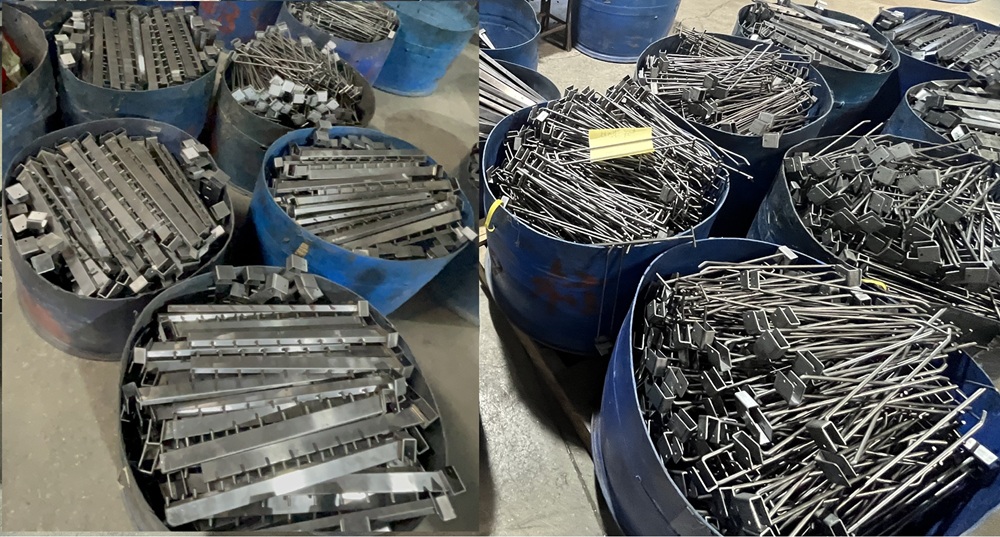
A clear brief helps an OEM manufacturer assess compatibility, function, and production feasibility. It also reduces the risk of repeated sample revisions caused by missing fixture or packaging details.
Provide as much of the following as possible:
- Product photos, technical drawings, or a physical sample
- Product and package dimensions, unit weight, and hang-hole details
- Fixture type, panel specification, and installation method
- Required hook style, length, projection, and tip design
- Desired anti-slip or security function
- Material, finish, color, and packaging requirements
- Estimated order quantity and delivery expectations
- Any market-specific documentation or testing requirements
For a custom design, mark which features are mandatory and which can be adjusted. For example, the retention feature may be essential, while a cosmetic detail may have an acceptable range. If an EAS-compatible component or key-operated release is required, include the relevant system information early; do not leave it until after prototype approval.
Once a prototype is available, test it on the intended panel with representative products. Approve a controlled drawing or reference sample, and make sure any later changes to materials, dimensions, finish, or function are documented.
- Calling every stopper "anti-theft": Product retention and theft deterrence are different functions.
- Ordering without checking panel dimensions: Hook geometry must match the fixture.
- Testing without actual packaging: Hang-hole shape, package stiffness, and weight affect performance.
- Ignoring staff access: Locks and release tools influence restocking time.
- Accepting an unsupported load claim: Ask for the test configuration and pass/fail criteria.
- Approving only appearance: A visually acceptable sample does not prove fit or function.
- Leaving the final specification informal: Keep the approved drawing or sample reference linked to the purchase order.
It is a hook designed to help reduce accidental product movement or slippage. Features may include an upturned end, stopper, retaining clip, or package-specific shape. The exact function depends on the design and should be confirmed with a sample.
Not necessarily. Anti-slip features help retain products during normal display use; they are not automatically theft-prevention devices. If theft deterrence is required, specify a locking or other security solution and confirm how it works.
Security-oriented designs are offered for different display systems, but compatibility varies by product and panel. Confirm the fixture dimensions and test the sample before ordering in bulk.
Choose a stopper when the main issue is accidental product slippage. Consider a locking design when controlled access or theft deterrence is required. Check that shoppers and store staff can still use the display effectively.
Check fixture fit, product loading and removal, retention behavior, lock operation if applicable, and visible condition after testing. Record the test setup, acceptance criteria, and result.
Provide the fixture specification, product and package dimensions, unit weight, desired hook geometry, finish, security function, estimated quantity, and drawings or samples where available.
Waigaoqiao provides OEM manufacturing for retail display fixtures. Share your project brief, fixture details, intended function, finish preferences, and target quantity to discuss design feasibility and a sample plan.
If you are sourcing retail display hooks with anti-slip or security features, Waigaoqiao can discuss Slatwall Hooks, Pegboard Hooks, Display Brackets, custom design, OEM manufacturing, quality control, and load testing for your project.
Send us your product and fixture specifications to begin a quotation and sample review. The more clearly you define the package, mounting interface, and security goal, the more effectively we can assess a suitable design.
- [Security Display Hooks](http://www.security-display.com/sdp/1505375/4/pl-6111809/0-2867184/Security_Display_Hooks.html) — example of security-focused retail display hook products.
- [Retail Security Display Slatwall Locking Hooks and Pegboard Hooks](https://www.welguard.com/sdp/1475528/4/pd-6043860/12840676-2413673/Retail_Security_Display_Slatwall_Locking_Hooks_Peg.html) — example of locking hook options for retail fixtures.
- [Clip Strip Corp.: Pegboard and Slatwall Hooks for Retail Displays](https://www.clipstrip.com/pegboard-slatwall-hooks-for-retail-displays-white-abs-plastic-2-10) — product example with material and panel-fit details.
- [Clip Strip Corp.: Easy-Remove Pegboard and Slatwall Metal Display Hooks](https://www.clipstrip.com/easy-remove-pegboard-slatwall-hooks-metal-display-hooks-for-retail-fixtures-2-to-8-lengths) — example of hook length and mounting design options.
- [Alibaba: Locking Security Hooks for Slatwall](https://www.alibaba.com/showroom/locking-security-hook-for-slatwall_4.html) — marketplace listing category illustrating security-hook sourcing options.
- [Alibaba: Slatwall Security Hooks](https://www.alibaba.com/showroom/slat-wall-security-hooks.html) — marketplace listing category for slatwall security hooks.


