
Views: 170 Author: wai'gao'qiao Publish Time: 2026-08-09 Origin: Site
Content Menu
● Custom Engineering Instead of Catalog-Only Products
● Flexible Material and Surface-Finish Options
● Modular and Reusable Fixtures
● Sustainability as an Operational Requirement
● Physical Displays Supporting Omnichannel Retail
● Step 1: Define the Application
● Step 2: Review Engineering Requirements
● Step 3: Produce and Evaluate a Prototype
● Step 4: Conduct Functional and Quality Testing
● Step 5: Confirm Production and Inspection Standards
● For Wholesalers and Distributors
● 1. What types of custom retail display hooks does Waigaoqiao manufacture?
● 2. Can Waigaoqiao manufacture according to our drawings?
● 3. Which materials are suitable for retail display hangers?
● 4. Can the hooks be customized with our brand color?
● 5. How can we test a hook before mass production?
● 6. Are custom retail display hooks suitable for sustainable retail programs?
● 7. What information should we provide for a quotation?
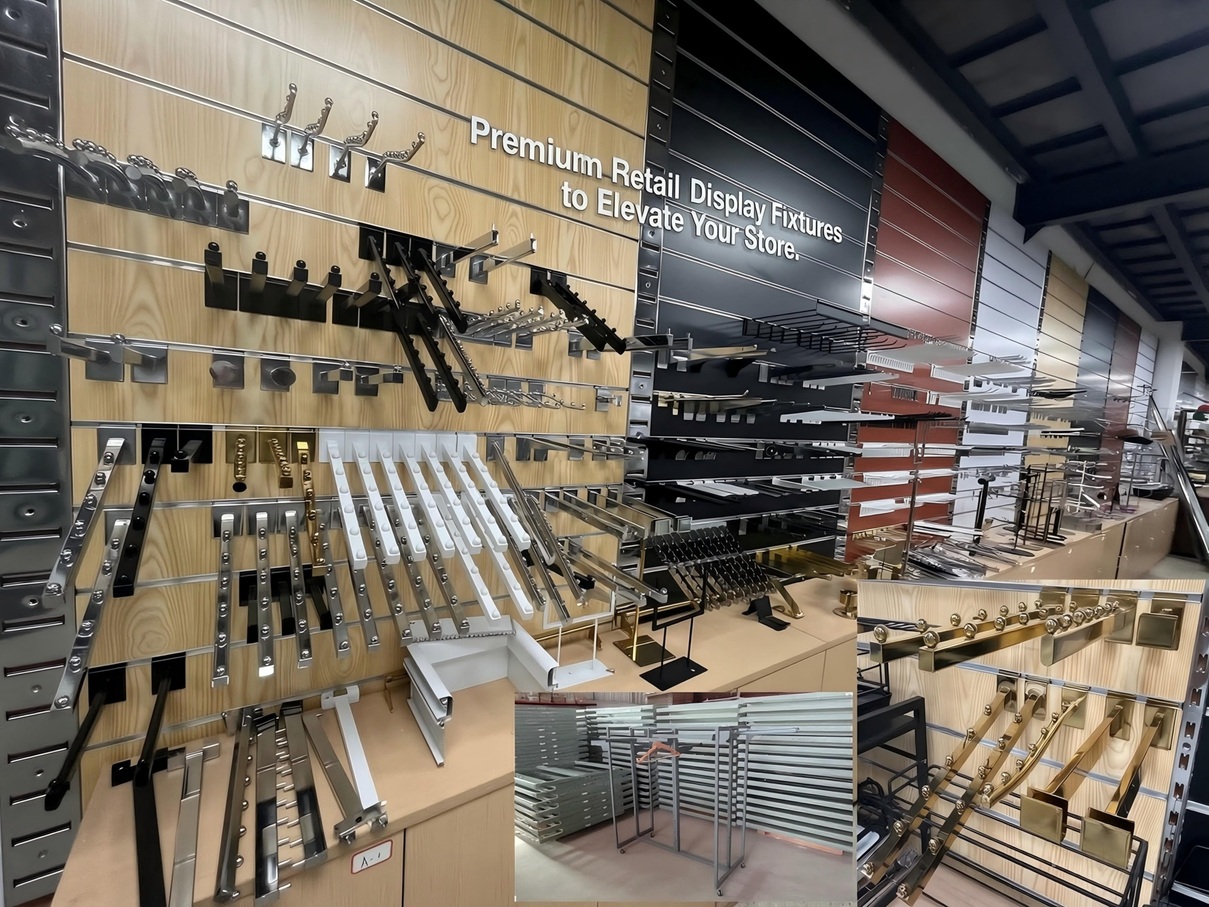
In 2026, custom retail display hangers and hooks are no longer simple hardware components. They are essential parts of a complete merchandising system that influences product visibility, brand perception, store efficiency, and customer experience. For international brands, wholesalers, and manufacturers looking for dependable OEM retail display fixtures, Waigaoqiao offers a practical combination of customization, manufacturing expertise, quality control, and export support.
Retail environments are becoming more visual, flexible, sustainable, and connected. Current industry discussions highlight modular fixtures, reusable displays, responsible materials, digital integration, and experiential merchandising as important retail display trends for 2026.
For buyers, the real question is not simply, "Who can produce a hook?" The more important question is:
Who can transform a merchandising concept into a reliable, scalable, and brand-consistent retail display solution?
That is where Waigaoqiao stands out.
## Why Custom Retail Display Hangers and Hooks Matter
Retail display hangers and hooks perform several important functions. First, they place products at the correct height, angle, and position. Second, they help store teams organize, replenish, and rotate merchandise efficiently. Third, their shape, finish, and integration with signage can reinforce a brand's visual identity.
A poorly designed hook may create several problems:
- Products may slip or fall.
- Packaging may become scratched or damaged.
- Displays may look crowded or disorganized.
- Store employees may spend more time replenishing products.
- Customers may find it difficult to compare items.
- Retailers may need to replace fixtures more frequently.
A well-engineered custom hook supports visual clarity, product security, fast installation, and consistent store execution.
From an industry perspective, the best hook is not necessarily the most complicated one. It is the component that performs reliably in real retail conditions—during transportation, installation, daily customer handling, and repeated restocking.
## Why Waigaoqiao Is a Strong OEM Partner for Retail Display Fixtures
Standard hooks can be suitable for basic applications, but international brands often require specific dimensions, load capacities, finishes, packaging formats, or mounting systems.
Waigaoqiao's OEM approach allows buyers to develop a wide range of solutions, including:
- Single retail display hooks
- Double hooks
- Pegboard hooks
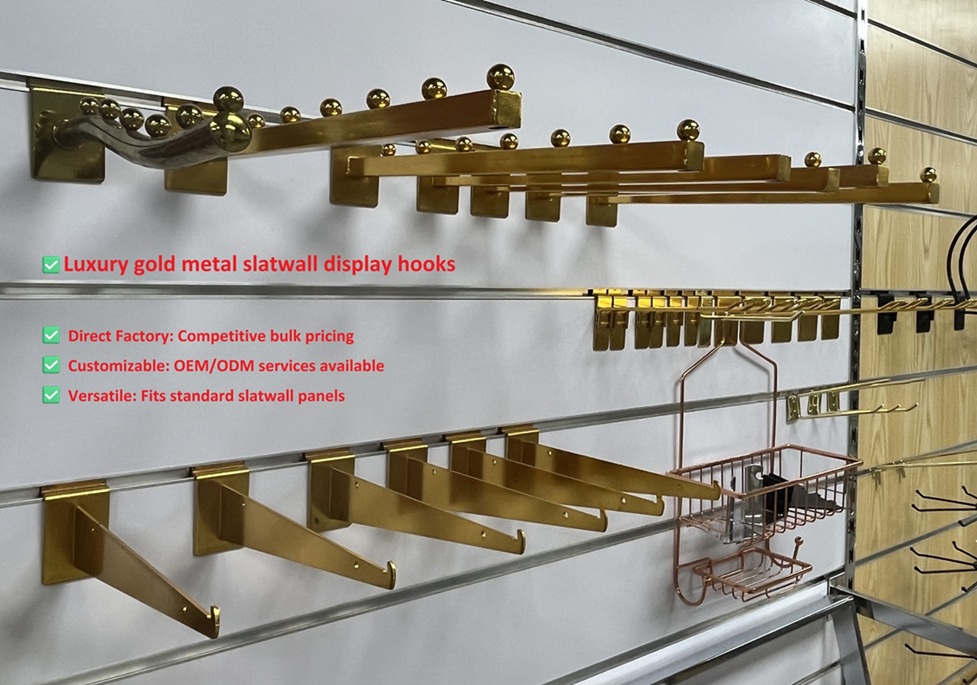
- Slatwall hooks
- Gridwall hooks
- Shelf-edge hooks
- Security display hooks
- Swivel and angled hooks
- Hooks with price-tag channels
- Branded or logo-integrated hangers
- Custom wire and sheet-metal display components
The engineering process should begin with the product and the retail environment rather than with a factory's existing catalog. Before recommending a design, the supplier should understand:
1. What product will the hook carry?
2. What are the product's packaged weight and dimensions?
3. How frequently will customers handle it?
4. What type of retail panel or fixture will support it?
5. Does the display require tool-free installation?
6. Will the product be shipped assembled or flat-packed?
7. What visual and functional standards must the fixture meet?
This method helps prevent a common purchasing mistake: selecting a visually attractive hook that fails during actual store use.
Different retail categories require different materials and finishes. Depending on the design, custom retail display hooks may be manufactured from steel wire, sheet metal, stainless steel, aluminum, or engineered plastics.
Material selection should be based on load requirements, retail environment, expected service life, appearance, and budget. A hook for lightweight accessories does not need the same specification as one designed to carry tools, packaged hardware, or multiple products.
Surface finishing is also a branding decision. A matte black hook may support a premium industrial style, while white powder coating may suit a clean and minimalist store concept. Chrome, brushed metal, polished finishes, and custom colors can also be considered according to the brand's guidelines.
The most efficient design is not always the thickest or heaviest option. A professional supplier should help balance strength, weight, appearance, manufacturing cost, and shipping efficiency.
## Retail Display Trends That Favor Waigaoqiao in 2026
Retailers increasingly need fixtures that can adapt to changing product assortments, seasonal promotions, and different store formats. Modular components allow brands to change hooks, shelves, graphics, and product positions without replacing the entire display.
Reusable fixtures are particularly useful for:
- Pop-up stores
- Seasonal campaigns
- Retail rollouts
- Trade shows
- Multi-location merchandising
- Short-term promotional activations
Industry commentary for 2026 emphasizes modular and reusable displays because they improve operational flexibility and can reduce unnecessary waste.
For brands entering multiple markets, modular display hardware also makes it easier to standardize the basic fixture while adapting individual components for local products or promotions.
Sustainability is moving beyond marketing language. Retail buyers increasingly consider material recyclability, product lifespan, packaging volume, repairability, reusability, shipping efficiency, and end-of-life disposal.
A responsible design does not simply use an "eco-friendly" label. It reduces unnecessary material, avoids overengineering, supports repeated use, and makes replacement of individual components possible.
For example, a modular steel hook that can be removed, reused, repaired, and recycled may provide greater long-term value than a disposable fixture made from mixed materials.
For OEM buyers, sustainability should be discussed at the beginning of the project. Decisions about material, coating, packaging, and assembly can significantly influence the fixture's total environmental impact.
In 2026, physical stores increasingly connect with digital retail. A display may include QR codes for product information, digital price links, scan-to-buy functions, online product comparisons, or store-pickup information.
The National Retail Federation identifies seamless omnichannel experiences as an important expectation among younger shoppers, including Gen Z and Gen Alpha.
This development means a hanger or hook may need to support more than the physical product. The design may also need to leave space for price tickets, QR labels, promotional messages, or interactive content.
A small change in hook length, product spacing, or mounting position can improve the visibility of both the product and the accompanying digital information.
## A Practical OEM Development Process for Custom Hangers and Hooks
A reliable supplier should make the development process transparent and measurable.
Buyers should provide the factory with product photographs, product dimensions, product weight, packaging details, mounting-panel information, estimated quantity, destination market, and any required testing or certification standards.
A complete product brief reduces design revisions and helps the supplier recommend a suitable construction from the beginning.
The supplier should review the hook diameter or metal thickness, welding points, bend radius, mounting compatibility, load-bearing performance, clearance between products, customer safety, and packaging requirements.
This stage is designed to identify technical risks before sampling. It is usually more efficient to correct a problem in a drawing than after mass production.
A prototype allows the buyer to check fit, appearance, product access, stability, staff usability, packaging compatibility, and branding.
The prototype should be tested with the actual packaged product rather than evaluated as an isolated metal component. This helps reveal problems related to weight distribution, product clearance, and customer handling.
Recommended checks may include:
- Static load testing
- Repeated insertion and removal
- Weld-strength inspection
- Coating adhesion and appearance
- Dimensional measurement
- Corrosion testing when required
- Packaging drop testing
- Assembly and installation trials
The exact testing plan should reflect the product category and retail environment. A lightweight accessory hook and a heavy-duty hardware hook should not automatically be tested in the same way.
Before placing a purchase order, both parties should confirm approved drawings, material specifications, finish requirements, tolerance limits, inspection frequency, defect classification, packaging methods, carton labeling, and corrective-action procedures.
This documentation is particularly important for distributors and wholesalers managing several retail customers. It helps ensure that repeat orders remain consistent with the originally approved sample.
## Why Quality Control Matters More Than the Lowest Unit Price
A lower unit price can become expensive when fixtures fail after deployment.
The true cost may include product damage, replacement units, store labor, installation delays, repacking, reshipping, customer complaints, and lost confidence from retail buyers.
For this reason, an OEM supplier should be evaluated on total value, not price alone.
Important supplier capabilities include:
- Consistent production
- Stable material sourcing
- Engineering support
- Pre-production samples
- Bulk-order scalability
- Export packaging
- Clear communication with overseas buyers
- Customization for different retail systems
- Repeat-order consistency
For international retail programs, consistency across batches is especially important. A small change in diameter, finish, angle, or mounting fit can create visible differences across a store rollout.
## How Waigaoqiao Supports Different Buyer Types
International brands need display hardware that follows strict visual and functional guidelines. Custom OEM support can help with brand colors, specific dimensions, private-label packaging, store rollout programs, and coordinated fixtures across different product categories.
The objective is to ensure that every store presents the products in a consistent and recognizable way.
Wholesalers usually need reliable products that can serve several customers and applications. They may benefit from flexible product combinations, bulk packaging, repeat-order capability, multiple fixture styles, competitive OEM pricing, and stable production planning.
A supplier with a broad customization capability can help wholesalers reduce the need to source different components from several factories.
Manufacturers may require hooks that integrate with their products, packaging, or proprietary display systems. Custom engineering enables them to create a complete merchandising package rather than purchasing unrelated components from multiple vendors.
This can simplify procurement, improve product presentation, and create a more unified customer experience.
## How to Choose the Right Custom Retail Display Hook Supplier
Before selecting a factory, buyers should ask:
1. Can the supplier manufacture according to customer drawings or samples?
2. Can it recommend improvements when a design has technical risks?
3. Does it provide prototypes before mass production?
4. Can it maintain quality across repeat orders?
5. Does it understand international packaging and shipping requirements?
6. Can it provide inspection documentation?
7. Does it communicate clearly with overseas customers?
8. Can it support both pilot orders and larger retail rollouts?
9. Can it customize materials, finishes, packaging, and mounting systems?
10. Does it have experience with the buyer's product category?
Clear answers to these questions provide a better indication of supplier capability than a low quotation alone.
## Request a Custom Retail Display Fixture Quote
If you are developing custom retail display hangers, hooks, or OEM merchandising fixtures, prepare your product dimensions, target quantity, mounting requirements, preferred material, and desired finish.
Waigaoqiao can help transform your concept into a production-ready solution through:
- Design review
- Material recommendations
- Prototype development
- Functional testing
- Mass production
- Quality inspection
- Export packaging
Contact Waigaoqiao today to request a custom quote or discuss your retail display project.
## Frequently Asked Questions
Waigaoqiao can develop pegboard hooks, slatwall hooks, gridwall hooks, shelf-edge hooks, double hooks, angled hooks, swivel hooks, security-oriented hooks, and other custom display components based on the application.
Yes. OEM production can be based on approved drawings, physical samples, or detailed product requirements. The supplier can review dimensions, materials, finishes, mounting compatibility, and manufacturability before sampling.
Common options include steel wire, sheet metal, stainless steel, aluminum, and engineered plastics. The best material depends on load, environment, appearance, service life, and budget.
In many applications, yes. Custom finishes may include powder coating, painted finishes, chrome, brushed metal, polished finishes, or other specified surface treatments. Buyers should confirm color references and approval samples before production.
Request a prototype and test it with the actual packaged product. Check load capacity, stability, customer handling, installation, coating quality, product clearance, and packaging performance.
They can be, particularly when designed for long service life, reuse, repair, modular replacement, recyclable materials, and reduced packaging. Sustainability should be assessed across the fixture's complete lifecycle.
Provide product dimensions, product weight, photographs, mounting-system details, desired material, finish, estimated quantity, packaging requirements, destination market, and target delivery schedule.
## References
1. [shopPOPdisplays — 2026 Retail Display Trends: What's In and What's Out](https://www.shoppopdisplays.com/blog/2025/11/06/2026-retail-display-trends-whats-in-and-whats-out)
2. [National Retail Federation — 10 Trends and Predictions for Retail in 2026](https://nrf.com/blog/10-trends-and-predictions-for-retail-in-2026)
3. [DST Connect — Retail Display Trends to Captivate Customers in 2026](https://dst-connect.io/blogs/retail-display-trends-captivate-customers-2026)
4. [Smurfit Westrock — Top Retail Trends of 2026](https://www.smurfitwestrock.com/blog/top-retail-trends-of-2026-what-to-expect)
5. [Retail Dive — Retail Trends to Watch in 2026](https://www.retaildive.com/news/retail-trends-to-watch-2026/808341)


