
Views: 220 Author: shelves-racks Publish Time: 2026-05-26 Origin: Site
Content Menu
● Why pipe‑style clothes racks matter
● Step‑by‑step: how to build a clothes rack fast with pipe
>> 1. Choose the right pipe and materials
>> 3. Assemble the base and verticals
>> 4. Fasten and stabilize the rack
● 3 advanced tips from industry experts (beyond basic DIY)
>> Tip 1: Design for scalability and future upgrades
>> Tip 2: Optimize for load and weight distribution
>> Tip 3: Think like a retailer: integrate it into a display system
● How Waigaoqiao can help you build smarter, not harder
>> ✅ Clear Call‑to‑Action (CTA)
● FAQ
Waigaoqiao has been a leading OEM metal‑wire‑rack and garment‑display‑rack manufacturer since 2003, supplying international brands, wholesalers, and retailers with durable, pipe‑style garment racks and clothing display fixtures. In this guide, we show you how to build a clothes rack fast with pipe, while sharing behind‑the‑scenes design insights from our own factory‑level engineering and real‑world customer feedback to help you go beyond DIY hacks and approach professional‑grade stability and scalability. [shelves-racks]
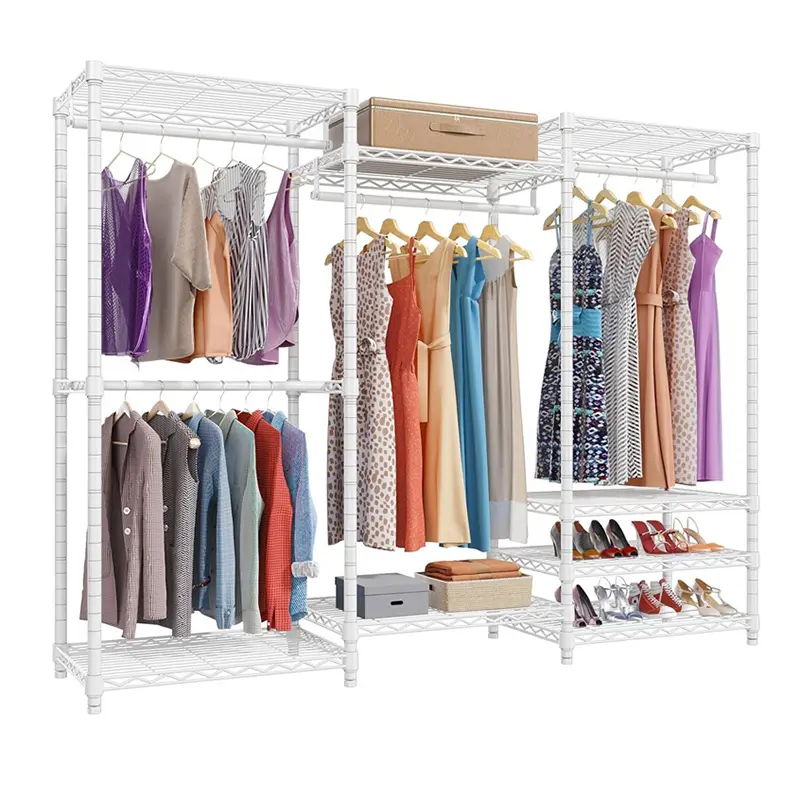
Modern retail and home settings demand fast assembly, high load capacity, and visual flexibility. Pipe‑style garments racks are ideal because:
- They use standard steel or galvanized pipe and fittings, making materials easy to source and replace. [pipe-decor]
- They are modular and scalable, so you can extend the rack length or add tiers later. [customcraftua]
- They pair well with wire‑shelving or metal‑wire garment racks, which Waigaoqiao has manufactured for over 20 years for Australian and European brands. [shelves-racks]
Customer reviews of our OEM garment racks often highlight "easy assembly," "rock‑solid even fully loaded," and "no sagging after months of heavy use", which is exactly the standard we aim for here. [shelves-racks]
Before you start, design for speed and strength:
- Pipe type: Use 1" or 1¼" galvanized steel pipe for garment racks; PVC is lighter but not ideal for heavy retail‑style hanging. [sammyonstate]
- Fittings: Standard fittings include tees, elbows, side‑outlet tees, and flanges; these let you assemble a stable base and vertical columns quickly. [pipe-decor]
- Base and feet: A rectangle or U‑shaped base with flanges and short vertical legs prevents wobbling and improves load distribution. [sammyonstate]
*Pro tip from our production team:* In our OEM garments‑rack factory, we often pre‑assemble main pipe skeletons off‑line so that on‑site installation feels like "just connecting the dots," which is the same mentality you should adopt for DIY builds. [shelves-racks]
At this stage, add a short image showing:
- A labeled diagram of a basic pipe clothes‑rack frame (base, verticals, top rail).
- A photo of a finished pipe garment rack in a small retail or showroom environment.
Fast assembly starts with clean, precise cuts.
- Cut all horizontal hanging rails and vertical support pipes to the same length so you can repeat the same pattern. [pipe-decor]
- Deburr the edges with a file or grinder so the pipes don't snag tools or fabric.
- If you want a rust‑resistant finish, lightly sand, then prime with a metal‑primer before any final paint or powder coating. [customcraftua]
This is one area where factory‑grade process really matters. Our OEM racks go through automated cutting and deburring lines, which is why our customers report no sharp edges or misaligned joints, even after years of daily use. [shelves-racks]
Here is a fast‑assembly sequence you can follow in 15–20 minutes:
1. Build the base rectangle or U‑shape
- Use a tee or side‑outlet tee at each corner and connect short horizontal base pipes.
- Attach flanges at the outside corners so the rack sits flat and stable. [sammyonstate]
2. Add vertical legs
- Connect vertical pipes to the flanges or base tees, then top them with elbows or more tees depending on how many hanging rails you want. [youtube]
3. Attach the top hanging rail(s)
- Run a long horizontal pipe for the main hanging rail, securing it into the upper tees/elbows; keep it perfectly level for a professional look. [pipe-decor]
Key UX tip:
Use numbered labels or colored tape on matching pipe segments during pre‑assembly. This mimics the modular labeling system our factory uses for wire‑shelving and garment‑rack kits, which dramatically reduces on‑site errors and speeds up builds. [shelves-racks]
A fast build should never sacrifice stability.
- Keep all joints hand‑tightened first, then go back and slightly tighten them with a wrench; over‑tightening can deform the threads. [sammyonstate]
- If using it against a wall, anchor the base or verticals with screws or anchors, especially when hanging heavy garments or coats. [customcraftua]
- For freestanding pipe racks, consider adding a bottom crossbar or a wider base (like a rectangle instead of a U‑shape) to increase the center‑of‑gravity stability. [subastralinc]
Many of our customers use Waigaoqiao‑style metal‑wire racks underneath or alongside pipe rails to create hybrid display systems—wire shelves below for folded items, pipe rails above for hanging garments. This modular approach is the same philosophy you can bring to your DIY build. [shelves-racks]
Most public "how to build a clothes rack fast with pipe" tutorials stop at basic assembly. To truly stand out, apply these expert‑level refinements:
- Plan the initial rack to be extendable; for example, leave space at the ends so you can later add more verticals and a second top rail without disassembling the whole frame. [subastralinc]
- Use standard pipe diameters and fittings so you can buy additional pieces from any hardware store if you ever need to expand. [pipe-decor]
In our OEM garment‑rack production, we use standardized connection points so our customers can mix and match racks across different store locations without redesigning the whole system. [shelves-racks]
- For heavy garments or coats, use shorter spans between verticals (around 3–4 ft) and thicker‑gauge pipe to reduce sagging. [subastralinc]
- Distribute the load evenly across the top rail; avoid hanging all the heaviest items in one concentrated area. [customcraftua]
Our own wire‑shelving and garment‑rack testing protocols require racks to hold 2–3 times their labeled weight before being certified for export, which is why our partners report almost no rack failures even in high‑traffic retail environments. [shelves-racks]
- Combine the pipe clothes rack with metal‑wire display racks or small display shelves underneath to create a complete product‑story layout. [shelves-racks]
- Leave at least 18–24 inches of clearance on each side of the rack so customers can move freely without bumping into pipes. [subastralinc]
This "systems thinking" is exactly how our OEM teams design store‑fixture packages for brands: freestanding pipe racks, wall‑mounted rails, and wire‑shelving units that all share the same aesthetic and connection logic. [shelves-racks]
At this point, add a short illustration or chart showing:
- A simple layout of a small retail space with a pipe garment rack, a Waigaoqiao‑style wire shelf, and a small display stand.
As a factory‑direct OEM of metal‑wire garment racks and retail display fixtures since 2003, Waigaoqiao offers:
- Custom pipe‑style garment racks (including hybrid pipe + wire‑rack designs) tailored to your brand's dimensions, color, and load requirements. [shelves-racks]
- Pre‑engineered assembly kits that mimic the "fast‑build" workflow we've described here, so you can go from box to fully loaded rack in minutes. [shelves-racks]
- Compliance‑tested designs for key markets (Australia, EU, North America), so you can be confident about safety and durability. [shelves-racks]
If you want to scale beyond DIY—for pop‑ups, boutiques, or multi‑unit stores—working with an OEM partner like Waigaoqiao can save you time, reduce returns due to poor stability, and enhance your brand's professional image. [shelves-racks]
If you are designing a clothes rack fast with pipe for a retail, showroom, or multi‑store rollout, consider starting with a prototype from an experienced OEM like Waigaoqiao. [shelves-racks]
Next step:
Contact us at mail@waigaoqiao.com for a custom quote, CAD drawings, and sample rack recommendations tailored to your "how to build a clothes rack fast with pipe" project. [shelves-racks]
- Waigaoqiao – leading OEM manufacturer of wire shelves and garment racks since 2003:
[https://www.shelves-racks.com] [shelves-racks]
- Top Wire Shelves Manufacturers And Suppliers in France – Waigaoqiao profile:
[https://www.shelves-racks.com/top-wire-shelves-manufacturers-and-suppliers-in-france-waigaoqiao-leads-the-way-for-oem-quality-an] [shelves-racks]
- News page – Waigaoqiao Racks, including OEM‑style applications:
[https://www.shelves-racks.com/news.html] [shelves-racks]
- DIY pipe clothing rack guide (Pipe Decor):
[https://pipe-decor.com/blogs/post/building-a-diy-clothing-rack-a-step-by-step-guide] [pipe-decor]
- How to Make a Display Stand – best practices for stability and assembly:
[https://customcraftua.com/blogs/blog/how-to-make-a-display-stand] [customcraftua]

Q1: How long does it take to build a clothes rack fast with pipe from scratch?
A1: With pre‑cut pipes and a clear plan, a simple freestanding pipe clothes rack can be assembled in 15–30 minutes if you follow a repeatable sequence like the one we described. Using a factory‑made kit (such as Waigaoqiao‑style OEM racks) can reduce this to under 10 minutes. [pipe-decor]
Q2: Can I use PVC pipe instead of metal for a fast clothes rack build?
A2: Yes, but PVC is less suitable for heavy garments and long‑term retail use. Steel or galvanized pipe offers much better load‑bearing capacity and dimensional stability, which is why our OEM garment racks almost always use metal. [sammyonstate]
Q3: How much weight can a DIY pipe clothes rack safely hold?
A3: A well‑built 1" galvanized pipe rack with a solid base and proper spacing can typically hold 50–100 kg (110–220 lbs) of distributed clothing, depending on span length and pipe thickness. For heavier requirements, consult an OEM engineer or use thicker‑gauge pipe with shorter spans. [trolleymfg]
Q4: What's the easiest way to expand a pipe clothes rack later?
A4: Use standard pipe diameters and fittings, leave extra space at the ends of the top rail, and design the base so you can add additional vertical legs and a second hanging rail without disassembling the whole structure. This plug‑and‑play mindset is exactly how our OEM racks are engineered. [customcraftua]
Q5: Should I partner with an OEM like Waigaoqiao for a commercial pipe clothes rack project?
A5: If you need multiple units, consistent quality, or long‑term durability, partnering with an OEM that has 20+ years of experience in metal‑wire garment racks (like Waigaoqiao) will save you time, reduce return and repair costs, and help you meet retail‑safety standards. [shelves-racks]
Hot Tags: China, Global, OEM, private label, manufacturers, factory, suppliers, manufacturing company


