
Views: 270 Author: waigaoqiao Publish Time: 2026-07-23 Origin: Site
Content Menu
● Why Precision Engineering Matters in Retail Merchandising
● The Anatomy of a High-Performance Display Hook
>> Defining Material and Gauge
>> Surface Finishes for Aesthetics and Longevity
● Advanced Procurement Strategies for Global Brands
>> Optimizing the Manufacturing Partnership
● Expert Insight: The Science of Vertical Merchandising
● Addressing the Hidden Challenges of Retail Hardware
● The Future of Retail Display: Customization and Modularity
● Frequently Asked Questions (FAQ)
In the competitive world of retail, the "silent salesman"—your display fixture—is often the difference between a missed opportunity and a high-conversion sale. For brand managers, wholesale procurement leaders, and store designers, the display unit's structural integrity, material quality, and design are not just aesthetic choices; they are strategic capital investments in product productivity.
As a specialized Chinese OEM manufacturer, Waigaoqiao understands that the engineering behind a display hook is as critical as the product hanging from it. This guide decodes the technical and strategic considerations for specing high-performing retail display hooks and brackets, designed to help you optimize your merchandising ROI.
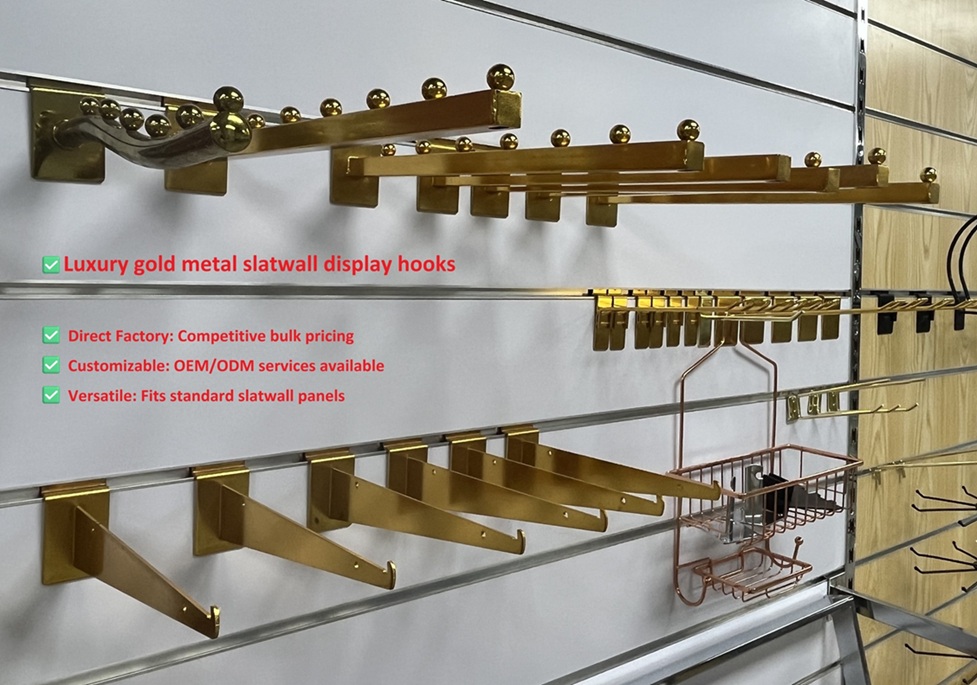
Retail display hardware is more than mere metal; it is the infrastructure of your brand's visual story. A well-engineered fixture removes friction, ensures product stability, and maximizes vertical space, directly influencing shopper psychology. When shoppers enter a retail space, their eyes are drawn to organized, accessible products. If a display hook is sagging, crooked, or visually unappealing, it subconsciously signals poor quality to the customer.
When specing your custom display hardware, focus on the following foundational elements:
* Structural Integrity: Poorly manufactured brackets can sag, twist, or fail, causing product loss, unsightly aesthetics, and significant safety concerns. Your fixtures must hold up under the weight of hundreds of shoppers handling items daily.
* Material Durability: Choosing the right gauge of wire or metal thickness is essential for longevity. In high-traffic retail environments, hardware is subject to constant physical stress.
* Brand Consistency: Custom finishes, colors, and specific design flourishes reinforce your brand identity at the point of sale. Your hooks should reflect the same premium quality as the products they display.
To ensure your custom orders align with your retail requirements, you must understand the technical specifications that manufacturers like Waigaoqiao use to engineer your solutions.
The wire diameter and material type dictate the load-bearing capacity of your hook. For example, common stem lengths range from 1 to 12 inches, with wire gauges typically between 0.186 and 0.212 inches. A critical mistake many procurement teams make is underestimating the weight of the product packaging, not just the product itself. Always consult the manufacturer's technical data sheet to ensure the gauge matches the weight of your product plus a safety buffer to account for aggressive shopper interaction.
Your hooks must be compatible with your existing fixtures. Whether you are using slatwall, pegboard, or gridwall, the mounting mechanism is the primary point of failure.
* Slatwall: Requires compatible prongs that snap securely into panel grooves.
* Pegboard: Needs saddle hooks or J-hooks designed for specific hole spacing, typically 1-inch on center.
* Gridwall: Requires specialized grid hooks that lock onto wire mesh frames, ensuring they don't shift when items are removed.
The finish is not just for looks; it prevents corrosion and enhances visibility.
* Chrome/Nickel: Offers a high-end, reflective finish ideal for boutique environments.
* Powder Coating: Available in custom colors to match brand palettes, providing superior scratch and rust resistance. This is often the preferred choice for long-term installations.
Partnering with an OEM manufacturer requires clear communication to achieve the desired balance between cost and quality. Managing a global supply chain for retail displays requires attention to logistics, material quality, and communication standards.
| Consideration | Why It Matters | Expert Tip |
| :--- | :--- | :--- |
| Load Capacity | Prevents fixture failure | Clearly specify the maximum weight of product per hook. |
| Lead Time | Impacts launch schedules | Align production timelines with retail floor rollout dates. |
| MOQ | Affects unit cost | Discuss bulk pricing vs. lower MOQ for testing new display types. |
| Tolerances | Ensures fit consistency | Set strict dimensional tolerances to ensure easy installation. |
When working with Waigaoqiao, provide detailed CAD drawings or physical prototypes. Often, minor adjustments in the bend radius of a hook can significantly improve its load-bearing strength. By leveraging our engineering expertise, you can often simplify the design, which reduces manufacturing complexity and lowers the unit cost without sacrificing quality.
Retail space is expensive. Maximizing "altitude"—the vertical space on your walls—is the fastest way to increase SKU productivity. We recommend designing fixtures that allow for tiered hook placement. The "Rule of 3" (or similar grouping techniques) allows shoppers to scan products efficiently without cluttering the visual field.
This approach has been shown to improve pack rates and boost revenue by reducing the time a customer spends searching for a specific item. By using custom-designed bracket assemblies, you can stagger hooks to create a "waterfall" effect, making every product visible even if they are packed tightly together. This is especially effective for smaller goods like phone accessories, cosmetics, or artisanal food products.
Procurement managers often overlook the "installation experience." If a hook is difficult to install, store associates will be less likely to keep the displays tidy. High-quality manufacturing includes deburring edges to prevent injury to staff and customers, ensuring that the backplate is perfectly perpendicular to the arm, and using high-grade steel that maintains its shape after repeated stress.
Furthermore, consider the environmental impact. Modern retail brands are increasingly requesting eco-friendly coating processes. Ask your manufacturer about low-VOC powder coatings or recycling-friendly metal compositions to align your display fixtures with your corporate sustainability goals.
As omnichannel retail continues to evolve, the demand for modular, interchangeable hardware is rising. Brands no longer want static displays; they want systems that can adapt to seasonal product changes. We are seeing a surge in demand for "universal" backplates that can accommodate different hook lengths or styles, allowing retailers to change their merchandising strategy over a weekend without needing a complete refit of the store.
By collaborating with Waigaoqiao on a modular design, you reduce the long-term cost of your retail environment. You invest in the infrastructure once, and then simply swap out the attachment arms as your product lines rotate. This is the future of smart retail procurement.
*Ready to elevate your retail display? Contact our engineering team at Waigaoqiao today to discuss your custom hardware needs and let us help you turn your store fixtures into high-performing sales engines.*
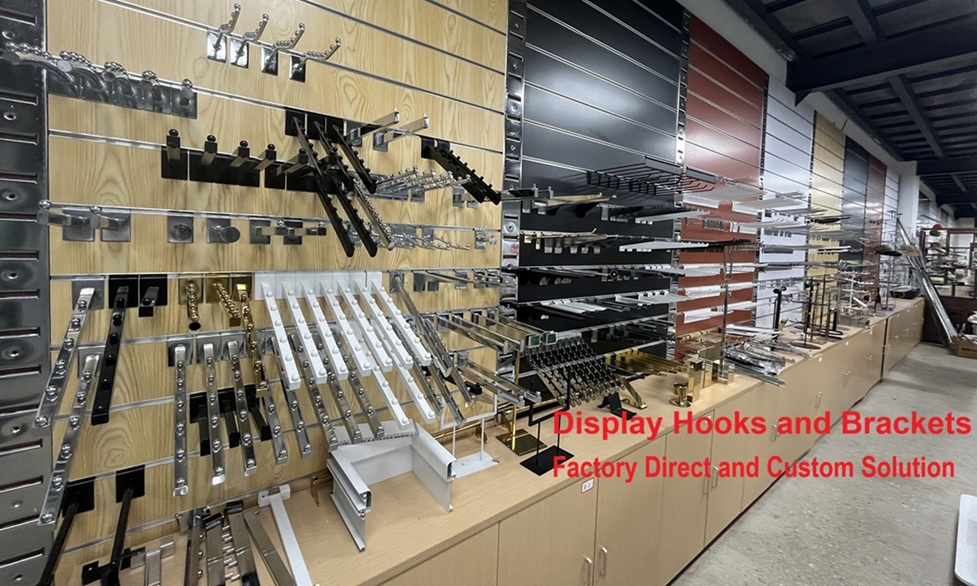
1. How do I choose the correct wire gauge for my display hook?
Consider the weight and packaging of your product. Heavier, carded, or bulky items require a thicker gauge to prevent bending. Always provide your product weight data to your manufacturer so they can calculate the required tensile strength.
2. What is the advantage of powder coating over chrome plating?
Powder coating offers superior rust resistance and, crucially, allows for custom branding by matching your company's specific color palette, whereas chrome is limited to metallic finishes and is more susceptible to scratching.
3. How can I ensure my hooks fit my existing store fixtures?
Always request samples before committing to a full production run. Provide the manufacturer with specifications for your existing slatwall, pegboard, or gridwall spacing to ensure a perfect lock.
4. Can Waigaoqiao provide custom-designed hooks that are not standard?
Yes. As an OEM, we specialize in adapting design to fit unique product shapes, such as automotive parts, electronics, or specialized apparel. We work from your 2D or 3D drawings to create bespoke solutions.
5. How do I maintain the lifespan of my retail display brackets?
Quality manufacturing is the first step. For maintenance, ensure staff are trained to avoid overloading, and clean with non-abrasive cloths to protect the powder-coated or chrome finish from scratches and environmental oxidation.


